
Fine hair has a reputation it does not deserve. It is often described as limp, flat or difficult, when in truth it is simply hair with a smaller strand diameter, which means each hair weighs less and holds less volume on its own. It can be beautifully soft, shiny and easy to style, but it needs the right cut to show that off. The wrong cut, especially one that is too long, too heavily layered or too thinned out, can make fine hair look thinner than it is.
The good news is that a haircut does more for fine hair than almost any product. A well-chosen shape creates the illusion of density: blunt ends make the bottom of the hair look thicker, short layers lift the crown, and the right length stops the ends from looking wispy and sparse. Styling helps too, but it works best when the cut is already doing most of the work.
Below are nine hairstyles that work especially well for fine hair in 2027, from a classic blunt bob to a modern textured pixie. Each one is described by what it does well, what to watch for, and who it suits best, so you can choose a style that flatters your hair as it is, not the hair you wish you had.
Key takeaways
- Blunt ends and shorter lengths make fine hair look thicker, because the weight of the hair is concentrated instead of spread thin.
- Light, well-placed layers add movement and lift, but too many layers or heavy thinning can make fine hair look sparse.
- Shorter styles such as bobs, lobs and pixies usually flatter fine hair more than very long hair, which tends to look wispy at the ends.
- Volume comes from the cut first and styling second: root lift, a round brush and a light mousse help, but they cannot rescue a cut that works against your hair.
- No haircut can change the diameter of your strands or add density that is not there, and a style that needs daily heat styling may not be worth it if your hair is fragile.
What this guide covers
This guide covers nine hairstyles chosen specifically for fine hair, at a range of lengths from very short to just past the shoulders. Every style here works by the same principle: it keeps the ends looking full, adds lift where fine hair tends to fall flat, and avoids the kind of over-layering that removes the very weight that makes hair look thick.
Fine hair is not the same as thin hair. Fine refers to the diameter of each strand, while thin refers to how many strands you have. Many people have fine hair that is also dense. The styles below suit fine hair of all densities, but the notes on each one say where density, face shape or texture change the result.
Each style includes what we like about it, what to consider before you commit, and who it suits best. The best haircut for fine hair is usually the one you will actually maintain, so read the whole list before you decide.
How we chose these hairstyles and what to look for
Look first at the ends. For fine hair, the single most flattering thing a cut can do is keep the perimeter strong. Blunt ends, cut straight across at one length, make the bottom edge of the hair look dense and intentional, while wispy, heavily thinned ends do the opposite.

Look next at the layers. Layers can be wonderful for fine hair when they are long, soft and placed to create movement, especially around the face and at the crown. Short, choppy layers throughout the hair remove weight and can leave the ends looking sparse. A good rule is that layers should start at the cheekbone or below, not at the crown.
Look finally at the length and the styling the cut demands. Fine hair usually looks fullest between the chin and the collarbone, where the ends stay strong. Very long fine hair can look beautiful, but it needs more care and more regular trims to avoid looking straggly. If you love your length, keep it, but ask for a blunt perimeter and long layers rather than heavy thinning. And if you use oils on your hair, keep them light: the same logic behind our guide to the best face oils applies here, because heavy oils weigh fine strands down and make them look flat by midday.
The blunt bob
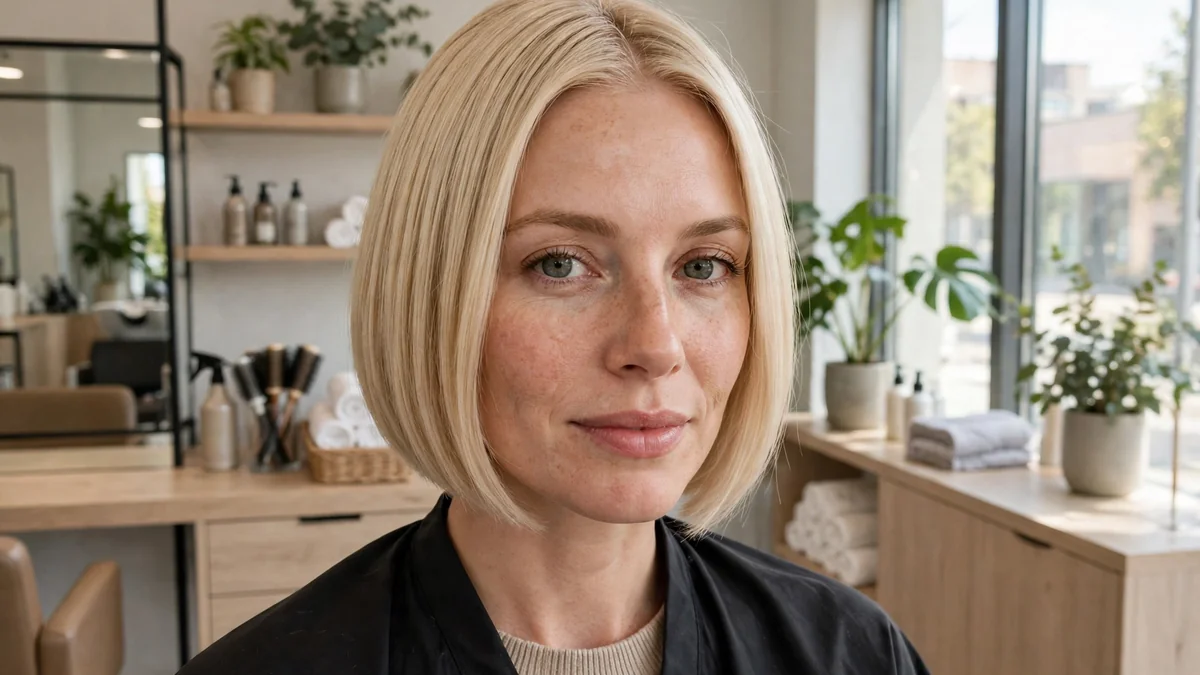
What we like: Cut straight across at chin or jaw length with no layers at the ends, it makes fine hair look instantly thicker, holds its shape with minimal styling, and suits almost every face shape.
What to consider: It needs a trim every six to eight weeks to keep the line sharp, and very straight fine hair can look severe without a little texture at the ends. Best for: Straight to slightly wavy fine hair. Length: Chin to jaw. Styling time: Low.
The blunt perimeter concentrates all of your hair’s weight at one line, so the ends look dense rather than wispy. Add a soft bend with a round brush and it looks polished with very little effort.
The long bob, or lob
What we like: The same blunt, thickening effect as a bob, but long enough to tie back, with a length that sits at or just below the collarbone and flatters most people.
What to consider: It can fall flat at the roots if your hair is very straight, so a little root lift or a side part helps, and the ends still need regular trims. Best for: Anyone who wants bob fullness with ponytail versatility. Length: Collarbone. Styling time: Low to medium.
The lob gives you the density of a blunt cut and the freedom of longer hair. Ask for a blunt base with a few long, invisible layers through the interior for movement.
The textured pixie
What we like: Short, piecey layers on top create instant volume and lift, fine hair dries in minutes, and the style looks deliberately chic rather than thin.
What to consider: It needs a trim every four to five weeks to hold its shape, and it is a commitment, since growing it out takes patience. Best for: Fine hair with some natural wave or bend. Length: Very short. Styling time: Low.
A pixie turns fine hair’s lightness into an advantage: less weight means the roots lift naturally, and a little styling paste is usually all it needs.
Long layers with a blunt base
What we like: Keeps the length you love while adding movement around the face and through the mid-lengths, and the blunt base stops the ends from looking sparse.
What to consider: The layers must start at the cheekbone or below, and the ends need a trim every eight to ten weeks, or the style loses its shape. Best for: Fine hair worn past the shoulders. Length: Shoulder to mid-back. Styling time: Medium.
The key is restraint: long layers that begin low, a strong blunt perimeter, and no thinning at the ends. The result moves beautifully and still looks full.
Curtain bangs with face-framing layers
What we like: Soft, parted bangs add fullness around the face, draw attention to the eyes and cheekbones, and grow out gracefully without an awkward stage.
What to consider: Bangs need a trim every three to four weeks, and they can look greasy quickly on fine hair, so dry shampoo becomes a regular habit. Best for: Fine hair with a longer length or a lob. Length: Any, with bangs at cheekbone length. Styling time: Medium.
Curtain bangs create the impression of fullness exactly where the eye lands first, and they soften a long face or a high forehead at the same time.
The modern shag
What we like: Choppy, lived-in layers and texture create movement and volume that fine hair rarely achieves on its own, and the style looks better slightly undone.
What to consider: It needs a stylist who understands fine hair, because too much layering removes the weight that keeps it looking full, and it needs texturising spray to hold the shape. Best for: Fine hair with natural wave. Length: Shoulder length. Styling time: Medium.
On fine, wavy hair the modern shag creates a tousled fullness that looks effortless, but it is the one style on this list where the skill of the cut matters most, so choose your stylist carefully.
The French bob
What we like: A chin-length bob with a soft, slightly curved shape and often a short fringe, it looks chic, full and deliberately styled with very little effort.
What to consider: The fringe needs regular trims, and the style suits shorter lengths best, so it is not for anyone who wants to keep long hair. Best for: Straight fine hair. Length: Chin. Styling time: Low.
The French bob sits at the chin, curves gently under, and often pairs with a soft fringe that adds fullness across the forehead. It is one of the most flattering short styles for fine hair.
The textured crop
What we like: A short, piecey cut with length on top and shorter sides, it gives fine hair height and texture, dries fast, and looks modern and confident.
What to consider: It needs frequent trims to keep the shape, and it suits oval, heart and square face shapes more than very round ones. Best for: Fine, straight hair. Length: Short. Styling time: Low.
The textured crop keeps length where it creates volume, on top, and removes it where it adds nothing. A little matte paste scrunched through the top is enough to style it.
Soft waves with long layers
What we like: Gentle waves add width and movement that make fine hair look fuller, and the style works for weddings, work and everyday wear alike.
What to consider: Waves need heat styling or overnight braids to create, and fine hair drops curl quickly, so a light hold spray and a cool shot from the dryer help. Best for: Fine hair at shoulder length or longer. Length: Shoulder to mid-back. Styling time: Medium to high.
Keep waves soft and loose rather than tight and uniform, because tight curls fall out of fine hair quickly. A large-barrel curling iron, or plaits left in overnight, gives the gentle bend that lasts.
Why fine hair behaves the way it does
Fine hair falls flat for a simple physical reason: each strand is light, so gravity wins. Thicker hair has enough weight and stiffness in each strand to hold a shape, while fine hair bends easily and lies close to the scalp. That is why volume at the roots disappears by lunchtime, why curls drop out, and why a style that looks full in the salon mirror can look limp an hour later.
Scalp health matters more than most people realise, because fine hair shows oil and build-up faster than thick hair. A clean scalp gives fine hair lift at the root, while heavy conditioner on the roots, or a build-up of styling product, flattens it. Apply conditioner from the mid-lengths to the ends only, and keep the roots as light as possible. The same barrier-care thinking in our guide to the best moisturisers for dry skin applies to the scalp too: a healthy barrier holds moisture in and keeps irritation out.
Density also plays a part. Some people have fine hair that is very dense, and their hair can look full with the right cut. Others have fine hair that is also sparse, and for them shorter styles and blunt ends matter even more, because length only spreads the available hair more thinly.
The caveats that matter
It is worth being honest about what a haircut can and cannot do. A cut can create the illusion of thickness, but it cannot change the diameter of your strands, add hair where there is none, or fix shedding or thinning caused by health, hormones or medication. If your hair has become noticeably thinner over a few months, that is worth discussing with a clinician rather than solving with a new style.
| Detail | What is known |
|---|---|
| Most flattering lengths | Chin to collarbone, where the ends stay strong and the hair holds a shape |
| Best cut for thickness | A blunt perimeter with long, soft layers, rather than heavy thinning or short choppy layers |
| Layers that help | Long layers starting at the cheekbone or below, adding movement without removing weight |
| Layers that hurt | Short, choppy layers throughout and heavy thinning shears, which leave the ends sparse |
| How often to trim | Every six to eight weeks for bobs, four to five weeks for pixies, eight to ten for longer styles |
| Conditioner placement | Mid-lengths to ends only, never on the roots, where it flattens fine hair |
| Styling that adds volume | Root lift spray or light mousse, blow-dried with a round brush, finished with a cool shot |
| When to see a clinician | Sudden thinning, increased shedding, or a widening part that does not improve in a few months |
Heat is the other caveat. Fine hair is more fragile than thick hair, so daily high-heat styling can cause breakage that makes the ends look thinner over time. Use the lowest heat setting that works, always use a heat protectant, and give your hair a break from hot tools a few days a week.
Checklist: choosing a hairstyle for fine hair honestly
Use these checks before you book, and again in the mirror two weeks after the cut.
- Check the ends: the perimeter should look strong and even, not wispy or thinned out.
- Check the layers: long, soft layers from the cheekbone down, not short choppy layers through the whole head.
- Check the length: chin to collarbone usually looks fullest, and very long hair needs more upkeep to avoid straggly ends.
- Check the styling time: be honest about how many minutes you will spend on your hair each morning.
- Check the roots: conditioner and heavy products belong on the mid-lengths and ends, never on the roots.
- Check the trim schedule: a blunt cut only stays blunt if you return every six to eight weeks.
Frequently asked questions
What is the best haircut for fine hair?
A blunt bob or lob is the most reliable choice, because the straight-across perimeter makes the ends look dense and the length is short enough to hold volume. A textured pixie is the best short option, and long layers with a blunt base are the best choice if you want to keep your length.
Should fine hair have layers?
Yes, but the right kind. Long, soft layers that start at the cheekbone or below add movement and lift without removing much weight. Short, choppy layers throughout the hair, or heavy thinning with thinning shears, usually make fine hair look thinner, so ask your stylist to keep the ends strong.
Does long hair make fine hair look thinner?
Often, yes. The longer fine hair grows, the more its weight is spread along the length, and the ends tend to look wispy and sparse. That does not mean you cannot have long fine hair, but it needs a blunt perimeter, long layers, regular trims and more styling to look full.
How can I add volume to fine hair without heat?
Blow-dry upside down or with a round brush for root lift, use a light mousse or root spray on damp hair, and try overnight plaits for soft waves. Dry shampoo at the roots on day two also adds grip and lift. Avoid heavy creams and oils, which weigh fine hair down.
Are hair oils good for fine hair?
They can be, in very small amounts and only on the mid-lengths and ends. A single drop of a lightweight oil smooths frizz without flattening the roots, and our guide to the best squalane products explains why squalane is one of the lightest options available. Heavy oils, butters and thick serums are usually too much for fine hair and make it look greasy by midday.
How often should fine hair be trimmed?
Every six to eight weeks for bobs and lobs, every four to five weeks for pixies and crops, and every eight to ten weeks for longer styles. Fine hair shows split ends and a weakening perimeter faster than thick hair, so regular trims matter more, not less.
The bottom line
The best hairstyle for fine hair in 2027 is not the most dramatic or the most fashionable. It is the cut that keeps your ends looking strong, adds lift where your hair naturally falls flat, and fits the amount of styling you are honestly willing to do each morning. For most people, that means a blunt bob or lob, long soft layers if you want length, or a textured pixie if you are ready to go short.
Choose the style that suits your hair as it is, keep the perimeter blunt, keep heavy products off your roots, and trim regularly. Do that, and fine hair stops being a problem to solve and becomes what it actually is: soft, shiny hair that, with the right cut, looks full and polished.
Note: This guide is general haircare information, not medical advice. If you notice sudden thinning, increased shedding or a widening part, speak to a clinician before trying new treatments or products.