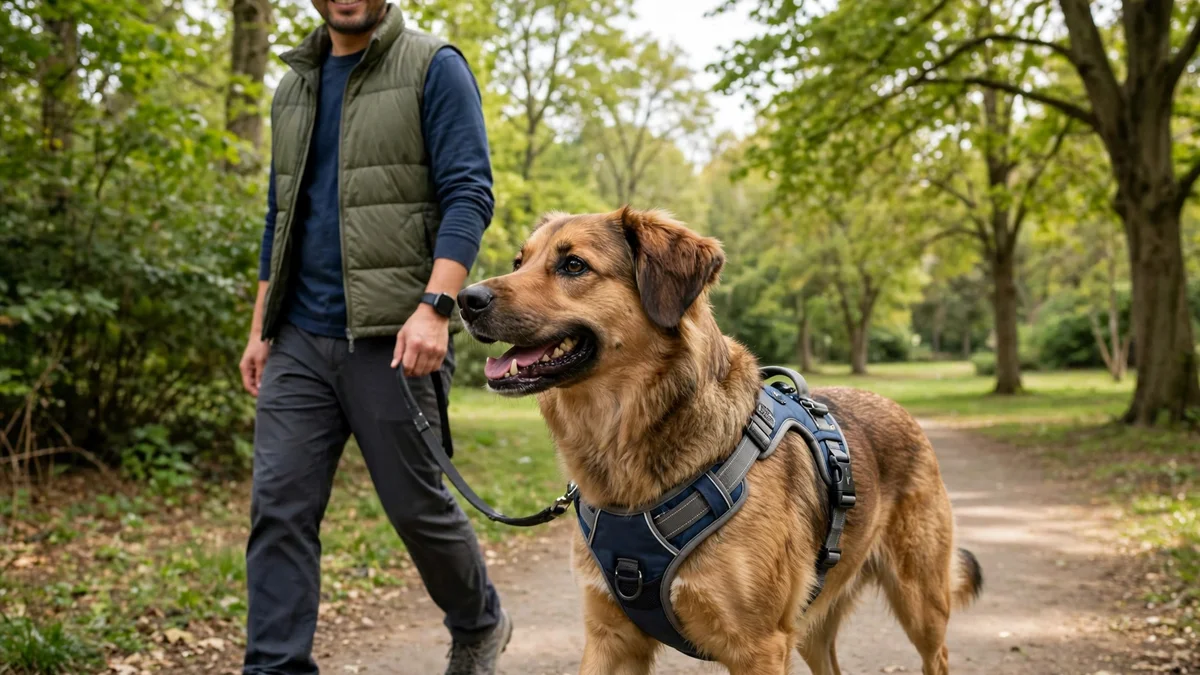
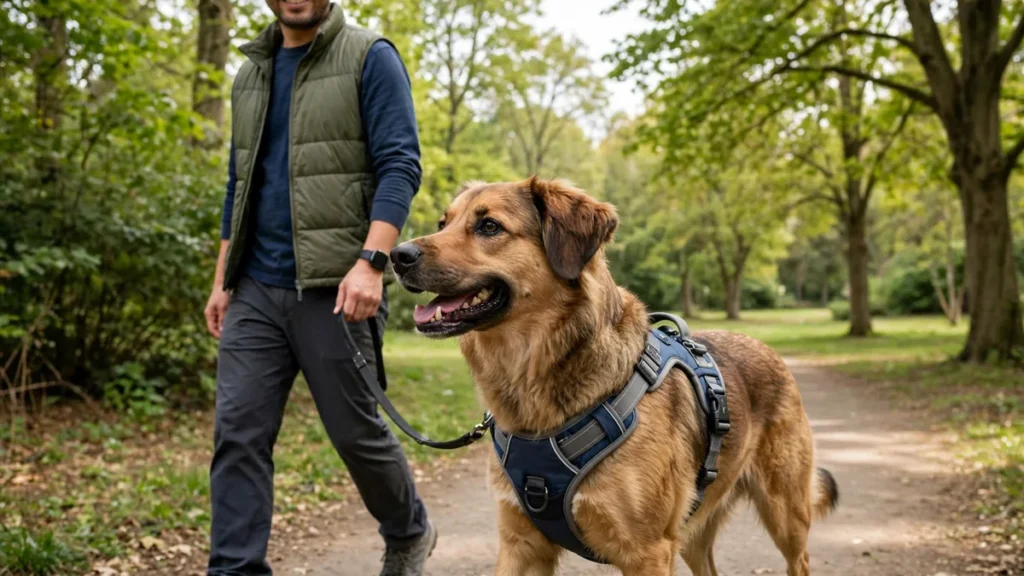
The best no pull dog harness is one that steers your dog gently from the chest, fits snugly without rubbing, and gives you calm control without hurting your dog. The best no pull dog harness for most dogs in 2027 is a padded front-clip design with two points of adjustment and a back clip for relaxed moments, because it turns a pull into a gentle turn instead of a tug-of-war.
Pulling is one of the most common reasons walks feel stressful, and one of the easiest problems to improve with the right kit. A collar puts pressure on the throat, while a harness spreads the load across the chest and shoulders. The right design does not punish pulling; it simply makes walking beside you the easier choice.
This guide covers ten harnesses for the dogs most owners actually walk: strong pullers, small breeds, puppies, escape artists, and night walkers. If you want the wider picture first, our guide to the best dog harness covers every style, while this list focuses only on designs built to reduce pulling.
Key takeaways
- A front chest clip is the single most useful feature for reducing pulling.
- Fit matters more than brand: two fingers should slide under every strap.
- Padded straps prevent rubbing on long walks and on short-coated dogs.
- Dual-clip designs let you switch between training and relaxed walking.
- A harness helps, but short training sessions change the habit.
How to Choose the Best No Pull Dog Harness
Start with the clip. A front clip sits on the chest and turns your dog towards you when they pull, which is why it works so well for training. A back clip suits dogs that already walk nicely.
Fit comes next. Measure your dog’s chest at its widest point and check the maker’s size chart rather than guessing from weight alone. Straps should sit flat, with room for two fingers underneath, and nothing should press on the throat.
Padding and material decide comfort. Neoprene or soft mesh lining protects the skin under the arms, where rubbing starts first. Wide straps spread pressure better than narrow ones, and reflective stitching is worth having if you walk after dark.
Think about how you will use it. A step-in design suits dogs that dislike things going over their heads, while an over-head style is often quicker once your dog is used to it. If your dog swims or walks in rain, look for quick-drying fabric and rust-proof fittings.
The 10 Best No Pull Dog Harnesses
The Padded Front-Clip Everyday Harness
This is the design most owners should start with. A padded chest plate spreads pressure evenly, while the front clip steers a puller gently back towards you.
The back clip takes over once your dog settles, and a handle helps at road crossings. Look for four points of adjustment and padding that feels soft, not stiff.
Best for: most dogs and everyday walks.
The Dual-Clip Training Harness
A dual-clip harness gives you two ways to walk the same dog. Use the front clip while you train, then switch to the back clip when your dog walks nicely.
That flexibility suits owners working through pulling with a young or lively dog. Check that both clips sit flat and the chest strap does not slide towards the front legs.
Best for: owners actively training a puller.
The Lightweight Mesh No Pull Harness
Mesh suits warm weather and short-coated dogs, because air moves through the fabric and the harness stays light. The best ones still carry a front clip, so you get steering without heavy padding.
Mesh dries quickly after rain, which is handy on muddy winter walks too. The trade-off is durability, so check the stitching around the clips on a strong dog.
Best for: warm weather and lighter dogs.
The Heavy-Duty Harness for Strong Pullers
Big, powerful dogs need a harness built like outdoor kit. Wide webbing, metal buckles, and reinforced stitching hold firm when a large dog lunges at a squirrel.
A padded handle on the back lets you hold your dog close without grabbing a strap. Fit matters even more here, so adjust every strap and re-check it after the first few walks.
Best for: large, strong dogs that lunge.
The Step-In No Pull Harness
Some dogs hate having a harness slipped over their head, and a step-in design solves that in seconds. Your dog steps into two leg holes, you pull the straps up, and the buckle clicks shut.
Step-in styles suit nervous dogs and owners with limited hand strength. Make sure the leg holes are roomy and the chest strap still carries a front clip.
Best for: head-shy or nervous dogs.
The Reflective Night-Walk Harness
If you walk before sunrise or after dark, reflective trim is essential, not a nice extra. Bright strips across the chest and back let drivers and cyclists see your dog from a distance.
The front clip works exactly as it does in daylight, so evenings stay safe without a change of routine. Look for reflective material on the sides too.
Best for: early-morning and evening walks.
The Adjustable Harness for Growing Puppies
Puppies grow fast, and a harness with wide adjustment can last through several growth spurts. Sliders on the neck and chest let you widen the fit as your puppy fills out.
A front clip helps you start loose-lead training early, while good habits are easiest to build. Choose a light, soft design and keep training sessions short and cheerful.
Best for: puppies and fast-growing breeds.
The Escape-Resistant Harness for Slippery Dogs
Some dogs can back out of a standard harness in seconds, especially slim breeds with narrow heads. A third strap behind the ribs stops the harness sliding forward over the shoulders.
Fit this style with extra care, with the belly strap snug behind the ribcage. Let your dog get used to it indoors first, and always check the buckles are fully closed.
Best for: slim breeds and escape artists.
The Adventure Harness for Long Walks and Hikes
Long days on the trail call for a harness that carries its own weight. A sturdy handle, strong attachment points, and thick padding stay comfortable over hours of walking.
Some designs add small pockets for bags or a water bottle, keeping your hands free. The extra structure adds weight, so it suits larger dogs better than small ones.
Best for: hiking and all-day walks.
The Gentle Everyday Harness for Small Dogs
Small dogs need a lighter touch. Thin straps, small buckles, and soft lining keep the harness comfortable on a tiny frame, while a front clip still stops pulling.
Heavy hardware would drag on a small dog, so this design keeps everything slim and light. Measure carefully, because one size step can mean the difference between snug and sloppy. If you walk with children, our guide to the best dogs for kids helps match the right breed to a family walk.
Best for: small breeds and toy dogs.
The 10 Picks at a Glance
| Harness | Clip | Best for | Standout feature |
|---|---|---|---|
| Padded Front-Clip Everyday | Front and back | Most dogs | Soft chest padding |
| Dual-Clip Training | Front and back | Training a puller | Two clip positions |
| Lightweight Mesh | Front | Warm weather | Breathable mesh fabric |
| Heavy-Duty Strong Puller | Front and back | Large strong dogs | Metal buckles, wide webbing |
| Step-In | Front | Head-shy dogs | No over-head fitting |
| Reflective Night-Walk | Front | Evening walks | Reflective all-round trim |
| Adjustable Puppy | Front and back | Growing puppies | Wide adjustment range |
| Escape-Resistant | Front and back | Escape artists | Third belly strap |
| Adventure Hiking | Front and back | Long walks | Carry handle, pockets |
| Gentle Small Dog | Front | Small breeds | Light, slim hardware |
What a Good No Pull Harness Feels Like
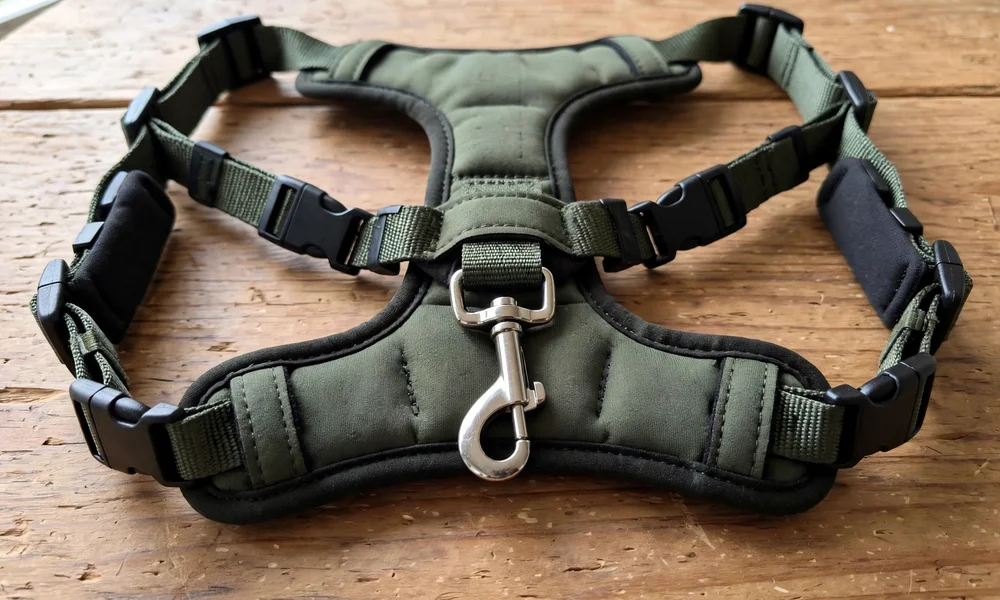
A good harness should feel like a comfortable jacket, not a restraint. The straps lie flat, the padding sits softly under the arms, and your dog moves freely.
Watch your dog’s body language on the first few walks. A relaxed tail, an easy stride, and no scratching at the straps all suggest the fit is right.
Comfort also shows up after the walk. There should be no red marks or sore spots when you run a hand under the straps. A harness that leaves marks is telling you something, so change the size or the shape.
Training Tips That Make a No Pull Harness Work Better
A harness is a tool, not a cure, and a few minutes of training make it far more effective. Start indoors, where there are fewer distractions, and reward your dog for walking beside you. Keep sessions short, around five minutes, and end while your dog is still enjoying it.
When your dog pulls outside, stop and wait for the lead to slacken before moving again. Your dog soon learns that pulling stops the walk while a loose lead keeps it going. Reward the behaviour you want, and keep a favourite toy from our guide to the best dog toys in your pocket.
Be consistent, because mixed messages undo good work. If pulling sometimes gets your dog where they want to go, they will keep trying it. Everyone who walks the dog should use the same rules, the same clip, and the same rewards.
Your No Pull Harness Checklist
Run through this list before you buy, and again when the harness arrives, so nothing gets missed.
- Front clip present, or dual clips if you want training flexibility.
- Chest measured at the widest point and matched to the size chart.
- Two fingers fit under every strap, with nothing pressing the throat.
- Padding under the arms and across the chest, with no hard edges.
- Buckles and stitching checked, with reflective trim for dark walks.
- Your dog walks, sits, and turns freely in it indoors.
Frequently Asked Questions
Do no pull harnesses hurt dogs?
No, when they fit well. A no pull harness spreads pressure across the chest and shoulders, which is far gentler than a collar on the throat. Pain comes from a poor fit, so check for redness after walks.
Can a puppy wear a no pull harness?
Yes, and starting young is a good idea. Choose a light, adjustable harness with a front clip and keep walks short while your puppy grows. Check the fit every couple of weeks, because a puppy can outgrow a size fast.
Should I use the front clip or the back clip?
Use the front clip while you train, because it turns your dog towards you. Switch to the back clip once your dog walks calmly on a loose lead. A dual-clip harness lets you switch between the two.
How tight should a no pull harness be?
Snug, but never tight. You should be able to slide two fingers flat under every strap, and the harness should not twist when your dog moves. If you can fit a whole hand underneath, it is too loose.
Will a no pull harness stop pulling on its own?
Not on its own, no. The harness makes pulling less rewarding, but your dog still needs to learn that a loose lead keeps the walk going. Pair it with short, consistent training and you will see real change within a few weeks.
The Bottom Line
The best no pull dog harness for most owners is a padded front-clip design that fits well. Strong pullers need heavier kit, small dogs need lighter kit, and puppies need room to grow. The principles stay the same: a front clip, a snug fit, and soft padding where it counts.
Choose from the ten picks above, fit the harness carefully, and give training a few weeks. Walks should be the best part of your dog’s day, and with the right harness they can be the best part of yours too.
Safety note: check the fit before every walk and look for redness under the straps after the first few outings. If you see chafing, loosen the straps or try a different shape.