
The best pets for kids are the ones that fit your family as it really is, not the one in the picture. A good first pet is gentle, sturdy enough for small hands, and happy with the care your household can give every day.
So which pet should you choose? It depends on your child’s age, your space, and the adults’ time. This guide answers that directly, with ten pets that work well for children.
Each pick explains what the pet needs, what children love, and where it can go wrong. Read it with your child, and choose the pet your family can look after for years.
Key takeaways
- Match the pet to your child’s age: dogs and cats suit older children, while fish suit younger ones still learning to be gentle.
- Adults do the real work: even the easiest pet needs an adult to feed it and clean its home.
- Start with temperament, not looks: a calm, friendly animal beats a striking one.
- Think in years, not weeks: some pets live for a decade or more, so choose for your family’s future.
- Check allergies and space first: confirm no one reacts to fur or feathers, and make room for the pet’s home.
How to Choose the Best Pets for Kids
Start with your child’s age. Children under five do best with pets they can watch, such as fish. Children aged five to eight can help with feeding, while children of nine and over can take on real responsibility with an adult nearby.
Be honest about time. Dogs need walks, play and training every day, and a well-fitted harness makes those walks easier and safer. Cats need less hands-on time but still want company.
Fish and small pets need short daily jobs, plus a longer clean each week.
Think about space and noise. A large dog needs room to move and a garden helps, while a hamster or a goldfish fits happily in a flat. Some pets are noisy at night, and some need quiet corners.
Choose the animal, not just the species. Two animals of the same breed can have very different temperaments, so meet the pet first. Rescue centres and good breeders will let you spend time with an animal and answer honest questions.
The 10 Best Pets for Kids
These ten pets cover every kind of family, from busy households to active ones ready for a dog.
1. Dog
Dogs are the classic family pet. A friendly dog joins in with walks, games and quiet evenings, and children learn loyalty and routine from caring for one.
A dog is also the biggest commitment here, needing daily walks, training and company for well over a decade. If dogs are your focus, our guide to the best dogs for kids in 2027 looks at ten breeds in detail.
Best for: active families with children aged six and over who can share daily walks and training.
2. Cat
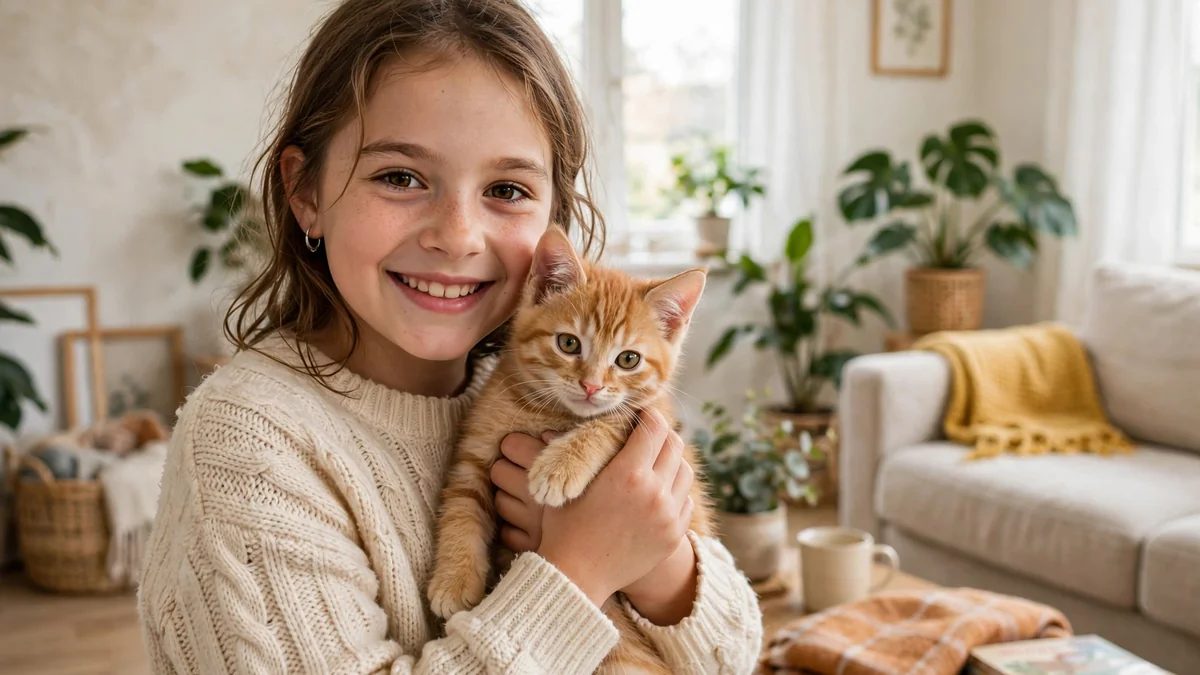
Cats suit families who want affection without a dog’s demands. A relaxed cat will sit on a child’s lap, purr through homework and play with a feather toy for hours.
Children must learn that cats set their own limits: a cat that walks away should be left alone. Older children who read those signals get on wonderfully with cats.
Best for: calmer households with children aged seven and over who can respect a cat’s space.
3. Goldfish
Goldfish are the gentlest possible start. Children can watch them swim, feed them a small pinch of food, and take pride in a clean, bright tank. With no handling to get wrong, they suit younger children well.
A goldfish still needs a filter, regular water changes and room to swim, with adults handling the cleaning. Done well, it can live for many years.
Best for: younger children aged four and over who want a pet to watch and help feed.
4. Hamster
Hamsters are small, busy and entertaining. Children love watching them run on a wheel, stuff their cheeks and build nests. They suit a child who wants something to hold.
Hamsters are nocturnal, so they are most active in the evening. They need a roomy cage, a wheel and a quiet daytime spot. Gentle handling from the start keeps them tame.
Best for: children aged six and over who are happy with an evening pet and gentle hands.
5. Rabbit
Rabbits are soft, quiet and full of character. A tame rabbit will nudge a hand for a stroke and binky, a joyful jump, when happy. They suit families who can give them space.
Rabbits need more room than many expect, plus hay, fresh greens and daily exercise outside the hutch. Handle them gently, never by the ears. A pair often keeps each other happier than one alone.
Best for: families with space and children aged eight and over who can help with daily feeding.
6. Budgie
Budgies are cheerful, clever and surprisingly chatty. A tame budgie may learn a few words, whistle tunes and perch on a finger. They are small enough for a flat and bright enough to lift any room.
Budgies need daily company and time outside the cage in a safe room. Their cage needs regular cleaning, and they do best in pairs. Move slowly around them until trust is built.
Best for: chatty children aged seven and over who want an interactive pet that talks back.
7. Guinea Pig
Guinea pigs are gentle, sociable and rarely bite. They whistle when they hear the fridge open and enjoy sitting on a lap for a cuddle.
Guinea pigs need a large enclosure, fresh hay daily and vitamin C from fresh vegetables. They are social and do best in pairs. Their gentle nature makes them a forgiving first pet.
Best for: gentle children aged six and over who want a cuddly pet to hold every day.
8. Betta Fish
Betta fish are small, vivid and full of personality. One betta in a warm, filtered tank will flare its fins and build bubble nests. They are beautiful and simple to care for.
Bettas must live alone, as males will fight other bettas. They need warm water, a filter and a tank with room to swim, not a tiny bowl. Feeding is a small daily job a child can own.
Best for: children aged five and over who want a beautiful, low-maintenance pet of their own.
9. Gerbil
Gerbils are active, curious and awake during the day, which makes them more fun than hamsters. They love to dig, tunnel and gnaw, and deep bedding keeps them busy for hours.
Gerbils need a deep tank with plenty of bedding to dig in. They are social, so keeping two together works well. Daily feeding and a weekly clean are the main jobs.
Best for: children aged six and over who want a daytime pet that is always on the move.
10. Leopard Gecko
Leopard geckos are calm, hardy and easy to handle. They are quiet, odourless and awake in the evening, and they tolerate gentle holding once used to it. Their spotted skin charms children.
A leopard gecko needs a warm tank with a heat mat, a hide and a shallow water dish. It eats insects, so the family must be comfortable with that. An adult should set up the tank.
Best for: older children aged nine and over who are curious about reptiles and happy with an evening pet.
The 10 Picks at a Glance
Use this table to compare the ten picks side by side.
| Pet | Best age | Daily care | Lifespan |
|---|---|---|---|
| Dog | 6 and over | Walks, feeding, play | 10 to 15 years |
| Cat | 7 and over | Feeding, brushing, play | 12 to 18 years |
| Goldfish | 4 and over | Feeding, tank checks | 10 to 15 years |
| Hamster | 6 and over | Feeding, spot cleaning | 2 to 3 years |
| Rabbit | 8 and over | Feeding, hay, exercise | 8 to 12 years |
| Budgie | 7 and over | Feeding, company, cleaning | 5 to 10 years |
| Guinea pig | 6 and over | Feeding, hay, cuddles | 5 to 7 years |
| Betta fish | 5 and over | Feeding, tank checks | 3 to 5 years |
| Gerbil | 6 and over | Feeding, spot cleaning | 3 to 4 years |
| Leopard gecko | 9 and over | Feeding, heat checks | 15 to 20 years |
What a Good First Pet Feels Like
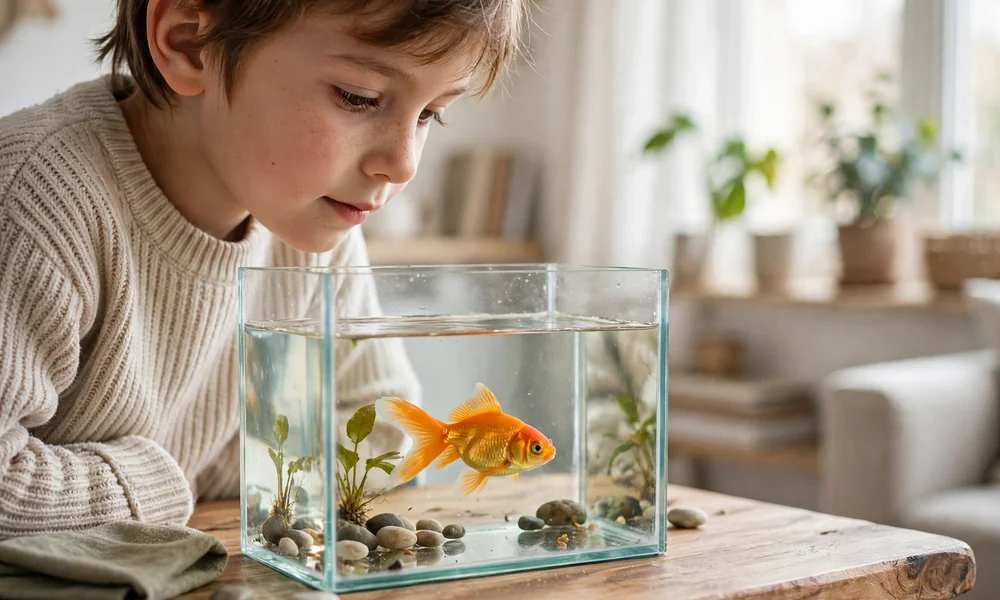
A good first pet feels calm, not chaotic. The child knows what to do each day, the pet trusts the hands that feed it, and adults are not constantly stepping in.
It also feels like a shared job. Children do the feeding and the gentle play, while adults handle cleaning and vet visits. Everyone knows their part.
Most of all, it feels like companionship. A pet that greets your child in the morning and waits at the door after school becomes part of the family.
The First Week With a New Pet
Keep the first week quiet. Let the pet settle in before inviting friends round, and keep handling short and gentle. A calm start builds trust faster than a busy one.
Set up a simple routine from day one. Feeding, cleaning and play should happen at the same times each day. A small chart on the fridge helps younger children remember their jobs.
Watch for signs of stress. A pet that hides or stops eating may need more space or a vet visit. If unsure, ask your vet: a quick call can prevent a small worry from becoming a real problem.
Your First-Pet Checklist
Run through this list before you bring any pet home.
- Check everyone for allergies to fur, feathers or bedding.
- Choose the pet’s home and set it up fully before the pet arrives.
- Buy food, bedding and cleaning supplies.
- Find a local vet and save their number in your phone.
- Agree who does each daily job.
- Plan who looks after the pet during holidays.
Frequently Asked Questions
What is the best pet for a five-year-old?
A goldfish or a betta fish is usually the best choice. Both are easy to watch and feed, with no handling to get wrong. An adult should still do the cleaning.
What is the easiest pet for kids to look after?
Fish are the easiest pets for children, as the daily job is simply feeding them. Tank care is an adult’s job. Among pets children can hold, guinea pigs are the most forgiving.
Are pets good for children?
Yes, pets can be very good for children. Caring for an animal teaches responsibility, empathy and routine, and many children find comfort in a pet’s company. The benefits are strongest when adults stay involved.
What pet is best for a child with allergies?
Fish are the safest choice for a child with allergies, since they produce no fur or feathers. A leopard gecko is another option, if the bedding does not trigger a reaction. Always check with your doctor first.
How do I know if my child is ready for a pet?
Your child is ready if they can follow simple instructions, handle things gently and keep up a small daily job for a few weeks. Try a trial run: ask them to water a plant daily. If they stick with it, they are ready for a pet.
The Bottom Line
The best pets for kids are the ones your family can care for happily for years, not the ones that look cutest in a shop window. Match the pet to your child’s age, be honest about the daily work, and let adults carry the jobs a child cannot.
Start small if you are unsure. A goldfish or a guinea pig can teach your child about responsibility, and you can welcome a bigger pet later. The right first pet is the one that makes your family smile.
A quick safety note: supervise young children around pets, wash hands after handling animals or cleaning their homes, and check for allergies before you commit. Choose a pet your family can care for for its whole life.