Dandruff makes hair care feel like a balancing act. Wash too little and flakes build up. Wash too much and the lengths turn dry and brittle. Add oil to the mix and the advice gets even more confusing, with one person swearing by overnight oiling and another warning that oil is the worst thing you can put on a flaky scalp.
Both sides have a point. Oil used the wrong way, heavy oil left on the scalp for hours, can feed the yeast behind dandruff and make flaking worse. Oil used the right way, a light scalp oil massaged in for 20 to 30 minutes before washing, can soften flakes, calm itching, and make your anti-dandruff shampoo work better. The method matters more than the product.
This guide walks through that method step by step, from choosing the right oil to washing it out properly, so you can use hair oil for dandruff without making the problem worse.
Key takeaways
- Use hair oil as a short pre-wash treatment, 20 to 30 minutes before shampooing, not as an overnight or leave-in treatment on the scalp.
- Choose a light scalp oil with rosemary, tea tree, or salicylic acid, and use only a few drops per application.
- Massage gently with your fingertips, never scratch with your nails, and always shampoo twice to remove the oil fully.
- Pair oiling with an anti-dandruff shampoo; oil softens flakes, but the shampoo is what treats the cause.
- No routine cures dandruff on its own, and flaking that spreads, hurts, or does not improve after four weeks should be checked by a dermatologist.
Why hair oil helps a flaky scalp
Dandruff happens when the scalp renews its skin too quickly, often because a yeast called Malassezia has overgrown. The result is flakes, itching, and a scalp that can feel both greasy and tight at the same time. Hair oil does not treat that yeast, but it does three useful things around it.
First, it softens flakes. Dry, crusty flakes are hard to wash away and easy to scratch off, which irritates the scalp further. A light oil loosens them so they lift away gently in the wash. Second, it calms the tight, itchy feeling that comes with an irritated scalp, which means less scratching and less damage. Third, it protects the lengths from the drying effect of frequent anti-dandruff shampooing, which is often the reason people stop treating their dandruff altogether.
The key is keeping the oil on the scalp for a short time only. Twenty to 30 minutes is enough to soften flakes and calm itching. Leaving it on overnight keeps the scalp warm, damp, and oily for hours, which is exactly the environment the yeast behind dandruff prefers. Short and washed out is the rule that makes oiling work for a flaky scalp.
What you need before you start
You do not need much. A light pre-wash scalp oil is the main item, ideally one with rosemary, tea tree, or salicylic acid, and a dropper or fine nozzle so you can place a few drops exactly where you need them. A wide-tooth comb helps spread the oil evenly, and a gentle anti-dandruff shampoo is essential for washing it out.

Choose your oil with your scalp type in mind. An oily, flaky scalp needs the lightest oil you can find, with no heavy butters and no leave-in claims. A dry, flaky scalp can handle a slightly richer pre-wash oil, and it may also benefit from a light finishing oil on the lengths after washing. If your scalp is sensitive, pick a fragrance-free or lightly fragranced formula and patch-test behind your ear for two days before your first full application.
Set aside 30 to 40 minutes for the whole routine, including the oiling time and two shampoos. It is a twice-a-week habit at most, not a daily one, so it fits easily into a normal wash routine once you know the steps. Our guide to hair oils for dry hair is a useful comparison if your lengths are dry as well, because it covers richer oils that suit the ends even when the scalp needs a lighter touch.
How to use hair oil for dandruff, step by step
Start with dry, untangled hair
What to do: Brush or comb your hair gently before you start, so the oil spreads evenly and you are not working through knots. What to avoid: Do not start on wet hair, because water blocks the oil from reaching the scalp. Best For: Every scalp type, every time you oil. Time Needed: 2 minutes. Standout Tip: A wide-tooth comb is gentler on a flaky scalp than a fine brush.
Untangled hair makes the whole routine easier. Oil applied to knotted hair sits on the surface and never reaches the scalp, which is where it needs to be.
Part the hair into sections
What to do: Use your fingers or a comb to part the hair into four or five sections, so you can reach the scalp evenly. What to avoid: Do not pour oil over the top of your head and hope it spreads, because it will pool on the crown and miss the sides. Best For: Thick or long hair, where the scalp is hard to reach. Time Needed: 2 minutes. Standout Tip: Sectioning takes a minute and makes the difference between an even treatment and a greasy patch.
Most people oil only the crown and wonder why the flakes behind the ears never improve. Sections fix that, because each part of the scalp gets the same small amount of oil.
Warm a few drops in your palms
What to do: Put three to five drops of oil in your palm and rub your hands together to warm it slightly. What to avoid: Do not use a large puddle of oil, and do not heat the oil in a microwave or over a flame. Best For: All scalp oils, especially thicker pre-wash formulas. Time Needed: 1 minute. Standout Tip: Warm oil spreads more easily and feels more comfortable on the scalp than cold oil.
A few drops is genuinely enough. The goal is a light film on the scalp, not a soaking, and warming the oil helps it spread further with less product.
Massage the oil into the scalp
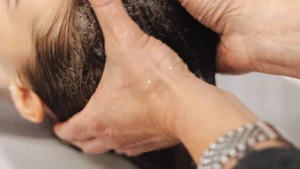
What to do: Use your fingertips to massage the oil into each section with small, gentle circles for two to three minutes. What to avoid: Never scratch with your nails, and do not press hard, because a flaky scalp is already irritated. Best For: Loosening flakes and calming itching before washing. Time Needed: 3 minutes. Standout Tip: Gentle circles increase blood flow to the scalp without damaging the skin.
Massage is the step that does the most work. It spreads the oil, loosens flakes, and calms itching, all without any extra product. Keep it gentle and take your time.
Work any leftover oil through the lengths
What to do: Smooth whatever oil is left on your hands through the mid-lengths and ends, where it protects against the drying effect of shampoo. What to avoid: Do not add more oil to the roots at this stage, and do not coat the lengths heavily. Best For: Dry or damaged ends that suffer from frequent washing. Time Needed: 1 minute. Standout Tip: The lengths need far less oil than you think; a trace is enough.
This step turns a scalp treatment into a full hair treatment. The lengths get protection from the shampoo that follows, and nothing extra is added to the scalp.
Leave the oil on for 20 to 30 minutes
What to do: Leave the oil on the scalp for 20 to 30 minutes, then wash it out. What to avoid: Do not leave it on overnight, and do not leave it on for hours, because long contact feeds the yeast behind dandruff. Best For: Softening flakes enough for them to lift away in the wash. Time Needed: 20 to 30 minutes. Standout Tip: Set a timer; it is easy to forget and leave oil on far longer than planned.
Twenty minutes is enough. The flakes soften, the itching calms, and the scalp gets the benefit without the risk that comes with leaving oil on for hours.
Shampoo twice with an anti-dandruff shampoo
What to do: Wet your hair, apply anti-dandruff shampoo, massage it in, rinse, and repeat a second time. What to avoid: Do not use a single quick wash, because it will not remove the oil fully, and residue left on the scalp makes flaking worse. Best For: Removing oil completely while treating the cause of dandruff. Time Needed: 5 minutes. Standout Tip: Leave the shampoo on the scalp for two to three minutes on the second wash, so the active ingredient has time to work.
The double shampoo is not optional. The first wash removes most of the oil, and the second wash treats the scalp properly. Skipping the second wash is the most common reason oiling seems to make dandruff worse. A tea tree oil shampoo is a good partner here, because tea tree suits flaky scalps and rinses cleanly after oiling.
Condition the lengths only
What to do: Apply conditioner to the mid-lengths and ends, leave it for two to three minutes, then rinse. What to avoid: Do not put conditioner on the scalp, because it adds buildup and can make flaking worse. Best For: Keeping the lengths soft after frequent washing. Time Needed: 3 minutes. Standout Tip: If your ends are very dry, a light leave-in on the lengths is fine, as long as it stays away from the roots.
Conditioner on the scalp is one of the quietest causes of buildup. Keep it on the lengths, where it belongs, and the scalp stays cleaner between washes.
Rinse well and dry gently
What to do: Rinse with lukewarm water until the hair feels clean, then pat dry with a towel and let it air-dry or use a low heat setting. What to avoid: Do not use very hot water, which irritates the scalp, and do not rub the hair roughly with a towel. Best For: Finishing the routine without irritating the scalp further. Time Needed: 5 minutes. Standout Tip: Hair that still feels oily after rinsing needs another shampoo, not more drying.
A good rinse is the final check. If your hair feels clean and light, the oil is out. If it still feels coated, wash once more rather than living with residue that will feed flaking.
How often to oil, and when to stop
Once or twice a week is enough for most people. That gives the scalp regular softening and calming without the buildup that comes from daily oiling. If you wash your hair every day, you can oil before one or two of those washes, and skip it on the others. More is not better; a scalp that is oiled every day stays damp and oily, which is the environment dandruff prefers.
Stop oiling and reassess if flakes get worse after two weeks, if itching increases, or if your hair starts to look greasy even after two shampoos. Those are signs that the oil is too heavy, the amount is too much, or the washout is not thorough enough. Try a lighter oil, use fewer drops, or oil less often before giving up entirely. If nothing helps after four weeks, or if flaking spreads to the ears, eyebrows, or hairline, see a dermatologist. Our guide to repairing damaged hair is worth reading alongside this one if your lengths are also suffering, because frequent washing and dandruff treatment can leave the ends dry even when the scalp improves.
The caveats that matter
Hair oil is a supporting step, not a cure. The treatment for dandruff is an anti-dandruff shampoo with an active ingredient such as zinc pyrithione, selenium sulfide, ketoconazole, or salicylic acid, used regularly. Oil makes the routine more comfortable and helps flakes lift away, but it does not address the yeast overgrowth behind most dandruff. Anyone who tells you oil alone will cure dandruff is selling you something.
| Detail | What is known |
|---|---|
| Best method | Pre-wash treatment, 20 to 30 minutes before shampooing, washed out fully |
| Best oils | Light scalp oils with rosemary, tea tree, or salicylic acid |
| How much | Three to five drops per application is enough for the scalp |
| How often | Once or twice a week, as part of a normal wash routine |
| What to avoid | Overnight oiling, heavy oils, and oil left on the roots as a leave-in |
| Shampoo rule | Always shampoo twice with an anti-dandruff shampoo after oiling |
| When to stop | If flakes or itching get worse after two weeks, or hair stays greasy after washing |
| When to see a dermatologist | Flaking that spreads, hurts, bleeds, or does not improve after four weeks |
If you are using a prescription scalp treatment, check with your dermatologist or pharmacist before adding a new oil, especially one with strong essential oils. Some oils can interfere with medicated treatments, and a simple check avoids weeks of irritation.
Checklist: oiling for dandruff, done properly
- Choose a light pre-wash scalp oil with rosemary, tea tree, or salicylic acid, not a heavy leave-in oil.
- Patch-test behind your ear for two days before your first full scalp application.
- Use three to five drops, part the hair into sections, and massage gently with your fingertips.
- Leave the oil on for 20 to 30 minutes only, never overnight.
- Shampoo twice with an anti-dandruff shampoo, leaving it on the scalp for two to three minutes on the second wash.
- Judge the routine after four weeks, and see a dermatologist if flaking spreads, hurts, or does not improve.
Frequently asked questions
Can I use hair oil every day if I have dandruff?
It is not recommended. Daily oiling keeps the scalp damp and oily, which suits the yeast behind dandruff and leads to buildup. Once or twice a week as a pre-wash treatment is enough for most people.
Should I oil my scalp before or after shampooing?
Before. Oil is a pre-wash treatment for a flaky scalp. Apply it 20 to 30 minutes before washing, then shampoo twice to remove it fully. Oiling after shampooing leaves residue on the scalp, which makes flaking worse.
Which oil is best for dandruff?
Light pre-wash scalp oils with rosemary or tea tree are the most commonly recommended, because they feel cooling, help soften flakes, and wash out cleanly. Salicylic acid oils help loosen stubborn flakes. Avoid heavy oils such as coconut or castor oil used in large amounts on the scalp.
Can I leave hair oil on overnight for dandruff?
No. Overnight oiling keeps the scalp warm, damp, and oily for hours, which is the environment the yeast behind dandruff prefers. A short pre-wash treatment gives you the softening benefit without the same risk.
Why does my hair still feel oily after shampooing?
Either the oil was too heavy, you used too much, or one shampoo was not enough. Use fewer drops next time, choose a lighter oil, and always shampoo twice. If the hair still feels coated after two thorough washes, the oil is wrong for your scalp.
Does hair oil replace anti-dandruff shampoo?
No. Oil softens flakes and calms itching, but it does not treat the cause of dandruff. An anti-dandruff shampoo with an active ingredient is the treatment, and oil is the supporting step that makes the routine more comfortable.
The bottom line
Using hair oil for dandruff works when the method is right: a light scalp oil, a few drops, gentle massage, 20 to 30 minutes, then two shampoos with an anti-dandruff shampoo. That routine softens flakes, calms itching, and protects the lengths, without feeding the problem. Used the wrong way, heavy oil left on for hours, it makes dandruff worse.
Start with one light scalp oil, follow the steps above once or twice a week for four weeks, and judge it on whether your flakes and itching improve. If they do, you have a routine that works. If they do not, or if flaking spreads or hurts, see a dermatologist. That is the honest way to use hair oil for dandruff.