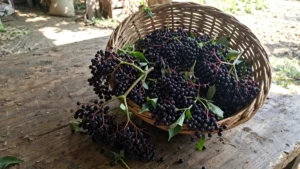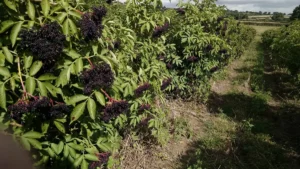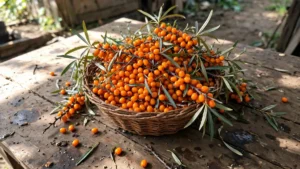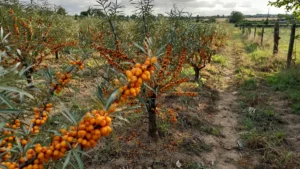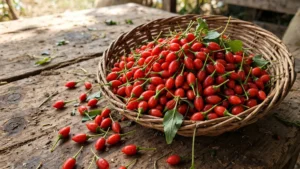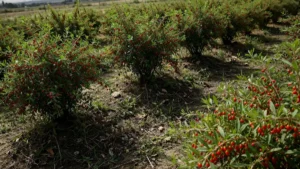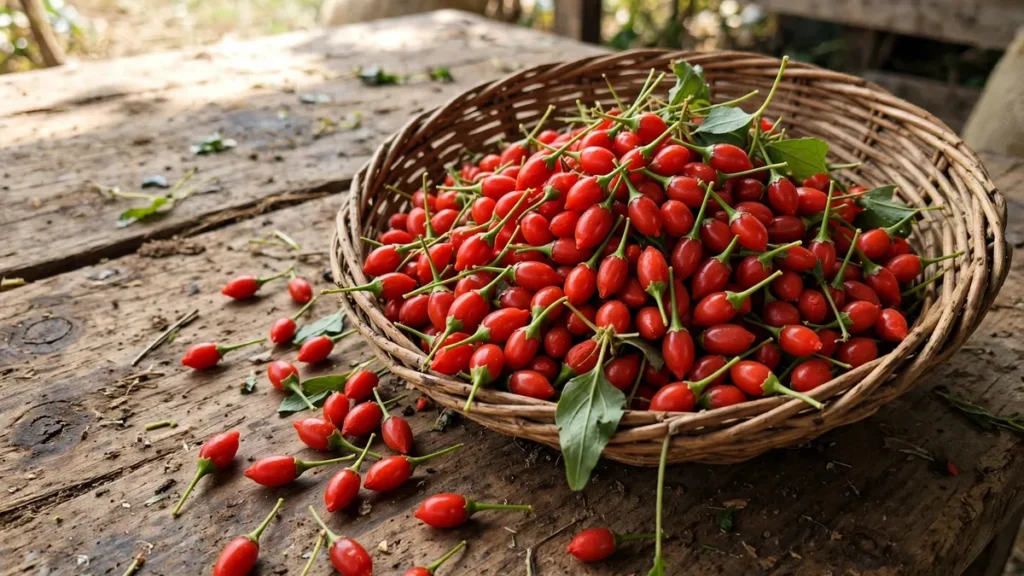
A goji berry farm escape is a working holiday built around a single shrub. The goji is a low, thorny bush of the dry north, with small oval leaves and clusters of bright red berries that colour up in waves through the summer. When the berries turn red and soft, the picking begins, and for a few months the whole farm revolves around the harvest: baskets, sorting trays, drying mats and a kitchen that cooks with the berry in nearly every meal.
Planning one takes more care than booking a beach hotel, because the shrub sets the dates. The berries ripen in waves, the harvest window is long but uneven, and a farm that is quiet in the green season turns busy and welcoming in the picking months. Get the timing right and you will spend your days in the rows with the crew; get it wrong and you will be looking at orange berries from a veranda.
This guide walks through the nine steps that make a goji berry farm escape work, from tasting the berries at home to bringing dried fruit back in your luggage. It covers northern China and California, the seasons that matter, the questions to ask before paying, and the small mistakes that turn a good trip into a frustrating one.
Key takeaways
- The harvest runs in waves: July to October in northern China, August to September at the peak, so dates matter more than destinations.
- Guests may join the picking at genuine farm stays, but the shrubs are thorny and gloves are part of the kit.
- Goji berries are naturally gluten-free, yet farm kitchens serve wheat noodles beside them, so the allergy must go in the first message.
- Three nights is the right length: one day to settle in, one to pick and dry, one for the market and the kitchen.
- Fresh berries spoil within a day, so buy dried berries at the farm shop instead.
What a goji berry farm escape involves
An escape starts at dawn, when the picking crew heads into the rows with baskets and sorting trays. Guests who rise early can follow, learn to spot a ripe berry by its bright red colour and soft skin, and gather the fruit that comes away with a gentle pull. By mid-morning the berries are on the drying mats, spread in the sun in thin red layers, and the kitchen is already cooking lunch with yesterday’s harvest.
The afternoons are slower. There is usually a sorting session, where the berries are graded by colour and size, and a tea lesson built around the day’s harvest. Evenings are for eating: noodles, lamb, soups and goji tea, all made from the same fields you walked through that morning. Carambola farm escapes run on the same rhythm of dawn work and slow afternoons, and the packing list barely differs.
The work is gentle but real. You will be on your feet in the heat, carrying baskets and sorting berries by hand. Nobody expects a guest to match the crew’s pace, and the farms on this list are used to visitors who tire before noon. The point is not to work hard; it is to understand where the sweet-tart berries in your tea actually come from.
Planning it, and the questions to ask first
Begin with the harvest, not the flight. Write to two or three farms and ask them to name their picking weeks for the year you travel. A farm that answers with dates is a farm worth booking; one that answers with a brochure is not. Once you have dates, arrange the rest of the trip around them — flights, rooms and market days all follow the berries.

Then ask about the kitchen. Goji berries are naturally gluten-free, but the noodles and steamed buns served beside them are not, so guests with coeliac disease need a written menu plan before arrival. Ask too whether meals and picking sessions sit inside the room rate, since some farms charge for them apart. A short, honest exchange of messages before booking saves a week of frustration.
The 9 steps to plan a goji berry farm escape
Buy a bag of dried goji before you plan
Before you book anything, eat goji berries for a week. Buy dried berries from a grocer, steep them in hot water, and taste the tea plain, then with porridge or in a soup. You will learn the sweet-tart balance that defines the berry, and you will arrive at the farm knowing what the shrubs are for rather than guessing. What to Do: Buy dried goji berries and taste them plain, then brewed as tea. What to Avoid: Judging the berry from a single sweetened snack bar, which hides the flavour. Best For: First-time visitors who have never eaten goji. Time Needed: A week of evening tasting. Standout Tip: Taste the tea plain once, so you know what the farm truly harvests.
Let the farm’s calendar fix your travel dates
Cheap flights are tempting, but they mean nothing if the berries are still orange. The harvest runs from July to October in northern China, with August to September the peak, and the exact weeks shift with the rains. Ask each farm for its picking dates, then book flights landing the day before the picking starts. What to Do: Get picking weeks in writing from two farms before you look at flights. What to Avoid: Booking a non-refundable flight before the farm confirms its picking dates for the year. Best For: Travellers whose schedules can bend. Time Needed: A fortnight of messages before booking. Standout Tip: Aim for the middle of the picking window, when the berries taste sweetest.
Pick the region whose food you love most
Every region cooks goji differently: Ningxia leans sweet and simple, Xinjiang leans rich and spiced, California leans fresh and light. The photos all look alike — shrubs, sun, drying mats — but the food does not. Choose the region whose cooking you would happily eat three days running. What to Do: Read a few recipes from each region before deciding. What to Avoid: Picking a stay for its cottage photos while its kitchen is an afterthought. Best For: Food lovers who put lunch before the room. Time Needed: An evening reading and tasting. Standout Tip: If you love sweet teas, choose Ningxia; if you love spiced food, choose Xinjiang.
Ask about picking before you hand over money
Some farms welcome guests into the rows with the crew; others keep visitors on the veranda and call it a farm experience. The difference is everything. Ask plainly whether guests can pick berries, use the baskets, and sit at the sorting table, and ask what time the crew starts. What to Do: Ask for the picking start time and whether guests can join. What to Avoid: Paying a deposit before the farm answers your picking question in writing. Best For: Guests who want real farm work, not a photo stop. Time Needed: One message, answered before you pay. Standout Tip: A farm that names its crew start time is serious.
Learn the gentle pull of a ripe berry
A ripe goji berry is bright red and soft, and comes away from the stem with a gentle pull. An orange berry is firm and tart, and stays on the shrub no matter how you tug. The crew will show you on your first morning, but knowing the signs in advance means you pick well from day one. What to Do: Study photos of ripe and orange berries before the trip. What to Avoid: Pulling down orange berries, which never sweeten off the shrub. Best For: Guests who would rather help than watch. Time Needed: Half an hour of reading before you set off. Standout Tip: Pull gently; a ripe berry comes away with almost no effort.
Mention wheat in your very first message
Goji berries are naturally gluten-free, but the table they sit on is not. Farm kitchens serve wheat noodles, steamed buns and soy sauce alongside the berry dishes, and cross-contact is common in a small rural kitchen. Tell the farm about the allergy in your very first message, and ask for a written outline of your meals. What to Do: State the allergy plainly and ask the farm for a written menu plan. What to Avoid: Mentioning it only at check-in, once the kitchen has already cooked. Best For: Coeliac guests and anyone avoiding wheat. Time Needed: Ten minutes writing your first message. Standout Tip: Ask the farm to cook your rice and soups in a separate pot.
Gloves and sleeves for the thorny rows
The rows are hot, dusty and uneven underfoot, and the mornings are long. Closed shoes protect against dry leaves and thorns, long sleeves guard against the sun and the shrubs, and a hat matters more than any other single item. Gloves keep the thorns off your hands while you pick. What to Do: Pack closed shoes, a wide hat, long sleeves and gloves for the rows. What to Avoid: Sandals in the rows, where dry leaves and thorns litter the ground. Best For: Anyone out in the rows all morning long. Time Needed: An evening packing before departure. Standout Tip: Bring a small cloth bag for berries you pick yourself.
Rise early for the market run with the cook
The best cooking lesson on a goji farm is not in the kitchen but at the market, where the cook buys herbs, vegetables and spices for the day’s meals. Go along, watch what the cook chooses, and ask why. You will learn more about the region’s food in two hours at the stalls than in a week of eating elsewhere. What to Do: Ask the cook whether you may come on the morning market run. What to Avoid: Sleeping through the market trip, which usually leaves before seven. Best For: Curious cooks who rise early. Time Needed: One early morning. Standout Tip: Buy dried goji at the market, where it costs half the farm-shop price.
Leave with sealed bags from the farm shop
Fresh berries look charming in a basket, but they spoil within a day in a hot suitcase and often go soft before you get home. Dried berries, sealed in bags at the farm, keep for months in a cool cupboard and taste far closer to the fresh harvest. Buy them at the farm shop on your last morning, not at the airport as you leave. What to Do: Buy sealed bags of dried goji at the farm shop. What to Avoid: Fresh berries in a suitcase, which sweat and spoil. Best For: Travellers who want the harvest to keep for months. Time Needed: A quarter of an hour on your last morning. Standout Tip: Wrap the bags in cloth, not plastic, so they travel safely on the flight home.
Choosing the season and the region
The season makes the trip. In Ningxia the berries ripen from July to October, with Zhongning and Yinchuan ripening first and the higher fields a few weeks later. In Gansu and Qinghai the window runs from July to September as well, with the plateau ripening slightly later than the river plain. California ripens on its own schedule, roughly August to October, but the fields there are smaller and the picking is shorter.
For a first escape, Zhongning in August is the safest bet: the weather is warm, the berries are ripe, and the kitchens are at their busiest. Gansu in August suits travellers who prefer a working farm and cooler hill air, while Napa in September suits those who want comfort and a shorter picking season. Passion fruit farm escapes follow similar seasonal logic, with tropical harvests that reward travellers who plan around the picking weeks.
Whichever region you choose, leave one buffer day. A rainy week can push the harvest back by several days, and a farm that picks late is not a farm that has failed — it is a farm that waits for the berries. Arrive a day early and leave a day late, and the harvest usually meets you halfway.
The caveats that matter
Goji is a forgiving berry, but the trip still has edges worth knowing. The shrubs are low and thorny, so gloves and long sleeves are part of the kit, not an afterthought. Fresh berries spoil within a day, which is why the kitchen serves them the morning they are picked. Wet berries spoil fast, so a rainy harvest week can cut the picking short and leave the drying mats empty.
| Detail | What is known |
|---|---|
| Best harvest window | July to October in northern China, August to September at the peak |
| Fruit ripeness test | Berries turn bright red and soft, and come away with a gentle pull |
| Gluten status | Berries are naturally gluten-free, but wheat noodles share the table |
| Guest picking | Allowed with baskets and sorting trays, crew shows newcomers the ripe signs |
| Thorns | Shrubs are thorny, so gloves and long sleeves protect pickers in the rows |
| Fresh berries | Spoil within a day; the kitchen serves them the morning they are picked |
| Rain risk | Wet berries spoil quickly and can shorten the picking week |
| What to bring home | Sealed bags of dried goji from the farm shop, wrapped in cloth |
Checklist: before you book a goji berry farm escape
- Get the farm’s picking weeks in writing before you book flights.
- State any wheat or gluten allergy in your first message and ask for a written menu plan.
- Confirm whether meals and picking sessions sit inside the room rate.
- Book three nights: one to settle in, one to pick and dry, one for the market.
- Pack closed shoes, a hat, long sleeves and gloves for the rows.
- Bring cash for the farm shop and the town market stalls.
Frequently asked questions
In which months do goji berries ripen?
The warm months bring the berries on, from about July to October across northern China, with August to September the peak. As they ripen, the berries turn bright red and soft, and come away with a gentle pull. Berries picked while they are still orange stay tart and never improve.
Can guests pick berries with the harvest crew?
Yes, at genuine farm stays. Guests carry baskets and gather berries by hand, and the crew shows newcomers how to tell ripe berries from orange ones. Guests wear gloves, since the shrubs are thorny and the berries bruise easily.
Can goji berry farms feed gluten-free guests?
The berries are naturally gluten-free, but the kitchen serves wheat noodles and steamed buns beside them, so cross-contact is the real risk. Tell the farm before arrival and ask for a written menu plan with your rice and soups cooked in a separate pot.
How do I recognise a ripe goji berry?
Look for a bright red, soft berry that comes away with a gentle pull, with flesh that tastes sweet and lightly tart. Orange berries are firm and sharp, and stay on the shrub no matter how you tug.
Which region suits a first goji berry trip?
Zhongning in August is the safest first trip: warm weather, ripe berries, and kitchens that have cooked with goji for generations. Gansu in August suits travellers who prefer a working farm and hill air.
What is worth carrying home from a goji berry farm?
Sealed bags of dried goji from the farm shop, wrapped in cloth so they travel safely. They keep for months in a cool cupboard. Avoid fresh berries, which sweat and spoil in luggage. Lychee farm escapes make a fine second trip for travellers building a dried-fruit pantry from farm visits.
The bottom line
A goji berry farm escape works when the calendar, the kitchen and the rows all line up. Get the picking weeks in writing, tell the farm about your allergies before you pay, and pack for long mornings among the shrubs. The shrub does the rest, and the berries you pick yourself will taste better than anything you can buy at home.
Three nights is enough, and extra nights rarely add anything. One day to walk the fields, one day to pick and dry with the crew, and one morning at the market with the cook. Leave with dried berries in your bag and the sweet-tart taste still on your tongue, and the trip will have done its job.