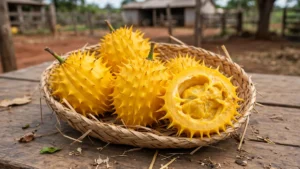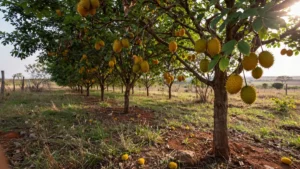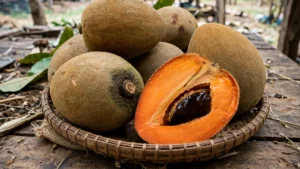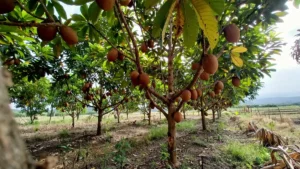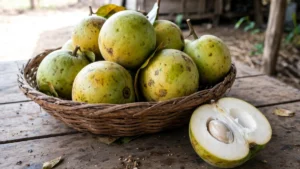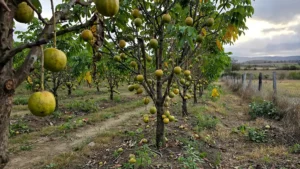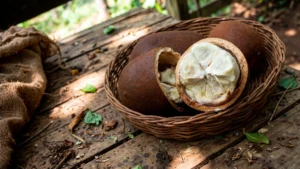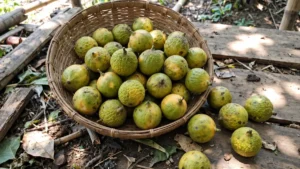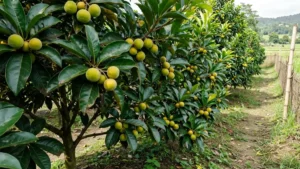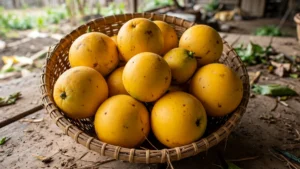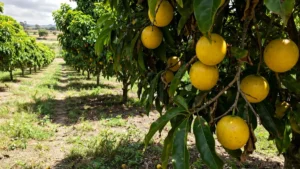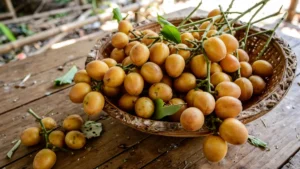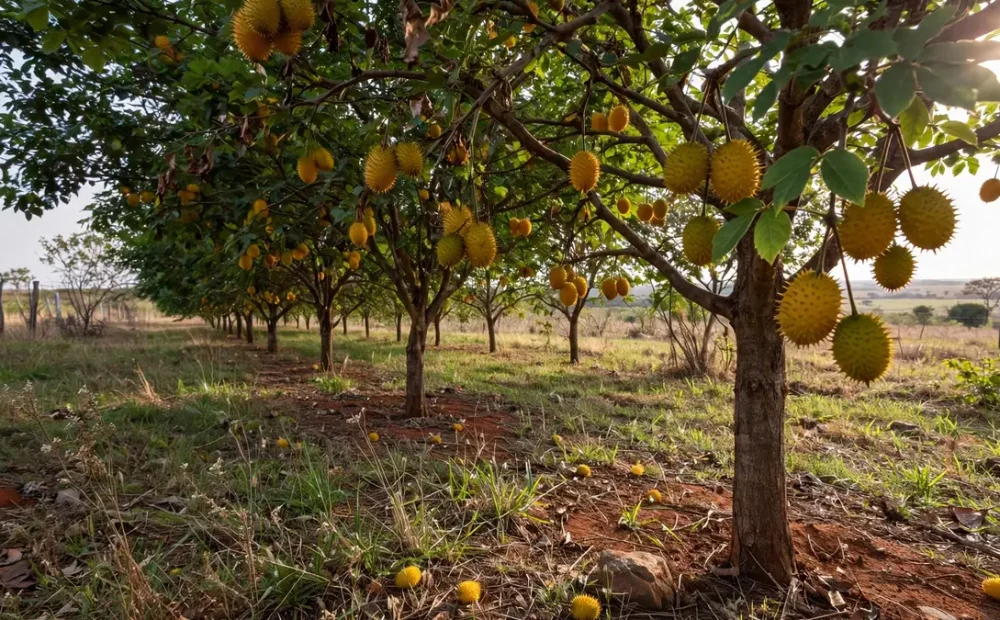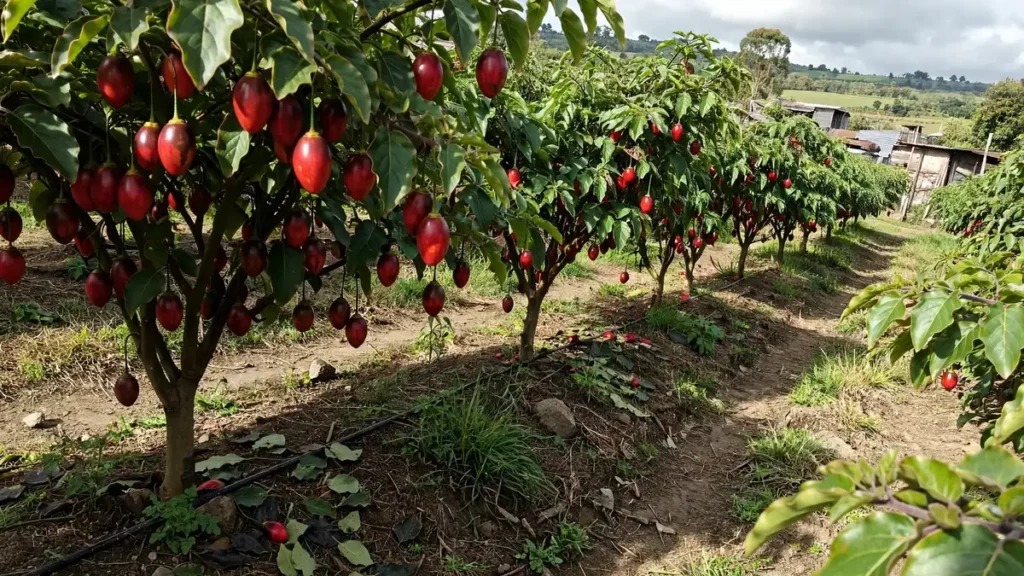
A tamarillo is the fruit you peel before you eat, like an egg, and then scoop out with a spoon. Inside the thin skin sits flesh that is red or gold, soft, and sharp enough to make your mouth water, somewhere between a tomato and a passion fruit. The trees are small and quick-growing, the fruit hangs in clusters from brittle branches, and a good picking morning ends with a basket of glossy ovals and sticky fingers.
The fruit is too tart to eat like an apple, and that sharpness is the point. A tamarillo farm stay is built around the small orchard and the kitchen that knows what to do with the harvest: the flesh is scooped into sauces, folded into chutneys, and spooned over ice cream while the trees outside are still being picked.
Below are nine tamarillo farm stays worth considering in 2027, from the misty valleys of New Zealand to a small farm in the hills of the Western Cape. Each entry sets out the stay’s strong points, its weak points, and the traveller it suits best.
Key takeaways
- Tamarillos grow on small, fast-growing trees, and the best stays are working orchards where the fruit is the main crop.
- A ripe tamarillo is fully coloured, red or gold all over, and gives slightly when pressed; a pale or hard fruit is not ready.
- The skin is peeled off before eating, and the flesh is scooped out, which means a farm that teaches the peeling is worth more than one that only serves the fruit.
- Most stays include an orchard walk and a tasting, but meals, transfers, and sauce-making sessions are often priced separately.
- Travellers with a wheat allergy should talk to the kitchen first, since farm kitchens bake bread each morning and flour gets everywhere.
What a tamarillo farm retreat actually is
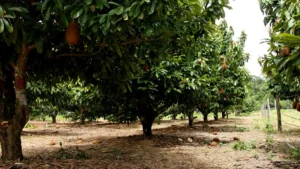
A tamarillo farm retreat is a stay on, or beside, a working tamarillo orchard. The trees stand in small groves, seldom taller than a house, and the fruit hangs in loose clusters that ripen a few at a time, so the picking never stops while the season runs. The fruit is picked by hand, and the farm cooks most of what it grows.
The one fruit is what sets it apart from a plain farm stay. The tamarillo runs the day, from scooped flesh at breakfast to sauce at lunch and chutney with cheese after dinner. Rooms are usually plain, the host usually works the grove, and the harvest, not a timetable, sets the day.
Know what the rate includes before you commit. Some of these stays are orchards first, with plain rooms and a host who prunes each morning. Others are comfortable guesthouses set among the trees, with more ease and less farm work on show. Both kinds can be wonderful, yet they are different holidays, and the nightly rate usually shows which sort you are booking. Our guide to luxury passion fruit farm retreats says the same: get the inclusions in writing before the photographs win you over.
How we picked these stays, and what to ask first
We looked for stays where the tamarillo trees are real and central, not decorative. A good tamarillo retreat grows its own fruit, offers a grove walk or tasting as part of the stay, and is honest about what happens outside the fruiting season.
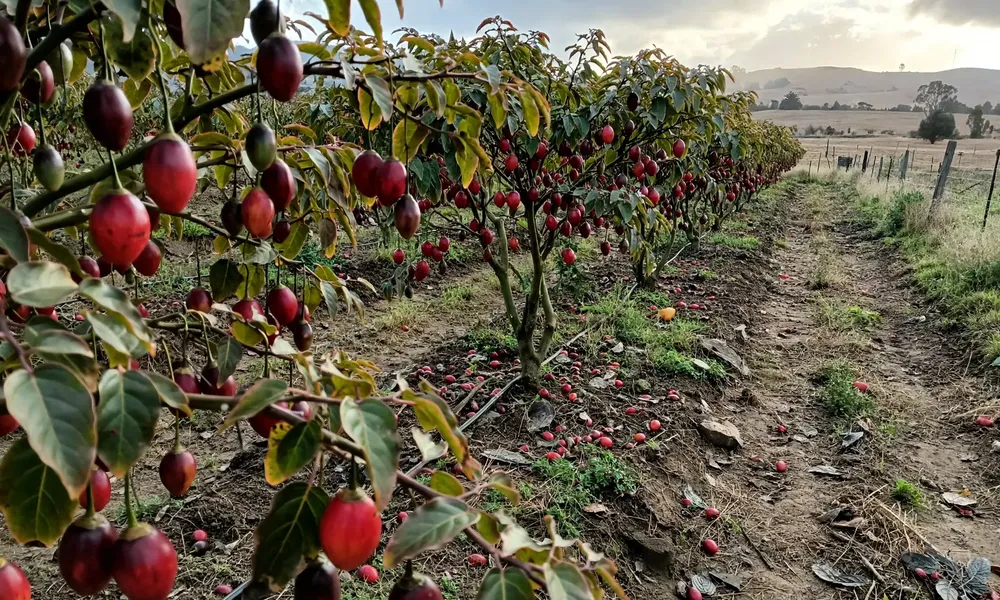
The fruit arrives in flushes through the warm months, and the peak moves by country. New Zealand and Australia pick from late summer into autumn, red kinds coming earlier than gold. Colombia and Ecuador pick for much of the year, while South Africa picks as the northern farms rest.
Ask what the price covers. A grove walk, a tasting, and a sauce session are three separate things, and some stays bill each one separately. Find out if breakfast is part of the room rate, if the garden is shared, and if the host speaks a language you can manage. A farm that lays out every charge up front is usually run with care. The luxury guava farm retreats we covered earlier follow the same shape: small stays where the booking details count for more than any star rating.
The 9 best luxury tamarillo farm retreats of 2027
Otago, New Zealand — Red Tamarillos under Southern Skies
What we like: Otago is New Zealand’s tamarillo heartland, and the fruit here grows in sheltered valleys, red, glossy, and sharply flavoured. The stay is a weathered cottage at the grove edge, where the host walks guests through the trees with a basket before breakfast.
What to consider: The weather turns quickly, and a cold snap can split the fruit before picking. The nearest town is a drive away, so arrange a lift ahead of time. Best for: Travellers chasing tamarillos where New Zealand grows them best. Style: Weathered cottage at the grove edge. Price range: $65–$95 a night, morning meal part of the rate. Standout feature: Dawn picking walks with the host.
Bay of Plenty, New Zealand — Gold Tamarillos by the Warm Coast
What we like: A coastal farm in the Bay of Plenty where gold tamarillos grow in warm, sheltered soil, and the fruit is milder and sweeter than the red kind. The stay is a comfortable farmhouse with a wide garden, and the host runs tasting mornings for guests who want to learn the peeling.
What to consider: Midday heat is strong and the city is a long drive off, so plan around the shade. The sea breeze helps, but the paths turn dusty after a dry week, so bring shoes that can take it. Best for: Fruit lovers after a gentler, sweeter tamarillo. Style: A roomy farmhouse a short walk from the shore. Price range: $95–$125 a night, farm breakfast part of the rate. Standout feature: Tasting mornings that teach the peeling.
New South Wales, Australia — Tamarillos in the Subtropical Hills
What we like: A farm in the subtropical hills where tamarillos grow in rich red soil, and the fruit is served scooped over yoghurt. The house is a low timber building with a shaded garden, and the host cooks the fruit into chutney for the farm gate stall.
What to consider: The farm is a long drive from the city and the summer heat can soften the fruit by midday. Insects appear on still evenings, so pack repellent. Best for: Travellers pairing fruit with a celebrated food region. Style: A low timber house under shady trees. Price range: $125–$160 a night, with breakfast and supper covered. Standout feature: Chutney cooked fresh for the farm gate stall.
Queensland, Australia — Tamarillo Trees above the Valley Floor
What we like: A valley farm in the warm north where tamarillos grow in rich soil under the hills, and the fruit is dark red, tangy, and slow to ripen. The rooms look over the valley, and the sauce is made in a wide pan on the stove.
What to consider: The climb is steep and rooms go fast in fruiting months. Evenings are warm enough to sit outside, and the nearest town is half an hour away. Best for: Travellers who like warm valley air with their fruit. Style: A farmhouse on the valley side, views included. Price range: $160–$195 a night, supper included in the rate. Standout feature: Sauce simmered in a wide pan on the stove.
Cundinamarca, Colombia — Tamarillos between Mountain and Market
What we like: A farm in the cool mountains near Bogotá where tamarillos, called tomate de árbol here, grow beside coffee, and the kitchen folds the fruit into sauces every afternoon. The house is old and low, the air is cool even in the dry season.
What to consider: The mountain road is narrow and the farm has few rooms, so book early. The fruit is sharp in the early season, and the mist rolls in by afternoon. Best for: Travellers after a quiet, green corner of the Andes. Style: Old farmhouse in the mountains. Price range: $195–$230 a night, with every meal in the rate. Standout feature: Afternoon sauces from the farm kitchen.
Loja, Ecuador — Tamarillos in the Warm Southern Highlands
What we like: A farm in the warm south where tamarillos ripen for much of the year, in long rows under a wide sky, and the fruit is picked into baskets for the farm gate stall. The house sits among the trees, and the kitchen uses the fruit in sauces and jam.
What to consider: Heat arrives early and the nearest city is an hour off, so leave in the cool of the morning. Paths turn dusty after dry days, so wear shoes that can take dust. Best for: Travellers pairing fruit with Andean warmth. Style: Farmhouse among the trees. Price range: $230–$265 a night, breakfast and supper both in the rate. Standout feature: Jam made in the farm kitchen.
Madeira, Portugal — Tamarillos on Steep Island Terraces
What we like: An island farm on steep terraces where tamarillos grow in mild air above the sea, and the season runs while the mainland farms rest. The house is a whitewashed cottage, and the host serves the fruit with cream from a neighbouring dairy.
What to consider: Sea wind is strong and the town is a drive away, so bring a layer. The season runs short, so dates matter more than the rate. Best for: Travellers who want tamarillos beside the sea. Style: Whitewashed cottage by the shore. Price range: $265–$300 a night, meals plus tastings in the rate. Standout feature: Scooped fruit with cream from the dairy nearby.
Tenerife, Canary Islands — Tamarillo Trees in the Volcanic Hills
What we like: A farm in the green north of Tenerife where tamarillos grow in cool, damp air, and the fruit is picked into baskets for the farm gate stall. The host is a second-generation grower, and the kitchen makes a tamarillo sauce guests take home in jars.
What to consider: The road winds a long way and rooms book out in picking months. Rain comes often, so pick at first light and rest when the sun breaks out. Best for: Travellers wanting a long season in green hills. Style: A hillside farmhouse with its own gate stall. Price range: $300–$340 a night, full board for the full stay. Standout feature: Sauce jars guests carry home.
Western Cape, South Africa — Tamarillos on a Small Hills Farm
What we like: A small farm in the hills behind the Cape where tamarillos grow in neat rows behind an old shed, and the stay is a polished cottage with a valley view. The fruit is the sharp red kind, and the kitchen folds it into morning pancakes.
What to consider: It is the priciest stay here, and the city is a drive off. The season is brief, so confirm the dates before you pay. Best for: Travellers who want tamarillos close to the Cape. Style: A polished cottage looking down the valley. Price range: $345–$380 a night, the lot in the rate. Standout feature: A tasting once a week, valley in view.
Which tamarillo region fits your trip
For the most traditional fruit, Otago or the Bay of Plenty, where the trees are a working crop and the basket reaches the table at every meal. For the wildest setting, the mountains of Colombia, where the farm sits in cool air above the coffee. For the biggest flavours, Loja, where the sun is strong and the harvest runs long.
For a first trip, Otago is the simplest choice: the farm is used to guests, the season is generous, and the kitchen cooks with the fruit every day. Our guide to the luxury carambola farm retreats says the same: choose the farm that cooks with its crop every day, and the trip mostly looks after itself.
The caveats that matter
Tamarillo farm retreats are lovely, but they do not suit everyone. The fruit keeps to the seasons, the farms sit far from town, and an honest stay will say plainly what is ripening and what is not.
| Detail | What is known |
|---|---|
| Best time to visit | The warm months, when the trees are bearing; the window moves by country |
| The two main kinds | Red tamarillos are sharp and tangy; gold tamarillos are milder and sweeter |
| How ripe fruit looks | Fully coloured, red or gold all over, and slightly soft when pressed, with no green on the skin |
| What is usually included | Room and breakfast plus a grove walk or tasting; sauce-making and transfers often cost extra |
| Who should go | Slow travellers, food lovers, and families with older children |
| Who should think twice | Anyone after nightlife, quick service, or a full daily programme |
| Transfers | Usually an hour or more from the closest airport; book the lift before you arrive |
| What is not guaranteed | Fruit on your dates; the crop leans on weather, season, and the tree’s own rhythm |
Tamarillos carry no gluten themselves, yet the farm kitchen bakes bread each morning, so find out how it keeps flour away from your plate. The fruit is best eaten the day it is picked, so scoop it fresh and carry chutney home rather than fresh fruit. Before booking, think about the practical side if you have a health condition, are expecting, or travel with small children: how far the nearest clinic is, when the farm last sprayed, and whether the paths suit little feet.
Checklist: booking a tamarillo farm stay honestly
Run through these checks before you pay, then once more in the week before you travel.
- Ask about the fruiting: will the trees be bearing on your dates, or are they only open for guests?
- Check the inclusions: grove walk, tasting, meals, transfers, and which ones carry an extra cost.
- Check the distance: how long is the airport drive, and does the farm send a car for guests?
- Check the bedroom: which way does the window face, grove or garden, and is there shade, a fan, or air conditioning?
- Check the growing: ask how big the grove is, whether it is organic, and when it was last sprayed.
- Check recent reviews: look for guests who travelled in the same season you plan to.
Frequently asked questions
When is tamarillo season?
It depends on the country. In New Zealand and Australia, the trees bear from late summer into autumn, with red kinds fruiting earlier than gold. In Colombia and Ecuador the window is long, and in South Africa the fruit comes while the northern farms rest.
What does a tamarillo taste like?
Sharp and tangy at once, somewhere between a tomato and a passion fruit, with a soft flesh that scoops out with a spoon. A ripe fruit is fully coloured and fragrant; an unripe one is pale, firm, and sour. Eat them fresh, the same morning they were picked.
May guests pick tamarillos from the trees?
Yes, at most farms, if you ask first and walk with a guide. Some farms hand guests a basket for a few fruit, while others keep the picking to the crew, since the branches are brittle and snap easily. Say so when you book, and wear long sleeves, because the branches are scratchy.
Is it safe for everyone to eat tamarillos?
Mostly. The fruit is fine for most people, but the sharp flesh can bother a sensitive stomach, and anyone with a nightshade allergy should tell the farm before booking. Peel the fruit before eating, and keep portions small if your stomach is delicate.
Where should a first-timer begin with tamarillo farms?
Otago, for the easiest journey and the longest season. The farm is used to guests, the fruit comes for much of the warm months, and the kitchen serves it with every meal.
What should a gluten-free traveller ask on a tamarillo farm?
Yes, if you flag it when you book. The fruit has no gluten in it, and the rice dishes are normally safe. The risk is the morning bread, so ask the farm how it keeps flour away from your food.
The bottom line
A tamarillo farm retreat suits travellers who like their food to come from the tree beside them, and who are happy to let the harvest set the day. The fruit is sharp, the season is generous, and the best stays pick it, serve it fresh, and cook the rest into sauces with no fuss.
Choose the region by what you want most: the sheltered valleys of Otago, the cool mountains of Colombia, or the green hills of Tenerife — and bring the chutney home sealed, not the fruit itself. A jar of it will outlast any photograph.