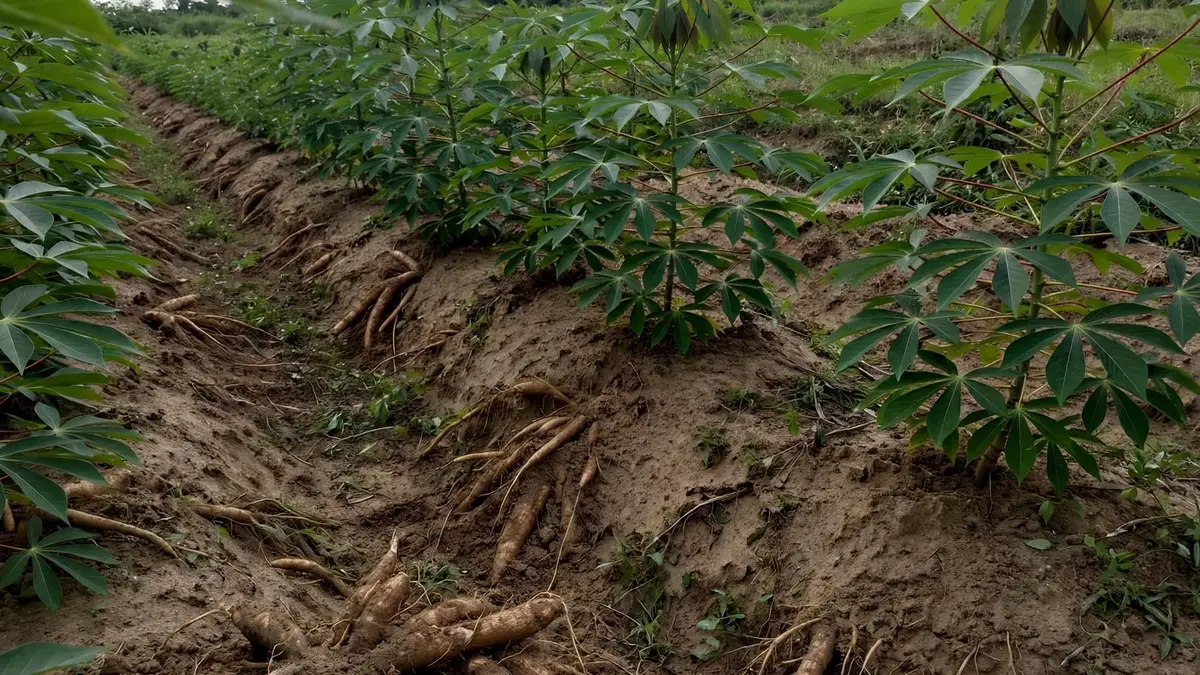
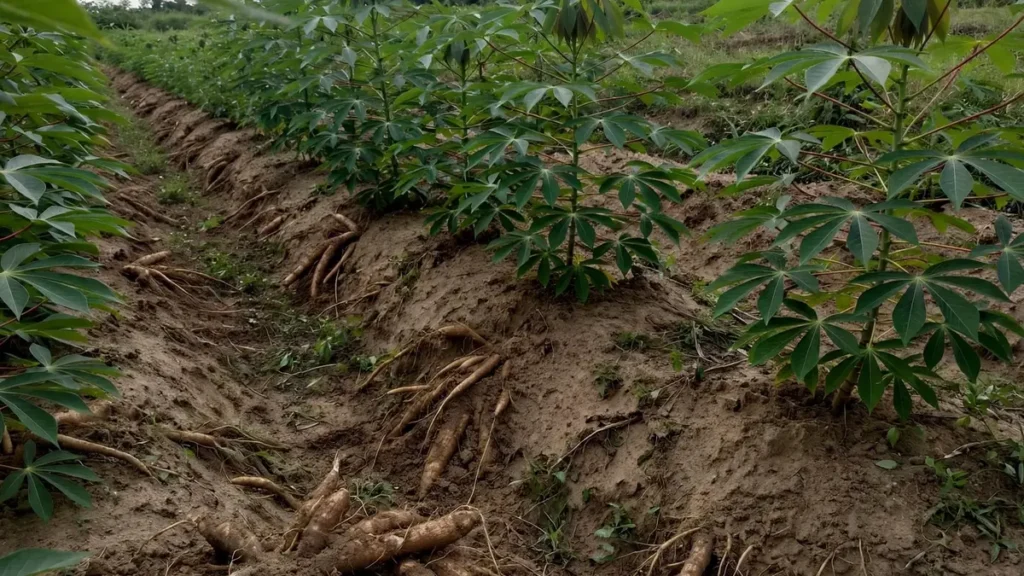
Cassava feeds more people than almost any other root on earth, and most of them have never seen it on a restaurant menu. Manihot esculenta grows as a woody shrub across the tropics, its long brown roots hiding underground for a year or more before they are dug. The root is almost pure starch, and it becomes tapioca, garri, fufu, farinha and cassava flour, the daily bread of West Africa, Brazil and Southeast Asia. Nigeria grows more of it than any other country, and the crop feeds close to a billion people.
A farm stay built around cassava is a working holiday, not a spa break. You sleep in a guesthouse beside the fields, dig roots with a short hoe, watch them peeled, grated and pressed, and eat the result the same day, as fufu with soup, as garri with groundnuts, or as farinha toasted in a pan. The work is dusty, the kitchens run on fire, and the food tastes of the soil it came from.
The nine stays below were chosen for the farming first and the comfort second.
Key takeaways
- Cassava, Manihot esculenta, is a starchy root grown across the tropics, and Nigeria grows more of it than anywhere else on earth.
- It is not a yam and not a potato. Yam is Dioscorea, potato is Solanum, cassava is Manihot, three separate families with three different ways of cooking.
- Raw cassava is never food. The root must be peeled, soaked, pressed or fermented, then cooked through, and bitter varieties carry more of the compounds that make raw eating unsafe.
- The digging goes on all year in the tropics, so the trip is shaped by rain and roads more than by a single harvest week.
- Cassava itself has no gluten, but farm kitchens fry bread, thicken stews with wheat and bake daily, so guests who avoid gluten should warn the kitchen in writing before they arrive.
What a cassava farm retreat actually is
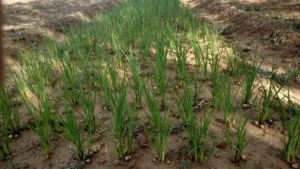
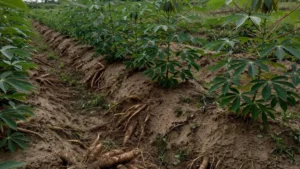
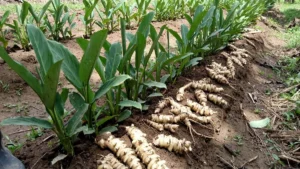
A cassava farm retreat is a working farm in the cassava belt that takes a small number of guests, usually fewer than a dozen at a time, and feeds them from its own fields. The farm plants stem cuttings at the start of the rains, tends the shrubs through the dry months, and digs the roots when they are fat enough to eat.
What sets these stays apart from a rural hotel is the processing. Cassava cannot be eaten straight from the ground, so every farm has a routine: peel, wash, grate, press out the juice, ferment or dry, then cook. Guests are shown each stage, and the lesson is the point of the trip.
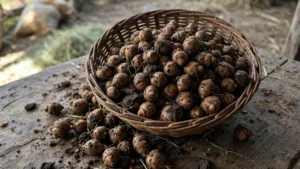
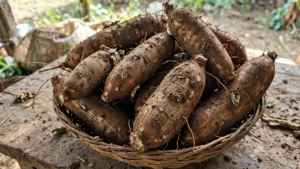
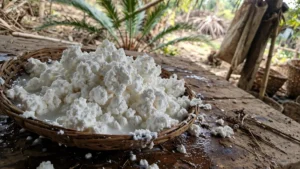
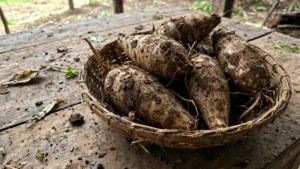
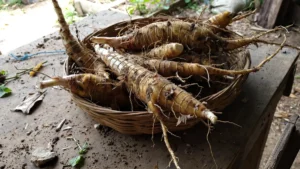
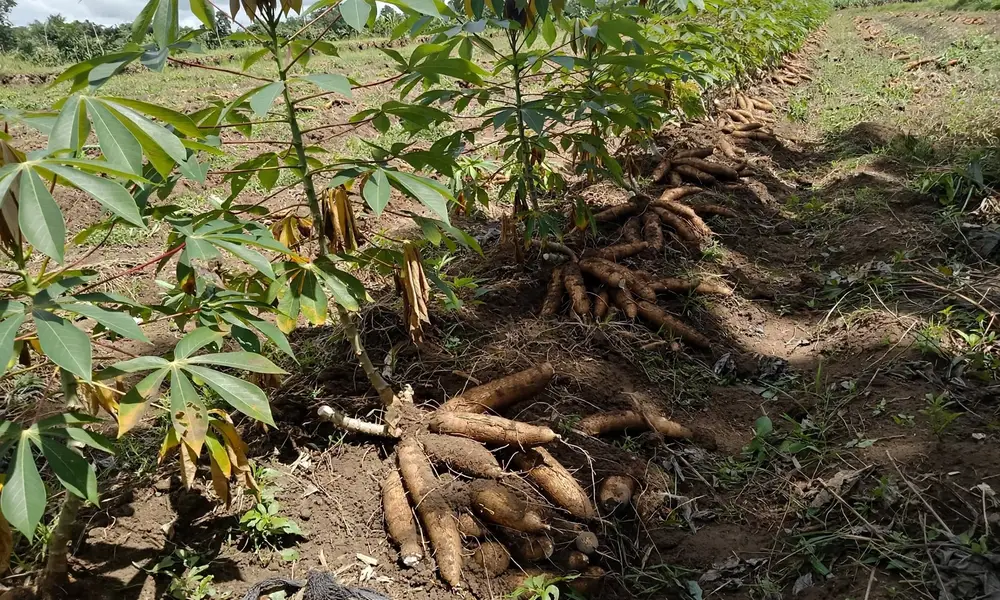
The root itself deserves an introduction. A cassava root is long and tapered, with rough brown skin and white or cream flesh inside. Cooked, it is dense, filling and mild, a blank page for soups, stews and sauces. As garri it is gritty and nutty; as fufu it is soft and stretchy; as farinha it is toasted and crumbly; as tapioca it turns into pearls and puddings.
How we picked these stays, and what to ask first
We looked for farms that grow cassava as their main crop, not as a patch kept for show, and that process it on site rather than buying flour in town.
We also weighed the rooms, the shade, and the food beyond the root. A good stay has a cool sleeping room, a kitchen that can handle a gluten-free request without confusion, and a host who will say plainly how the farm treats bitter varieties and how long the soaking and fermenting takes. Send the farm four questions before you send any money: which varieties grow here, how the root is made safe to eat, how the farm copes with the midday heat, and whether the kitchen can cook your meals without wheat. Our roundup of yam farm retreats leans on the same four questions, because they suit any farm stay built around a single root.
The 9 best luxury cassava farm retreats of 2027
Lagos — Riverside Farm with a Garri Shed
What we like: A farm on the green edge of Lagos, with cassava ridges behind a shaded guesthouse and a garri shed where the granules are roasted in wide pans. What to consider: The traffic out of Lagos can crawl, and the farm stays warm and humid even in the morning. Best for: Newcomers to West Africa who want a working farm close to the city. Style: Shaded guesthouse, open kitchen, garri shed with roasting pans. Price range: $120–$175 a night, meals included. Standout feature: A garri roasting lesson at dusk, ending with a bowl of garri and groundnut soup you helped make.
Ibadan — Farm in the Hills with a Fufu Kitchen
What we like: A farm on the hills outside Ibadan, with a fufu kitchen where the mortar and pestle never rest for long, and cassava ridges that run down to a small stream. What to consider: The track to the farm turns rough after rain, and the farm keeps no vehicle of its own, so you will need a driver from Ibadan. Best for: Travellers who want to learn fufu properly, from digging to serving. Style: Hill farmhouse, fufu kitchen, shaded veranda. Price range: $88–$138 a night, meals included. Standout feature: A fufu pounding lesson at dusk, ending with a bowl of fufu and vegetable soup you helped make.
Salvador — Coastal Farm with a Farinha Mill
What we like: A coastal farm outside Salvador, with a farinha mill where the toasted flour is made in a copper pan, and cassava fields that run down toward the sea. What to consider: Portuguese is the working language of the kitchen, and the farm is a long drive from Salvador airport. Best for: Travellers who want Brazilian food culture at its most hands-on. Style: Coastal farmhouse, farinha mill, open dining room. Price range: $98–$148 a night, meals included. Standout feature: Farinha toasted in a copper pan and eaten the same evening with fish stew from the bay.
Fortaleza — Dry-Country Farm with a Tapioca Pan
What we like: A farm in the dry country outside Fortaleza, where the sun is strong and the tapioca pan is always hot. What to consider: The dry heat is fierce at midday, and the farm has little shade outside the house. Best for: Travellers who like dry landscapes and simple, sun-baked food. Style: Dry-country farmhouse, tapioca pan, shaded courtyard. Price range: $78–$118 a night, meals included. Standout feature: A beiju breakfast cooked to order, filled with cheese, coconut or banana from the farm.
Bangkok — Canal Farm with a Starch House
What we like: A canal-side farm outside Bangkok, with a starch house where the root is washed and settled into fine white starch, and a kitchen that turns it into pearls for desserts. What to consider: The setting feels less remote than the inland farms, and weekends bring day visitors to the canal. Best for: Travellers who want a short, easy introduction to cassava country. Style: Canal-side farmhouse, starch house, shaded dining area. Price range: $108–$158 a night, meals included. Standout feature: A morning at the canal market with the farm cook, buying the fruit and coconut that go with the tapioca.
Jakarta — Highland Farm with a Cassava Chip Kitchen
What we like: A farm in the cooler highlands near Jakarta, where cassava grows in dark soil and the kitchen fries it into chips, thin and crisp, seasoned with chilli and lime leaf. What to consider: The traffic out of Jakarta is slow, and the farm road winds for a long way uphill. Best for: Families and travellers who want a gentler climate and a kitchen with a sense of fun. Style: Highland farmhouse, chip kitchen, outdoor dining terrace. Price range: $92–$142 a night, meals included. Standout feature: Cassava chips fried in the farm kitchen and eaten warm, with chilli salt made on the farm.
Manila — Island Farm with a Wood-Fired Oven
What we like: An island farm a ferry ride from Manila, where the oven is wood-fired and the kitchen bakes cassava cake, dense and golden, with coconut milk and brown sugar. What to consider: Ferry timetables rule the trip, and a missed boat means a night in town. Best for: Travellers who want the sweet side of cassava and a slower island pace. Style: Island farmhouse, wood-fired oven, sea-facing veranda. Price range: $112–$168 a night, meals included. Standout feature: A cassava cake baked in the wood oven, cut while it is still warm and eaten with coconut.
Accra — Farm on the Slopes above the City
What we like: A hillside farm above Accra, with cassava ridges terraced into the slope and a kitchen that makes banku, the fermented maize and cassava dough, served with okra stew. What to consider: The slope is steep, and the rooms are plain, cooled by fans rather than air conditioning. Best for: Walkers who like a slope, a view, and a farm that feels genuinely lived-in. Style: Hillside farmhouse, terraced ridges, plain rooms. Price range: $82–$125 a night, meals included. Standout feature: A dawn walk up through the terraces to the top ridge, followed by banku and okra stew cooked over charcoal.
Abidjan — Farm by the Lagoon with an Attiéké Kitchen
What we like: A farm on the lagoon outside Abidjan, where cassava is fermented into attiéké, the fine steamed semolina that is the pride of Ivorian cooking, and served with grilled fish from the lagoon. What to consider: The farm is a long drive from Abidjan airport, and the kitchen works in French. Best for: Travellers who want lagoon air and a kitchen with a clearly Ivorian voice. Style: Lagoon-side farmhouse, attiéké kitchen, shaded terrace. Price range: $118–$178 a night, meals included. Standout feature: Attiéké and grilled fish served on the terrace as the sun sets over the lagoon.
Which cassava region fits your trip
The Nigerian farms, Lagos and Ibadan, suit first-time visitors. Getting there is easy, and the farms are used to guests who have never picked up a hoe. Lagos is the easiest to reach, and Ibadan is the best for learning the cooking.
The Brazilian farms, Salvador and Fortaleza, suit travellers who want a different food culture with the same root. Salvador is the practical choice for a short stay, while Fortaleza rewards a longer one, with its dry light and its tapioca pan. Both suit a second trip, for anyone who has spent time in West Africa and wants to compare the cooking.
The Asian farms, Bangkok, Jakarta and Manila, suit short stays and travellers who want a gentler climate. Bangkok is the easiest of the three, Jakarta the most relaxed, and Manila the sweetest, for its cassava cake. Accra and Abidjan suit the committed: Accra for the climb and the banku, Abidjan for the lagoon and the attiéké. Our roundup of jicama farm retreats reaches the same conclusion about fitting the region to the traveller, and the same logic applies on this list.
The caveats that matter
Cassava is a safe, long-eaten food when it is prepared properly, but it is never a raw snack. Bitter varieties hold compounds that release cyanide when the root is damaged, and the farm’s peeling, grating, pressing, fermenting and cooking are what make it safe. Sweet varieties hold far less, but they are still always cooked before eating. The leaves are also eaten in parts of Africa, as pondu, but only after long cooking. Heat is the other practical concern. All nine farms sit in hot, humid country, and the midday sun is not to be shrugged off. Carry water all day, keep a hat on in the fields, and take the shade after lunch.
| Detail | What is known |
|---|---|
| Botanical name | Manihot esculenta, also called yuca or manioc, not related to yam or potato |
| Where it grows | Tropics worldwide, mainly Nigeria, Brazil, Thailand, Indonesia and DR Congo |
| Main harvest | Year-round in the tropics, with roots dug 8 to 18 months after planting |
| How it is eaten | Peeled, soaked, grated, pressed or fermented, then cooked, never raw |
| Flavour and texture | Mild and starchy, gritty as garri, soft as fufu, crisp as chips |
| Safety note | Bitter varieties need full processing, and sweet varieties must still be cooked |
| Gluten note | Cassava has no gluten, but farm kitchens also serve bread and wheat sauces |
| What it is not | Not a yam, not a potato, not yucca, and not eaten raw |
Cash matters more than cards here. The nearest town usually has a machine, but the farm itself runs on cash, so bring notes for tips, market stalls and the farm shop.
Checklist: booking a cassava farm stay honestly
Use these checks before you pay, and again a week before you travel.
- Get the farm’s processing routine confirmed in writing: peeling, soaking, pressing, fermenting, cooking.
- Ask which varieties grow here, bitter or sweet, and how long the soaking lasts.
- Tell the kitchen in writing about gluten and any allergy before you book, and ask how sauces are thickened.
- Ask how you get there, who drives, and how the road holds up when it rains.
- Check what the nightly rate actually includes, since meals, field walks, processing lessons and laundry are often priced apart.
- Bring enough cash for tips and the farm shop, since the farm itself takes no cards.
Frequently asked questions
Can I eat cassava raw?
No. Cassava should always be peeled, soaked, grated, pressed or fermented, then cooked, before eating. Raw cassava is not part of any tropical cooking tradition, and the compounds in the root can make you seriously ill. Every farm here processes it the right way, so the table is nothing to worry about.
What is the difference between bitter and sweet cassava?
The two types sit on a scale, not a wall. Bitter varieties hold more cyanogenic compounds and need longer soaking, pressing and fermenting before they are safe, while sweet varieties hold far less and can be cooked sooner. Both are always cooked. Farms know their varieties by name, and a good host will tell you which ones grow in the fields.
How does cassava differ from yam and potato?
The three crops sit in entirely separate plant families. Cassava is Manihot esculenta, a woody shrub in the spurge family; yam is Dioscorea, a true yam grown on vines; potato is Solanum tuberosum, a nightshade tuber from the Andes. Cassava is starchier and milder than either, and it is the only one of the three that must be processed before cooking.
When is the best time to visit a cassava farm?
Digging runs all year in the tropics, so there is no single harvest week to chase. The dry season is the easiest time to travel, because the roads are firm and the fields are workable, while the wet season brings mud and slow transfers. In West Africa the dry months run roughly November to March, in Thailand roughly November to February, and in the Philippines roughly December to May.
How should I warn the kitchen if I avoid gluten?
Write to the kitchen before you book and ask if your meals can be cooked without wheat, and whether flour goes into the sauces. Cassava itself has no gluten, and cassava flour is a common gluten-free flour, but tropical farm kitchens bake bread daily and often thicken soups with wheat, so a clear written request is the only reliable way to be safe.
Can children come to a cassava farm retreat?
Yes, older children usually love it, especially the digging and the grating, but the heat and the long days make it hard for very young children. Most farms suggest children over eight, and ask parents to take the first afternoon gently.
The bottom line
The best cassava farm retreat in 2027 is the one that matches your appetite for hands-on work and your tolerance for heat. Lagos and Ibadan are the easiest introductions, Salvador and Fortaleza are the best for Brazilian cooking, Bangkok and Jakarta suit a short trip, and Abidjan is the most distinctive table on the list.
A few days on a cassava farm will change how you see the tropics. The root is humble, the work is honest, and eating fufu an hour after digging the root is a pleasure no city restaurant can copy. Our roundup of taro farm retreats covers another little-known tropical root the same way, if you want to keep exploring after the cassava belt.