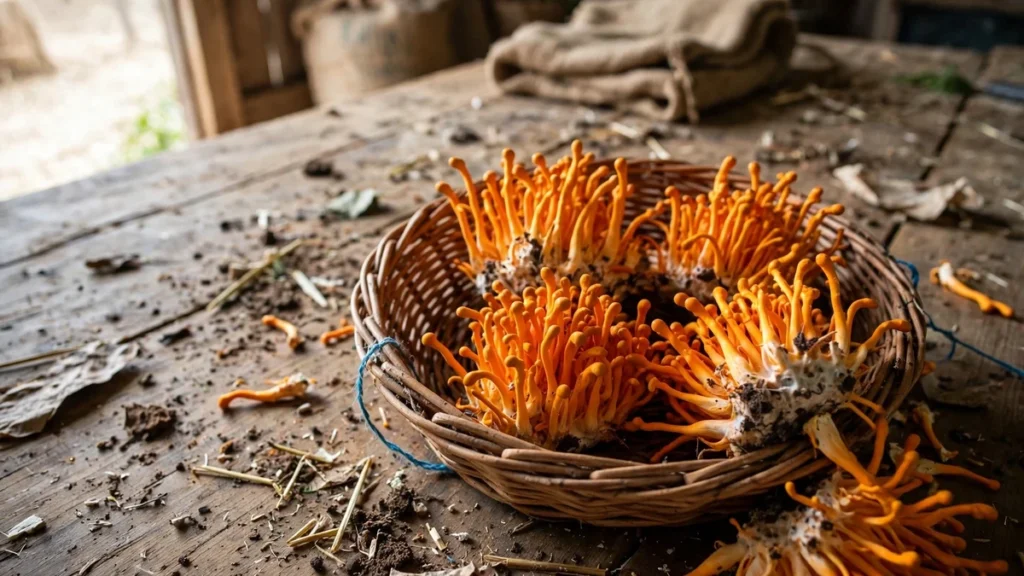
A cordyceps farm escape is not a hike or a tasting tour in the usual sense. It is a slow visit to a dim, humid grow room where bright orange fingers rise out of trays of rice, followed by a kitchen session where those same fingers are soaked, simmered and served in a clear broth. The fungus is small, the rooms are quiet, and the pleasure comes from watching a strange organism grow and then eating it.
Planning matters more here than at a vineyard or a truffle farm, because cordyceps farms are often in the hills, the grow rooms run on their own schedule, and the wild fungus that made the name famous is almost never what you will be shown. The farms worth visiting grow Cordyceps militaris themselves, on site, and explain the difference between that farmed fungus and the wild caterpillar fungus of the Tibetan plateau. A farm that blurs the two is a farm to avoid.
This guide walks you through the trip in nine steps, from choosing a farm that grows its own trays to cooking what you take home. It is written for a first visit, with the practical details that matter: the season, the journey, the kitchen, and the questions to ask before you pay. Our guide to how to plan an enoki farm escape covers a gentler mushroom trip in the same style.
Key takeaways
- Pick a farm that grows Cordyceps militaris on site and opens its grow room to guests, not a guesthouse that only sells dried stock.
- Farmed cordyceps fruits all year, but the cooler months give the steadiest trays and the most comfortable grow rooms.
- Ask the species, the substrate and the drying method before you buy anything, and be wary of cheap bags labelled wild caterpillar fungus.
- Budget two or three nights, because the grow room tour, the kitchen session and the journey to the farm each deserve a day.
- Cordyceps itself has no gluten, but the broths, soy sauce and noodles it is served with often do, so check the kitchen before every meal.
What a cordyceps farm escape actually is
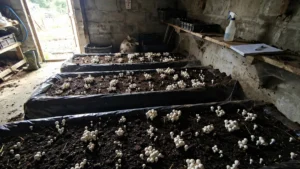
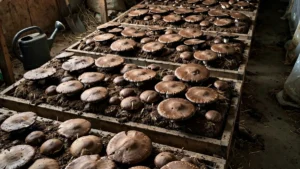
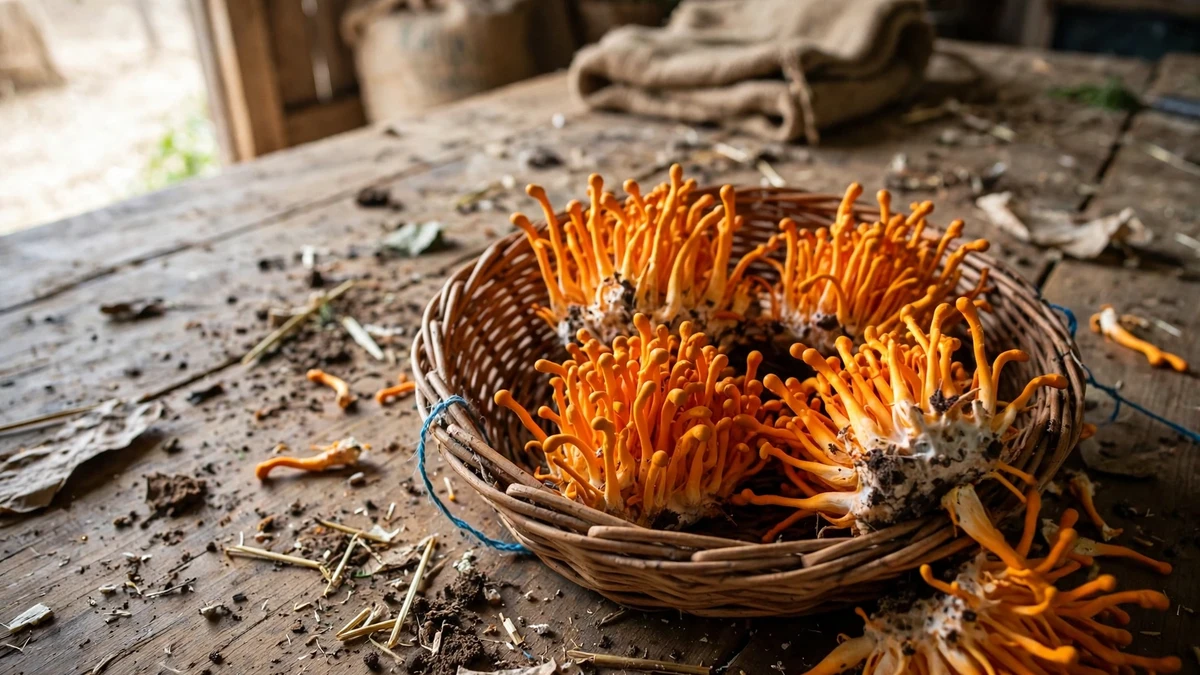
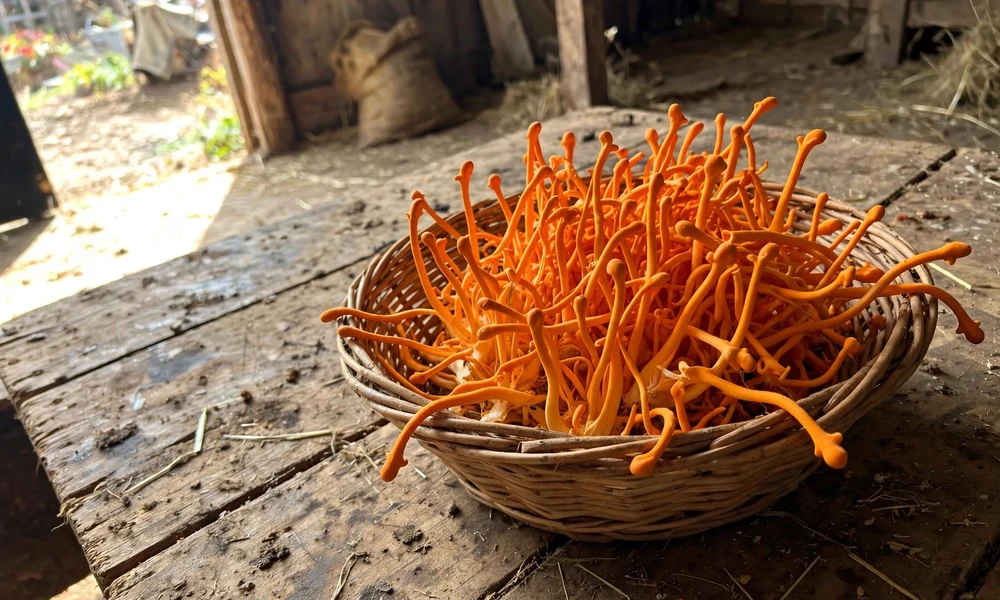
A cordyceps farm escape is a stay at a farm that grows Cordyceps militaris indoors, in trays of cooked rice or grain kept dark, cool and humid. The fungus appears as slender orange fingers, two to six centimetres long, rising in clusters from the substrate. Guests walk the tray lines with the grower, learn how the rooms are kept cool and humid, and watch a harvest: the fingers are cut at the base, laid out to dry, and sorted by length and colour.
The kitchen is the second half of the visit. Dried cordyceps is soaked in warm water, then simmered in a clear broth with chicken, pork or vegetables, or steeped as a tea with red dates and goji berries. The flavour is mild and earthy, slightly sweet, and it deepens with a long, slow simmer. Most farms serve it as part of a simple meal, and the best ones show you how to soak and simmer it yourself.
The wild fungus, Ophiocordyceps sinensis, is a different organism, and you will almost certainly not see it growing on a farm visit. It is a parasite of ghost moth caterpillars, dug by hand on the Tibetan plateau for a few weeks each year, and it sells for a fortune. Some farms keep a dried specimen to show guests. A farm that claims to grow wild caterpillar fungus in trays is not telling the truth.
How to plan your cordyceps escape in nine steps
Start with the farm, not the flight. Cordyceps farms are small, they take few guests, and the best ones answer messages personally, so a short exchange before you book tells you more than any listing. Ask which species they grow, whether the grow room is open to guests, and what the kitchen serves. A clear, direct reply is the best sign you have found the right place.
Then work out the season and the journey together. Farmed cordyceps fruits all year, but the rooms run best in the cooler months, and the farms are often up a hill track that is slow in rain. Book the farm first, then the travel, so your dates fit the grow room rather than the other way around. The guide to planning a chanterelle farm escape makes the same point for a woodland mushroom.
The nine steps below take you from that first message to the broth you cook at home. Each one has a practical job, a mistake to avoid, and a tip from the farms themselves.
The 9 steps to a cordyceps farm escape
Step 1: Write to farms that grow their own trays
What to do: Write to two or three farms and ask whether they grow Cordyceps militaris on site, whether guests can enter the grow room, and which substrate the trays use. What to avoid: Do not book a farm that only shows guest rooms and jars of dried stock, because the grow room is the reason to travel. Best For: Travellers who want to see the fungus growing, not just buy it. Time Needed: A few evenings of messages before you choose. Standout Tip: Ask which strain the farm grows and how long its trays take to fruit, because a grower who knows the answer is a grower who grows.
Step 2: Confirm the species in writing
What to do: Ask the farm to confirm in writing that it grows Cordyceps militaris, and ask whether it keeps any wild Ophiocordyceps sinensis specimens for guests to see. A clear answer protects you. What to avoid: Do not accept a listing that calls its trays wild caterpillar fungus, because wild sinensis is not grown in trays. Best For: Anyone buying dried cordyceps to take home. Time Needed: One short message, answered before any money moves. Standout Tip: If a farm offers wild caterpillar fungus at a low price, walk away, because genuine wild stock is never cheap.
Step 3: Pick the cooler months for the visit
What to do: Choose a date in the cooler months, when the grow rooms hold a steady temperature and the trays fruit evenly. What to avoid: Do not plan around a single hot week in midsummer, because humid heat makes the rooms harder to manage and the trays slower to fruit. Best For: Travellers who can move their dates by a fortnight. Time Needed: A day to compare seasons with the farm. Standout Tip: Ask which month gave the farm its longest, brightest fingers last year, not just when the rooms are open.
Step 4: Fix the price and the meals before you pay
What to do: Get the full price in writing, with meals, tastings and any dried stock included, and ask what the kitchen serves each evening. Confirm whether the broth uses soy sauce or wheat noodles. What to avoid: Do not pay a deposit on a price that only covers the room, because the kitchen session and the tasting are the heart of the stay. Best For: Travellers who need a gluten-free table. Time Needed: One careful exchange before you send money. Standout Tip: Ask the farm to name the dishes, not just the number of meals.
Step 5: Give the trip two or three nights, not a single one
What to do: Book two or three nights, so you have a day for the grow room, a day for the kitchen, and a day for the hills around the farm. What to avoid: Do not try to fit the farm into a single day trip, because the journey alone can take half a day and the grow room tour deserves an unhurried morning. Best For: First-time visitors who want to learn, not just look. Time Needed: Two or three nights on the farm. Standout Tip: Use the middle day for the kitchen, when you have already seen the trays and know what you are cooking.
Step 6: Sort the last stretch of road first
What to do: Ask the farm how long the last stretch of road takes, whether it collects guests from the nearest town, and what the track is like after rain. What to avoid: Do not assume a taxi from the nearest city will know the farm, because hill farms often sit at the end of an unnamed track. Best For: Travellers arriving by bus or train, without a car. Time Needed: An afternoon to arrange the transfer. Standout Tip: Ask for the farm’s phone number and a photo of the gate, because a name on a map is not enough on a hill road.
Step 7: Pack a jacket, grippy shoes and a cloth bag
What to do: Pack a light jacket for the cool grow room, shoes that grip on wet floors, and a small bag for any dried stock you buy. Bring a notebook. What to avoid: Do not wear smooth-soled shoes into a humid grow room, and do not bring a scented hand cream into the tray lines, because the rooms are kept clean and the fungus is sensitive. Best For: Travellers who like to take notes and buy a little to take home. Time Needed: An evening of packing. Standout Tip: Pack a sealed jar for dried cordyceps, because a paper bag will not keep it dry on the journey home.
Step 8: Watch a harvest, then cook what you cut
What to do: Join the morning harvest, watch the grower cut the fingers at the base, and then stay for the kitchen session, where the dried fungus is soaked and simmered in broth. What to avoid: Do not eat the fungus raw, and do not buy a bag without asking how it was dried, because sun-dried and machine-dried stock cook differently. Best For: Travellers who cook at home and want to repeat the dish. Time Needed: A morning in the grow room and an afternoon in the kitchen. Standout Tip: Taste the broth before the fungus goes in, so you learn what the cordyceps itself adds.
Step 9: Buy a little, label it, and cook it within the year
What to do: Buy a small bag of dried cordyceps from the farm, label it with the species, the farm name and the date, and store it in a sealed jar away from light. What to avoid: Do not buy a large bag from a market stall on the way home, because unlabeled stock is often mixed, old, or not what the label claims. Best For: Travellers who want a souvenir they can actually cook. Time Needed: A few minutes at the farm shop before you leave. Standout Tip: Keep the farm’s cooking notes with the jar, so the soaking and simmering times are there when you need them.
When to go and where to start
Go in the cooler months, when the grow rooms hold their temperature and the trays fruit evenly. Farmed cordyceps fruits all year, so no single month is a deadline, but a hot, humid week makes the rooms harder to run and the trays slower to finish. Late autumn and early spring are the most reliable windows in Sichuan and Yunnan, and the same holds in northern Vietnam and Korea.
Start in Chengdu or Kunming if this is your first cordyceps trip. The farms are working grow rooms, the growers have time to talk, and the journey is straightforward. The guide to planning a lion’s mane farm escape starts in a similar way, with a city-edge farm, because a first fungus trip should be easy to reach. If you already know cordyceps and want the wild story, go to Lhasa or Kathmandu, where the trade in caterpillar fungus is part of daily life.
Wherever you start, give the trip three days. One for the journey and the first look at the trays, one for the kitchen, and one for the hills. Cordyceps is a slow fungus, and a slow trip suits it.
The caveats that matter
Cordyceps is a food with a long cooking history, not a medicine, and no farm should promise you a health result. Traditional claims about energy and stamina are not proven, and a farm that guarantees them is overselling. If you take blood thinners, live with an autoimmune condition, or are pregnant, speak to your clinician before eating cordyceps on a regular basis.
| Detail | What is known |
|---|---|
| Farmed kind | Cordyceps militaris, grown on rice or grain in trays indoors, fruits all year |
| Wild kind | Ophiocordyceps sinensis, caterpillar fungus from the Tibetan plateau, rare and very expensive |
| What it looks like | Slender orange fingers, two to six centimetres long, growing in clusters from the substrate |
| How it is eaten | Mostly dried, soaked, then simmered in soups, broths and teas |
| Best visiting months | Cooler months, when grow rooms run steadily and the trays fruit evenly |
| Who should ask first | Anyone on blood thinners, with an autoimmune condition, or pregnant, should check with a clinician |
| Buying safely | Buy from the farm you visited, with the species, farm name and date on the label |
| What it does not do | It is not a proven medicine, and it does not replace medical treatment or a balanced diet |
Watch out for fakes on the way home. A bag labelled wild caterpillar fungus at a low price is almost certainly not wild, and a bag with no species name, no farm name and no harvest date tells you nothing. The honest purchase is a small bag of farmed militaris from the farm you visited.
Checklist: before you book a cordyceps farm escape
Use these checks before you pay a deposit, and again in the week before you travel.
- Check the farm grows Cordyceps militaris on site and opens its grow room to guests.
- Check the species in writing, and be wary of any farm that calls its trays wild caterpillar fungus.
- Check the kitchen: ask how the fungus is cooked, and whether the broths, noodles or soy sauce contain gluten.
- Check the journey: ask how long the last stretch of road takes, and whether the farm collects guests.
- Check the season: cooler months give steadier fruiting, even though farmed rooms fruit all year.
- Check the price in writing: confirm what is included, especially meals, tastings and dried stock to take home.
Frequently asked questions
Do I need mushroom experience to visit a cordyceps farm?
No. The farms on this list welcome first-timers, and the grower walks the tray lines with you. You do not need to know anything about fungi to enjoy the visit, only curiosity and a willingness to listen.
Is the cordyceps I pick safe to eat?
Yes, if it is farmed Cordyceps militaris from the farm you visited, and it is cooked properly. Soak it, then simmer it in soup, broth or tea. Do not eat it raw, and do not eat wild mushrooms you find yourself without an expert beside you.
What sets cordyceps apart from shiitake?
Shiitake is a brown-capped mushroom grown on oak logs and eaten fresh in stir-fries and soups. Cordyceps is a slender orange fungus grown on grain in trays, mostly eaten dried, simmered in broth or tea. They look, grow and cook differently.
When is the best month for a cordyceps farm escape?
The cooler months are best, because the grow rooms hold a steady temperature and the trays fruit evenly. Farmed cordyceps fruits all year, so you can visit in any season, but hot, humid weeks make the rooms harder to manage.
Can children join a cordyceps farm escape?
Children past about ten who are curious about fungi usually enjoy the grow room tour and the kitchen session. Younger children may find the dim, humid rooms dull, so ask the farm first and plan a shorter visit for them.
Does cordyceps contain gluten?
The fungus itself has no gluten in it, but the dishes it is served in often do. Broths are often seasoned with soy sauce and soups served with wheat noodles, so check with the kitchen first if you need a gluten-free meal.
The bottom line
A cordyceps farm escape works when you choose a farm that grows its own trays, opens its grow room, and cooks the fungus honestly. Start in Chengdu or Kunming, go in the cooler months, stay two or three nights, and ask which species you are looking at before you buy anything.
Buy a small bag from the farm, label it, and cook it at home in a slow broth within the year.