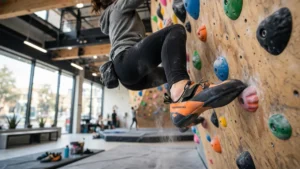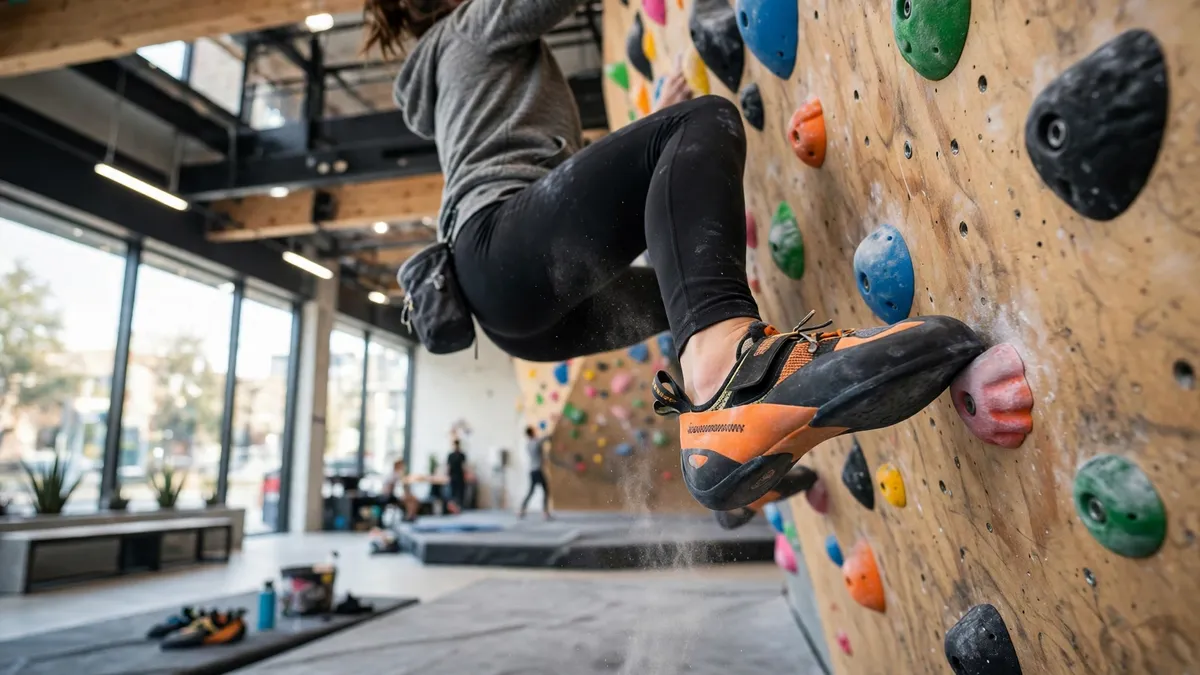
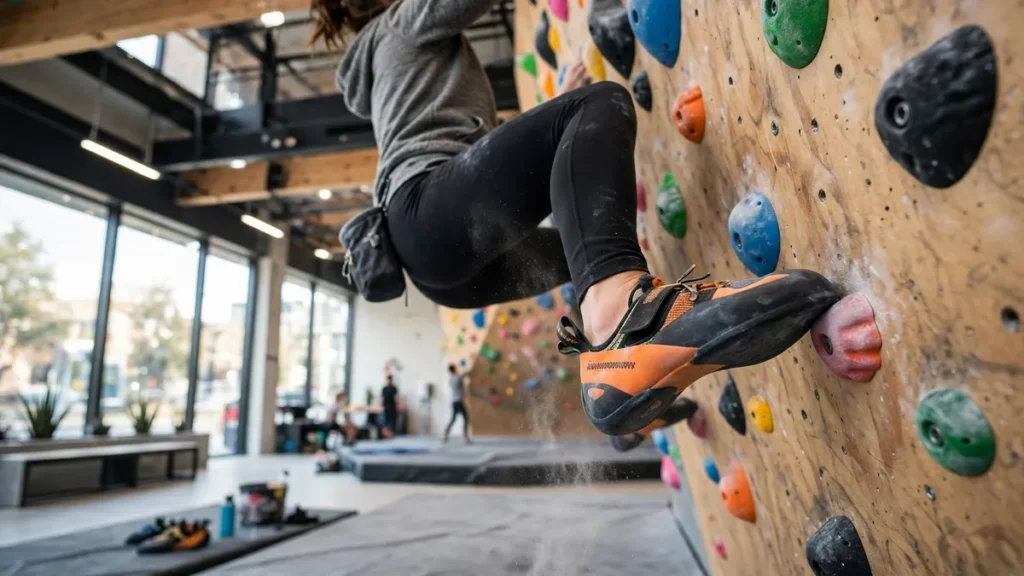
The best climbing shoes in 2027 are the ones that fit your feet, suit your climbing style, and hold their edge when it matters. That sounds simple, yet it trips up almost every new climber.
So what is the best climbing shoes choice for you this year? For most people, it is a comfortable, flat or gently downturned shoe with sticky rubber and a secure heel. Beginners should start there. Experienced climbers can then add a second, more aggressive pair for steep ground.
Key takeaways: Fit matters more than brand. A flat, comfortable shoe suits most beginners. Downturned shoes help on steep ground but hurt on long routes. Sticky rubber grips better but wears faster. Try shoes on in the afternoon, when feet are slightly swollen. Break them in at the gym before taking them outside.
How We Chose These Climbing Shoes
We looked for shoes with a proven track record, not just a fresh launch. Every pick below has been worn by large numbers of climbers over several seasons, which means its quirks are well known.
Fit came first in our thinking. A climbing shoe works by holding your foot in a precise shape, so the last — the mould the shoe is built around — decides who it suits. We have included options for both, and we say so plainly in each pick.
Rubber was the second test. Modern climbing rubber is genuinely sticky, and the best compounds grip polished indoor holds as well as rough rock. Thicker soles last longer. Thinner soles feel more, which helps on tiny edges. We note the balance each shoe strikes, so you can match it to your climbing.
Closure matters too. Laces give the finest adjustment across the whole foot, which helps on long trad routes where comfort counts. Hook-and-loop straps are quicker, which suits bouldering and gym sessions. Slip-on shoes are the fastest of all but fit a narrower range of feet. None is best for everyone, and the right choice depends on how you climb.
The 10 Best Climbing Shoes in 2027
1. La Sportiva Tarantula
Best for: beginners taking their first climbing shoes home.
The Tarantula has introduced more people to climbing than almost any other shoe, and there is a good reason for that. It is flat, forgiving and easy to get on, with a roomy fit that does not demand suffering. New climbers can wear it for a whole gym session without counting the minutes until they can take it off.
The rubber is durable rather than ultra-sensitive, which is exactly what a beginner needs.
2. Scarpa Vapor V
Best for: climbers who want one shoe for almost everything.
The Vapor V is the all-rounder of this list. It is gently downturned, with a pointed toe that edges well and a heel that stays put on hooks. It handles vertical sport routes, gym boulders and the odd trad pitch without complaint, which makes it a smart single purchase.
The hook-and-loop closure makes it quick to slip on between burns.
3. La Sportiva Solution
Best for: bouldering and steep sport climbing.
The Solution is an aggressive, downturned shoe with a single strap and a famously secure heel. On overhanging ground it feels like it was made for the job, because it was. The toe hooks confidently, the heel locks in, and the whole shoe drives power through your big toe.
It is a tight, performance fit, and it is not a shoe for long, easy routes.
4. Scarpa Instinct VS
Best for: steep sport routes and powerful moves.
The Instinct VS pairs a downturned shape with a sensitive sole, so you can feel small holds through the rubber. Its two-strap closure spreads pressure evenly, and the toe rubber gives extra grip when you toe-hook. On steep limestone and indoor overhangs, it is hard to beat.
Beginners may find it too aggressive for all-day wear.
5. Five Ten Hiangle
Best for: edging on vertical rock and gym walls.
The Hiangle is a downturned lace-up with a stiff midsole, which makes it a strong edger. It holds its shape on tiny footholds where softer shoes fold. The laces let you fine-tune the fit across the instep, a real advantage on long routes where pressure points build up.
That makes sizing simpler, though it also means you should get the size right first time.
6. Evolv Shaman
Best for: climbers with wider feet who want performance.
Wide feet often get squeezed into narrow performance shoes, which is miserable. The Shaman was built around a broader last, with a roomy toe box and a shape that still drives power forward. It proves that wide feet do not have to settle for a beginner shoe.
The three-strap closure gives a secure, adjustable fit.
7. Black Diamond Momentum
Best for: beginners on a budget who climb at the gym.
The Momentum is a comfortable, flat shoe with a soft, forgiving feel. It slips on easily, breathes well, and costs less than most rivals, which makes it a sensible first purchase. Gym climbers who go once or twice a week will find it does everything they need.
The rubber is grippy enough for indoor holds and easy slabs. For learning the ropes, that honesty is a strength.
8. La Sportiva Katana Lace
Best for: trad climbing and long multi-pitch routes.
The Katana Lace has been a trad favourite for years, and it is easy to see why. It is moderately downturned, with a lace closure that spreads pressure and a shape that edges with confidence. On long routes, where you might wear your shoes for hours, that comfort matters as much as grip.
It also works well on vertical sport routes.
9. Scarpa Drago
Best for: advanced bouldering on steep, powerful problems.
The Drago is soft, sensitive and aggressively downturned, built for climbers who want to feel every ripple in the rock. Its thin sole transmits a huge amount of information, which helps on smeary, featureless ground. The heel is deep and secure, and the toe rubber grips well on hooks.
It is a specialist, not an everyday shoe.
10. Evolv Defy
Best for: comfort-first gym climbing and all-day sessions.
The Defy is a flat, comfortable shoe with a roomy fit and a gentle feel. It is the kind of shoe you can wear for a long gym session without thinking about your feet at all. For climbers who value comfort over cutting-edge performance, that is the whole point.
The closure is simple and quick.
Best Climbing Shoes at a Glance
| Shoe | Best For | Shape | Closure |
|---|---|---|---|
| La Sportiva Tarantula | Beginners | Flat | Hook-and-loop |
| Scarpa Vapor V | All-round climbing | Moderate downturn | Hook-and-loop |
| La Sportiva Solution | Bouldering | Aggressive downturn | Single strap |
| Scarpa Instinct VS | Steep sport | Downturned | Two straps |
| Five Ten Hiangle | Edging | Downturned | Laces |
| Evolv Shaman | Wider feet | Downturned | Three straps |
| Black Diamond Momentum | Budget beginners | Flat | Hook-and-loop |
| La Sportiva Katana Lace | Trad climbing | Moderate downturn | Laces |
| Scarpa Drago | Advanced bouldering | Aggressive downturn | Slip-on |
| Evolv Defy | Comfort and gym | Flat | Hook-and-loop |
Getting the Fit Right
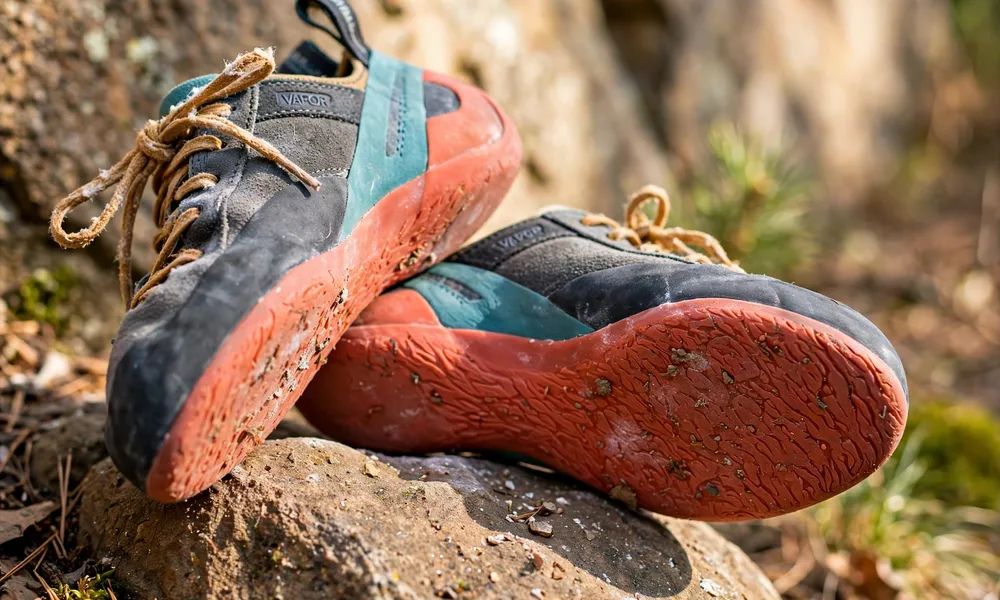
Fit is the single biggest factor in how a climbing shoe performs, and it is also the easiest to get wrong. Your toes should touch the end of the shoe, with no empty space in front of them. They should not be folded hard under, either. A little pressure is normal. Sharp pain is not, and it will not magically vanish with breaking in.
Try shoes on later in the day, when your feet are at their largest. Wear the socks you climb in, which for most people means none at all, since climbing shoes are usually worn barefoot. Walk around the shop, stand on a small edge if one is available, and crouch down. If the heel lifts or the shoe slips, try another size or another model.
Leather uppers stretch, sometimes by as much as half a size, while synthetic uppers hold their shape. That changes how snug your first fit should be. A leather shoe can start tight and ease off. A synthetic shoe should feel right from the start, because it will not change much.
Remember that your two feet are rarely the same size. Fit the larger foot first, then check the smaller one. If one shoe fits and the other pinches, try a different model rather than forcing the issue. Shoe choice is personal, and the best shoe for your climbing partner may be a poor fit for you.
Good footwear habits carry across sports. If you run as well as climb, our guide to the best Brooks running shoes in 2027 follows the same fit-first approach, while the best Adidas running shoes in 2027 covers road and gym options. Barefoot-style training shoes are covered in our best barefoot shoes in 2027 guide, which is worth a read if you like a natural, close-to-the-ground feel.
Your Climbing Shoe Checklist
- Match the shoe shape to your climbing: flat for beginners, downturned for steep ground.
- Check the last width against your feet, and favour wider models if your toes feel squeezed.
- Choose laces for fine adjustment, straps for speed, and slip-ons only if the fit is exact.
- Pick thicker rubber for durability and thinner rubber for sensitivity on small edges.
- Try shoes on in the afternoon, barefoot, and test them on a small edge.
- Fit the larger foot first, and never buy a shoe that causes sharp pain.
- Break new shoes in at the gym before trusting them on a long outdoor route.
- Resole worn shoes promptly, since thin rubber grips poorly and wears through fast.
Frequently Asked Questions
How tight should climbing shoes be?
Snug, not painful. Your toes should touch the end, with no dead space, and your heel should stay put. Beginners should favour comfort, since painful shoes ruin footwork. Performance climbers go tighter, but they accept that trade-off knowingly.
Should beginners buy aggressive climbing shoes?
No. Aggressive shoes are downturned and tight, which hurts on easy ground and teaches nothing useful at first. Start flat and comfortable, learn to place your feet well, and move to a downturned shoe once you climb steeper ground regularly.
How long do climbing shoes last?
It depends on how often you climb and how you treat them. Gym climbers who go twice a week often get a year or more from a pair. Outdoor climbers on rough rock wear rubber faster. Resoling once the sole thins will extend the life of a good upper considerably.
Can I wear socks with climbing shoes?
Most climbers do not, since bare feet give the best feel and the snuggest fit. Thin socks can help if a shoe rubs, but they change the fit, so try the shoe with socks on if that is how you plan to wear it. Never size a shoe in socks and then climb barefoot.
Do I need different shoes for bouldering and sport climbing?
Not at first. One comfortable all-rounder covers both while you learn. Later, many climbers add a downturned bouldering shoe for steep problems and keep a flatter pair for longer routes. Two pairs is a luxury, not a requirement, for most people.
A Note on Safety
Climbing carries a real risk of falls and injury, so treat safety as part of the sport, not an afterthought. Learn proper belaying and falling technique from a qualified instructor, check your kit before every session, and climb within your ability. A good pair of shoes helps your feet, but it cannot replace sound judgement, a careful partner and well-maintained safety gear.
Choose for fit first, match the shape to your climbing, and give new shoes time to break in. Then get out there, climb often, and let your feet learn the rock.