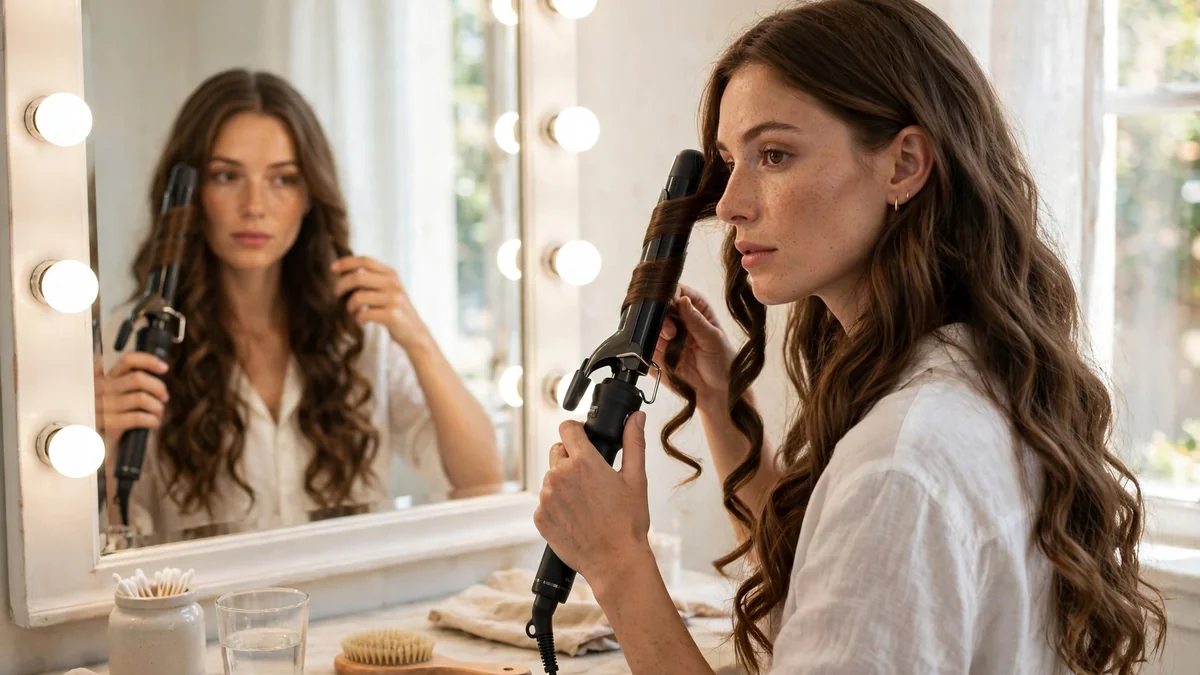
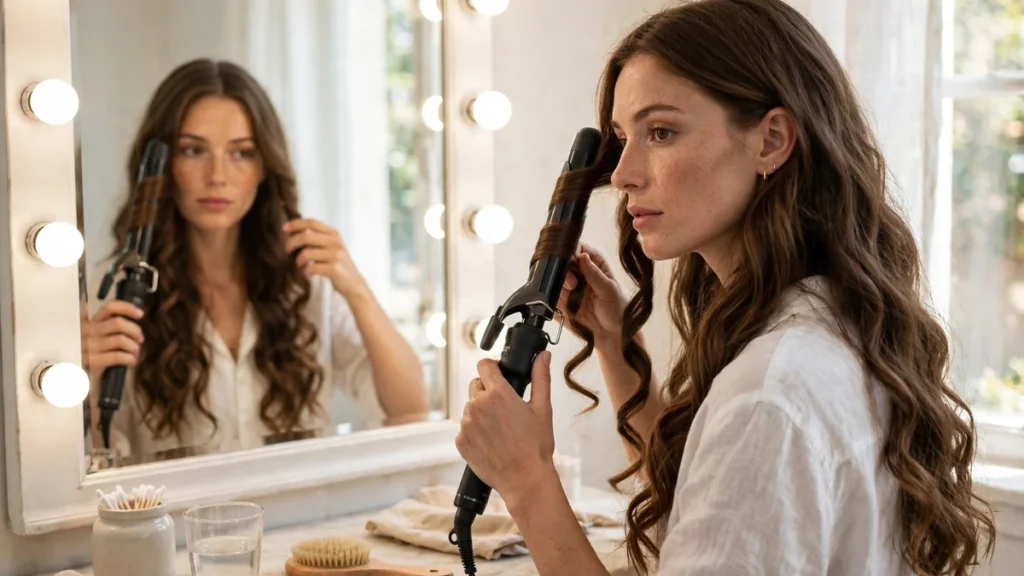
A curling wand is one of those tools that looks simple until you try to buy one. Barrel sizes, materials, temperature ranges, clamp or no clamp, and prices from under thirty pounds to several hundred all compete for your attention, and the wrong choice leaves you with curls that fall flat by lunchtime or hair that feels fried after a month of styling.
The truth is that a good wand does not need to be the most expensive one on the shelf. What matters is a barrel that suits your hair length, even heat that does not spike and scorch, and a temperature you can actually control. Get those three things right and most wands will give you soft, lasting curls.
Below are nine curling wands worth considering in 2027, from a budget-friendly ceramic wand to a high-end multi-styler that curls with air instead of extreme heat. Each one is described by what it does well, what to watch for, and who it suits best, so you can choose with your hair in mind, not just the packaging.
Key takeaways
- A 25 mm barrel suits most hair lengths for everyday waves, while a 32 mm barrel gives looser, softer curls and a 19 mm barrel gives tighter, more defined ones.
- Ceramic and tourmaline barrels spread heat evenly and suit fine or colour-treated hair, while titanium heats fast and holds its temperature on thick, coarse hair.
- Adjustable temperature control matters more than maximum heat: fine hair needs around 150 to 170 degrees, thick hair needs around 180 to 200 degrees.
- Always use a heat protectant, work in small sections, and let each curl cool in your palm for a few seconds before brushing it out.
- No wand repairs heat damage or makes curls last for days on their own, and a wand that snags, pulls or smells of burning hair is a sign to stop and check the temperature.
What a curling wand actually does to your hair
A curling wand reshapes hair with heat. When hair is heated to around 150 to 200 degrees, the hydrogen bonds inside each strand soften and can be reset into a new shape. Wrap the hair around a hot barrel, hold it for a few seconds, let it cool, and the curl holds until moisture, brushing or the next wash breaks those bonds again.
Barrel size decides the shape of the curl more than anything else. A narrow 19 mm barrel makes tight, springy curls, a 25 mm barrel makes the classic, versatile wave most people want day to day, and a 32 mm barrel makes loose, relaxed waves that look effortless. Longer hair generally suits a wider barrel, because a narrow barrel cannot wrap a long section evenly, while shorter hair suits a narrower one.
Material matters too, though less than marketing suggests. Ceramic barrels heat evenly and are gentle on fine, damaged or colour-treated hair. Tourmaline adds negative ions that smooth frizz and add shine. Titanium heats quickly and holds a steady temperature, which is useful for thick, coarse hair that cools a barrel down as it wraps.
How we chose these curling wands and what to look for
Look first at the barrel size and how it fits your hair. If your hair is shoulder-length or shorter, a 19 to 25 mm barrel will give you the most control. If your hair is long, a 25 to 32 mm barrel will wrap a section in one pass and give you looser, more natural-looking waves.
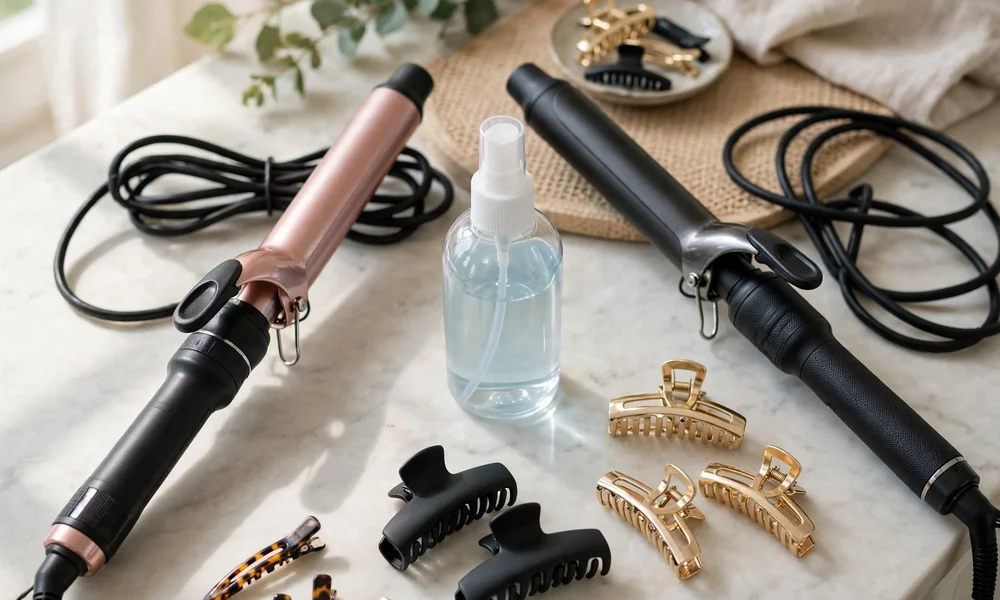
Look next at temperature control. A wand with a single fixed temperature is a gamble, because fine hair and thick hair need very different heat. Adjustable settings with a digital display are worth paying for, and a wand that reaches your chosen temperature quickly and holds it steady will give you more even curls. Before you style, a heat protectant is essential, and a light hair oil smoothed over the ends afterwards adds shine without weighing curls down. Our guide to the best face oils covers how lightweight oils protect and smooth skin, and the same principle applies to hair.
Finally, look at the practical details. A swivel cord stops the cable tangling as you work around your head, a cool tip protects your fingers, and an automatic shut-off is worth having if you ever leave the house wondering whether you switched it off.
The 9 best curling wands of 2027
Dyson Airwrap Multi-Styler
What we like: Curls with air rather than extreme heat, so hair feels softer and less damaged over time, with interchangeable barrels and a genuinely clever design that makes curling feel easier.
What to consider: Premium price by a long way, and it works best on damp-to-dry hair, so it is a different routine from a traditional wand. Barrel sizes: 30 mm / 40 mm. Heat settings: 3 heat, 3 airflow. Best for: All hair types, especially heat-damaged hair. Price range: Premium.
This is the wand for anyone who styles often and worries about heat damage: the only tool here that curls without a scorching hot barrel.
ghd Curve Soft Curl Tong
What we like: A 32 mm ceramic barrel with a single, well-chosen temperature of 185 degrees, even heat, a cool tip, and a smooth finish that suits everyday loose waves.
What to consider: One fixed temperature, so there is no lower setting for very fine hair, and it sits at a premium price. Barrel size: 32 mm. Heat settings: Fixed 185°C. Best for: Medium to long hair, loose waves. Price range: Premium.
A reliable, beautifully made wand for soft, polished waves, and the one-temperature design means you never have to think about settings.
T3 SinglePass Curl 1.25 Inch
What we like: A ceramic barrel with digital temperature control in five settings, fast heat-up, and a long barrel that suits long hair, with a polished, frizz-free finish.
What to consider: Premium price, and the long barrel can feel unwieldy on short hair. Barrel size: 32 mm. Heat settings: 5 settings, up to 210°C. Best for: Long hair, smooth waves. Price range: Premium.
One of the best options for long hair, with a barrel long enough to wrap a full section in a single pass.
BaBylissPRO Nano Titanium Spring Curling Iron
What we like: A titanium barrel that heats fast and holds its temperature on thick, coarse hair, with a wide temperature range and a solid, professional feel.
What to consider: Titanium runs hot and can be too much for fine or damaged hair if the temperature is set too high. Barrel size: 25 mm / 32 mm. Heat settings: Up to 230°C, 50 settings. Best for: Thick, coarse, resistant hair. Price range: Mid-range.
A salon favourite: if your hair is thick, coarse or resistant to curling, this wand holds its heat and the curls last.
Hot Tools 24K Gold Curling Iron
What we like: A gold-plated barrel that heats evenly and quickly, a long-standing salon staple, with a wide range of barrel sizes and a reasonable price.
What to consider: The barrel gets very hot and there is no digital display on some models, so the dial takes a little guesswork. Barrel size: 19 mm / 25 mm / 32 mm. Heat settings: Rheostat dial, up to 220°C. Best for: All hair types, defined curls. Price range: Mid-range.
A classic for defined, long-lasting curls at a mid-range price, and the wand many hairdressers reach for.
CHI Air Spin N Curl
What we like: An automatic rotating barrel that draws hair in and curls it for you, which is genuinely helpful if you struggle with wrapping hair by hand.
What to consider: It suits medium-length hair best, and very long or very short hair can be tricky to feed into the chamber. Barrel size: 25 mm chamber. Heat settings: 3 settings, up to 210°C. Best for: Beginners, medium-length hair. Price range: Mid-range.
A friendly way in for anyone who has never managed a manual wand: it does the wrapping for you, and the results are consistent once you get the section size right.
Conair InfinitiPro Curling Wand
What we like: A tourmaline ceramic barrel at a budget price, with five heat settings, a cool tip, and a tapered barrel option that gives natural-looking curls.
What to consider: The build feels lighter and less premium than the salon brands, and the highest settings are best avoided on fine hair. Barrel size: 19 to 25 mm tapered. Heat settings: 5 settings, up to 205°C. Best for: Budget buyers, natural waves. Price range: Budget.
The best value in this guide: it does not feel luxurious, but it curls well and heats evenly.
Remington Pro Pearl Ceramic Curling Wand
What we like: A pearl ceramic barrel that glides smoothly through hair, with a digital display, ten heat settings, and a tapered barrel for soft, natural curls.
What to consider: The tapered shape takes a little practice, and the barrel is long, which can feel awkward on short hair. Barrel size: 19 to 32 mm tapered. Heat settings: 10 settings, up to 210°C. Best for: Natural, beachy waves. Price range: Budget.
A strong budget option for loose, beachy waves, with more control than most wands at this price.
L’ange Le Curl Titanium Curling Wand
What we like: A titanium barrel with a rotating clamp design that makes wrapping easier, adjustable temperature, and a smooth finish that suits thick hair.
What to consider: The rotating clamp is a different technique to learn, and it is heavier than a simple wand. Barrel size: 25 mm / 32 mm. Heat settings: Adjustable, up to 220°C. Best for: Thick hair, salon-style curls. Price range: Mid-range.
A good choice if you like the control of a clamp but want the speed of titanium, and one of the quicker ways to curl a full head of hair once the rotating motion clicks.
Which curling wand is right for your hair
Fine, thin or colour-treated hair needs a ceramic or tourmaline barrel and a low temperature, around 150 to 170 degrees. Fine hair heats through quickly, so it does not need high heat, and high heat will dry it out and make it look thinner. Use small sections, hold each curl for five to eight seconds, and let it cool before touching it. If your hair feels dry or brittle between styles, the same care that goes into choosing a moisturiser applies here: protect first, then style. Our guide to the best moisturisers for dry skin explains how to repair a damaged barrier, and dry, over-styled hair benefits from the same gentle, consistent approach.
Thick, coarse or resistant hair needs a titanium barrel and a higher temperature, around 180 to 200 degrees, because the hair cools the barrel as it wraps and a cooler barrel gives curls that drop out within the hour. Work in smaller sections than you think you need, hold each one a few seconds longer, and let the curl cool fully in your hand before you move on.
Short hair suits a narrow 19 to 25 mm barrel, because a wide barrel cannot wrap a short section properly. Long hair suits a 25 to 32 mm barrel, or a long-barrel design, so a full section wraps in one pass. Curly or wavy hair that you want to smooth and reshape usually does best with a 25 mm barrel and a brush-out afterwards.
The caveats that matter
Heat styling damages hair over time, and no wand, however expensive, removes that risk. The damage is cumulative: each pass at high heat weakens the hair a little more, and the signs show up as split ends, breakage, and hair that feels rough even when it is clean. Using a heat protectant every time, keeping the temperature as low as your hair allows, and giving your hair heat-free days will slow that damage far more than any single product.
| Detail | What is known |
|---|---|
| Best barrel size for most hair | 25 mm for everyday waves, 32 mm for loose waves, 19 mm for tight curls |
| Temperature for fine hair | Around 150 to 170 degrees, held for five to eight seconds |
| Temperature for thick hair | Around 180 to 200 degrees, held for eight to ten seconds |
| Best material for fine hair | Ceramic or tourmaline, for even, gentle heat |
| Best material for thick hair | Titanium, which holds its temperature while styling |
| How to make curls last | Small sections, let each curl cool before touching it, finish with a light hold spray |
| What to avoid | Styling wet or damp hair with a hot barrel, and using the highest setting by default |
| When to replace a wand | When the barrel coating is chipped, the temperature is unreliable, or hair snags on it |
Never use a hot wand on wet or damp hair, unless it is a tool designed for it, like the Airwrap. Water trapped in the hair turns to steam inside the strand and can cause bubble hair, a form of damage that weakens the strand from within. Dry your hair fully first, then style.
Checklist: choosing a curling wand honestly
Use these checks before you buy, and again after two weeks of use.
- Check the barrel size: 25 mm suits most hair, 32 mm for loose waves, 19 mm for tight curls.
- Check the temperature control: adjustable settings with a display beat a single fixed heat.
- Check the material: ceramic or tourmaline for fine hair, titanium for thick, resistant hair.
- Match it to your hair length: narrow barrels for short hair, wider or longer barrels for long hair.
- Always use a heat protectant: apply it to dry hair before every styling session, without exception.
- Let curls cool: hold each curl in your palm for a few seconds before brushing it out, so the shape sets.
Frequently asked questions
What size curling wand should I buy first?
A 25 mm barrel is the best first wand for most people: classic, versatile waves on medium to long hair, and soft, bouncy curls on shorter hair. If you only buy one wand, make it this size.
How hot should my curling wand be?
Fine, thin or colour-treated hair needs around 150 to 170 degrees. Normal hair does well at 170 to 185 degrees. Thick, coarse or resistant hair needs around 180 to 200 degrees. Start low and raise it only if the curls are not holding.
Should I use a curling wand or a curling iron?
A wand has no clamp, so you wrap the hair by hand, which gives a more natural, slightly looser curl with no crease. An iron has a clamp that holds the hair, giving more control and a more uniform curl. Wands suit soft waves; irons suit polished, defined curls.
Why do my curls fall out so quickly?
Usually because the sections are too big, the temperature is too low, or the curl is touched before it cools. Use smaller sections, make sure the hair is fully dry, hold each curl for eight to ten seconds, and let it cool in your palm before brushing it out. A light hold spray after styling helps, and a drop of smoothing oil on the ends adds shine. Our guide to the best squalane products explains how a lightweight oil seals in moisture without heaviness, which is the same finish you want on styled hair.
Can I curl my hair every day?
You can, but daily high heat will dry hair out over time. If you style every day, keep the temperature as low as your hair allows, always use a heat protectant, and give your hair a break on some days. Heatless methods, such as overnight braids or foam rollers, are a good way to keep the curl habit without the daily heat.
How do I clean a curling wand?
Wait until it is completely cool, then wipe the barrel with a damp cloth to remove product build-up, using a little rubbing alcohol for stubborn residue. Never submerge the wand in water, and replace it if the coating is chipped or rough enough to snag hair.
The bottom line
The best curling wand in 2027 is not the most expensive one. It is the one with the right barrel size for your hair length, a temperature you can control, and a barrel that heats evenly. For most people, that means a 25 mm ceramic or tourmaline wand with adjustable heat. For thick, resistant hair, a titanium barrel is worth the upgrade, and for anyone who styles every day, a lower-heat option like the Airwrap is worth considering.
Choose your barrel size, set the lowest temperature that holds a curl, use a heat protectant every time, and let each curl cool before you touch it. That is the honest way to get soft, lasting curls without wearing your hair out in the process.
Note: This guide is general haircare information, not professional advice. Patch-test new styling products, and speak to a hairdresser if your hair is breaking, thinning, or not recovering between styles, or if heat styling leaves it feeling rough or brittle.