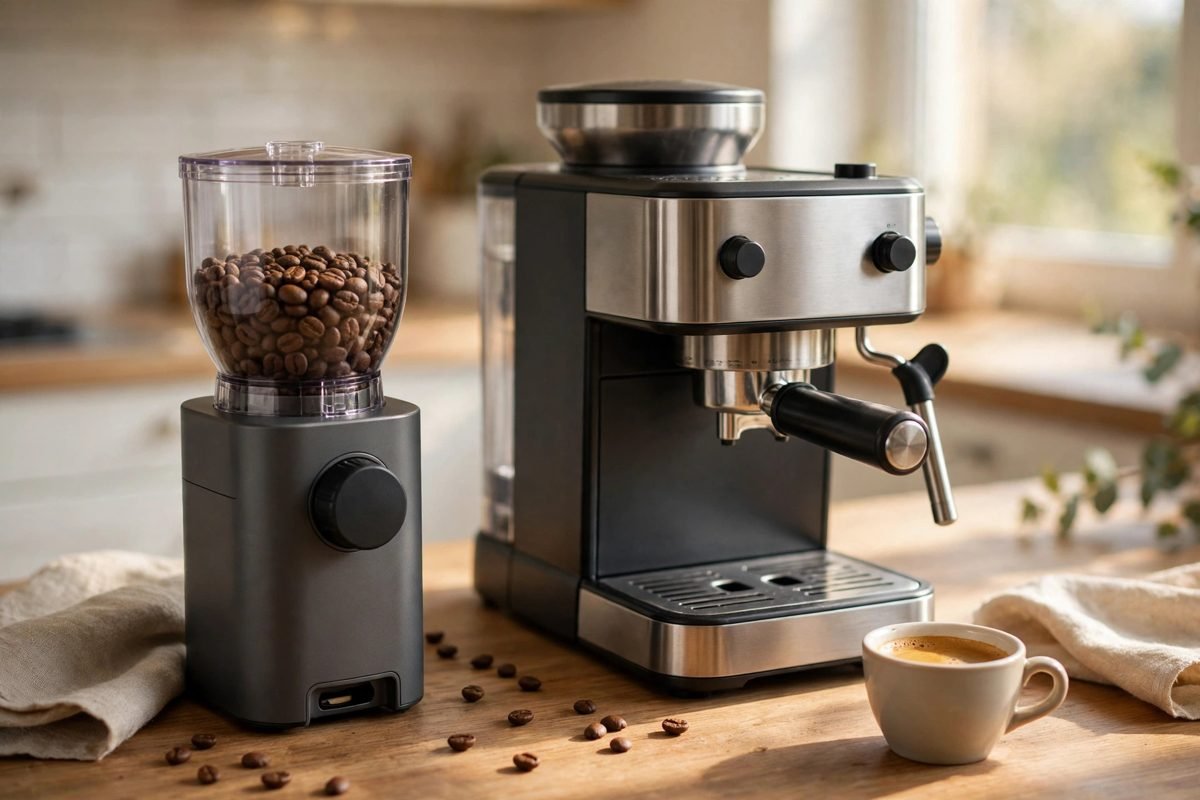
The best espresso grinder in 2027 is the grinder that gives you fine, even grounds, shot after shot, with as little waste as possible. Espresso is unforgiving: water is forced through a small puck of coffee in under half a minute.
That is what makes an espresso grinder different from a general coffee grinder. It is not enough for the grind to be fine; it must be consistent, adjustable in small steps and easy to dose accurately. A grinder that works well for filter coffee may simply not grind fine enough for espresso.
Key takeaways
- Espresso needs a fine, even grind with small adjustment steps — coarse steps make dialling in far harder.
- Grind consistency matters more than speed: uneven grounds lead to sour and bitter notes in the same cup.
- Low retention keeps old grounds out of your next shot, which matters most when you change beans often.
- Single-dose grinders suit people who weigh every dose; hopper-fed grinders suit fast, repeated brewing.
- Match the grinder to your machine and your routine, not to features you will never use.
What makes a grinder good for espresso
Espresso asks more of a grinder than any other brewing method. The grounds must be fine enough to slow pressurised water, yet even enough that the water passes through the whole puck at the same rate. Uneven grounds make the shot taste both sour and bitter at once.
Adjustment steps are the first thing to check. A grinder with small, precise steps lets you nudge the grind finer or coarser until the shot runs at the right pace. Stepless adjustment gives the finest control of all.
Retention is the second key measure: ground coffee left inside the grinder after you dose, which can end up stale in your next shot. Low-retention grinders push nearly all the grounds out. Dosing is the third piece: a good espresso grinder lets you weigh or time a repeatable dose, so every shot starts from the same amount of coffee.
The 10 best espresso grinders
1. Best single-dose grinder
Best for: home baristas who weigh every dose and switch beans often.
A single-dose grinder is built around one idea: you weigh the beans, put them in, and nearly all of them come out as grounds. Each shot tastes like the beans you chose for it. The routine takes a little longer, since you weigh and load beans for every shot.
2. Best hopper-fed grinder
Best for: busy mornings and households that brew several espressos in a row.
A hopper-fed grinder keeps a supply of beans ready above the burrs, so you can grind shot after shot without stopping to weigh and load. Timed dosing makes the routine fast: press a button, get your dose and tamp. Beans in a hopper lose freshness faster than beans kept sealed, so this design suits people who work through a bag steadily.
3. Best stepless grinder
Best for: precise dialling in and anyone who chases the perfect shot.
A stepless grinder lets you move the grind setting smoothly, without clicks or fixed steps. That freedom matters for espresso, where the difference between a good shot and a great one can be a tiny change in grind size. Without clicks, it is easier to lose your place, so note your dial position. If you enjoy fine-tuning and brew the same beans for days at a time, stepless control is a genuine advantage.
4. Best stepped grinder
Best for: beginners and anyone who wants repeatable settings.
A stepped grinder clicks between clearly marked settings, so you always know where you are. That makes it easy to return to a setting that worked, to share the grinder with someone else in the house and to learn how small changes affect the shot. The limitation is the size of the steps: if they are wide, you may find one setting runs too fast and the next too slow. Look for a grinder with fine steps.
5. Best low-retention grinder
Best for: changing beans often and keeping every shot fresh.
A low-retention grinder is designed so that almost no ground coffee stays inside after dosing. That matters because stale grounds left in the chute can mix into your next shot and dull its flavour, especially when you switch from one bean to another. These grinders tend to be built for single dosing. If you rotate beans regularly, low retention is one of the most useful features a grinder can offer.
6. Best grinder for a small kitchen
Best for: compact kitchens where worktop space is precious.
A compact espresso grinder fits beside the machine without taking over the worktop. It still needs to grind fine and evenly, and the best small grinders do exactly that, pairing a modest footprint with solid burrs and fine adjustment. The compromise is usually the hopper, which holds fewer beans, and sometimes a slower motor. Neither matters much for one or two shots a day.
7. Best quiet espresso grinder
Best for: early mornings, flats and open-plan homes.
A quiet grinder softens the whine that many grinders make, which matters when you brew before the rest of the house wakes. Quieter models use insulation, a slower motor speed or a heavier body to damp the sound, and the difference is easy to hear side by side. Quiet grinding can take a few seconds longer, and some quiet grinders are larger or heavier than their louder rivals. For early risers, the calmer sound is worth it.
8. Best grinder for milk drinks
Best for: flat whites, lattes and cappuccinos every day.
Milk drinks forgive small flaws in a shot that a straight espresso would expose, but they still need a grinder that doses consistently. A grinder for milk drinks should be fast and easy to dose. A hopper and timed dosing suit this routine well. You still need a grind fine enough for espresso and steps small enough to keep the shot in range.
9. Best grinder for light-roast beans
Best for: bright, acidic beans that need a very even grind.
Light-roast beans are denser and harder than dark roasts, and they punish an uneven grind more harshly. A grinder for light roasts needs burrs that cut cleanly and evenly, with fine adjustment to find the sweet spot where the shot is sweet rather than sharp. Light roasts also tend to need a slightly finer grind and a careful dose, so a grinder that pairs well with weighing each shot is a good match.
10. Best simple espresso grinder
Best for: first-time espresso brewers who want a straightforward start.
A simple espresso grinder does the essentials well: it grinds fine enough for espresso, adjusts in manageable steps and doses without fuss. There is no single-dosing ritual to learn, no stepless dial to track and nothing that needs a manual to understand. You give up some precision and some freshness compared with the more specialised picks here.
Dosing and low retention
Dosing is where consistency is won or lost. The simplest reliable method is to weigh your beans before grinding and weigh the grounds as they land in the portafilter. That habit removes one variable from the many that shape a shot.
Timed dosing is the faster alternative. The grinder runs for a set number of seconds, and you adjust the time until the dose is right. It works well once it is set up, but the dose can drift as beans settle in the hopper, so check it with scales from time to time.
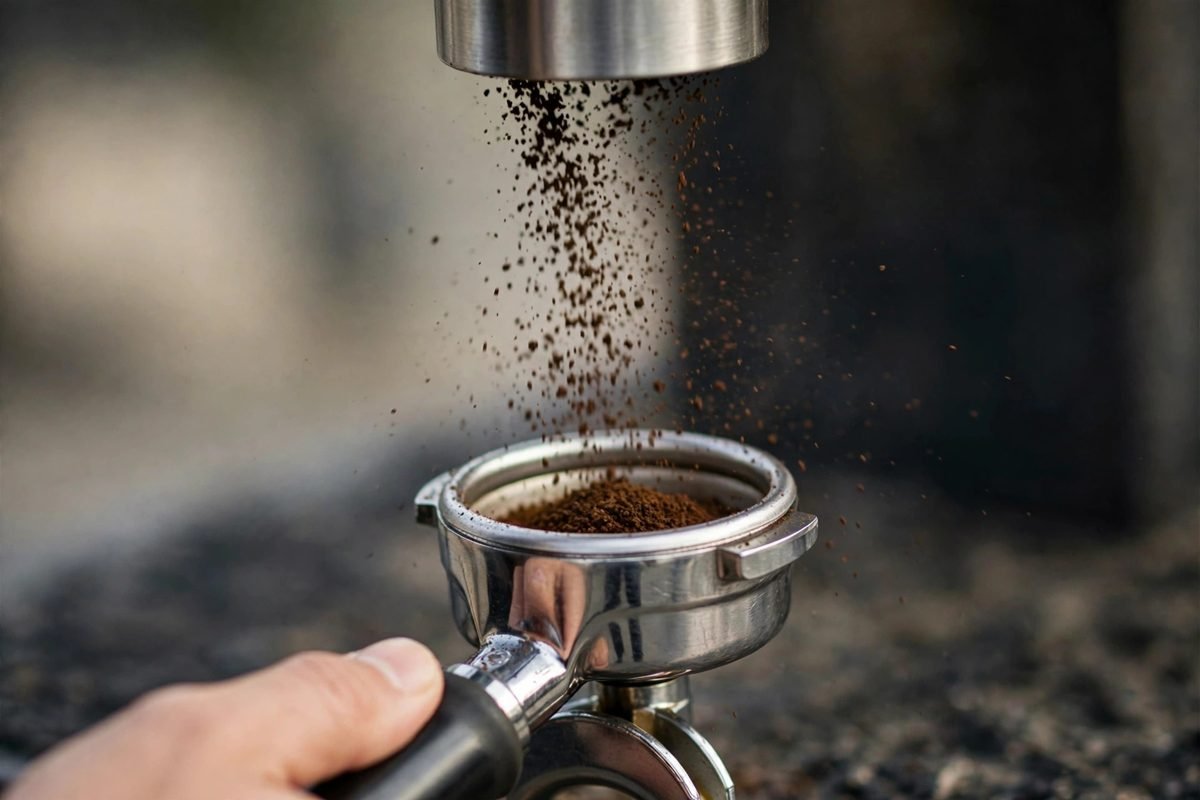
Retention ties the two together. Grounds left inside the grinder go stale quickly, and they can end up in your next shot without you noticing. A low-retention grinder clears almost everything, which is why it pairs so well with single dosing and frequent bean changes. A quick purge after changing beans or settings keeps the next shot honest.
Comparison table
| Pick | Type | Dosing | Best for |
|---|---|---|---|
| 1. Single dose | Single dose | Weighed | Switching beans often |
| 2. Hopper fed | Hopper fed | Timed | Busy mornings |
| 3. Stepless | Stepless adjustment | Weighed or timed | Precise dialling in |
| 4. Stepped | Stepped adjustment | Weighed or timed | Beginners |
| 5. Low retention | Low retention | Weighed | Fresh shots |
| 6. Small kitchen | Compact | Weighed or timed | Compact kitchens |
| 7. Quiet | Quiet motor | Timed | Early mornings |
| 8. Milk drinks | Hopper fed | Timed | Flat whites and lattes |
| 9. Light roast | Even grind | Weighed | Bright, light beans |
| 10. Simple | Basic espresso | Timed | First-time brewers |
Espresso grinder checklist
Run through this list before you buy, and you will avoid the most common regrets.
- Check that the grinder reaches a fine espresso grind, not just a general fine setting.
- Look for small adjustment steps or stepless control so you can dial in a shot properly.
- Ask how much ground coffee the grinder retains, and favour low retention if you change beans often.
- Decide between single-dose weighing and hopper-fed timed dosing for your routine.
- Make sure the grinder fits beside your machine, with room to lift the portafilter in and out.
- Check how easy the grinder is to clean, including access to the burrs and the chute.
- Listen to the noise level if you can, especially if you brew early in the morning.
- Confirm the dose is repeatable, whether by weight or by timer, before you commit.
Frequently asked questions
Do I need a special grinder for espresso?
Yes. Espresso needs a finer, more even grind than filter coffee, with small adjustment steps to dial in the shot. A general grinder may not reach a fine enough setting or hold it consistently.
What is low retention and why does it matter?
Retention is ground coffee left inside the grinder after dosing. Low retention means almost all the grounds reach your portafilter, so stale coffee does not mix into the next shot. It matters most when you change beans often or brew only once or twice a day.
Is single-dose or hopper-fed better for espresso?
Neither is better for everyone. Single-dose grinding suits people who weigh each dose and switch beans often, since it keeps every shot fresh. Hopper-fed grinding suits busy routines, since timed dosing is faster.
How fine should I grind for espresso?
Espresso grounds should feel like fine sand between your fingers, much finer than filter coffee. The exact setting depends on your beans and your machine, so start fine and adjust in small steps until the shot flows steadily and tastes balanced.
Should I weigh my coffee dose?
Weighing your dose is the simplest way to make every shot repeatable. Timed dosing works too, but check it against scales regularly.
Can I use the same grinder for espresso and filter coffee?
You can, if the grinder covers the full range from fine espresso to coarse filter and holds its settings well. In practice, switching back and forth means re-dialling in each time, which is fiddly.
Sources
To build the rest of your setup, read our guide to the best espresso machine and, for a gentler budget, the best budget espresso machine. Choosing good beans matters just as much as the grinder, so see our guide to the best coffee beans for espresso.
The bottom line
The best espresso grinder is the one that matches how you brew, not the one with the most features. If you weigh every dose and rotate beans, a single-dose, low-retention grinder will reward you. If you brew several espressos before work, a hopper-fed grinder with timed dosing will make mornings easier. Fine steps and an even grind matter more than speed or size.
Start by deciding how you will dose, then check the adjustment steps and the retention. Pair the grinder with a machine you already own or plan to buy, and choose beans you enjoy.