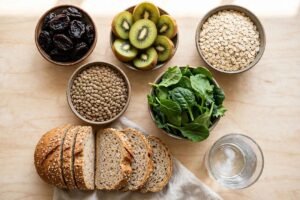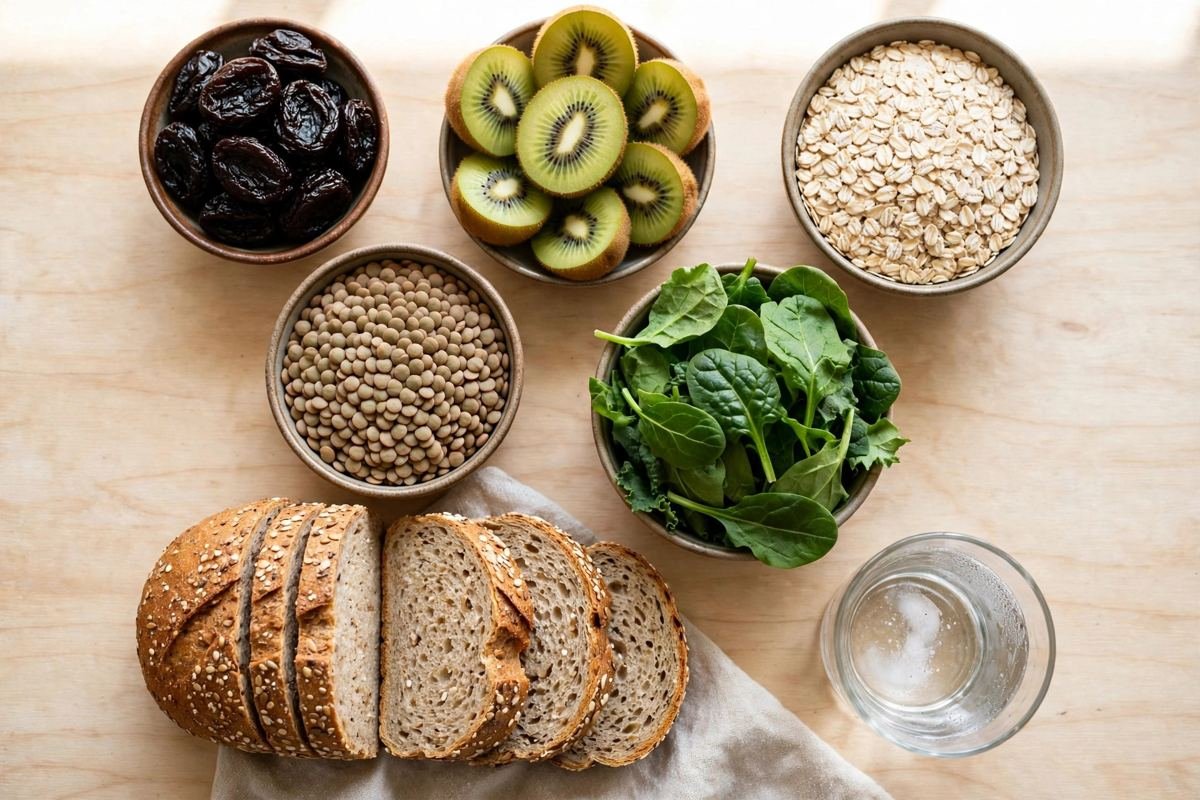
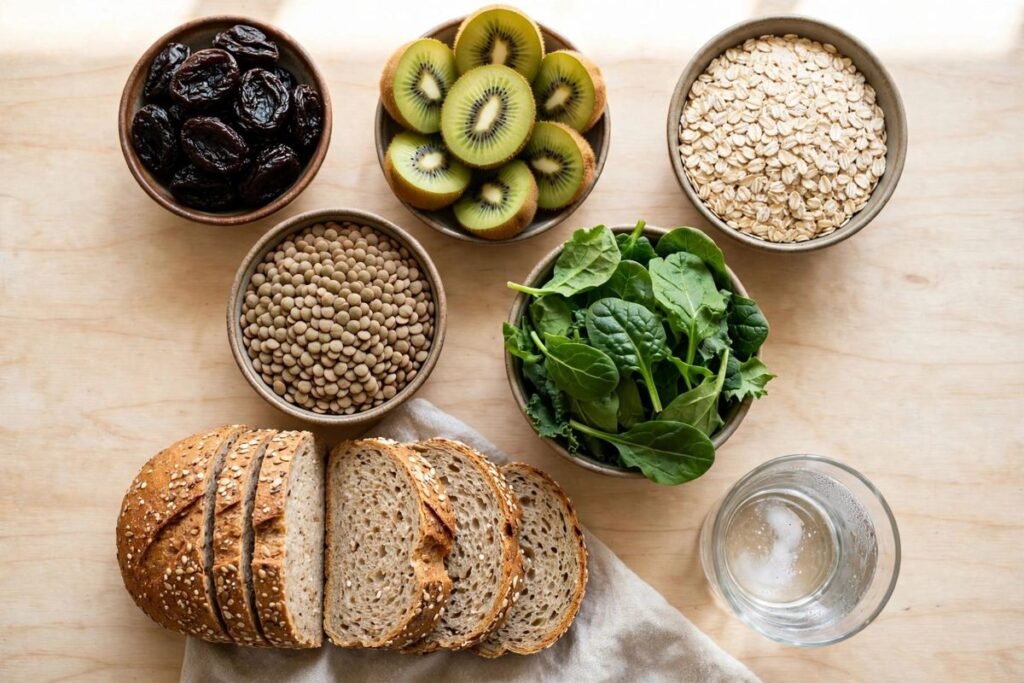
The best food for constipation is usually a fibre-rich food eaten with plenty of fluid, because fibre adds bulk to stools and fluid helps that bulk move through the gut more easily. Prunes, kiwi fruit, beans, lentils, oats and leafy greens are among the most useful choices, and they work best as part of a varied diet rather than as a single quick fix.
So which foods should you actually put on your plate? The short answer is to build meals around fibre-rich foods, drink fluid through the day, and move a little more, then give the pattern a few days to work. This guide ranks ten foods that fit that pattern and shows how to use them in ordinary meals.
Key takeaways:
- Fibre adds bulk and softness to stools, and fluid helps fibre do its work, so the two belong together at every meal.
- Prunes, kiwi fruit, beans, lentils, oats and leafy greens are among the most practical everyday choices.
- Increase fibre gradually and drink fluid through the day, because a sudden change can cause bloating.
- Persistent, severe or changing bowel symptoms are worth discussing with a clinician, rather than managing alone.
Why food can help with constipation
Constipation usually means stools that are hard, dry or difficult to pass, or bowel movements that happen less often than usual. It is common, and for many people it is linked to a diet low in fibre, too little fluid, too little movement, or a change in routine such as travel or a period of illness.
Fibre is the part of plant foods that the body does not fully digest. Soluble fibre absorbs water and forms a soft gel, while insoluble fibre adds bulk and helps move material through the gut. Most fibre-rich foods contain a mix of the two. Fluid matters just as much: without enough of it, extra fibre can make stools harder rather than softer.
How to use this list
Start with one or two foods from this list and add them to meals you already eat, rather than changing everything at once. A bowl of oats at breakfast, a handful of prunes as a snack, or a portion of beans in a stew are all easy places to begin. Add more fibre over a week or two, drink fluid alongside each change, and keep portions ordinary.
The 10 best foods for constipation
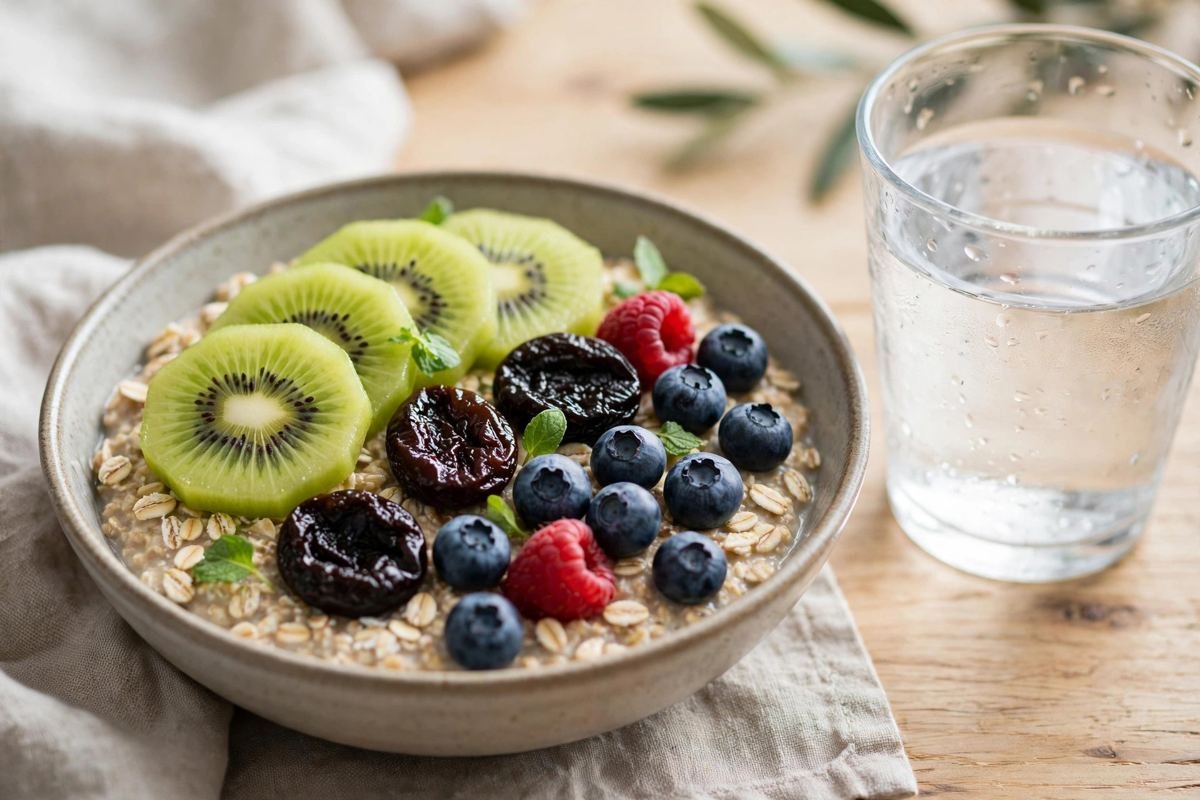
1. Prunes
Best for: a simple, reliable daily habit that needs no cooking.
Prunes are dried plums, and they are one of the best-known foods for keeping things moving. They are rich in fibre and contain sorbitol, a naturally occurring sugar alcohol that draws water into the gut. A small handful a day, on their own or in porridge or yoghurt, is a sensible start.
2. Kiwi fruit
Best for: a fresh fruit that is easy to eat every day.
Kiwi fruit is rich in fibre, has a high water content, and contains an enzyme called actinidin that may help digestion. Green and gold kiwi both work, with a spoon or sliced into yoghurt, and two a day fits easily into breakfast or a snack.
3. Beans
Best for: filling, budget-friendly meals that are rich in fibre.
Beans are among the richest sources of fibre in an everyday diet, and a good source of plant protein. Black, kidney, butter and cannellini beans all count, in stews, chilli, salads and soups. Tinned beans are convenient; rinse them well, and start with a modest portion if they are new to you.
4. Lentils
Best for: soups, stews and curries that are easy to digest.
Lentils are a gentle source of fibre and cook quickly. Red lentils turn soft and creamy in soups and dals, while green and brown lentils hold their shape in salads and stews. They are also a good source of plant protein.
5. Oats
Best for: a warm, fibre-rich breakfast that sets up the day.
Oats are rich in soluble fibre, which absorbs water and forms a soft gel in the gut. Porridge is the classic way to eat them, and overnight oats are another option. A bowl with prunes or kiwi on top combines two foods from this list in one meal.
6. Leafy greens
Best for: adding fibre and fluid to almost any meal.
Spinach, kale, chard and spring greens are rich in fibre, have a high water content, and are easy to add in generous amounts. Spinach wilts into pasta, soup and curry in minutes, kale works in stews and stir-fries, and greens add bulk without adding much energy.
7. Wholemeal bread
Best for: an easy swap from white bread that adds fibre at every meal.
Wholemeal bread is made from the whole grain, so it keeps the fibre that white bread loses during milling. Swapping white bread for wholemeal is one of the simplest changes in this list, because it needs no new cooking. Our guide to bread for diabetics looks at bread choices in more detail. Check the label, because some loaves described as brown bread are not wholemeal.
8. Berries
Best for: a sweet, fibre-rich snack or dessert.
Berries are a good source of fibre for their size, because their seeds and skins add bulk. Raspberries, blackberries, blueberries and strawberries all count, fresh, frozen or stirred into yoghurt and porridge. A handful with breakfast adds fibre without much effort.
9. Pears
Best for: a gentle fruit that travels well as a snack.
Pears are rich in fibre, have a high water content, and contain sorbitol, the same compound found in prunes. A ripe pear is soft and sweet, and works in a lunchbox, sliced into a salad, or poached as dessert. Eat the skin, because much of the fibre is in or just under it.
10. Yoghurt with live cultures
Best for: a creamy food that pairs well with fruit and oats.
Yoghurt with live cultures contains bacteria that are part of a healthy gut, and it is useful alongside fibre-rich foods. Plain yoghurt is best, because flavoured yoghurts are often high in added sugar. A pot with prunes, berries or oats on top combines several foods from this list in one bowl. Our guide to oat milk covers a useful partner for oats, and our guide to high-protein foods covers yoghurt in more detail.
Fluids: the partner fibre needs
Fluid is the partner fibre needs. Water is the simplest choice, and drinking it through the day is more useful than drinking a large amount at once. Herbal tea, soup and milk all count towards fluid intake. A glass with each meal, and a glass between meals, is a practical pattern.
Foods for constipation at a glance
| Food | Why it helps | Easy way to eat it | Good with |
|---|---|---|---|
| Prunes | Fibre and sorbitol | A small handful daily | Porridge or yoghurt |
| Kiwi fruit | Fibre, water and actinidin | Two a day, fresh | Yoghurt or fruit salad |
| Beans | Rich in fibre and protein | In stews, chilli or salads | Wholemeal bread |
| Lentils | Gentle fibre, easy to cook | In soup, dal or stew | Tomatoes and carrots |
| Oats | Soluble fibre | Porridge or overnight oats | Prunes, kiwi or berries |
| Leafy greens | Fibre and high water content | Wilted into pasta or soup | Garlic and olive oil |
| Wholemeal bread | Wholegrain fibre | Toast or sandwiches | Soup or salad |
| Berries | Fibre in seeds and skins | Fresh or frozen, by the handful | Yoghurt or porridge |
| Pears | Fibre, water and sorbitol | Fresh, skin on | Cheese, nuts or yoghurt |
| Yoghurt with live cultures | Live cultures and calcium | Plain, with fruit or oats | Berries, prunes or oats |
The table is a guide, not a prescription: the best food is the one you will actually eat, regularly, in a meal you enjoy.
Your fibre-friendly eating checklist
Work through this list when you plan your meals for the week.
- Add one fibre food at a time: start with oats, prunes or beans, and build up over a week or two.
- Drink fluid with every meal: a glass of water with food helps fibre do its work.
- Choose wholemeal over white: wholemeal bread, pasta and rice add fibre without new cooking.
- Put a pulse on the plate: beans or lentils in a stew, soup or salad most days.
- Add fruit to breakfast: kiwi, berries, pears or prunes with porridge or yoghurt.
- Fill half the plate with vegetables: leafy greens and other vegetables add fibre and fluid.
- Keep moving: a daily walk and gentle activity help the gut keep moving too.
- Watch for warning signs: blood in stools, unexplained weight loss, or a lasting change in bowel habit needs a clinician.
Frequently asked questions
What is the best food for constipation?
There is no single best food, but prunes, kiwi fruit, beans, lentils, oats and leafy greens are among the most useful, because they are rich in fibre and easy to eat regularly. The best choice is the one you will eat often, with plenty of fluid.
How quickly does food help constipation?
Food changes usually take a few days to make a difference, because fibre needs time to work through the gut. A steady pattern over a week is more useful than a single large portion of one food, and drinking fluid alongside the change helps it work sooner.
Should you eat more fibre all at once?
No, it is better to increase fibre gradually over a week or two. A sudden large increase can cause bloating, wind and discomfort, especially if fluid intake does not increase at the same time. Start with one or two changes, and add more once your gut has settled.
Does drinking water help constipation?
Yes, fluid helps fibre do its work, and without enough fluid extra fibre can make stools harder. Water is the simplest choice, and drinking it through the day, with meals and between them, is more useful than drinking a large amount at once.
Are prunes better than prune juice?
Whole prunes provide more fibre than prune juice, because the fibre stays in the fruit. Prune juice still contains sorbitol and fluid, so it can help, but whole prunes are the better choice for most people. A small handful of prunes a day is a sensible place to start.
When should you see a clinician about constipation?
See a clinician if constipation is persistent or severe, if it starts suddenly without a clear cause, or if it comes with blood in stools, unexplained weight loss, severe pain, or a lasting change in bowel habit. This guide is not a substitute for medical advice.
Sources
This guide is based on widely published nutrition guidance about fibre, fluid and bowel health, including advice from national health services and nutrition organisations. It describes general food information only, and it does not replace advice from a clinician about a personal health concern.
The bottom line
The best food for constipation is not a single ingredient, but a pattern: fibre-rich foods at most meals, fluid through the day, and a little movement. Prunes and kiwi are easy places to start, beans and lentils add fibre to main meals, and oats make a strong breakfast.
Your next step is simple: choose one food from this list, add it to a meal tomorrow, and drink a glass of water with it. Add a second food a few days later, and keep building. If symptoms persist, worsen, or come with warning signs, speak to a clinician.
Please note: this article is general health information only and is not medical advice. It does not diagnose, treat or cure any condition, and it is not a substitute for advice from a qualified clinician. If you have persistent or severe constipation, or any worrying symptom, please speak to a clinician before changing your diet.