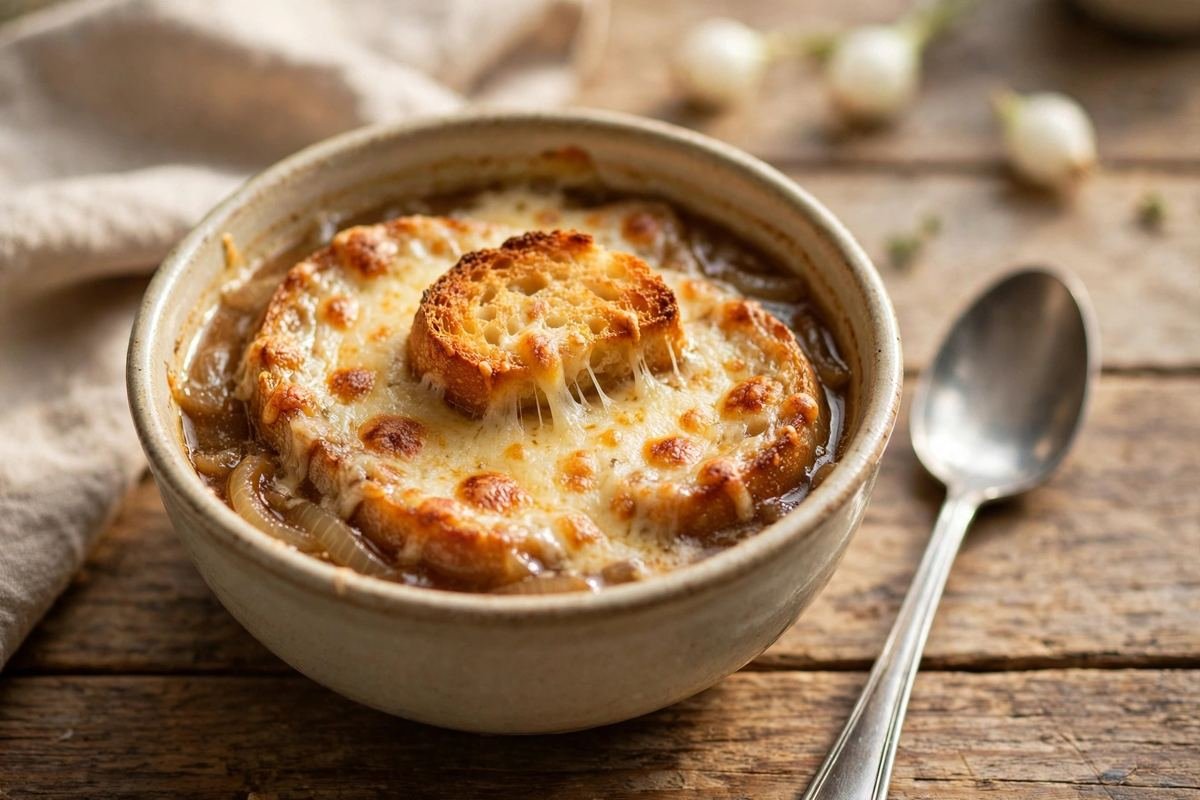

French onion soup is a bowl of slowly caramelised onions in a rich beef stock, topped with toasted bread and melted cheese, and it is one of the most satisfying soups a home cook can make. The dish is simple at heart: onions, butter, stock, bread and cheese, cooked with patience until the onions turn deep gold and sweet.
So what makes a good French onion soup, and how do you get it right at home? The short answer is time: the onions need slow, gentle cooking, the stock needs to be well seasoned, and the cheese-topped bread needs a hot grill to finish. This guide covers the history, the ingredients, the method, the variations, and how to serve and store it safely.
Key takeaways:
- The onions are the dish: cook them slowly until they are deep gold and sweet, and do not rush them.
- A good beef stock, dry white wine and a splash of sherry or brandy give the soup its depth.
- Toast the bread first, then grill the cheese until it bubbles and browns at the edges.
- Cool leftovers quickly, refrigerate within two hours, and use within three to four days.
A short history of French onion soup
Onion soup has been eaten in France for centuries, long before it became a restaurant classic. Onions were cheap, plentiful and easy to store through winter, so a soup made from them was natural for ordinary households. Early versions were simple: onions cooked in water or thin stock, served with bread.
The soup as we know it took shape in Paris in the nineteenth century, in the bistros around Les Halles, the old central food market. Cooks there enriched it with beef stock and finished it with bread and melted cheese, often Gruyere, under a hot grill. From Paris it spread around the world, and it remains a fixture on bistro menus today.
The ingredients
The classic recipe uses few ingredients, and each one matters. Yellow onions are the usual choice, because they are sweet when cooked slowly and hold up well over a long cooking time. White onions work too, and a mix of yellow and sweet onions can add a little extra sweetness. Avoid red onions for the classic version, because their colour can muddy the soup.
Butter is the traditional fat, often with a little oil to stop it burning. Beef stock gives the soup its depth, and a good-quality stock is worth seeking out. Dry white wine, a bay leaf and thyme add flavour, and a splash of sherry or brandy at the end is a classic touch. For the topping, use firm white bread or baguette and a good melting cheese, usually Gruyere.
Choosing the onions and the cheese
Choose onions that feel firm and heavy, with dry, papery skins and no soft spots or sprouting. Large onions are easier to slice evenly, and even slices matter, because thin pieces cook faster than thick ones and can burn while the rest are still pale. Slice the onions thinly and evenly, from root to tip, so they soften at the same rate.
For the cheese, Gruyere is the classic choice: it melts smoothly, browns well, and has a nutty flavour that suits the sweet onions. Emmental melts well too, and a mix of the two is common. Grate the cheese rather than slicing it, so it melts evenly. Our guide to cheese for burgers looks at melting cheeses in more detail.
The method: caramelising the onions
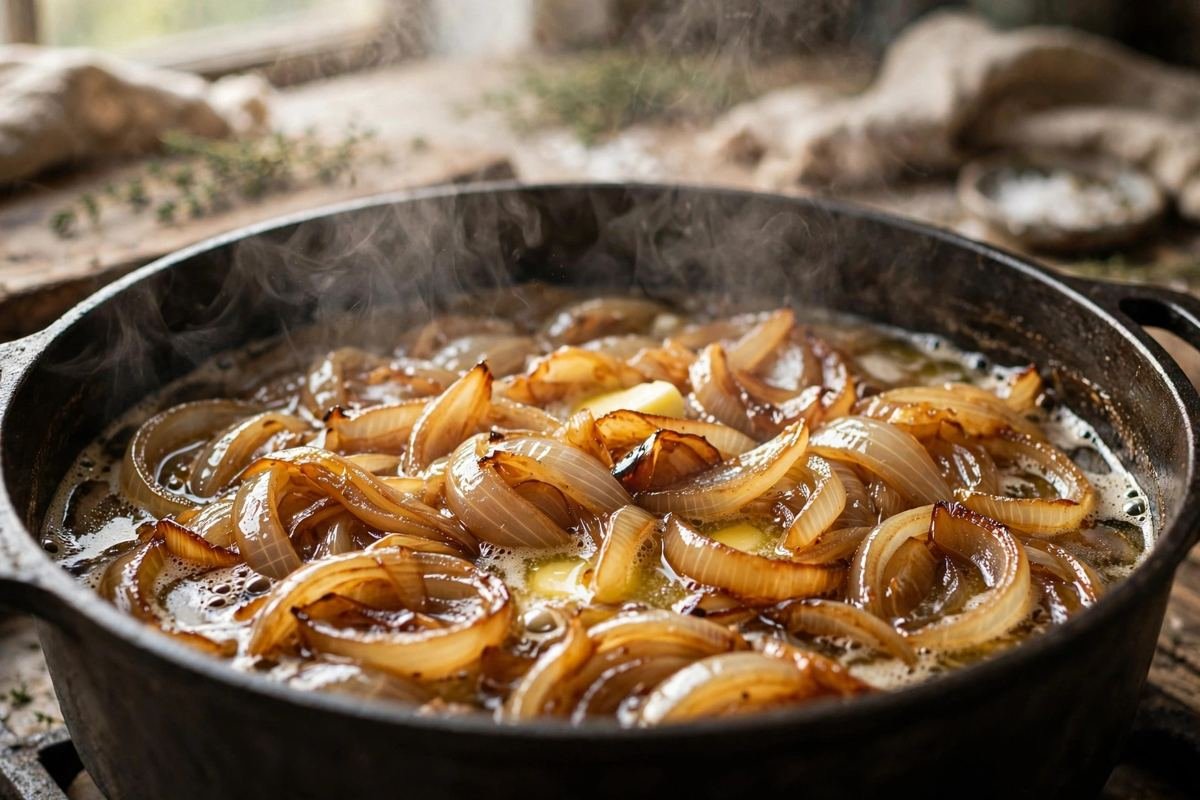
Melt butter in a large, heavy-based pot over a medium heat, with a little oil if you like. Add the sliced onions and a pinch of salt, stir to coat them in butter, and lower the heat. The onions should cook gently, not fry, stirring regularly until they soften and release their moisture.
Then comes the patient part. Cook the onions over a low to medium heat for thirty to forty minutes, stirring every few minutes, until they are soft, sweet and deep golden brown. If they start to catch, lower the heat and add a splash of water. The colour should come from slow cooking, not high heat.
When the onions are ready, pour in the white wine and let it bubble for a minute or two, scraping up any browned bits from the base. Add the beef stock, bay leaf and thyme, simmer gently for twenty to thirty minutes more, then season with salt and pepper, add the sherry or brandy if using it, and remove the bay leaf and thyme.
Finishing the soup
While the soup simmers, toast slices of baguette or firm white bread until crisp and golden on both sides. The bread needs to be dry and sturdy, because soft bread will fall apart. Aim for a slice about a centimetre thick: too thin and it will sink, too thick and it will not soak up enough soup.
Ladle the hot soup into ovenproof bowls, place a slice of toast on top of each, and cover generously with grated cheese. Grill for a few minutes, until the cheese bubbles and browns at the edges. Serve at once, on a plate or a folded cloth, because the bowls are very hot, and let them stand for a minute before eating.
Variations to try
The classic version is hard to beat, but there are variations worth trying. A vegetarian version uses a good vegetable stock, with a little soy sauce or miso for depth. A richer version adds a splash of port instead of sherry, or a spoonful of Dijon mustard stirred into the onions near the end.
Some cooks add a little garlic, or a pinch of sugar to help the onions caramelise, although they should sweeten on their own with enough time. A lighter version uses less cheese, while a heartier version adds a second slice of toast underneath the first. Our guide to mashed potatoes covers another classic side.
What to serve with French onion soup
French onion soup is rich, so it pairs well with something fresh and simple. A green salad with a sharp vinaigrette cuts through the richness, and a glass of dry white wine or a light red works well alongside it.
As a starter, serve a small bowl, and as a main course, serve a large bowl with a salad and extra bread. It is also a good lunch dish on a cold day. Keep the rest of the meal light, because the soup itself is filling.
Storing and reheating leftovers
French onion soup keeps well, but it needs careful handling. Cool it quickly after cooking, and refrigerate leftovers within two hours. Store it in a covered container in the fridge, and use it within three to four days. Keep the bread and cheese topping separate, and add fresh toast and cheese when you reheat.
Reheat the soup gently on the hob until it is piping hot all the way through, and never reheat it more than once. If you have reheated a portion and some is left, throw the remainder away. Cook the soup thoroughly, and wash your hands, boards and utensils before and after handling food.
French onion soup at a glance
| Stage | Classic choice | Why it works | Watch out for |
|---|---|---|---|
| Onions | Yellow onions, thinly sliced | Sweet and sturdy when cooked slowly | Uneven slices cook unevenly |
| Fat | Butter, with a little oil | Rich flavour, less burning | High heat burns the butter |
| Stock | Good beef stock | Depth and savoury flavour | Thin stock makes thin soup |
| Flavouring | White wine, thyme, bay leaf | Brightness and aroma | Too much wine overpowers |
| Bread | Toasted baguette, crisp | Holds up in the soup | Soft bread falls apart |
| Cheese | Gruyere, grated | Melts smoothly, browns well | Sliced cheese melts unevenly |
| Finishing | Hot grill, a few minutes | Bubbled, browned top | Grill too close burns the top |
The table is a guide, not a rigid rule: the best soup is the one made with care, using the ingredients you have, and cooked slowly enough for the onions to turn sweet.
Your French onion soup checklist
Work through this list before you start cooking.
- Slice the onions evenly: thin, even slices cook at the same rate and caramelise properly.
- Use a heavy pot: a heavy base spreads the heat and stops the onions catching.
- Keep the heat low: slow cooking gives sweet, golden onions; high heat gives burnt ones.
- Stir every few minutes: regular stirring keeps the onions cooking evenly.
- Use good stock: the stock is half the soup, so choose the best you can.
- Toast the bread well: crisp toast holds up in the soup; soft bread falls apart.
- Grate the cheese: grated cheese melts evenly over the toast.
- Cool leftovers quickly: refrigerate within two hours and use within three to four days.
Frequently asked questions
How long does it take to caramelise onions for French onion soup?
Allow thirty to forty minutes over a low to medium heat, stirring every few minutes, until the onions are soft, sweet and deep golden brown. Rushing them over high heat will burn them before they sweeten, so patience is the main ingredient.
Can you make French onion soup without wine?
Yes, you can leave the wine out and add a little extra stock instead. The wine adds brightness and depth, but the soup is still good without it. A splash of vinegar or lemon juice at the end can add a little of the same lift.
What is the best cheese for French onion soup?
Gruyere is the classic choice, because it melts smoothly, browns well and has a nutty flavour that suits the sweet onions. Emmental is a good alternative, and a mix of the two is common. Grate the cheese so it melts evenly.
Can you make French onion soup ahead of time?
Yes, the soup base keeps well in the fridge for three to four days, and it often tastes better the next day. Store the soup without its topping, and add fresh toast and cheese when you reheat it, so the topping stays crisp.
Can you freeze French onion soup?
Yes, the soup base freezes well for a few months, without the bread and cheese topping. Cool it quickly, freeze it in portions, and defrost it fully in the fridge before reheating it gently until piping hot. Add fresh toast and cheese to serve.
Why is my French onion soup too sweet or too salty?
Sweetness usually comes from onions cooked too long or too fast, or from a sweet stock, while saltiness usually comes from a salty stock or from seasoning before the soup has reduced. Taste at the end, season lightly, and use a good stock that is not overly salty.
Sources
This guide is based on widely published accounts of French onion soup, including its history in Parisian bistros and classic recipes using beef stock, Gruyere and toasted bread. Food safety guidance follows the standard advice to cook food thoroughly, refrigerate leftovers promptly and reheat only once. For more classic dishes, our guide to baked chicken breast covers another simple main course.
The bottom line
French onion soup is a simple dish that rewards patience. Good onions, cooked slowly until deep gold and sweet, a well-seasoned stock, crisp toast and melted Gruyere are all it takes. There is no shortcut for the caramelising, but there is nothing difficult about it either.
Your next step is simple: buy a bag of firm yellow onions, a good beef stock and a piece of Gruyere, and set aside an unhurried hour in the kitchen. Cook the onions slowly, taste as you go, and finish the soup under the grill just before serving. Once you have made it, you will know why it has lasted so long.