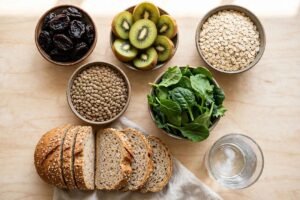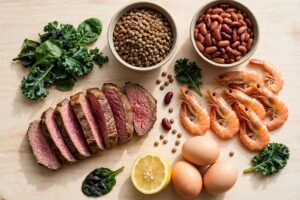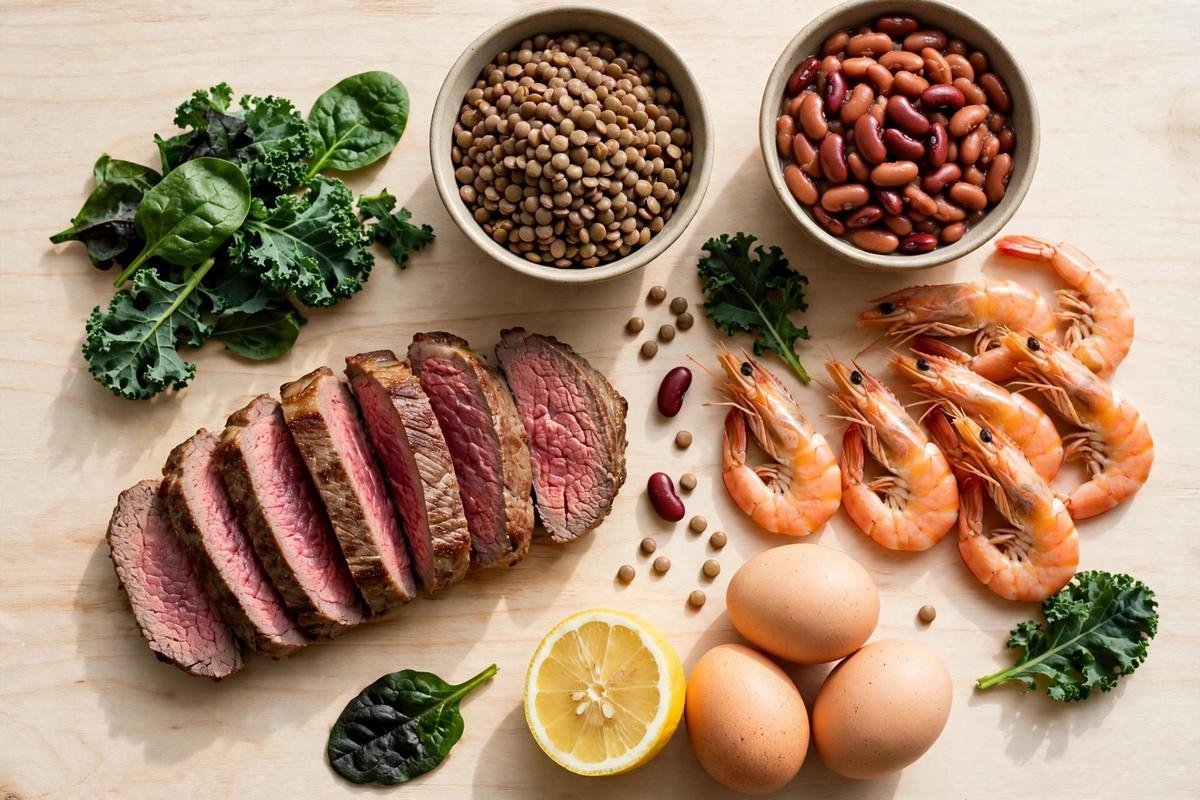

Foods high in iron are the foods that help the body make healthy red blood cells, which carry oxygen around the body. Iron is found in red meat, liver, shellfish, beans, lentils, leafy greens and fortified foods, and a varied diet usually provides it without any special effort.
So which foods are genuinely rich in iron, and how can you get more from the meals you already eat? The short answer is to include a mix of animal and plant sources, and to pair plant foods with vitamin C, which helps the body absorb the iron they contain. This guide explains the main sources, the difference between heme and non-heme iron, and the simple habits that make a difference.
Key takeaways:
- Red meat, liver and shellfish are among the richest sources of iron, and the iron in animal foods is absorbed more easily.
- Beans, lentils, leafy greens, tofu and fortified foods are valuable plant sources, especially when eaten with vitamin C.
- Vitamin C helps the body absorb iron from plant foods, so citrus, peppers and tomatoes make a useful partner at the same meal.
- A varied diet with iron-rich foods at several meals is more useful than a single large portion once in a while.
What is iron, and why does it matter?
Iron is a mineral the body needs to make haemoglobin, the part of red blood cells that carries oxygen from the lungs to the rest of the body. Without enough iron, the body cannot make enough healthy red blood cells, and that can leave a person feeling tired, pale or short of breath.
Most people get the iron they need from food, because the body stores iron and uses it carefully. The amount a person needs changes with age, with sex and with life stage, and some people need more than others. Teenagers, women of childbearing age, pregnant people, athletes and people who eat little or no meat are among those who may need to pay closer attention to iron-rich foods.
Heme iron vs non-heme iron
Iron in food comes in two forms, and the difference matters. Heme iron is found in animal foods such as red meat, liver, poultry and shellfish. The body absorbs heme iron more easily than the other form, which is one reason a small portion of red meat or shellfish can be such a useful source.
Non-heme iron is found in plant foods such as beans, lentils, leafy greens, nuts, seeds and fortified cereals, and also in eggs and dairy in smaller amounts. The body absorbs non-heme iron less easily, and how much is absorbed depends on what else is eaten at the same meal. That does not make plant sources poor choices, but it does mean the meal around them matters more.
The practical point is simple: people who eat meat and fish get a mix of both forms, while people who eat only plant foods rely on non-heme iron alone. A plant-based diet can still provide plenty of iron, but it needs a little more thought, more variety and a regular partner in vitamin C at meals.
The best animal sources of iron
Red meat is the best-known source of iron, and it is rich in heme iron. Beef and lamb are both strong choices, and liver is one of the richest iron foods of all, although its strong flavour means it is not to everyone’s taste.
Shellfish is another excellent source, and it is easy to overlook. Oysters, mussels and clams are particularly rich in iron, and prawns and other shellfish also contribute. Poultry and eggs provide smaller amounts, but they still help, especially when they appear in meals alongside plant sources. Our guide to baked chicken breast covers a simple way to cook poultry well.
The best plant-based sources of iron
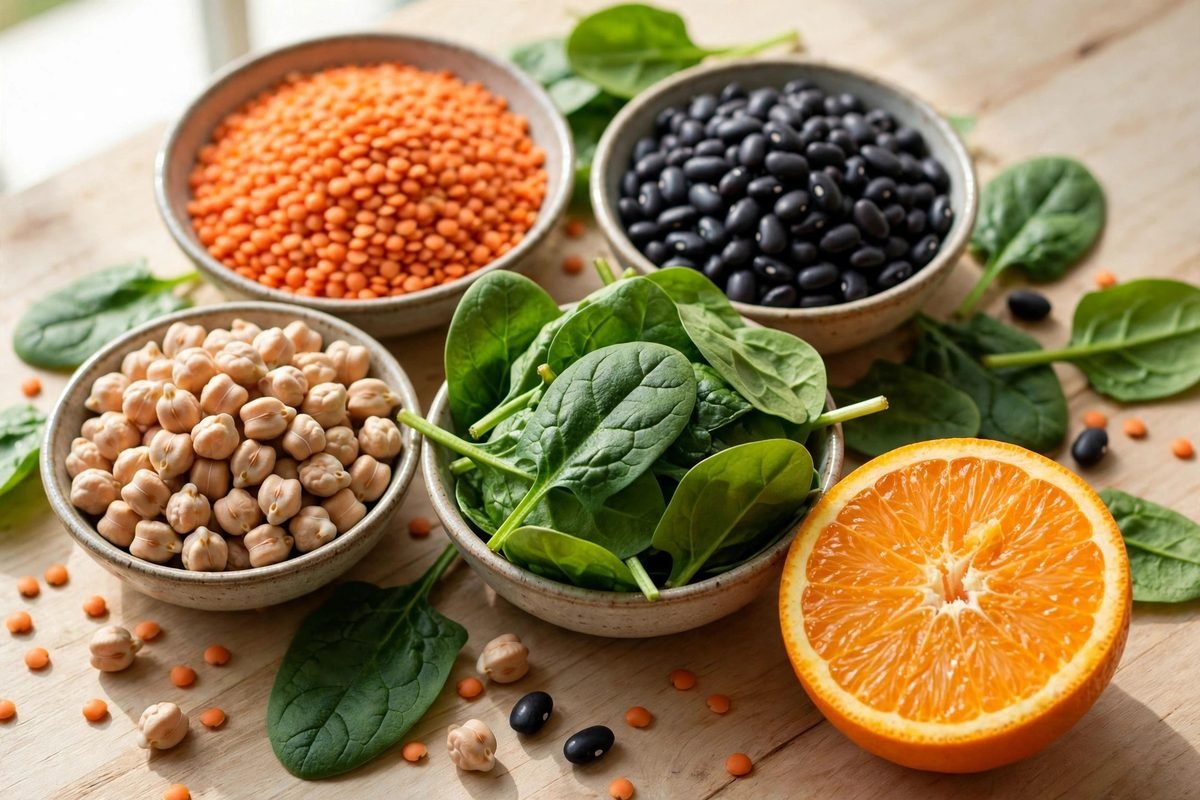
Beans and lentils are the backbone of plant-based iron, and they are also cheap, filling and easy to cook. Red lentils, brown lentils, black beans, kidney beans and chickpeas are all good sources, and they work in soups, stews, curries, salads and wraps. Tofu, tempeh and other soya foods are useful too, especially when they are made with calcium salts, which is worth checking on the label.
Leafy greens are another valuable source. Spinach, kale and chard all contain iron, and they are easy to add to a meal in generous amounts, wilted into pasta, stirred into a curry or blended into a soup. Nuts and seeds, including pumpkin seeds, sesame seeds and cashews, add smaller amounts, and dried fruit such as apricots and raisins can help too. Fortified breakfast cereals and fortified breads are a useful everyday source, because iron is added during manufacture.
How vitamin C helps iron absorption
Vitamin C is the best-known helper for iron absorption, and it works mainly with non-heme iron from plant foods. It changes the iron into a form the body can absorb more easily, and it can make a real difference to how much iron a meal provides. The effect is strongest when the vitamin C food is eaten at the same meal as the iron-rich food.
The simplest way to use this is to add a source of vitamin C to a plant-based meal. A squeeze of lemon over lentils, tomatoes in a bean stew, peppers in a stir-fry, or an orange or a handful of strawberries after a meal all work.
What can make iron harder to absorb?
Some foods and drinks can reduce how much iron the body absorbs from a meal, especially non-heme iron. Tea and coffee are the best-known examples, because compounds in them can bind to iron and make it harder to absorb. The effect is strongest when tea or coffee is drunk with the meal itself, rather than between meals.
Calcium can also reduce iron absorption when it is eaten in large amounts at the same meal, which is why a large glass of milk with an iron-rich meal is not the best pairing. This does not mean calcium foods should be avoided, only that spacing them out a little can help. Wholegrains and legumes contain natural compounds that can also bind iron, but cooking, soaking and fermenting these foods reduces the effect, and a varied diet with vitamin C at meals usually balances it out.
How to build iron-rich meals
Building an iron-rich meal is easier than it sounds, because most iron-rich foods are everyday ingredients. A beef stew with carrots and potatoes, a lentil curry with tomatoes, a spinach and chickpea stew with lemon, or a stir-fry with tofu, peppers and broccoli all provide iron and vitamin C together. A fortified cereal with berries at breakfast, and a bean salad with peppers at lunch, add more through the day.
Variety is the key, because no single food provides everything. Mixing animal and plant sources, eating iron-rich foods at several meals rather than one, and adding a source of vitamin C each time is a simple pattern that works. Our guide to high-protein foods covers many of the same ingredients from a protein point of view, and our guide to ground turkey recipes offers more ideas for everyday meals.
Iron-rich foods at a glance
| Food group | Good choices | Type of iron | Best eaten with |
|---|---|---|---|
| Red meat and liver | Beef, lamb, liver | Heme | Vegetables and salad |
| Shellfish | Oysters, mussels, clams, prawns | Heme | Lemon and herbs |
| Beans and lentils | Red lentils, black beans, chickpeas | Non-heme | Tomatoes, peppers, citrus |
| Leafy greens | Spinach, kale, chard | Non-heme | Lemon, tomatoes, orange |
| Fortified foods | Fortified cereals, fortified breads | Non-heme | Fruit and fruit juice |
The table is a guide, not a ranking: the best source is the one you will actually eat, regularly, in a meal you enjoy.
Your iron-rich eating checklist
Work through this list when you plan your meals.
- Include an iron source at most meals: meat, fish, beans, lentils, greens or a fortified food.
- Mix animal and plant sources: a varied diet gives a mix of heme and non-heme iron.
- Add vitamin C: citrus, peppers, tomatoes or berries at the same meal as plant iron.
- Time your tea and coffee: enjoy them between meals rather than with an iron-rich meal.
- Soak and cook legumes well: soaking beans and cooking lentils thoroughly helps absorption.
- Keep portions regular: modest portions several times a week beat one very large portion.
- Check fortified foods: look for iron on the label of cereals and breads you buy often.
- Watch for tiredness: ongoing tiredness, paleness or breathlessness is worth discussing with a clinician.
Frequently asked questions
What food is highest in iron?
Liver and shellfish such as oysters, mussels and clams are among the richest sources of iron, followed by red meat. Among plant foods, lentils, beans and leafy greens are strong choices, especially when eaten with a source of vitamin C.
Can you get enough iron without eating meat?
Yes, many people do, but it needs a little more planning. Beans, lentils, tofu, leafy greens, nuts, seeds and fortified foods can all provide iron, and eating them with vitamin C at the same meal helps the body absorb it.
Does vitamin C really help iron absorption?
Yes, vitamin C helps the body absorb non-heme iron from plant foods, and the effect is strongest when the vitamin C food is eaten at the same meal. Citrus fruit, peppers, tomatoes and berries are all useful partners.
Does tea stop the body absorbing iron?
Tea and coffee can reduce how much iron is absorbed from a meal, especially plant iron, when they are drunk with the meal. Drinking them between meals, rather than with food, is a simple way to reduce the effect.
Should you take an iron supplement?
Most people do not need a supplement if they eat a varied diet, and iron supplements can cause side effects and can be harmful in large amounts. Anyone who thinks they may be low in iron should speak to a clinician and have their iron levels checked before taking a supplement.
What are the signs of low iron?
Low iron can cause tiredness, paleness, shortness of breath, headaches and a fast heartbeat, but these symptoms have many possible causes. A blood test is the only reliable way to know, so speak to a clinician if you are concerned.
Sources
This guide is based on widely published nutrition guidance about iron-rich foods and absorption, including advice from national health services and nutrition organisations. For more everyday meal ideas, our guide to high-protein foods covers many of the same ingredients, and our guide to baked chicken breast covers a simple iron and protein main course.
The bottom line
Iron is not a rare nutrient, and it is not a difficult one to get from food. Red meat, liver and shellfish are rich sources, beans, lentils and leafy greens are strong plant sources, and vitamin C at the same meal helps the body make the most of plant iron. A varied diet, with iron-rich foods at several meals, is the pattern that works best.
Your next step is simple: look at the meals you already eat, add an iron-rich food to one or two of them, and add a source of vitamin C to the same plate. If you feel persistently tired or unwell, or if you think you may be low in iron, speak to a clinician and ask for a blood test before changing your diet or taking a supplement.
Please note: this article is general nutrition information only and is not medical advice. It makes no claim to diagnose, treat or cure any condition. If you have a health concern, or if you are thinking about taking an iron supplement, please speak to a clinician first.