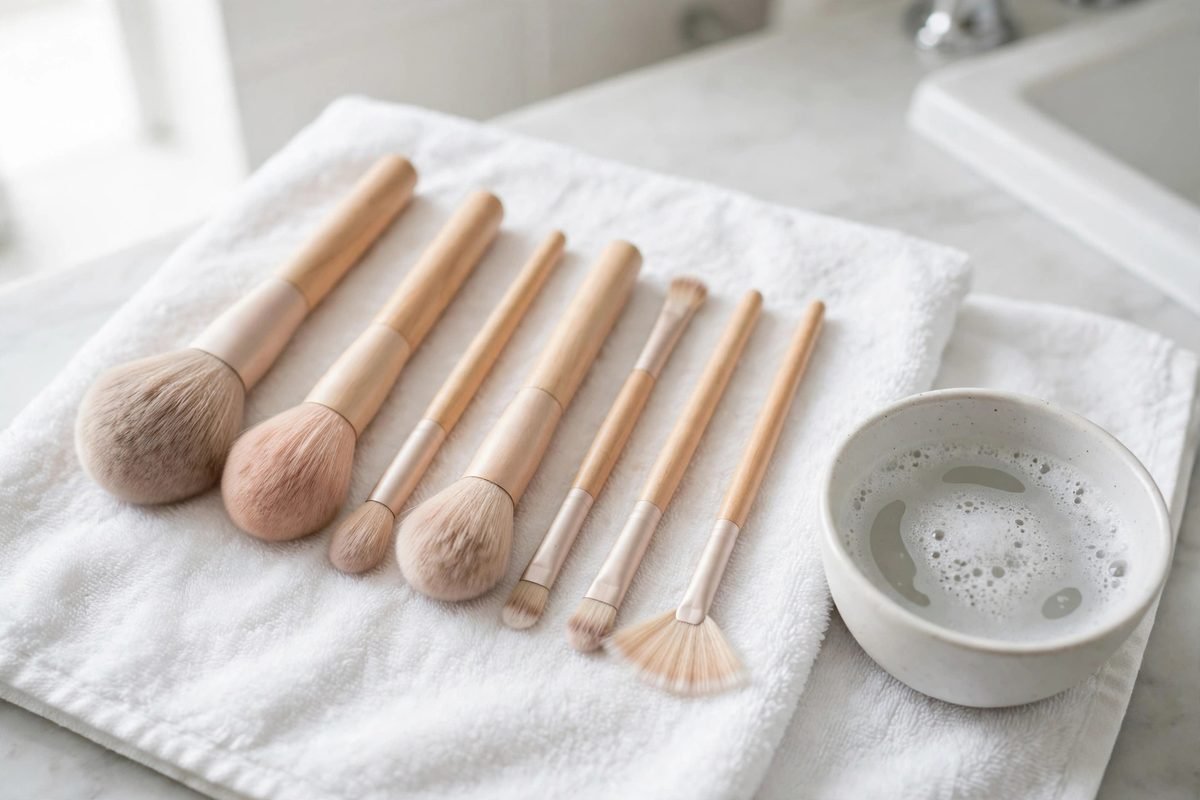
Learning how to clean makeup brushes properly is one of the simplest ways to look after both your skin and your makeup. Dirty brushes collect old product, oil, dust and bacteria, and every time you use them, all of that goes back onto your face.
So how should you clean makeup brushes? Wash them with lukewarm water and a gentle cleanser, swirling the bristles until the water runs clear, then rinse, reshape and lay them flat to dry. Foundation and concealer brushes need washing at least once a week, while powder brushes can go a little longer, and this guide walks you through every step.
Clean brushes also make your makeup look better. Product goes on more smoothly, colours stay true instead of muddying into each other, and brushes last longer when they are washed regularly.
Key takeaways:
- Wash foundation and concealer brushes at least once a week, and powder brushes every one to two weeks.
- Use lukewarm water and a gentle soap or brush cleanser, and swirl the bristles until the water runs clear.
- Never soak the whole brush or stand it upright to dry, since water loosens the glue that holds the bristles in place.
- Dry brushes flat or hanging bristle-down, with the bristles reshaped, and do not use a brush until it is fully dry.
- Replace a brush when it sheds constantly, feels scratchy, loses its shape or smells musty even after washing.
Why clean makeup brushes matter
A makeup brush touches your face every day, and it picks up more than makeup. Skin oil, dead skin cells, dust and moisture all collect in the bristles, and a damp brush left in a warm bathroom is a comfortable place for bacteria to grow. Using a dirty brush can irritate sensitive skin and contribute to breakouts.
Dirty brushes also work less well. A foundation brush clogged with old product drags and streaks instead of blending, an eyeshadow brush full of yesterday’s colour muddies today’s shade, and a powder brush stiff with product cannot pick up powder evenly. Cleaning restores the softness and shape the brush was designed with. Our guide to how to get rid of dark circles explains why gentle care around the eyes matters, and clean brushes are part of that approach.
How often should you clean makeup brushes?
How often you wash a brush depends on what it is used for. Brushes used with liquid or cream products need washing most often, because wet product feeds bacteria and dries into a stiff crust. Brushes used with dry powder stay cleaner for longer, but they still need regular washing.
Foundation and concealer brushes should be washed at least once a week, and more often if you use them daily or have breakout-prone skin. Brushes used for cream blush, contour or liquid highlighter need the same weekly routine. Powder, blush, bronzer and eyeshadow brushes can be washed every one to two weeks.
What you need to clean makeup brushes
You do not need expensive equipment to wash brushes well. A gentle cleanser, lukewarm water, a clean towel and a flat surface for drying are enough. A mild liquid soap, a gentle shampoo or a dedicated brush cleanser all work well, as long as the product is gentle and rinses clean.
A silicone brush-cleaning mat can help loosen stubborn product, but your palm works just as well. Avoid harsh detergents, washing-up liquid and strong solvents, which can dry out natural bristles and damage the glue at the base.
How to clean makeup brushes, step by step
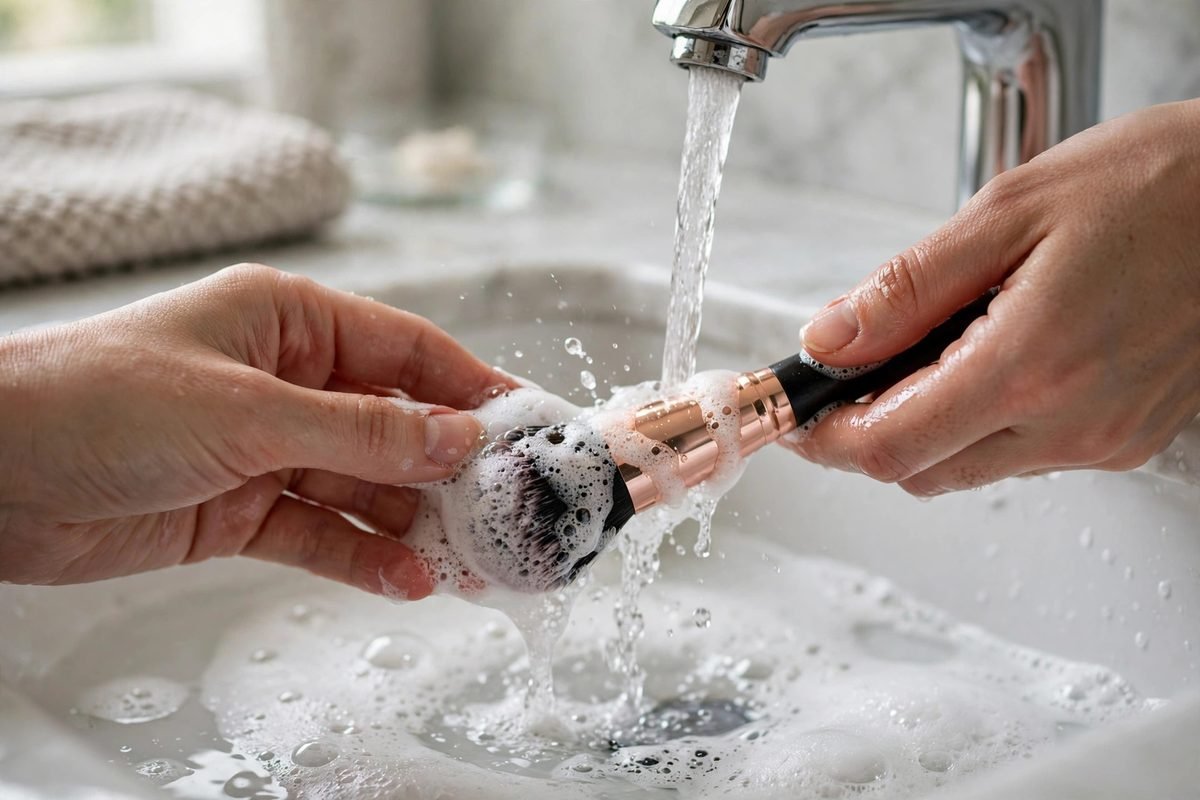
Washing a brush takes only a couple of minutes, and the method is the same for a big powder brush or a small eyeshadow brush. Take your time with the rinse, since leftover soap is as bad as leftover makeup.
- Wet the bristles under lukewarm running water, holding the brush bristles down so water does not run into the handle.
- Add a drop of gentle cleanser to your palm, a cleaning mat or a small bowl of lukewarm water.
- Swirl the bristles gently in the cleanser, without pressing hard or splaying them.
- Rinse under lukewarm water, still bristles down, until the water runs completely clear.
- Repeat the wash if the water is still cloudy or coloured after the first rinse.
- Gently squeeze out the excess water with your fingers or a clean towel, without pulling or twisting the bristles.
- Reshape the bristles with your fingers so the brush dries in its proper shape.
- Lay the brush flat on a clean towel, bristles over the edge of a counter, and leave it to dry fully.
Cleaning different types of brushes
Large powder and bronzer brushes have a lot of bristles, so they take longer to rinse clean, and you may need to repeat the wash twice. Hold them bristles down and work the cleanser through in sections rather than mashing the whole head at once.
Foundation and concealer brushes hold the most product, and they are the ones that need the most thorough wash. Cream and liquid formulas cling to the base of the bristles, so spend extra time working cleanser into the centre of the brush head, not just the tips. A second wash is normal for these brushes.
How to dry makeup brushes properly
Drying is where many people damage their brushes without realising it. Keep water away from the ferrule, the metal band that holds the bristles to the handle, because water loosens the glue inside it and makes bristles shed. That is why brushes should never be soaked, or stood upright in a cup while wet.
The best way to dry brushes is flat, on a clean towel, with the bristles hanging slightly over the edge of a counter so air can circulate around them. Alternatively, hang them bristle-down from a drying rack, which lets water drip away from the handle. Reshape the bristles first, so the brush dries in its proper shape.
Makeup brush hygiene: what else matters
Do not share brushes with other people, and be careful with testers in shops, since shared brushes can pass on skin infections. If you use a brush on broken skin or a spot, wash it straight afterwards. Wash your hands before you do your makeup too. Keeping tools clean is a habit that applies beyond makeup: the same regular routine that keeps a kitchen in good order, as in our guide to how to clean an oven, works for brushes too.
If you have sensitive or reactive skin, clean brushes matter even more. Residue and bacteria on a dirty brush can aggravate redness and irritation, so choose a gentle, fragrance-free soap for washing. Our guide to rosacea explains how easily reactive skin can be irritated, and keeping brushes clean is one of the simplest ways to reduce that risk.
When to replace makeup brushes
Good brushes can last for years with regular washing, but they do not last forever. Replace a brush when it sheds bristles constantly, even after washing. A brush that feels scratchy or has bristles that stay bent out of shape is past its best too.
Other signs include a handle that is loose or cracked, a ferrule that wobbles, and a smell that does not go away after washing. A musty smell that survives a thorough wash usually means moisture has got into the handle, and the brush should go. The same applies to beauty sponges, which should be replaced every one to three months.
| Brush type | How often to wash | Why | Quick clean between washes |
|---|---|---|---|
| Foundation brush | At least once a week | Liquid product builds up fast and feeds bacteria | Wipe on a tissue after each use |
| Concealer brush | At least once a week | Cream product clings to the bristles | Wipe on a tissue after each use |
| Powder brush | Every one to two weeks | Dry powder stays cleaner for longer | Tap off excess powder after use |
| Blush and bronzer brush | Every one to two weeks | Dry powder, used over a smaller area | Wipe on a clean towel between shades |
| Eyeshadow brush | Every one to two weeks | Pigment builds up and muddies colours | Wipe on a towel between colours |
| Eyeliner and lip brush | After every use | Used near the eyes and mouth, where skin is delicate | Spray cleanser on a tissue |
The table is a guide, not a strict rule. If you use a brush daily, wash it more often, and if your skin is prone to breakouts, wash more often too. The best schedule is the one you actually keep.
Your makeup brush cleaning checklist
- Wash foundation brushes weekly, and powder brushes every one to two weeks
- Use lukewarm water and a gentle soap, shampoo or brush cleanser
- Hold the brush bristles down while wetting and rinsing
- Swirl gently until the water runs clear, and repeat the wash if it does not
- Reshape the bristles, then lay brushes flat or hang them bristle-down to dry
- Never use a brush until it is completely dry, and never dry it with a hairdryer
- Wipe eyeshadow brushes on a clean towel between colours
- Replace a brush that sheds, feels scratchy or smells musty after washing
Frequently asked questions
Can you clean makeup brushes with shampoo?
Yes, a gentle shampoo works well for cleaning makeup brushes, and it is a good choice for natural-hair brushes in particular. Use a mild, fragrance-free shampoo, a small amount at a time, and rinse thoroughly until the water runs clear. Avoid shampoos with heavy conditioning ingredients.
Can you use washing-up liquid to clean makeup brushes?
It is best not to. Washing-up liquid is designed to strip grease from dishes, and it can dry out bristles, damage natural hair and loosen the glue that holds the brush together. A gentle soap or brush cleanser cleans just as well without the damage.
How long do makeup brushes take to dry?
Most brushes take several hours to dry, and large, dense brushes can take overnight. Wash brushes in the evening when you can, and never use a hairdryer to speed things up.
Should you soak makeup brushes in water?
No, never soak the whole brush. Water that reaches the ferrule loosens the glue holding the bristles, which causes shedding and can make the handle come loose. Only the bristles should get wet, and the brush should be held bristles down while you wash and rinse it.
Can dirty makeup brushes cause breakouts?
Dirty brushes can contribute to breakouts, especially if they are used with liquid foundation on breakout-prone skin. Old product, oil and bacteria collect in the bristles and are transferred to the face with every use. Regular washing is one of the simplest steps you can take.
Sources
Cleaning guidance here follows the general recommendations published by dermatologists and beauty professionals for brush hygiene: wash foundation brushes weekly, use lukewarm water and a gentle cleanser, and dry brushes flat or bristle-down.
The bottom line
Cleaning your makeup brushes is a small habit with a visible payoff. Your makeup applies more smoothly, your colours stay true, your brushes last longer, and your skin gets a cleaner start every morning. None of it needs special equipment, just lukewarm water, a gentle cleanser and a few minutes once a week.
Your next step is to wash the brush you use most, tonight, using the method in this guide. Once you feel how soft and clean it is when it dries, the rest of the set will follow.
Note: if you have a skin condition, broken skin, an eye infection or a reaction that does not clear up, stop using the brush on the affected area and speak to your doctor or pharmacist. This article is general guidance, not medical advice.