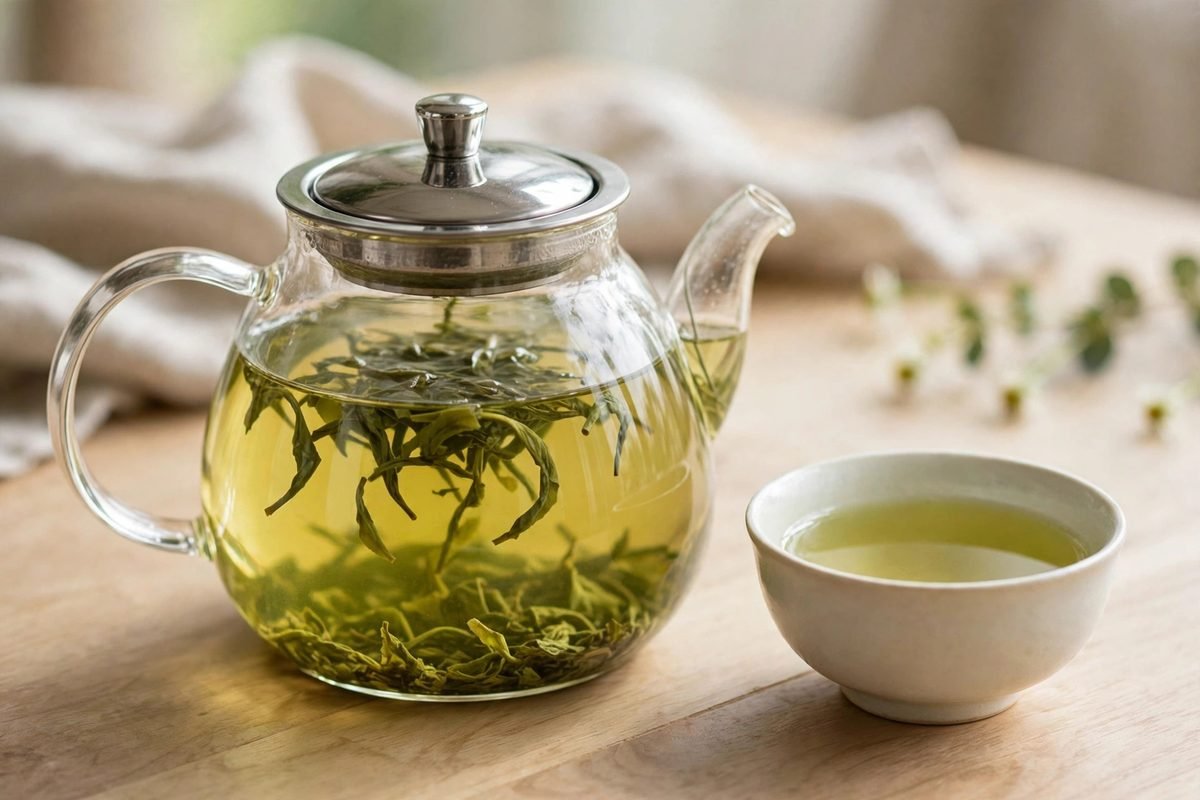

Learning how to brew green tea properly is the difference between a smooth, fragrant cup and a bitter one you push aside. Green tea is delicate, and it rewards a gentler hand than black tea: cooler water, a shorter steep and a little patience.
So what is the best way to brew green tea? Use water at around 70 to 80 degrees Celsius, steep the leaves for one to three minutes, and use about one teaspoon of loose leaf per cup. That simple formula suits most green teas, and the rest of this guide shows you how to adjust it for different tea types, fix a bitter cup and keep your leaves fresh.
Green tea comes from the same plant as black tea, Camellia sinensis, but the leaves are heated soon after picking to stop them oxidising, which keeps their green colour and fresh, grassy flavour. That freshness is why brewing technique matters so much.
Key takeaways:
- Use water at 70 to 80 degrees Celsius for most green teas, never fully boiling water, which scorches the leaves and turns the cup bitter.
- Steep for one to three minutes, and start tasting at one minute so you can stop the brew while it is still smooth.
- Use about one teaspoon of loose leaf tea per cup, and always lift the leaves out when the time is up.
- Delicate teas such as gyokuro need cooler water, while rolled teas such as gunpowder can take hotter water.
- Store green tea in an airtight container away from light, heat and strong smells.
What you need to brew green tea
You do not need specialist equipment to brew good green tea. A teapot or a large mug, a strainer or infuser, a kettle and a kitchen timer are enough. A thermometer takes the guesswork out of water temperature, but you can manage without one, as the next section explains.
Loose leaf tea gives the best results because the leaves have room to unfurl in the water, which releases their flavour evenly. Tea bags are convenient and work well for everyday drinking, so use whichever suits your morning. Water quality matters too: tap water with a strong chlorine taste will show up in the cup, so filtered water is worth using if your tap water tastes of chemicals. Our guide to how to make tea covers the basics for every kind of tea.
Water temperature: the single most important detail
Water temperature is the one thing that makes or breaks a cup of green tea. Most green teas brew best at 70 to 80 degrees Celsius, well below boiling. Water at 100 degrees scorches the leaves and flattens the fresh flavour you are trying to keep.
If you do not have a thermometer, boil the kettle and let it stand for three to five minutes. In an open jug or a cold teapot, water drops roughly ten degrees in the first couple of minutes, which usually lands you in the right range.
Delicate teas need even cooler water: gyokuro brews best at around 50 to 60 degrees, while rolled teas such as gunpowder can handle water nearer 80 to 85 degrees. When in doubt, start cooler: a tea brewed too cool tastes mild and can be steeped longer, but a tea brewed too hot turns bitter and cannot be rescued.
How much tea and how long to steep
As a starting point, use about one teaspoon of loose leaf tea, roughly two grams, per cup of water. A standard cup is about 200 to 250 millilitres. If you like a stronger cup, add more leaf rather than steeping longer, because extra time pulls out bitterness.
Steeping time is short: one to three minutes for most types. Sencha is usually ready in one to two minutes, while Chinese greens such as Dragon Well often taste best at two to three minutes. Start tasting at one minute.
How to brew green tea, step by step
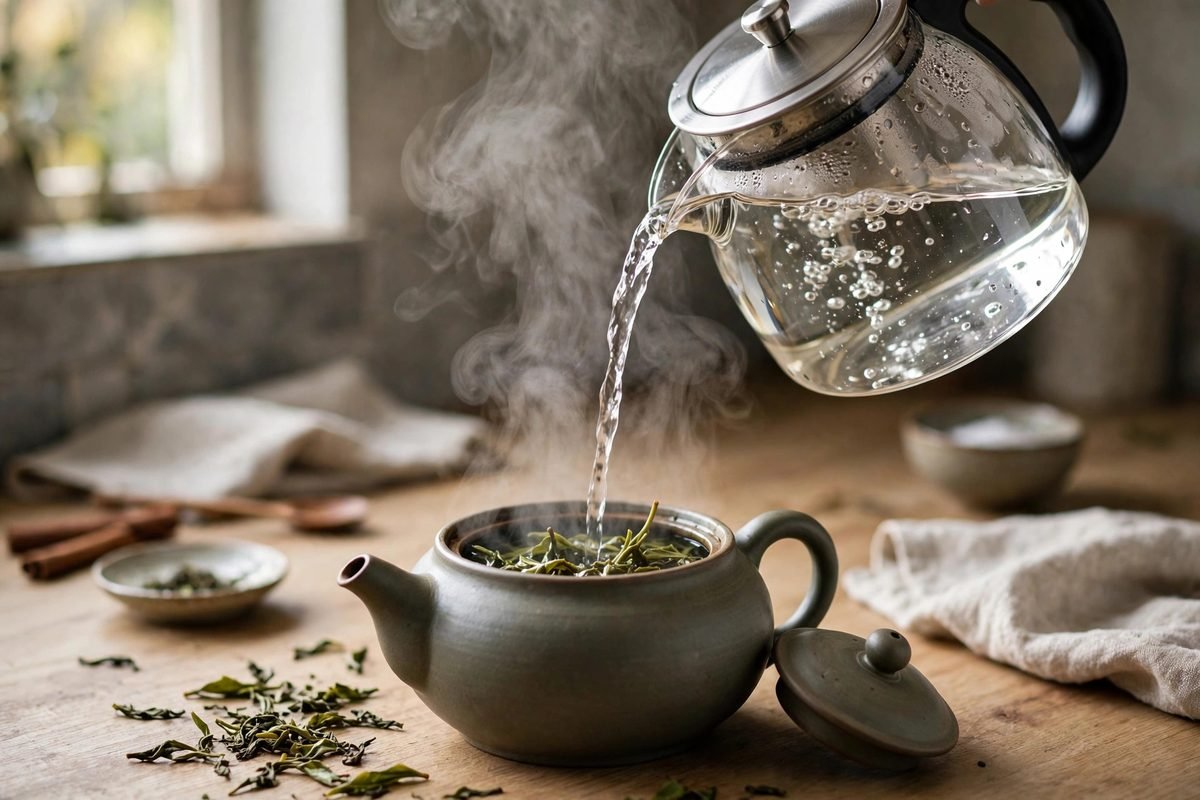
Brewing green tea well is a short routine. Follow these steps and adjust the temperature and timing to suit your tea.
- Warm the teapot or cup with a little hot water, then tip it away.
- Heat fresh water and let it cool to the right temperature, usually 70 to 80 degrees Celsius.
- Add the tea leaves to the pot or infuser, about one teaspoon per cup.
- Pour the water over the leaves in a slow, even stream.
- Cover and steep for one to three minutes, tasting from one minute onwards.
- Remove the leaves completely, pour the tea and enjoy it straight away.
If you are brewing in a mug with an infuser basket, lift the basket out when the time is up. The key point is the same either way: the leaves come out when the time is up, and the tea you pour is finished, not still brewing.
Green tea types and how to brew each one
Green tea is not one flavour. Chinese greens tend to be smooth and nutty, while Japanese greens are brighter and more grassy. Sencha is the everyday green tea of Japan, with a fresh, grassy flavour. Dragon Well, or Longjing, is China’s most famous green tea, pan-fired in a wok, with a smooth, nutty taste. Gyokuro is a shaded Japanese tea with a rich, savoury sweetness, and it needs the coolest water of all.
| Tea type | Flavour | Water temperature | Steeping time |
|---|---|---|---|
| Sencha | Fresh, grassy, lightly sweet | 70 to 80 degrees Celsius | 1 to 2 minutes |
| Dragon Well (Longjing) | Smooth, nutty, mellow | 75 to 80 degrees Celsius | 2 to 3 minutes |
| Gyokuro | Rich, savoury, sweet | 50 to 60 degrees Celsius | 2 minutes |
| Jasmine green | Floral, fragrant, soft | 75 to 80 degrees Celsius | 2 to 3 minutes |
| Gunpowder | Bold, slightly smoky | 80 to 85 degrees Celsius | 2 to 3 minutes |
| Hojicha | Toasty, caramel, mellow | 80 to 90 degrees Celsius | 1 to 2 minutes |
Use the table as a starting point, not a set of rules carved in stone. Tea from different gardens and harvests will vary, so treat the first cup from a new packet as a test, note what you did, and adjust the temperature or timing for the next one.
Matcha is the exception to these rules: it is a fine powder whisked into water rather than steeped, which gives it a vivid colour and a stronger flavour. Whisk one to two teaspoons with a little water at 70 to 80 degrees until frothy, or whisk it with warm milk for a latte. Our guide to how to make oat milk is useful for a dairy-free version, since oat milk froths well.
How to cold brew green tea
Cold brewing is the easiest way to make green tea in summer, and it is very forgiving. Because the water is cold, the bitter compounds dissolve slowly, so the result is smooth and sweet even if you leave it longer than planned. Use about one tablespoon of loose leaf tea per 500 millilitres of cold, filtered water in a jug or bottle, stir gently, cover it and leave it in the fridge for six to eight hours, or overnight. If you enjoy chilled tea, our guide to how to make iced tea has more ideas for serving tea cold.
Common mistakes when brewing green tea
The most common mistake is water that is too hot. Boiling water scalds green tea leaves and drags out bitter flavours. If your green tea always tastes harsh, try dropping the temperature by ten degrees first.
The second mistake is steeping for too long. Green tea needs minutes, not the five-plus minutes that suit black tea, and leaving the leaves in the pot while you drink turns a good cup bitter. Set a timer until the habit sticks.
Other mistakes are smaller but worth avoiding. Using too little leaf makes a thin, watery cup, while stale leaves make a flat one, however well you brew them. Storing tea next to the cooker or in a clear jar on a sunny shelf fades its flavour quickly, and milk and sugar both mask the delicate flavour that makes green tea worth drinking, so try it plain first.
How to store green tea
Green tea is more perishable than black tea, and it loses its freshness faster. Light, air, heat and moisture are its enemies, and strong smells are too, since dry tea leaves absorb odours from whatever sits nearby. An opened packet left on a sunny shelf can taste tired within weeks.
Your green tea brewing checklist
- Fresh, good-quality loose leaf or tea bags
- Filtered water at 70 to 80 degrees Celsius for most green teas
- About one teaspoon of leaf per cup, or one tea bag per cup
- A timer set for one to three minutes, tasting from one minute
- Leaves removed completely when the time is up, never left in the pot
- Airtight storage in a cool, dark cupboard, away from light and strong smells
- A second and third steep from the same leaves
Frequently asked questions
How long should you steep green tea?
Most green teas need one to three minutes. Sencha is usually ready in one to two minutes, while Chinese greens such as Dragon Well often taste best at two to three minutes. Start tasting at one minute and lift the leaves out as soon as you like the flavour.
What temperature should green tea be brewed at?
Most green teas brew best at 70 to 80 degrees Celsius. Delicate teas such as gyokuro need cooler water, around 50 to 60 degrees, while rolled teas such as gunpowder can take water up to about 85 degrees. Never use fully boiling water, which scorches the leaves.
Why does my green tea taste bitter?
Bitterness usually comes from water that is too hot or a steep that is too long. Try dropping the temperature by ten degrees and steeping for one minute less, and always remove the leaves when the time is up. Stale tea can also taste harsh, so check your leaves have been stored away from light and heat.
Can you steep green tea twice?
Yes, good loose leaf green tea can usually be steeped two or three times. Add about thirty seconds to each later steep, and use slightly hotter water if you like. The second infusion is often smoother than the first, so do not throw the leaves away after one cup.
Should you add milk or sugar to green tea?
You can, but most green tea tastes best plain. Milk and sugar mask the delicate, grassy flavour that makes green tea distinctive, so try it without anything first. A little honey or lemon suits some green teas, particularly jasmine, but keep additions light.
Sources
Brewing guidance here follows the general recommendations published by tea producers for green tea: water at 70 to 80 degrees Celsius, steeped for one to three minutes.
The bottom line
Brewing good green tea is not complicated, but it does ask for a gentler hand than most people give it. Cooler water, a short steep and fresh leaves are the three things that matter. Start with the basic formula, taste as you go, and adjust one thing at a time.
Your next step is simple: pick one green tea, brew it at 75 degrees for two minutes, and see how it tastes. Then try it cooler, or shorter, or with a second steep, and notice what changes. That is how a good cup becomes a habit.
Note: green tea contains caffeine, though usually less than coffee. If you are sensitive to caffeine, pregnant, or taking medication that interacts with caffeine, drink it earlier in the day and check with your doctor if you are unsure.