

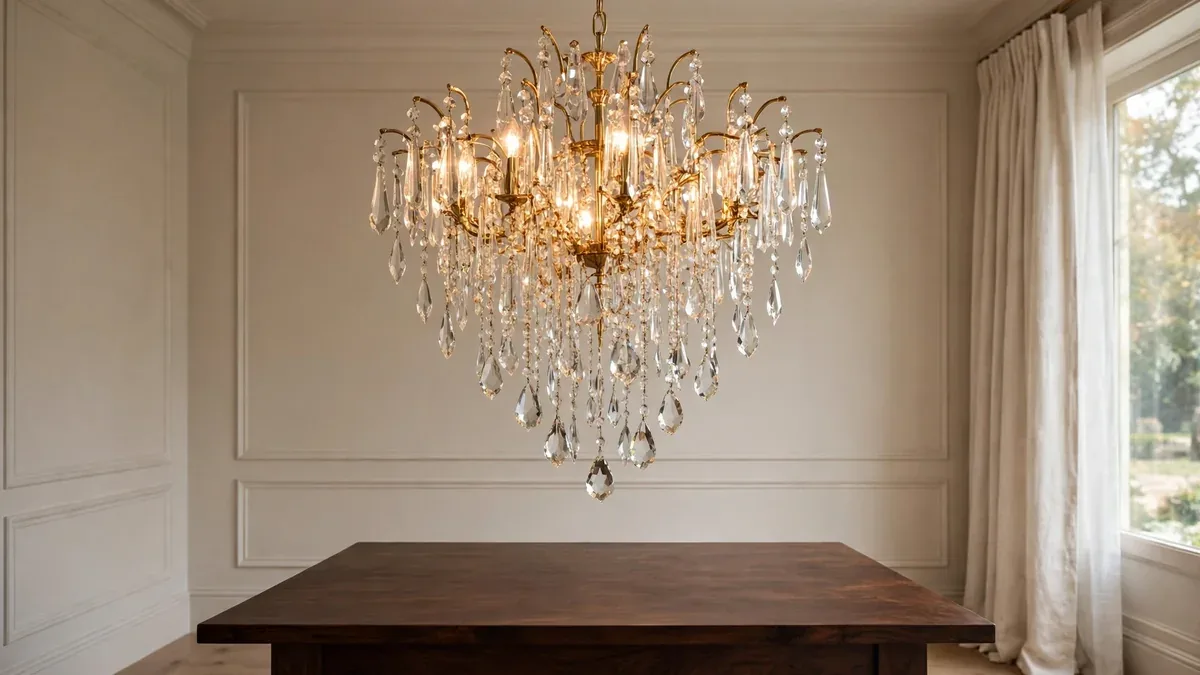

A chandelier is the one fixture that can change a room before a single piece of furniture arrives. It sets the scale of a dining room, gives an entry hall its sense of occasion, and turns an ordinary ceiling into a focal point. The best luxury chandelier brands understand that a chandelier is not only a light source. It is the centrepiece of the room, the piece guests notice first, and the one object that has to look beautiful both lit and unlit, day and night.
Choosing between those brands is harder than it looks. Crystal quality, metal finishing, proportion, and light output all vary widely, and the price gap between a well-made fixture and a merely expensive one is not always obvious from a photograph. A hand-cut crystal chandelier from a heritage French maison behaves very differently from a contemporary sculptural piece, and a fixture that looks perfect in a showroom can overwhelm a low ceiling or disappear against a dark wall at home.
Below are nine brands worth considering in 2027, from centuries-old crystal houses to contemporary lighting studios. Each one is described by what it does well, what to watch for, and where its pieces work best, so you can choose with your room in mind, not just a brand name.
Key takeaways
- Crystal quality is the biggest difference between luxury chandelier brands: hand-cut, high-clarity crystal refracts light cleanly, while lower-grade glass looks flat and dull.
- Measure before you fall in love: a chandelier should be roughly half to two-thirds the width of the table beneath it, and hang 30 to 36 inches above a dining table.
- Heritage crystal houses such as Baccarat, Lalique, and Saint-Louis suit classic and formal rooms, while contemporary studios such as Roll & Hill and Gabriel Scott suit modern interiors.
- Check the light source before buying: integrated LED fixtures are efficient but harder to repair, while socketed fixtures let you change bulbs and warmth easily.
- No chandelier suits every ceiling, and a fixture that is too large, too heavy, or too dim for its room will disappoint no matter how respected the brand is.

What makes a chandelier a luxury chandelier
A luxury chandelier is defined by materials, making, and light, not by price alone. The crystal should be cut by hand or by precision machine, then polished so each facet catches and throws light. The metalwork should be cast, finished, and lacquered to resist tarnishing, not plated thinly over a base that will show wear within a year. The wiring, sockets, and suspension should be engineered for the weight of the piece, because a large crystal chandelier can weigh as much as a person.
Light quality matters just as much. A good chandelier spreads warm, even light across a room without harsh glare or dark corners. That depends on the number and placement of the lights, the clarity of the crystal, and whether the fixture is dimmable. Many luxury brands now offer warm dimming, which shifts the light from bright white to a candle-like amber as it dims.
Provenance is the third part of the story. The heritage crystal houses have been making chandeliers for centuries, and their archives hold designs that have hung in palaces, hotels, and embassies. Contemporary studios bring a different kind of value: original design, new materials, and pieces made in small runs. Neither is better in every room. The right choice depends on the architecture of your home, the height of your ceilings, and the mood you want the room to have.
What to look for in a luxury chandelier brand
Start with scale and weight. Measure the length and width of the room in feet, add the two numbers together, and convert the total to inches. That gives a sensible starting diameter for a chandelier in that room. Then check the ceiling height and the weight rating of the junction box. A heavy crystal fixture needs a braced ceiling support, and that is a job for an electrician, not a hopeful guess.
Look next at the crystal and the finish. Ask whether the crystal is full-lead crystal or a lead-free alternative, how it is cut, and how it is cleaned. Ask whether the metal finish is lacquered, and whether replacement parts such as crystals, arms, and candle covers are available years later. A brand that supports its pieces after the sale is worth more than one that sells a beautiful fixture and disappears. For inspiration on how a statement fixture sits within a finished room, our guide to celebrity home decor shows how designers balance one dramatic piece against quieter furniture and finishes.
Finally, consider the light itself. Count the bulbs, check the maximum wattage, and ask whether the fixture is dimmable and which bulbs it takes. A chandelier with too few lights will leave a dining table dim, and one with harsh, cool bulbs will make even the best crystal look cold. Warm white light, between 2700 and 3000 Kelvin, suits most living and dining rooms.
Baccarat
What we like: Hand-cut full-lead crystal made in France since 1764, exceptional clarity and refraction, and designs that range from the classic Zenith to contemporary collaborations. What to consider: Among the most expensive chandeliers available, and the weight of larger pieces needs professional installation and a braced ceiling. Materials: Full-lead crystal, brass and gilt bronze. Best for: Formal dining rooms, grand entry halls, and classic interiors. Price range: High luxury.
Baccarat is the benchmark against which other crystal chandeliers are measured. The crystal is cut and polished by hand, and the difference is visible the moment the lights come on: the room fills with clean, bright sparkle rather than flat glare. A Baccarat chandelier is a long-term piece that holds its presence for decades, which is why it suits homes where the chandelier is meant to be the centrepiece.
Lalique
What we like: Sculptural, art-led crystal with a distinctive French art deco heritage, and pieces that read as art objects as much as light fixtures. What to consider: Many designs are bold and decorative, so they need a room with enough space and calm around them. Materials: Moulded and hand-finished crystal, often with bronze or lacquered metal. Best for: Art-led interiors, statement entry halls, and collectors. Price range: High luxury.
Lalique chandeliers carry the house style of René Lalique: flowing forms, frosted crystal, and motifs drawn from nature. They are less about traditional candle arms and more about sculpture, which makes them a strong choice when the chandelier is meant to be a work of art.
Saint-Louis
What we like: The oldest crystal maker in France, founded in 1586, with coloured crystal and precise cutting that few houses can match. What to consider: Classic in style, so it suits traditional and transitional rooms more than starkly modern ones. Materials: Full-lead crystal, including coloured crystal, with gilt bronze mounts. Best for: Classic dining rooms, heritage homes, and rooms with antique furniture. Price range: High luxury.
Saint-Louis is the quiet connoisseur choice among the French crystal houses. Its coloured crystal, in deep red, amber, and blue, adds warmth that clear crystal cannot, and its cutting is precise enough that even a small piece throws remarkable light.
Schonbek
What we like: Handcrafted crystal chandeliers made in New York since 1870, with Swarovski crystal options and a wide range from traditional to contemporary. What to consider: The range is large, so quality and style vary by collection, and the most elaborate pieces are a serious investment. Materials: Swarovski and proprietary crystal, brass, and hand-finished metal. Best for: Traditional and transitional homes, hotels, and large dining rooms. Price range: Luxury to high luxury.
Schonbek is the American answer to the French crystal houses, and its workshop tradition is a large part of its appeal. Each fixture is assembled by hand, and the crystal is cut to catch light from many angles.
Swarovski
What we like: Precision-cut crystal with remarkable sparkle, a huge design range, and strong quality control across every collection. What to consider: Some designs lean glamorous and modern, so they suit contemporary rooms better than period interiors. Materials: Precision-cut Swarovski crystal, polished chrome, and brass. Best for: Modern luxury interiors, glamorous dining rooms, and statement lighting. Price range: Luxury.
Swarovski chandeliers are known for one thing above all: brilliance. The crystal is cut by machine to exact tolerances, so the light it throws is sharp, bright, and consistent. That makes Swarovski a strong choice for a modern room where the chandelier is the main decoration.
Visual Comfort
What we like: A broad, designer-led catalogue with collections by well-known interior designers, and reliable quality across many styles and price points. What to consider: With such a large range, it takes care to choose a piece that feels special rather than generic. Materials: Crystal, glass, brass, bronze, and plaster, depending on the collection. Best for: Almost any room, from kitchens to formal dining rooms. Price range: Mid luxury to luxury.
Visual Comfort is the most practical name on this list, and that is a compliment. Its designer collections, including work by Thomas O’Brien, AERIN, and Kelly Wearstler, cover everything from a small linen-shaded chandelier for a bedroom to a large crystal piece for a dining room.
Currey & Company
What we like: Distinctive, handcrafted designs with natural materials, including shell, stone, and hand-blown glass, and a strong sense of craft. What to consider: Many pieces are decorative and organic rather than formally luxurious, so they suit relaxed luxury better than grand formality. Materials: Hand-blown glass, natural shell, stone, brass, and iron. Best for: Coastal homes, relaxed luxury interiors, and dining rooms with texture. Price range: Mid luxury to luxury.
Currey & Company chandeliers feel made by hand, because they are. The brand is known for unusual materials and for fixtures that bring texture into a room, from a chandelier of pale shells to one of hand-blown glass orbs.
Arteriors
What we like: Bold, design-forward chandeliers with unusual materials such as alabaster, travertine, and smoked glass, and a strong contemporary point of view. What to consider: The most striking designs are statement pieces, so they need space and a restrained room around them. Materials: Alabaster, travertine, brass, smoked glass, and plaster. Best for: Modern luxury homes, design-led interiors, and large open-plan rooms. Price range: Luxury.
Arteriors chandeliers are for rooms where the lighting is part of the architecture. A ring of alabaster, a cluster of smoked glass, or a travertine disc changes the feel of a space even before it is switched on.
Roll & Hill
What we like: Sculptural, gallery-quality lighting from contemporary designers, made in small runs with exceptional attention to detail. What to consider: Many pieces are made to order with long lead times, and prices reflect the small-batch, design-led approach. Materials: Brass, bronze, hand-blown glass, and LED. Best for: Modern and minimalist luxury interiors, art collectors, and design-led homes. Price range: Luxury to high luxury.
Roll & Hill is the most design-led name on this list. Its chandeliers, from Lindsey Adelman and other contemporary designers, are closer to sculpture than to traditional lighting, with branching arms, hand-blown glass, and unlacquered brass that ages gracefully.
The caveats that matter
A chandelier is a permanent fixture, and the mistakes are expensive to undo. The most common is scale: a fixture that is too small looks lost, and one that is too large dominates the room and hangs too low over a table. The second is weight. A large crystal chandelier can weigh 50 kilograms or more, and an ordinary ceiling box will not hold it. Always confirm the weight and the support before you buy, and budget for professional installation.
Wall colour and finish change how a chandelier reads. Clear crystal sparkles most against a mid-tone or dark wall, while a white or very pale room can wash it out. Brass and gold finishes warm up cool grey and white rooms, while chrome and nickel suit cooler palettes. If you are rethinking the room around the fixture, our pink wallpaper guide is a useful reminder of how much a wall colour changes the way light and metal behave in a room.
Cleaning is the caveat nobody thinks about until the first year passes. Crystal needs regular dusting and an occasional careful wash, and a chandelier over a dining table is harder to reach than one in an entry hall. Ask how the crystals are attached and removed before you buy.
| Detail | What is known |
|---|---|
| Best crystal houses | Baccarat, Lalique, and Saint-Louis for hand-cut French crystal |
| Best American crystal | Schonbek, handcrafted in New York with Swarovski crystal options |
| Best modern sparkle | Swarovski, for precision-cut crystal and consistent brilliance |
| Best designer range | Visual Comfort, with collections by leading interior designers |
| Best sculptural design | Roll & Hill and Arteriors, for contemporary, gallery-quality pieces |
| Best natural materials | Currey & Company, for shell, stone, and hand-blown glass |
| Sizing rule | Diameter roughly half to two-thirds the table width; hang 30 to 36 inches above it |
| What to check first | Ceiling height, weight rating, dimming, bulb type, and spare-part availability |
Checklist: choosing a luxury chandelier honestly
Use these checks before you buy, and again before the electrician arrives.
- Measure the room and the table: add the room length and width in feet, convert to inches for a starting diameter, and check the table width.
- Check the ceiling height and weight: confirm the junction box is braced for the fixture weight, and that the drop leaves enough clearance below.
- Look at the crystal in person if you can: hand-cut crystal refracts cleanly, while flat glass looks dull from the side.
- Check the light: count the bulbs, confirm the fixture is dimmable, and choose warm white light between 2700 and 3000 Kelvin.
- Ask about spares and cleaning: confirm replacement crystals, arms, and covers are available, and learn how the fixture is cleaned.
- Confirm the lead time and returns: many luxury chandeliers are made to order, so check the delivery time and the return terms before paying.
Frequently asked questions
How big should a chandelier be over a dining table?
A good starting point is a diameter roughly half to two-thirds the width of the table. A 60-inch table suits a chandelier around 30 to 40 inches wide. Hang it 30 to 36 inches above the table surface, measured from the bottom of the fixture, so it lights the table without blocking sightlines across it.
Can a chandelier work in a room with low ceilings?
Yes, but choose carefully. Look for a flush or semi-flush design, or a chandelier with a short drop and a wide, shallow profile. A long chain and a tall fixture will hang too low and make the room feel cramped, so measure the finished height before you order.
Is crystal or glass better for a chandelier?
Full-lead crystal refracts light more cleanly and throws more sparkle than ordinary glass, and it is the reason heritage houses charge what they do. High-quality lead-free crystal and precision-cut glass can come close, and they are easier to maintain in some homes. The difference is visible in person, so compare the two side by side if you can.
How do I clean a crystal chandelier?
Dust it regularly with a soft, dry cloth or a feather duster, and wash the crystals occasionally with a mild solution of warm water and a drop of washing-up liquid, drying each piece as you go. Never spray cleaner directly onto the fixture, and switch the power off and let the bulbs cool before you start.
Can I hang a chandelier in a bedroom or walk-in closet?
Yes, and smaller chandeliers are often the most charming part of a dressing room. Keep the scale modest, choose a design that suits the room, and make sure the fixture is centred and high enough to walk under comfortably. A well-planned dressing space helps here, and our guide to how to organize your closet shows how to plan the layout so a statement fixture has room to shine.
Are LED chandeliers worth buying?
Integrated LED chandeliers are efficient, long-lasting, and often offer warm dimming, but the light source cannot usually be replaced, so the whole fixture may need replacing when the LEDs fail. Socketed fixtures let you change bulbs and adjust warmth, which suits people who like to change the mood of a room.
The bottom line
The best luxury chandelier brands in 2027 are not the ones with the highest prices. They are the ones whose materials, making, and light suit your room. Baccarat, Lalique, and Saint-Louis remain the choice for classic crystal and formal rooms. Schonbek and Swarovski bring brilliance at a more approachable level of luxury. Visual Comfort, Currey & Company, Arteriors, and Roll & Hill cover the modern, design-led end of the market, from a practical designer piece to a sculptural statement.
Measure first, look at the crystal in person, and check the weight, the dimming, and the spare parts before you buy. A chandelier chosen that way will suit its room for decades, and it will look as good unlit in daylight as it does glowing over a dinner table in the evening.



