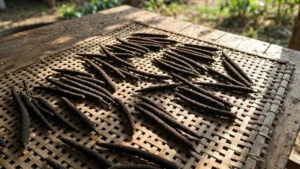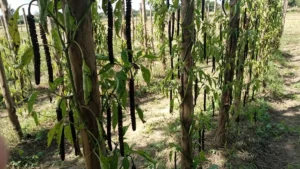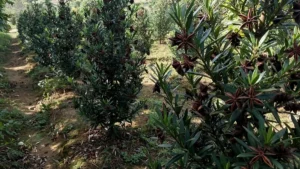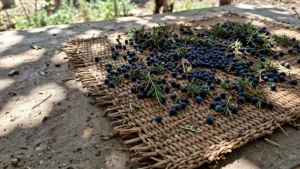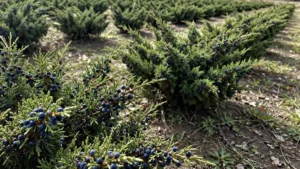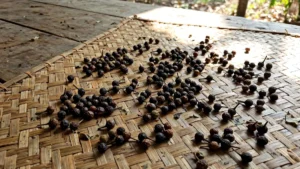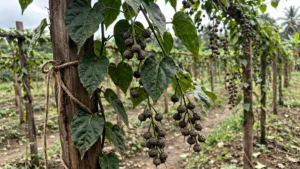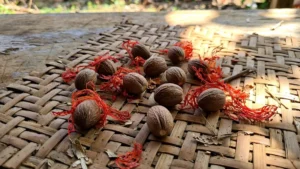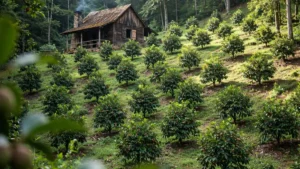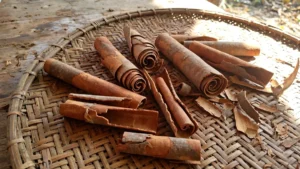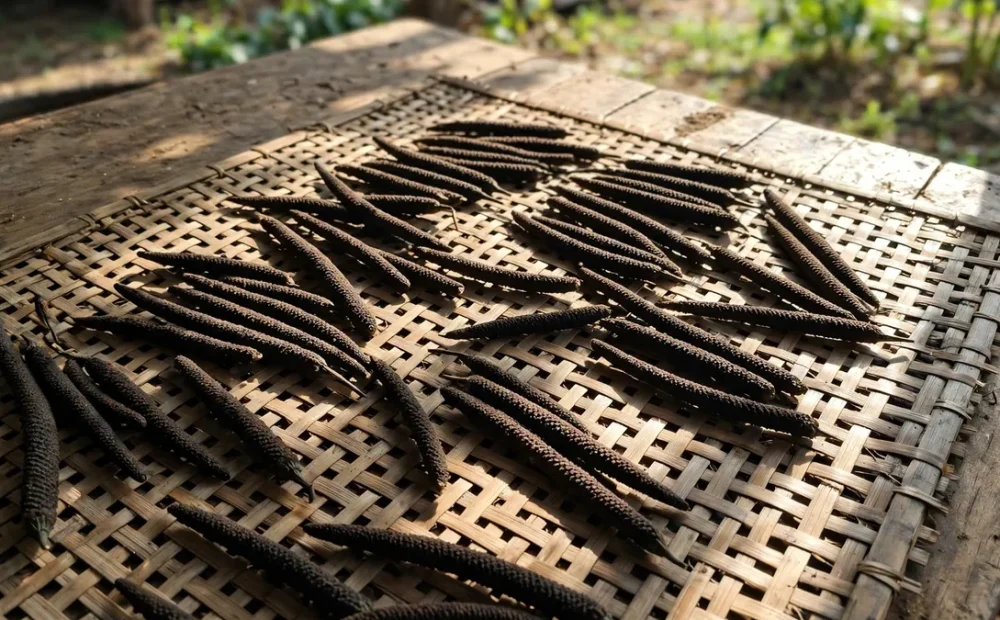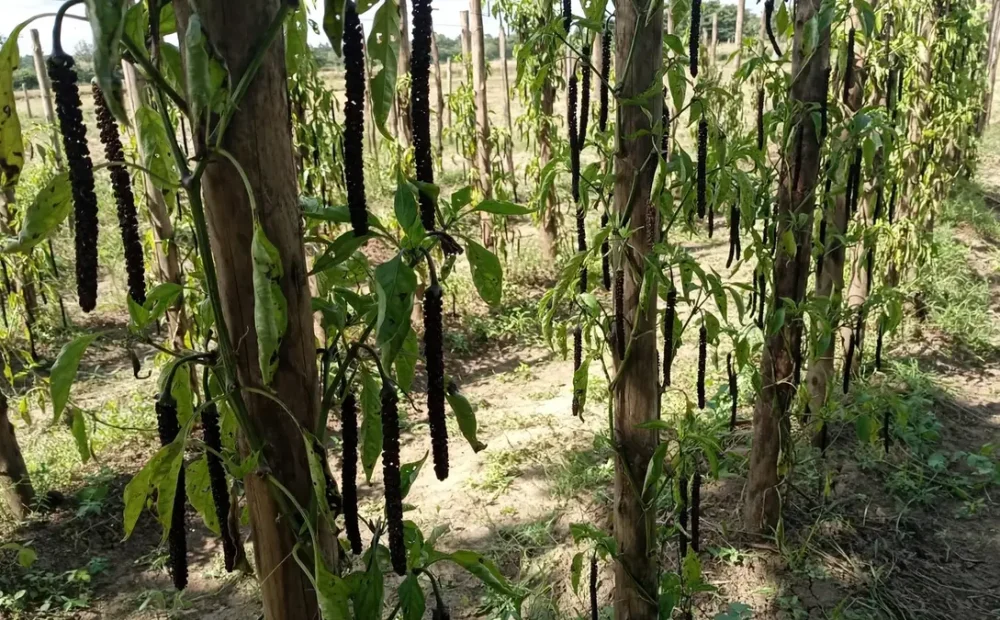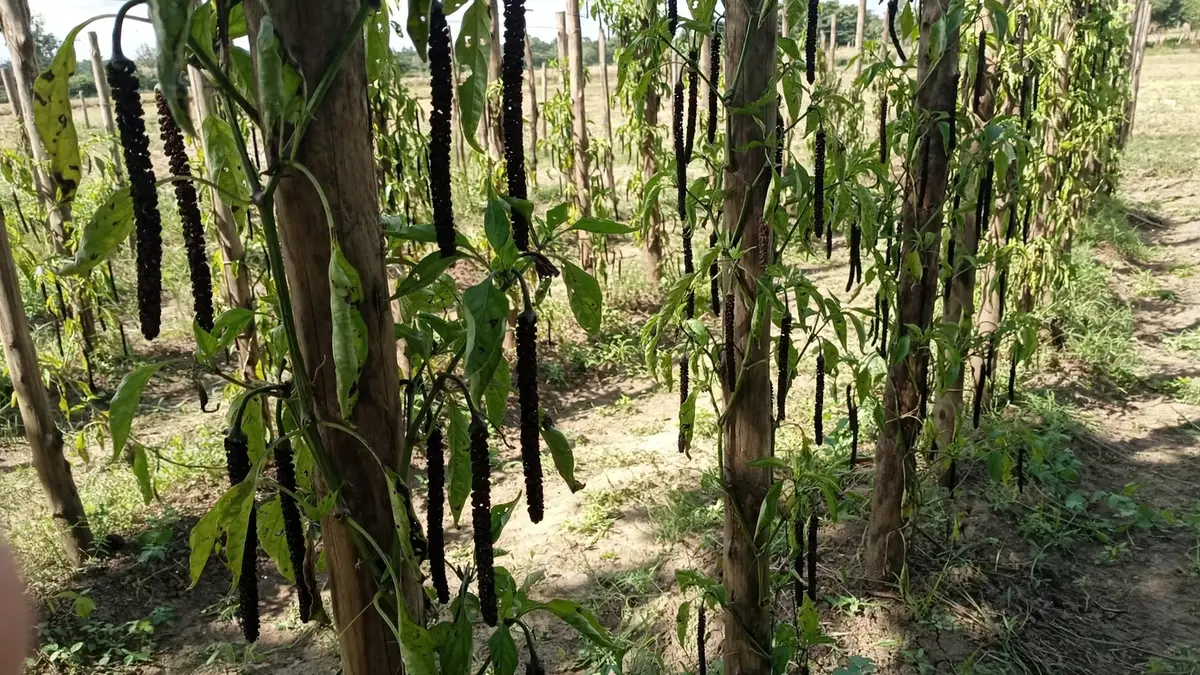
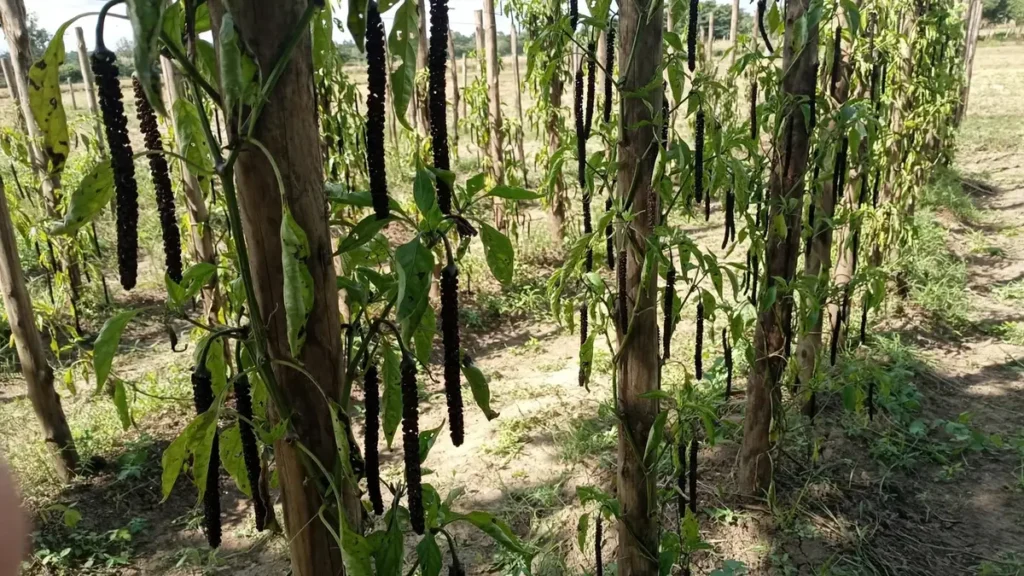
Long pepper is the spice Rome loved before black pepper took over, and it still grows on climbing vines across the wet lowlands of India, Sri Lanka and Southeast Asia. The spice is not a round berry but a small dark spike, a catkin of tiny fruits fused into one finger-length cone, and it carries a heat that builds slowly, with a sweet, almost resinous warmth underneath it. You walk the vines in the morning, watch the spikes cut down by hand, and eat food cooked with the pepper the farm picked that week.
The nine retreats below are working farms with a handful of rooms, not resorts with a spice garden bolted on. Each one grows long pepper as a real crop, dries it in its own yard, and cooks with it in its own kitchen. Prices run from $65–$95 a night at the plainest farm stays to $345–$380 at the most polished lodges, and the ladder below follows that order, cheapest first. If you already know the black pepper farm retreats of Kerala and Cambodia, long pepper is their older, hotter cousin.
Book the picking week first and the flights second. Long pepper spikes are cut green and dried in the sun until they turn dark, and the whole harvest of a small farm can pass in a fortnight. Arrive a week late and you will see the vines and eat the pepper, but you will miss the cutting, the stripping and the drying yard at full tilt. The farms below name their weeks, not their months, and the best of them will tell you plainly when to come and when not to bother.
Key takeaways
- Long pepper is the dried fruiting spike of a climbing vine, picked green and sun-dried until it turns dark and hard.
- It is hotter than black pepper, with a slow-building heat and a sweet warmth underneath, and Rome prized it before black pepper took its place.
- The harvest is short, and the farm names its picking week, not a month, so book the week before the flights.
- Long pepper farms run small, with a handful of rooms and meals shared at one table.
- Long pepper carries no gluten, but the bread served beside it is usually wheat, so settle the kitchen before you pay.
What a long pepper farm retreat actually is
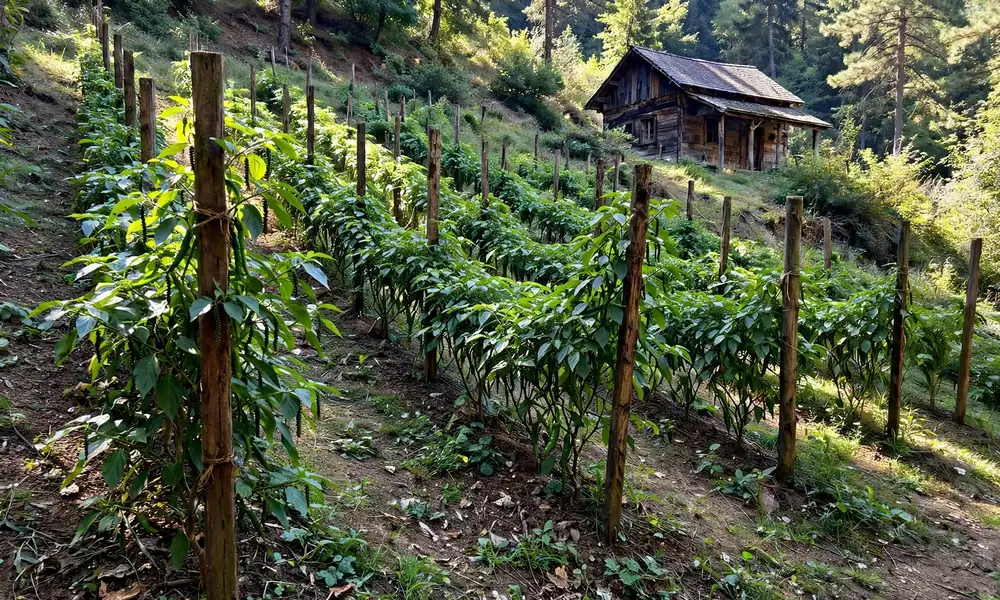
A long pepper farm retreat is a stay on a working spice farm where the crop is Piper longum, a climbing vine that winds up living trees and posts in wet, shaded ground. It climbs, gripping bark with small roots, and the spikes hang down from the stems like dark green catkins. When the spikes are ready they are cut by hand, carried to a drying yard, and spread in the sun until they shrink, harden and turn almost black.
The stay itself is simple. Most of these farms have between four and ten rooms, meals are cooked in the farm kitchen and served at one long table, and the day is built around the farm’s work rather than a guest schedule. Mornings belong to the vines. Afternoons belong to the drying yard, the kitchen, or a walk to the nearest village.
What makes it worth the trip is the flavour. Long pepper is not black pepper with a different name. It is hotter, and the heat arrives a beat later and stays longer, with a sweet, woody warmth that black pepper does not have. Cooks in Assam and Bengal use it in pickles, curries and slow-cooked meats.
How we picked these stays, and what to ask first
We picked farms that grow long pepper as a crop, not as a garnish. Every farm below has its own vines, its own drying yard and its own kitchen, and every one of them lets guests walk the vines and watch the harvest. The list runs from the cheapest stay to the most expensive, and the price is the room for one night, not a package.
Before you book, ask three questions. First, when is the picking week, and will guests be there for the cutting? Second, who dries the spikes, and can you see the drying yard? Third, what does the kitchen cook with long pepper, and can it feed you safely if you eat gluten-free? The cinnamon farm retreats of Sri Lanka and the Seychelles run on the same honest pattern, and the same three questions sort them just as well.
The 9 best luxury long pepper farm retreats of 2027
Assam, India — Long Pepper on the Floodplain Farms
What we like: Long pepper grows wild and farmed along the Brahmaputra floodplain, and the farm here keeps its vines on tall shade trees above a kitchen that cooks Assamese fish curry, duck with ash gourd and rice with fresh lime. The mornings are cool, and the picking happens before the heat sets in.
What to consider: The rains are fierce, the paths turn to red mud, and the farm is a long drive from town.
Style: Assamese riverside farm stay. Best for: Travellers who want long pepper where India grows it wildest. Price range: $65–$95 per night. Standout feature: Green spikes cut from the vines at first light.
Meghalaya, India — Long Pepper Under the Khasi Hills
What we like: The vines climb betel and jackfruit trees on steep Khasi hillsides, and the farm serves pork with bamboo shoot, smoked fish and rice cooked in bamboo. The mist sits low in the morning, and the drying yard catches the sun between the showers.
What to consider: The hills are steep, the rain can last all day, and the rooms are few, so book ahead.
Style: Khasi hill farm stay. Best for: Travellers who like steep walks and wet weather. Price range: $100–$130 per night. Standout feature: Spikes dried on bamboo trays above the mist.
Dooars, West Bengal, India — Long Pepper at the Himalayan Foothills
What we like: The Dooars sit where the plains meet the Himalayan foothills, and the farm here grows long pepper beneath tea bushes and sal trees, with elephants sometimes passing at the forest edge. The kitchen cooks Bengali fish curries, lentils with green chilli and rice with ghee.
What to consider: The weather turns fast, insects gather at dusk, and the farm is a rough road from the railway town.
Style: Foothill tea and spice farm stay. Best for: Travellers who want pepper, tea and forest in one trip. Price range: $135–$165 per night. Standout feature: Vines climbing sal trees at the forest edge.
Badulla, Sri Lanka — Long Pepper in the Uva Tea Country
What we like: Badulla sits in the Uva hills among tea gardens and spice plots, and the farm grows long pepper on Gliricidia shade trees above a kitchen that cooks kiri hodi, pol sambol and seeni sambol with the farm’s own spice. The air is cooler than the coast, and the picking week falls in the dry months.
What to consider: The roads wind for hours from the airport, the farm fills fast, and the dry-season sun is strong on the yard.
Style: Uva hill farm stay. Best for: Travellers who want spice country with cooler air. Price range: $170–$200 per night. Standout feature: Spikes picked beside the tea pluckers’ paths.
Bogor, Java, Indonesia — Long Pepper in the Rainy Highlands
What we like: Bogor is one of the wettest places on Java, and the farm here grows long pepper on tall rain trees above terraces of vegetables and herbs. The kitchen cooks soto, sayur lodeh and ayam goreng with long pepper ground fresh each morning.
What to consider: It rains most days, the paths are slick, and the farm sits up a narrow lane.
Style: Javanese highland farm stay. Best for: Travellers who do not mind rain and love wet green hills. Price range: $205–$235 per night. Standout feature: Fresh-ground long pepper in every midday meal.
Bengkulu, Sumatra, Indonesia — Long Pepper Facing the Open Sea
What we like: Bengkulu faces the Indian Ocean, and the farm grows long pepper on coconut and durian trees a short walk from the beach. The kitchen cooks rendang, gulai ikan and sambal with the farm’s dried spikes.
What to consider: The coast is hot and humid, the sea road floods in heavy rain, and the airport is a long drive away.
Style: Sumatran coastal farm stay. Best for: Travellers who want spice vines and a sea breeze. Price range: $240–$270 per night. Standout feature: Spikes dried in the sea wind on raised racks.
Lâm Đồng, Vietnam — Long Pepper in the Central Highlands
What we like: Lâm Đồng sits on the cool Central Highlands plateau, and the farm grows long pepper on coffee shade trees among avocado and macadamia plots. The kitchen cooks canh chua, thịt kho and grilled pork with long pepper crushed over the plate.
What to consider: The plateau roads wind, the farm is a drive from Da Lat, and the midday sun is strong on the vines.
Style: Vietnamese highland farm stay. Best for: Travellers who want coffee country with a pepper harvest. Price range: $275–$305 per night. Standout feature: Long pepper crushed fresh over highland grills.
Davao, Philippines — Long Pepper Below Mount Apo
What we like: Davao sits in the shadow of Mount Apo, and the farm grows long pepper on cacao and durian trees in rich volcanic soil. The kitchen cooks sinigang, kinilaw and grilled tuna with long pepper in the marinade.
What to consider: The heat is heavy at midday, the roads are rough after rain, and the picking week shifts with the fruit season.
Style: Mindanao volcanic farm stay. Best for: Travellers who want pepper, cacao and fruit in one valley. Price range: $310–$340 per night. Standout feature: Spikes picked in the same week as the durian harvest.
Sylhet, Bangladesh — Long Pepper in the Tea Garden Hills
What we like: Sylhet is tea country, and the farm here grows long pepper on shade trees between the tea rows, with a kitchen that cooks hilsa curry, duck bhuna and rice with mustard oil. The hills are soft and green, and the farmhouse has wide verandas for the rain.
What to consider: The monsoon is long and heavy, the farm is a rough drive from the city, and the picking week falls in the wettest months.
Style: Sylhet tea garden farm stay. Best for: Travellers who want the grandest garden setting of the nine. Price range: $345–$380 per night. Standout feature: A veranda dinner cooked entirely with the farm’s own long pepper.
Which long pepper region fits your trip
If this is your first long pepper trip, start in Assam or Badulla. Assam is the cheapest stay and the most direct introduction to the vine, the spike and the drying yard, while Badulla adds cooler air and a dry-season picking week that is easier to plan around. Both farms answer questions plainly and feed you well, and both sit close enough to a town that a missed bus is a nuisance rather than a disaster.
If you want the harvest at its most dramatic, go to Meghalaya or Sylhet in the rains. The vines are heaviest then, the cutting is daily, and the drying yards work between the showers. You will see the whole cycle from green spike to dark dried cone in a single week. If you want comfort with your harvest, Davao and Lâm Đồng are the better bets: volcanic soil, good kitchens, and farms that know how to host.
The nutmeg farm retreats of Grenada and Zanzibar share the same shape as these trips — small farms, shared tables, a single spice at the centre of everything. The difference is the heat: nutmeg is warm and sweet, long pepper is hot and slow, and the kitchens cook accordingly.
The caveats that matter
The harvest week is short and the weather decides it, so a farm can move its picking dates by a week with little warning. Rooms are few and plain, meals are set menus from the farm kitchen. Guests with a strong sensitivity to pepper should be careful: the drying yard fills the air with spice dust, and the kitchen uses long pepper in most dishes.
| Detail | What is known |
|---|---|
| Best time to visit | In the picking weeks, when the spikes are green and full, with the season shifting by region and the farm naming its week, not a month |
| What the work involves | Walking the vines, watching the spikes cut down and stripped by hand, and seeing them spread in the sun to dry and turn dark |
| How long a stay runs | Three to five nights, set around the picking weeks |
| Who should take care | Guests with a strong sensitivity to pepper, and anyone unused to fierce sun, heavy rain or steep muddy paths |
| What the kitchen serves | Curries, stews, grills and pickles with long pepper ground fresh, with rice, bread and farm butter beside the plate |
| Gluten note | Long pepper carries no gluten, but the bread and pastry served beside it are usually wheat, so ask the kitchen what it can safely serve |
| What to pack | Closed walking shoes, a broad sun hat, a rain layer for sudden showers, and clothes that wash easily by hand |
| What it does not do | No promised picking day, no fixed menu, and no hotel-style service on a working farm |
Checklist: booking a long pepper farm stay honestly
- Ask the farm for its picking week in writing before you book the flights.
- Confirm the room, the meals and the price in one message, and keep the reply.
- Tell the kitchen about wheat and any other allergy before the deposit is paid.
- Pack closed shoes, a rain layer and clothes you can wash by hand.
- Carry cash for the farm shop, since card machines are rare on small farms.
- Leave a free day after the picking week, in case the harvest shifts by a day or two.
Frequently asked questions
Why does long pepper taste hotter than black pepper?
Long pepper is the dried fruiting spike of a climbing vine, while black pepper is the dried round berry of a different vine. Long pepper is hotter, its heat builds more slowly and stays longer, and it carries a sweet, woody warmth that black pepper does not have.
In which weeks does the long pepper harvest fall?
In a short picking window that shifts by region and by year, usually two to four weeks. The farm names its week, not a month, and the dates can move by a week if the rains come early or late.
What does a long pepper vine climb?
On a vine. The vine climbs living trees and wooden posts, gripping the bark with small roots, and the spikes hang down from the stems. The trees are supports, not the crop, and the harvest is the cutting of the spikes from the vine.
Can guests join the picking crews?
On most of these farms, yes, for a morning or two, with gloves and a basket and a worker beside you. The spikes are cut with a small knife or shears, and the work is slow and careful, since a torn vine loses next year’s spikes.
Where should a newcomer start their long pepper trip?
Assam or Badulla. Assam is the cheapest stay and the plainest introduction to the vine and the drying yard, while Badulla has cooler air and a dry-season picking week that is easier to plan. Both farms feed you well and answer questions plainly.
Do long pepper farms cook well for gluten-free guests?
Yes, if you tell the kitchen before you pay. Long pepper itself carries no gluten, and the farms cook plenty of rice, lentils, vegetables and grilled meat. The risk is the bread and pastry served beside the meal, which are usually wheat.
The bottom line
Long pepper is the oldest pepper Europe knew, and it still grows the way it always has: on climbing vines in wet ground, cut by hand and dried in the sun. The nine farms above are the honest way to meet it. They are small, plain and busy, and they will feed you food you cannot get anywhere else.
Book the picking week, pack for mud and rain, and tell the kitchen what you can and cannot eat before you pay. Do that, and the trip pays you back with a spice you will never mistake for black pepper again.