A jacket earring looks like a trick the first time you see one. From the front there is a small, simple stud, the kind you might barely notice. From behind the earlobe, though, something larger and more decorative appears, a fan, a crescent, or a fringe of metal that seems to float below the ear. It is not a second earring, and it is not a clip-on. It is one piece, designed so the decoration sits behind the lobe while the stud holds it in place from the front.
The style has been around for years, but it keeps returning because it solves a real problem. Many people love the look of a statement earring but find long drops heavy, or feel that a big earring overwhelms a small face. A jacket earring gives you the drama at the back of the ear and a quiet front, so the overall effect is softer and easier to wear.
This guide explains what a jacket earring is, how the two parts fit together, what materials and shapes to look for, and how to wear one comfortably. A jacket earring is the keyword here, and it is worth learning properly, because a good one can change how your whole earring collection works, while a badly made one will sit in a drawer.
Key takeaways
- A jacket earring is a stud with a decorative piece that sits behind the earlobe, joined by a single post.
- The jacket is usually the star of the design, while the front stud is small and simple.
- It needs only a standard lobe piercing, no extra holes, and most jackets can be worn as a plain stud on their own.
- Comfort depends on weight, post length, and the back you use, so check those before you buy.
- A jacket earring does not suit every ear shape or hairstyle, and a heavy jacket can pull on the lobe if worn all day.
What a jacket earring actually is
The simplest way to describe a jacket earring is to imagine a stud that wears a coat. The front of the earring is a small stud, often a plain ball, a small pearl, or a tiny crystal. Through the piercing runs a post, and behind the lobe sits the jacket, a larger decorative element that hangs or fans out below the ear. The jacket is sometimes called an ear jacket.
The jacket is fixed to the post, so the two parts move together. When you put the earring on, you push the post through the lobe from the front, and the jacket slides into place behind the ear. A back, usually a butterfly clutch or a disc, holds the whole thing in position. The effect is that the decorative part appears to emerge from behind the earlobe, which is why the style looks so different from a normal drop earring.
How a jacket earring works and what to look for
Start with the post. A good jacket earring has a post long enough to pass through the lobe and leave room for the back, with the jacket sitting flat behind the ear. If the post is too short, the jacket will press against the lobe and feel tight. If it is too long, the earring will wobble and the jacket may tilt. Most well-made jackets use a standard post length, but if your lobes are thick, look for a longer post or a design that states it suits thicker lobes.
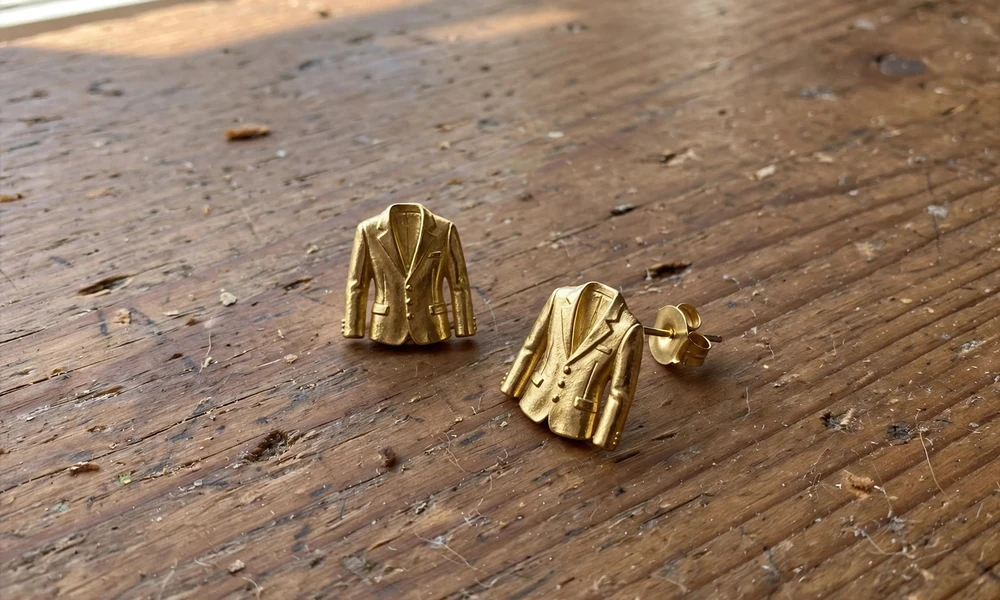
Next, look at the weight. The jacket is the heavier part, and its weight pulls gently downward and backward. A light jacket in gold vermeil or thin silver is comfortable for most people all day. A heavy jacket with large crystals or a wide fan can pull on the piercing after a few hours, especially if the front stud is very small and does not balance it. If you are new to the style, start with a light, simple jacket and see how your ears feel before buying a dramatic one.
Finally, check the finish and the back. The part of the jacket that touches the skin should be smooth, with no sharp edges or rough solder. A disc back, sometimes called a comfort back, spreads the pressure and helps a jacket sit straight. Our guide to earrings for everyday wear covers the same comfort checks, and they matter even more here, because a jacket earring has more metal in contact with your ear than a plain stud.
The 9 facts that explain a jacket earring
A jacket earring is a stud with a decorative piece behind the lobe
What it shows: The front is a small stud and the back is a larger decorative element, joined by one post that passes through the piercing.
What to consider: It can be easy to assume the jacket is a separate earring, but it is part of the same piece, and the two parts are not meant to be worn apart. Best for: Anyone curious about the style, and anyone who wants a statement look without a long drop. Material: Gold vermeil, sterling silver, or gold-plated brass. Price range: Around £25 to £120 for most designs. Standout feature: One piece, two looks, with the decoration hidden in plain sight behind the ear.
The front stud and the back jacket are one piece, joined by a post
What it shows: A single post runs from the stud, through the lobe, to the jacket, so the earring is put on and taken off as one unit.
What to consider: Some jackets are sold as separate enhancers that slide onto a stud you already own, but a true jacket earring is made as one piece, and mixing parts can change how it hangs. Best for: Anyone buying their first pair, because a one-piece design is simpler to wear. Material: The same metal throughout, usually gold vermeil or sterling silver. Price range: Around £30 to £150 for a one-piece design. Standout feature: No fiddly assembly, just push the post through and fasten the back.
The jacket is usually larger and more decorative than the stud
What it shows: The design puts the visual weight at the back, so the front can stay small, plain, and easy to wear.
What to consider: A very large jacket can overwhelm a small ear or a short neck, so the size of the jacket should suit the size of the lobe it sits behind. Best for: People who want drama without a heavy front earring. Material: Gold vermeil, silver, or crystal-set brass. Price range: Around £25 to £200, depending on size and stones. Standout feature: The decoration appears from behind the lobe, which makes the earring look more interesting than a plain drop.
Jackets come in many shapes: fans, fringes, crescents, drops, and wings
What it shows: A fan spreads out below the lobe, a fringe hangs in fine strands, a crescent curves under the ear, and a wing sweeps outward.
What to consider: The shape changes how the earring moves and how much it catches on hair or scarves, so a fringe jacket needs more care than a smooth crescent. Best for: Anyone matching a jacket to an outfit or an occasion. Material: Gold vermeil, sterling silver, or crystal-set metal. Price range: Around £25 to £180 across the common shapes. Standout feature: The shape is the personality of the earring, so choose it the way you would choose a neckline.
They work with a standard pierced lobe, no extra piercing needed
What it shows: A jacket earring uses the same single lobe piercing as a normal stud, so anyone with pierced ears can wear one.
What to consider: A stretched or very low piercing can change how the jacket sits, and a fresh piercing should be fully healed before you try a jacket, because the extra weight can irritate it. Best for: Anyone with a healed standard lobe piercing. Material: Any metal that suits your skin, usually gold vermeil or silver. Price range: Around £25 to £120 for most everyday designs. Standout feature: No new piercing, no extra commitment, just a different way to wear the hole you already have.
The weight sits mostly at the front, so comfort depends on the post and back
What it shows: Although the jacket is behind the lobe, its weight pulls the post forward, so the back and the stud share the load.
What to consider: A small butterfly back can let a heavy jacket tilt forward, so a larger disc back is often a better choice for heavier designs. Best for: Anyone planning to wear a jacket for a full day or evening. Material: Lightweight gold vermeil or thin sterling silver for comfort. Price range: Around £30 to £150, with disc backs often included. Standout feature: Comfort is a design feature, not an afterthought, and the right back makes the difference.
Most jackets are made from gold vermeil, sterling silver, or gold-plated brass
What it shows: Gold vermeil is sterling silver coated in a thick layer of gold, sterling silver is solid silver, and gold-plated brass is a lighter, cheaper base with a thin gold layer.
What to consider: Gold plating wears faster than vermeil, and brass can irritate sensitive ears, so check the metal before you buy if your skin is reactive. Best for: Anyone with sensitive skin, who should choose vermeil or solid silver. Material: Gold vermeil or sterling silver for sensitive ears. Price range: Around £25 to £200, with vermeil at the higher end. Standout feature: The metal decides how long the earring lasts and how your skin reacts to it.
They can be worn two ways: jacket on, or stud alone
What it shows: Take the jacket off the post, or choose a design where the jacket slides off, and the front stud works as a plain, everyday earring.
What to consider: Not every jacket is removable, so check before you buy if you want the two-in-one option, and keep the jacket somewhere safe when it is off, because it is small and easy to lose. Best for: Anyone who likes versatile jewellery. Material: Gold vermeil or sterling silver, in a simple stud design. Price range: Around £35 to £160 for a removable-jacket design. Standout feature: Two earrings in one piece, a quiet stud for the day and a statement jacket for the evening.
Jackets suit evening and occasion looks, but simple ones work every day
What it shows: A large crystal or fan jacket is made for weddings, parties, and evenings, while a small crescent or slim drop jacket works with a shirt and jeans.
What to consider: A very dramatic jacket can look out of place at work or with casual clothes, and a fringe jacket can catch on a scarf or a high collar. Best for: Anyone building a small, hard-working earring collection. Material: Gold vermeil for everyday, crystal-set metal for evenings. Price range: Around £25 to £180 across the range. Standout feature: One style, two moods, and the simple jackets are the ones you will reach for most.
Which jacket earring is right for you
Start with your lobe. A small lobe suits a small or medium jacket, a crescent or a slim drop, while a larger lobe can carry a fan or a fringe without the jacket looking oversized. Hold the earring against your ear before you buy if you can, and look at it from the side, not just the front, because the side view is where the jacket does its work.
Finally, match the jacket to your other jewellery. A gold jacket sits happily with a gold necklace or a gold watch, and a silver jacket with silver. Mixing metals can work, but a jacket earring is already a talking point, so keeping the rest of the jewellery simple lets it do its job. If you like small, close-fitting earrings, our guide to what a huggie earring is explains the other end of the scale, a tiny hoop that hugs the lobe, which pairs well with a jacket on a second piercing.
The caveats that matter
Jacket earrings are well made in most cases, but they are not the right choice for every ear or every day. The extra metal behind the lobe means more contact with the skin, and the weight, even when it is light, is more than a plain stud. That is not a reason to avoid them, only a reason to choose carefully and to know when to take them off.
| Detail | What is known |
|---|---|
| What it is | A stud with a decorative jacket behind the lobe, joined by one post |
| Piercing needed | A standard healed lobe piercing, no extra holes |
| Best metals | Gold vermeil or sterling silver, especially for sensitive ears |
| Comfort key | Light weight, a post long enough for your lobe, and a disc back |
| Who should start gently | Anyone with a fresh piercing, thin lobes, or very sensitive skin |
| What to avoid | Heavy jackets on small studs, rough edges, and thin gold plating on brass |
| Care | Wipe after wear, store flat so the jacket does not bend, keep away from perfume |
| What it does not do | It does not suit every ear shape, and it is not a substitute for a properly fitted stud |
Checklist: choosing a jacket earring honestly
Use these checks before you buy, and again after your first few wears.
- Check the post: it should pass through your lobe with room for the back, and the jacket should sit flat behind the ear.
- Check the weight: hold the earring in your palm first, and choose a light jacket if you plan to wear it all day.
- Check the metal: gold vermeil or sterling silver for sensitive ears, and avoid thin plating on brass if your skin reacts easily.
- Check the edges: the part of the jacket that touches your skin should be smooth, with no sharp points or rough solder.
- Check the back: a disc back spreads the pressure and helps a heavier jacket sit straight.
- Check the fit with your hair: wear your hair the way you normally do, and make sure the jacket shows and does not catch.
Frequently asked questions
What is a jacket earring?
It is a stud earring with a decorative piece, called a jacket, that sits behind the earlobe. The stud, the post, and the jacket are one piece, and the jacket is usually larger and more decorative than the stud.
Do I need a second piercing for a jacket earring?
No. A jacket earring uses a standard lobe piercing. The post passes through the same hole as a normal stud, and the jacket sits behind the lobe.
Can I wear the stud without the jacket?
Often yes. Many jackets are removable, or the stud is sold as a separate piece, so you can wear the stud alone as a plain everyday earring. Check before you buy, because not every design comes apart.
Are jacket earrings comfortable?
Light ones usually are, especially with a disc back. Heavy jackets can pull on the lobe after a few hours, so start with a light design and wear it for a short time first to see how your ears feel.
What metal should I choose for a jacket earring?
Gold vermeil or sterling silver are the safest choices, especially for sensitive ears. Gold-plated brass is cheaper, but the plating wears faster and the brass underneath can irritate some people.
How do I store jacket earrings?
Store them flat, with the jacket lying straight, so it does not bend. Keep them in a soft pouch or a lined box, away from perfume and moisture, and wipe them with a soft cloth after wearing. Our guide to the best drop earrings has the same storage advice, and it applies here too, because a bent jacket is hard to straighten.
The bottom line
A jacket earring is a simple idea done well: a small stud in front, a decorative jacket behind the lobe, and one post holding them together. It gives you the drama of a statement earring without the weight of a long drop, and it works with the piercing you already have. Choose a light jacket in gold vermeil or sterling silver, check the post length and the back, and try it for a few hours before committing to a full day.
The best jacket earring in 2027 is not the biggest or the most elaborate. It is the one that sits flat behind your lobe, feels comfortable by the evening, and shows just enough from the side to make people look twice. Start simple, learn what your ears like, and let the jacket do the talking.