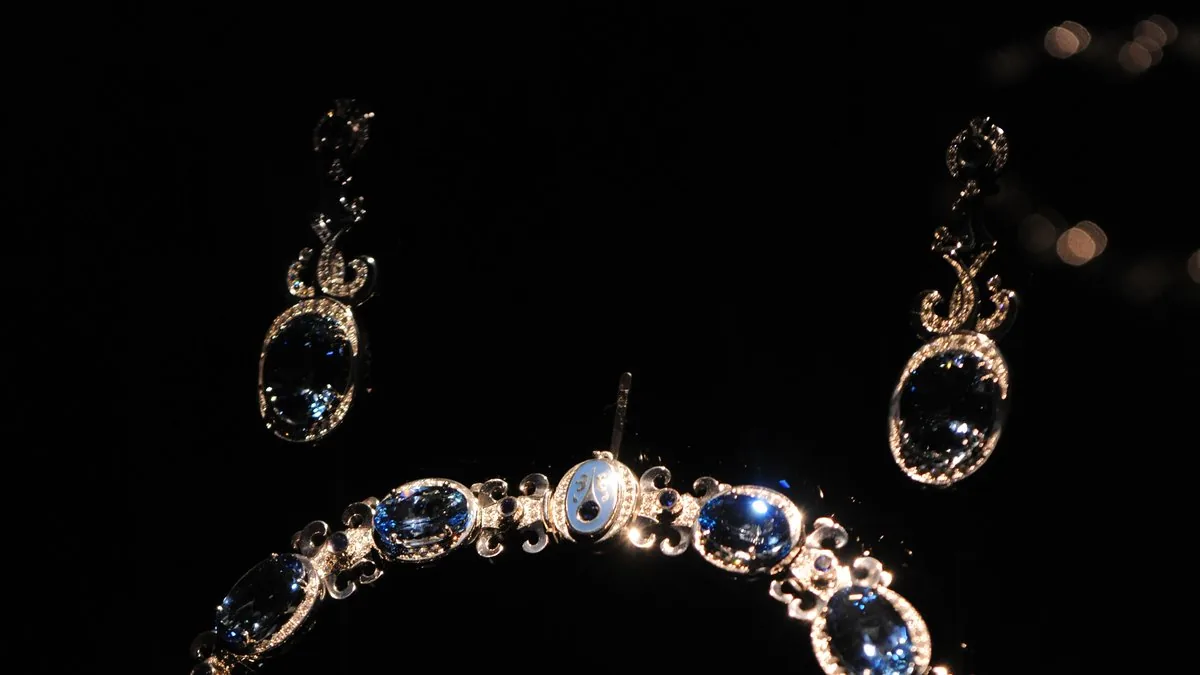

Aquamarine earrings have a quiet advantage: the stone is naturally clean, calmly blue, and hard enough for everyday wear. Aquamarine is the blue to greenish-blue variety of beryl, the same mineral family as emerald, yet it forms with far fewer inclusions, so an eye-clean pair is the norm.
The money goes mostly into colour. A pure, saturated blue costs far more per carat than a pale or greenish stone of the same size, and a large pale pair can cost less than a small vivid one.
It also covers the practical side: how heavy a pair feels after eight hours, which backs stay put, what heat treatment means, and how to spot the common lookalikes.
Key takeaways
- Colour is the biggest value driver: look for a pure, saturated blue that stays blue in ordinary indoor light.
- Expect eye-clean stones: obvious flaws should mean a lower price.
- Check the cut for windowing: tilt the stone and look for a pale, see-through patch in the centre.
- Heat treatment is standard, but it must be disclosed; ask whether the stone is natural or laboratory-grown.
- Match the pair: the two earrings should match in colour, size and cut.
Start with the colour, not the carat weight
Colour is where almost the whole value decision lives. Aquamarine ranges from very pale, almost colourless blue to a deep, vivid blue. The most prized colour is a pure blue of medium to medium-dark tone with strong saturation, and the deepest blue is sometimes called Santa Maria, after a famous Brazilian source.
Most aquamarine leans slightly green, because iron, the element that colours the stone, can push it toward sea-green. A faint tint is normal and many people prefer it, but a strong green cast usually lowers the price. Judge colour in ordinary light, in daylight and then indoors away from the jeweller’s spotlights. If the stones look nearly colourless in your kitchen light, they will look colourless every day.
Clarity: eye-clean is the normal standard
Aquamarine is a Type I gemstone, expected to have few or no inclusions visible to the naked eye. Good earrings should look clear and watery at a normal viewing distance. Anything you can see easily, such as a cloudy patch, a dark speck, or a crack reaching the surface, should lower the price.
Also check the condition. Look at the corners, the girdle edge and the points of pear or marquise shapes, where chips are most likely, and ask the seller to show you the edges the prongs hide. A milky stone sells for much less than a transparent one, and no cleaning will fix it.
Cut and shape: how the stone handles light
Cut matters more in aquamarine than many buyers expect, because a pale stone shows cutting mistakes clearly. The classic shapes are oval, round and emerald cut, with cushion and pear shapes also common. Oval and round stones are the easiest to match in a pair. Pear-shaped drops add movement, but their pointed tips need protection.
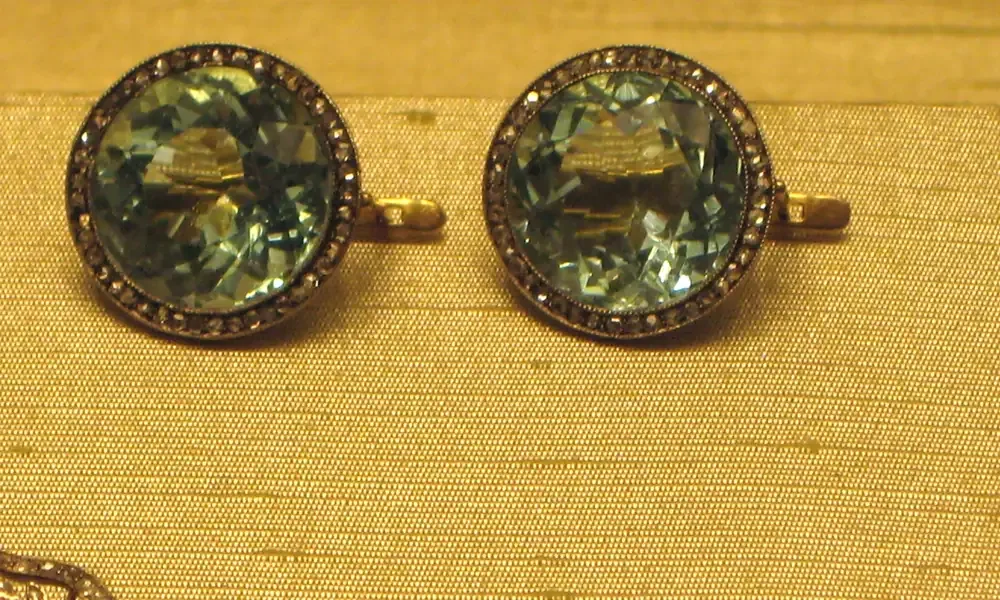
Watch for windowing, the most common cutting flaw in pale stones. Hold the earring face-up: if you see a large pale, transparent patch in the centre, the stone is cut too shallow and light is leaking out the back. The two stones should share the same outline, proportions and colour; place them side by side on a white surface and step back, since a mismatched pair is obvious at arm’s length.
Carat weight: buy presence, not just numbers
Aquamarine forms in large crystals, so large stones are available without the price spikes you see in sapphire or emerald. Most pairs fall between half a carat and two carats total weight, with studs at the smaller end and drops at the larger end. Total weight is the combined weight of both stones, so confirm whether a quoted figure is per stone or for the pair.
Colour deepens with size, because light travels further through a larger stone, so stones of two to three carats often show a richer blue than tiny ones. But size is no substitute for colour, and a large pale pair will still read as pale. Try the earrings on: the right size looks balanced with your face and feels like nothing after an hour.
Settings and metals: protection, comfort and skin
The setting decides how much of the stone you see and how safe it is. Prong settings expose more stone and let in more light, but a worn prong can lose a stone and exposed corners chip more easily. Bezel settings wrap the stone in metal, protecting the edges, though they can make a pale stone look slightly darker. Halo settings add sparkle and make the centre stone look larger.
Fourteen-karat gold is the everyday workhorse, warm in yellow gold and crisp in white gold. Platinum is heavier and more expensive but very secure and naturally hypoallergenic. Sterling silver is the most affordable and looks fresh with aquamarine’s cool blue, but it is softer. If you have sensitive ears, choose nickel-free metals and ask about the post material, since a gold earring can still have a base-metal post. Check that both backs match and grip firmly.
Earring styles compared
Different styles suit different faces and budgets. A simple stud needs a fine stone because there is nothing to distract the eye, while a long drop can carry a paler stone gracefully because movement does the work.
| Style | Typical total weight | Best for | What to check |
|---|---|---|---|
| Classic studs | 0.50–1.50 carats | Everyday wear, work, gifts | Colour match and secure backs |
| Halo studs | 0.50–2.00 carats | Extra sparkle, smaller budgets | Halo stones firmly set and even |
| Drop earrings | 1.00–3.00 carats | Evenings, weddings, occasions | Length, weight and swing |
| Dangle earrings | 1.00–4.00 carats | Statement looks, long necks | Hooks, movement and comfort |
| Hoops with aquamarine | 0.50–2.00 carats | Casual polish, everyday glamour | Hoop closure and stone security |
| Cluster earrings | 1.00–3.00 carats | Vintage feel, maximum sparkle | Even setting and colour match |
| Chandelier earrings | 2.00–5.00 carats | Formal events, bridal looks | Weight, balance and durability |
| Huggie earrings | 0.25–1.00 carats | Minimal looks, second piercings | Small stones, snug comfortable fit |
Think about when the earrings will actually be worn: halo studs in good blue will be worn weekly, while a chandelier pair in the same budget may come out twice a year. For more on how earring shapes have changed, see our history of hoop earrings, and to compare aquamarine with the classic choice, see our guide to the best diamond earrings for 2027 shows what a top diamond pair should offer at each price point.
Treatments, authenticity and lookalikes
Heat treatment is the one treatment you should expect. Heating is commonly used to reduce the greenish component and produce a bluer appearance, and the change is stable and widely accepted. It does not make a stone poor quality, but the seller should disclose it, so ask directly and get the answer in writing.
Natural, laboratory-grown and synthetic stones are different things, and the price should reflect which one you are buying. Laboratory-grown aquamarine is real aquamarine, grown rather than mined, and usually much cheaper. The most common lookalikes are blue topaz, often a brighter, more electric blue, and synthetic spinel. For a valuable pair, ask for a certificate from an independent laboratory. For more on how fine stones are graded, see our diamond buying guide for 2027 explains the same four Cs that apply across fine jewellery.
What aquamarine earrings cost in 2027
Prices track colour far more closely than size. As a rough guide for natural loose aquamarine, pale commercial material sells for around $20 to $80 per carat, good quality for around $80 to $250, fine material for around $250 to $600, and rich Santa Maria-type colour for around $600 to $1,000 or more per carat. Finished earrings commonly sell from around $75 to $800.
That spread explains why two similar-looking pairs can differ by hundreds of dollars. Compare pairs by colour, clarity, total weight and metal together, never by price alone. On a modest budget, a smaller pair in good blue will look better than a larger pair in washed-out material, so spend on colour first, then cut, then metal.
Comfort, wearability and care
Aquamarine is a practical everyday stone. It rates 7.5 to 8 on the Mohs hardness scale, so it resists scratches well: household dust, at hardness 7, cannot scratch it. But hardness is not toughness, and aquamarine has imperfect cleavage, so a hard knock on a corner can chip it. Weight matters too: drops over about three grams each can start to pull by late afternoon, so try the pair for at least ten minutes in the shop.
Cleaning is simple: warm soapy water and a soft brush, followed by a rinse and a pat dry with a lint-free cloth. Clean behind the stones too, since dirt there blocks light and is often why a pair looks dull. Ultrasonic and steam cleaners are usually safe, but only if the stone has no fractures, so ask your jeweller first. Store each pair in its own soft pouch, away from harder stones, and have the settings checked once a year.
Your pre-purchase checklist
- Colour holds up in daylight and indoor light, with no pale window in the centre when you tilt the stones.
- Both stones match in colour, size, shape and cut, and look even side by side on a white surface.
- Stones are eye-clean, with no visible cracks, chips at the corners, or cloudy patches that dull the sparkle.
- Treatment and origin are disclosed in writing: heated or unheated, natural or laboratory-grown.
- Setting protects the stone’s edges, prongs are even and secure, and the backs grip firmly and match each other.
- Comfort is tested: the pair feels light after ten minutes, sits flat, and suits your daily routine.
Frequently asked questions
How can I tell if aquamarine earrings are real?
Real aquamarine is cool to the touch, transparent, and usually eye-clean, with a soft blue to greenish-blue colour. Blue topaz is often brighter and more electric, while glass can show bubbles. Buy from a reputable seller and request a laboratory certificate for a valuable pair.
Is heat-treated aquamarine worth buying?
Yes, provided the treatment is disclosed and the price reflects it. Heating is standard practice, used to reduce the green component and produce a bluer stone, and the change is stable. Do not pay a large premium for an untreated label unless the colour justifies it.
What carat weight should I choose for aquamarine studs?
A total weight of 0.50 to 1.50 carats suits most faces for everyday wear, while 1.50 to 2.00 carats gives more presence for evenings. Colour deepens with size, but balance matters more than the number.
Can I wear aquamarine earrings every day?
Yes. At 7.5 to 8 on the Mohs scale, aquamarine resists scratches well and is suitable for daily wear. Choose a protective setting, check the backs regularly, and take the earrings off for heavy exercise and swimming in chlorinated water.
Do aquamarine earrings fade in sunlight?
Standard aquamarine is stable in light, including sunlight, and its colour does not fade under normal wear. One rare variety, Maxixe-type beryl, can fade in strong light or heat, but it is uncommon in jewellery.
Which metal is best for aquamarine earrings?
Fourteen-karat gold is the best all-round choice for durability and everyday wear, in yellow gold for warmth or white gold for a cooler look. Platinum is the most secure and hypoallergenic option but costs more, while sterling silver is the most affordable. For sensitive ears, confirm the posts and backs are nickel-free. If you are still deciding between styles, see our look at hoop earrings, their history and styles shows how a classic shape can carry a coloured stone beautifully.
The bottom line
The best aquamarine earrings are not the biggest or the most expensive pair in the shop. They are the pair whose blue stays blue in your light, whose stones match, whose cut returns light instead of leaking it, and whose setting feels like nothing after a full day. Spend on colour first, then cut, then a secure setting, and insist on written disclosure.
Note: Prices and grading guidance in this article are general information for 2027 shoppers, not a valuation of any specific pair. Gemstone prices vary with colour, clarity, cut, size, treatment and retailer, so compare similar stones side by side and confirm treatment, origin and return terms in writing before you buy.