A diamond tennis bracelet is one of the few pieces of jewellery that works almost everywhere. It is a single line of matched diamonds, set in a row, that sits flat against the wrist and catches the light with every movement. It suits a wedding, a work meeting, a dinner out, and a quiet day at home, which is why it has stayed popular for decades while other trends have come and gone.
The problem is not finding a diamond tennis bracelet. It is finding one that is well made, honestly priced, and comfortable enough to wear every day. The stones should match in size and colour, the settings should hold them securely, and the clasp should stay shut without needing to be checked every hour. A bracelet that fails on any of these points will spend more time in a box than on a wrist.
Below are nine diamond tennis bracelets worth considering in 2027, from a classic white gold line to a graduated design and a bezel-set option for active days. Each one is described by what it does well, what to watch for, and who it suits best, so you can choose with the bracelet in mind, not just the carat count.
Key takeaways
- A diamond tennis bracelet is a single line of matched diamonds, and the quality of the match matters as much as the total carat weight.
- Look for consistent stone size and colour, secure prong or bezel settings, and a clasp with a safety catch.
- Lab-grown diamonds offer the same look for a lower price, while natural diamonds hold their resale value better.
- White gold and platinum suit cool skin tones and bright diamonds, while yellow and rose gold warm the look.
- No tennis bracelet is indestructible, and a loose stone, a bent prong, or a clasp that no longer clicks shut should be checked by a jeweller before the bracelet is worn again.
What a diamond tennis bracelet actually is
A tennis bracelet is a flexible line of diamonds, usually round-cut, set individually in prongs or bezels and joined by small links. The name comes from tennis player Chris Evert, whose diamond bracelet broke during a match in 1987 and stopped play while she searched for it. Before that, the style was simply called a line bracelet. The name stuck, and so did the design.
The bracelet works because the stones are matched. Each diamond should be close in size, colour, and clarity to its neighbours, so the line reads as one continuous sparkle rather than a row of different stones. When the match is good, the bracelet looks bright from across a room. When it is poor, the eye catches the one stone that is slightly yellower or slightly smaller than the rest, and the whole piece looks uneven.
Total carat weight is the number most people ask about first, but it is only part of the story. A 3-carat bracelet with well-matched, bright stones will look better than a 5-carat bracelet with cloudy or mismatched stones. The setting matters too. Four-prong settings show more of each stone and let in more light, while bezel settings wrap each stone in metal and protect it better. Neither is better in every case. The right choice depends on how the bracelet will be worn.
How we chose these bracelets and what to look for
Look first at the stones. Ask about the colour and clarity grade, and whether the diamonds are natural or lab-grown. For a tennis bracelet, colour grades of G to I and clarity of VS2 to SI1 usually give a bright, clean look without the price of the highest grades. Check that the stones are matched by looking at the bracelet in daylight, not just under a jeweller’s bright spotlights, which flatter almost everything.
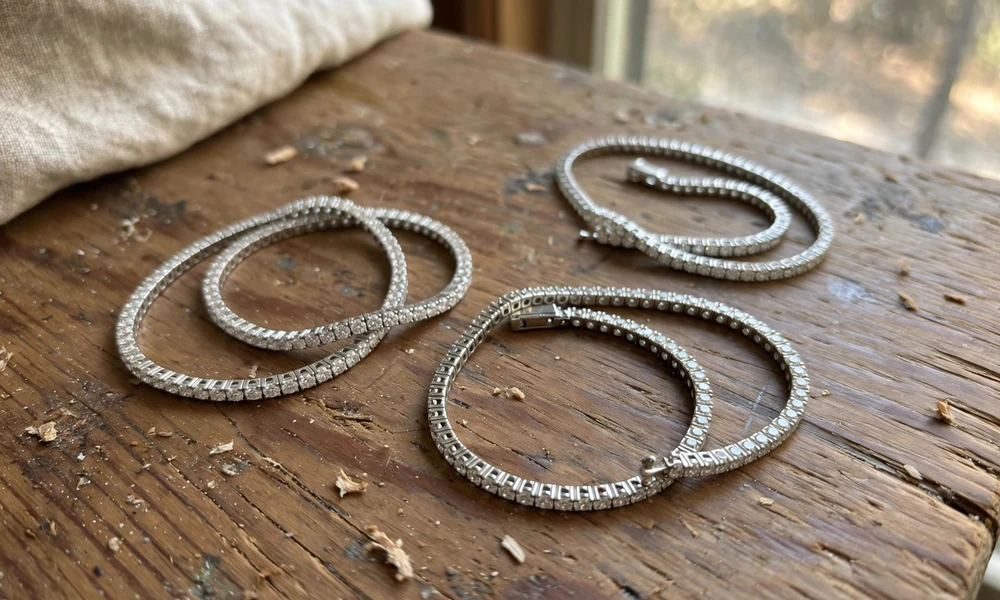
Look next at the setting and the clasp. The prongs should be even and firmly set, with no stone that wobbles when touched. The clasp should close with a clear click and have a safety catch or figure-eight safety chain, because a tennis bracelet that opens unnoticed is easily lost. Try the bracelet on and move your wrist. It should sit flat, slide a little, and not twist so that the clasp ends up on top.
Finally, look at the metal and the length. White gold and platinum are the most popular choices for diamond tennis bracelets because they do not add colour to the stones. Yellow and rose gold are warmer and suit people who wear gold jewellery every day. The bracelet should be about one centimetre longer than your wrist measurement, so it moves comfortably without sliding over your hand. Our guide to the best tennis bracelets of 2027 covers the wider range of styles, including gold and gemstone versions, if you want to compare beyond diamonds.
The 9 best diamond tennis bracelets of 2027
The Classic 14k White Gold Diamond Tennis Bracelet
What we like: A clean line of round-cut diamonds in four-prong settings, bright and even, with a secure box clasp and safety catch. What to consider: White gold needs re-plating every year or two to keep its bright finish. Best for: A first tennis bracelet. Material: 14k white gold, natural diamonds. Price range: Mid to high. Standout feature: The classic look that suits every occasion.
This is the bracelet most people picture when they think of a tennis bracelet, and it earns that place. The white gold keeps the focus on the diamonds, the prongs are slim enough to let light through, and the line sits flat on the wrist. It is the safest choice if you want one bracelet to wear for years.
The Slim 18k Yellow Gold Diamond Tennis Bracelet
What we like: A slim, warm-toned line that pairs naturally with gold rings and watches, with well-matched stones and a neat, low clasp. What to consider: Yellow gold can make lower-colour diamonds look warmer than they are. Best for: People who wear gold every day. Material: 18k yellow gold, natural diamonds. Price range: High. Standout feature: The warm glow that softens the diamonds.
Yellow gold gives a tennis bracelet a different character. It feels less formal than white gold and sits well alongside gold jewellery you already own. Choose stones of G colour or better if you want the diamonds to stay bright against the warm metal.
The Lab-Grown Diamond Tennis Bracelet in White Gold
What we like: The same look as a natural diamond bracelet at a much lower price, with stones that are chemically identical to mined diamonds. What to consider: Lab-grown diamonds usually resell for far less than natural diamonds. Best for: A larger carat weight on a set budget. Material: 14k white gold, lab-grown diamonds. Price range: Mid. Standout feature: A 5-carat look for a 3-carat budget.
The Round-Cut Diamond Tennis Bracelet with a Hidden Clasp
What we like: Round-cut stones with a clasp that disappears into the line, so the bracelet looks unbroken from every angle. What to consider: Hidden clasps can be harder to open and close without help. Best for: Evenings and occasions. Material: 18k white gold, natural diamonds. Price range: High. Standout feature: The seamless, unbroken line of diamonds.
A hidden clasp is a small luxury that changes how the bracelet looks. There is no visible box or tongue to interrupt the row of stones, which makes the bracelet look more expensive than it is. Practise opening it at home before wearing it out, because it takes a little getting used to.
The Oval-Cut Diamond Tennis Bracelet
What we like: Oval stones that look larger than round stones of the same weight, with a graceful, elongated sparkle. What to consider: Oval diamonds can show a dark bow-tie effect in the centre if they are poorly cut. Best for: A distinctive take on the classic. Material: 14k white gold, natural oval diamonds. Price range: High. Standout feature: The larger-looking stones.
The Rose Gold Diamond Tennis Bracelet
What we like: A soft pink-gold setting that flatters warm skin tones and looks modern without being trendy. What to consider: Rose gold is an alloy, and the pink tone varies between makers. Best for: Warm skin tones and rose gold lovers. Material: 14k rose gold, natural diamonds. Price range: Mid to high. Standout feature: The blush tone that warms the diamonds.
Rose gold suits people who find white gold too cool and yellow gold too strong. It pairs well with both silver and gold jewellery, which makes it easy to wear every day. Look at the bracelet next to your other rose gold pieces to make sure the tones match.
The Graduated Diamond Tennis Bracelet
What we like: Stones that grow larger towards the centre of the wrist, giving the bracelet a graceful, deliberate shape. What to consider: The graduation must be even, or the bracelet looks lopsided. Best for: A softer, more jewellery-led look. Material: 18k white gold, natural diamonds. Price range: High. Standout feature: The gentle curve of growing stones.
A graduated bracelet feels more designed than a uniform line, and it suits people who want a tennis bracelet that reads as a piece of jewellery rather than a row of identical stones. The largest stone sits at the centre of the wrist, so check that it is well protected by its setting.
The Bezel-Set Diamond Tennis Bracelet
What we like: Each stone wrapped in a thin rim of metal, which protects the edges and makes the bracelet far more practical for daily wear. What to consider: Bezel settings cover more of each stone, so the bracelet sparkles slightly less than a prong-set one. Best for: Everyday wear and active days. Material: 14k white gold, natural diamonds. Price range: Mid to high. Standout feature: The smooth, snag-free finish.
The Three-Prong Diamond Tennis Bracelet in Platinum
What we like: Platinum settings that hold each stone with three prongs, strong and secure, with a cool white metal that never needs re-plating. What to consider: Platinum is heavier and more expensive than white gold. Best for: A bracelet to keep for life. Material: Platinum, natural diamonds. Price range: Premium. Standout feature: The strength and permanence of platinum.
Platinum is the most durable choice for a tennis bracelet, and it suits the piece’s role as a long-term purchase. It does not wear thin the way white gold can, and it never loses its colour. The weight is noticeable at first, but most people stop noticing it within a day.
Which diamond tennis bracelet is right for you
Start with how you will wear it. If the bracelet is for every day, choose a bezel setting or a sturdy four-prong setting, a secure clasp with a safety catch, and a metal that suits the jewellery you already wear. If it is for occasions, a prong-set bracelet with a hidden clasp will look brighter and more refined, and the extra care it needs will not matter.
Next, set your budget by total carat weight, then choose the best colour and clarity you can afford within it. A smaller bracelet with bright, well-matched stones will look better than a larger one with dull or mismatched stones. Lab-grown diamonds are worth considering if you want a bigger look for the same money and do not mind the lower resale value. Our guide to the best diamond bracelets of 2027 compares wider styles, including bangles and cuffs, if you want to see how a tennis bracelet fits into a broader diamond collection.
Finally, think about the metal. White gold and platinum keep diamonds looking bright and cool. Yellow gold warms them and suits people who wear gold daily. Rose gold sits between the two and flatters warm skin. There is no wrong choice, only the one that matches your skin, your wardrobe, and the jewellery you already love.
The caveats that matter
A tennis bracelet is a row of individual stones, and each one is held by a small amount of metal. That makes it more vulnerable than a bangle or a solid cuff. Prongs wear thin over time, clasps loosen, and a single loose stone can be lost without you noticing. A yearly check by a jeweller, who will test each stone and tighten any loose prongs, is the simplest way to keep a tennis bracelet safe.
| Detail | What is known |
|---|---|
| Best colour for most buyers | G to I for a bright look without the top-grade price |
| Best clarity for most buyers | VS2 to SI1, clean to the naked eye |
| Most secure setting | Bezel, followed by four-prong with a safety catch |
| Most practical metal | Platinum for durability, white gold for value |
| Lab-grown vs natural | Same look, lower price, much lower resale value |
| Fit | About 1 cm longer than your wrist measurement |
| Maintenance | Yearly jeweller check, clean with warm soapy water |
| What it does not do | It does not suit rough wear, and it cannot be resized easily |
Do not wear a tennis bracelet for sport, swimming, or heavy work. Chlorine can weaken gold, a hard knock can chip a diamond, and a bracelet that snags can break at the weakest link. Take it off, put it in its box, and put it back on when the work is done. That habit alone will add years to its life.
Checklist: choosing a diamond tennis bracelet honestly
Use these checks before you buy, and again when the bracelet arrives.
- Check the match: look at the stones in daylight and make sure none is visibly yellower or smaller than the rest.
- Check the clasp: it should close with a clear click and have a safety catch or safety chain.
- Check the prongs: each one should be even and firm, with no stone that moves when touched.
- Check the length: it should slide a little on the wrist without slipping over your hand.
- Check the paperwork: ask for a grading report or a jeweller’s certificate for the stones.
- Check the return policy: a good seller allows returns, so you can judge the bracelet at home in daylight.
Frequently asked questions
How much should a diamond tennis bracelet cost?
It depends on total carat weight, stone quality, and metal. A lab-grown bracelet can start at a modest price, while a natural diamond bracelet in platinum can cost many times more. Set your budget first, then choose the best colour and clarity within it.
Are lab-grown diamonds real diamonds?
Yes. Lab-grown diamonds are chemically and physically the same as mined diamonds. They look identical and are graded in the same way. The main difference is price and resale value, which is usually much lower for lab-grown stones.
What is the best setting for a tennis bracelet?
Four-prong settings show the most sparkle, while bezel settings protect the stones better. For everyday wear, bezel or sturdy four-prong settings are the most practical. For occasions, a prong setting with a hidden clasp looks the most refined.
How do I know if the diamonds match?
Look at the bracelet in daylight, not under shop spotlights. The stones should be the same size and colour, with no single stone that stands out as yellower, duller, or smaller than its neighbours.
Can a tennis bracelet be resized?
Yes, but it is more work than resizing a ring. A jeweller adds or removes links and stones, which changes the total carat weight. It is best to buy the right length in the first place, so ask for an exact wrist measurement before ordering.
How do I style a diamond tennis bracelet?
Wear it alone for a clean look, or stack it with a slim gold bangle for a layered feel. It suits both formal and everyday outfits, which is part of its appeal. Our guide on how to style diamond jewellery has more ideas for wearing diamonds without overdoing them.
The bottom line
The best diamond tennis bracelet in 2027 is not the one with the highest carat weight. It is the one with well-matched stones, a secure clasp, and a metal that suits your skin and your wardrobe. A classic white gold line is the safest choice, a bezel setting is the most practical for daily wear, and a lab-grown bracelet is the smartest way to get a bigger look for the same money.
Choose the bracelet that fits how you live, check the stones in daylight, and have it looked at by a jeweller once a year. A tennis bracelet bought with care will be worn for decades, and it will still look as bright in ten years as it does on the day you buy it.