
A peach farm escape is a short trip built around a working orchard, and it works best when you plan it around the fruit, not a flight or a hotel deal. The trees bloom in spring, the fruit ripens in a short summer window, and the farm’s whole year is shaped by those two seasons.
The idea is simple. You stay on or beside a working peach farm, spend your mornings in the orchard, and eat at a table that cooks what the trees produced that day. There is no itinerary of attractions to tick off. The orchard is the attraction, and the days are shaped by the heat, the harvest and the light.
This guide walks through the nine steps that make the difference between a good peach farm escape and a disappointing one: choosing the variety before the destination, timing the short ripe window, and picking an orchard that thins its crop.
Key takeaways
- Plan the trip around the peach, not the flight: the ripe window is short, often ten days per variety.
- Choose your peach first, white, yellow, donut or clingstone, because the variety decides the region and the date.
- A good escape is a working orchard first and a hotel second, with the farm table at its centre.
- Ask the farm directly when its varieties ripen, and book a flexible rate for harvest weeks.
- No farm can promise a perfect harvest, and a late frost or a wet spring can change the season entirely.
What a peach farm escape actually is
A peach farm escape is a stay on a working orchard, usually three to five nights, in which the farm is the reason for the trip rather than the backdrop. You sleep in a farmhouse, a cabin or a guest room within walking distance of the rows, you eat at a table that cooks from the orchard, and you spend your days among the trees. It is not a resort with a peach theme.
The days have a shape of their own. Mornings are for the orchard, when the fruit is cool and the picking crews are at work. Midday is for shade, a long lunch and a rest, because the summer heat makes the afternoon the wrong time to be in the rows. Evenings are for the farm table and the walk back through the orchard as the light fades. The apricot farms of Turkey work the same way, and our guide to how to plan an apricot farm escape shows how a stone-fruit farm day is put together.
What makes it different is that the farm is still a farm. The picking crews are real, the packing shed is real, and the fruit on your plate was on the tree that morning. That honesty is what you are paying for.
How to plan it, and what to decide first
Start with the peach, not the place. White, yellow, donut and clingstone peaches ripen at different times and taste very different, and the region should follow the variety you want to taste. Georgia and South Carolina are the easiest first choice, Murcia ripens earliest in Europe, and Yamanashi grows the most careful fruit in the world.

Next, decide the dates around the harvest. Every orchard has a short window when each variety is at its best, and that window moves with the weather. Ask the farm directly when its main varieties ripen. The chamomile farms we covered earlier need the same care, and our guide to how to plan a chamomile farm escape explains why asking the farm beats trusting a booking site’s generic season.
Finally, book a flexible rate. A late frost or a wet spring can move the harvest by a week, and a flexible booking lets you move with it. The cheapest non-refundable rate is a false economy on a harvest trip.
The 9 steps that make the trip work
Learn the peach’s two seasons: the pink spring bloom and the summer harvest
What to do: Learn when the trees bloom and when the fruit ripens, and plan around both if you can. What to avoid: Booking a blossom trip and expecting ripe fruit, or a harvest trip and expecting blossom. Best for: First-time visitors who want to understand the orchard’s year. Time needed: An evening of reading before you book. Standout tip: The bloom lasts two to three weeks, but the harvest window for each variety is often only ten days.
Peach trees bloom in spring, in a wash of pink that lasts two or three weeks, and the fruit ripens in high summer. The two seasons are months apart, and a trip planned for one will not give you the other.
Pick your peach before your place: white, yellow, donut or clingstone
What to do: Taste the varieties in your head first, then choose the region that grows the one you want. What to avoid: Choosing a region for its flights and hoping the peaches suit you. Best for: Travellers who know what they like to eat. Time needed: A few hours of research before you book. Standout tip: White peaches are sweeter and gentler, yellow peaches are more aromatic, and donut peaches are the sweetest of all.
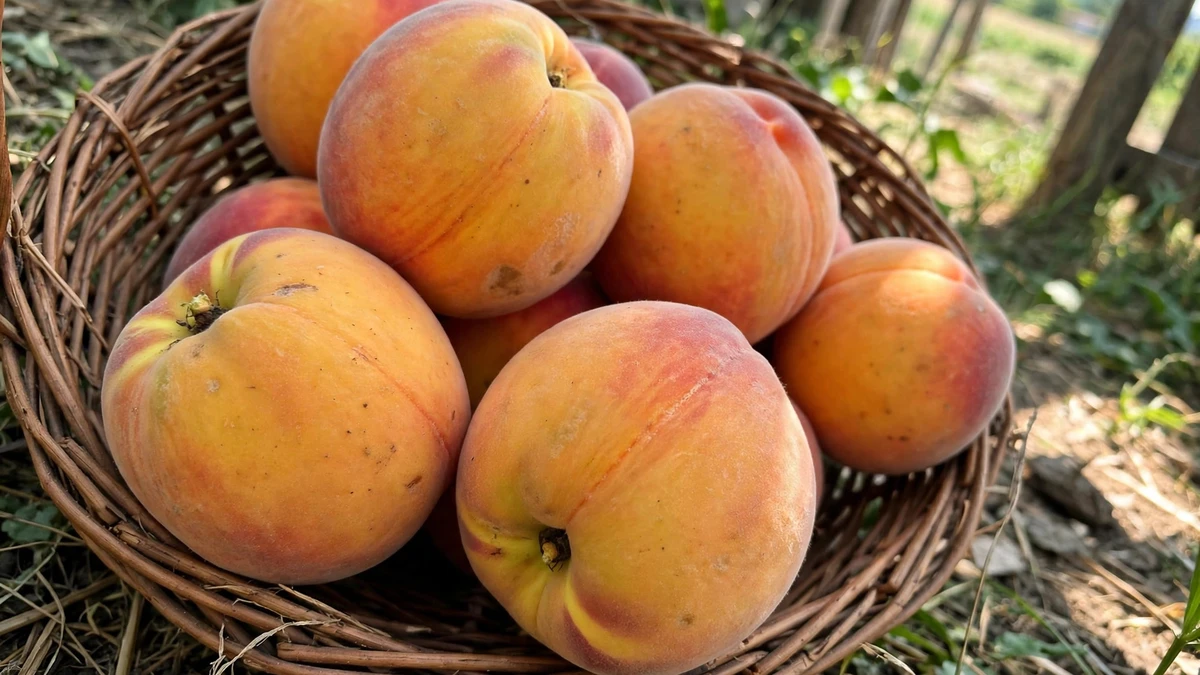
White peaches are pale, sweet and low in acid. Yellow peaches are firmer, more aromatic and better for cooking. Donut peaches are flat and very sweet. Clingstone peaches hold their flesh tight to the stone and are often the ones made into jam.
Aim for the short ripe window, when a peach gives slightly under your thumb
What to do: Ask the farm which week its main varieties ripen, and book for that week. What to avoid: Arriving a week early, when the fruit is hard, or a week late, when it is soft. Best for: Anyone who wants to taste a truly tree-ripe peach. Time needed: One email to the farm before you book. Standout tip: A ripe peach gives slightly under your thumb and smells sweet at the stem end.
The ripe window is the heart of the trip. A peach picked a week early is hard and sour, and a peach picked a week late is soft and bruised. The farm knows its own trees, so ask it directly when the main varieties ripen.
Choose an orchard that thins its crop, so the fruit grows big and sweet
What to do: Ask whether the farm thins its fruit, and choose one that does. What to avoid: Orchards that let every peach grow, because the fruit stays small and tart. Best for: Travellers who care about the taste of the fruit itself. Time needed: One question to the farm before you book. Standout tip: A thinned tree grows fewer peaches, but each one is bigger, sweeter and better coloured.
Thinning is the quiet work of a good orchard. The grower removes some of the young fruit in spring, so the tree puts its energy into the peaches that remain, and you can taste the difference in the first bite.
Be in the rows at first picking light, before the heat softens the fruit
What to do: Join the picking crews early, when the fruit is cool and firm. What to avoid: Picking in the heat of the afternoon, when the fruit bruises easily. Best for: Early risers and anyone who wants to pick with the crew. Time needed: Two to three hours in the morning. Standout tip: The best picking light is the first two hours after sunrise, before the sun is high.
Peaches are picked in the morning for a reason. The fruit is cool, firm and easy to handle, and it bruises less. By midday the heat has softened the fruit and the crews have stopped. Plan your day around that.
Taste the same variety warm from the tree and cold from the packing shed
What to do: Taste each variety twice, once warm from the tree and once chilled. What to avoid: Judging a peach only after it has been chilled, because cold hides the aroma. Best for: Food lovers who want to understand what ripeness really means. Time needed: An hour in the orchard and the packing shed. Standout tip: A warm peach smells of honey and flowers, while the same peach cold tastes cleaner and firmer.
The same peach tastes different warm and cold, and tasting both is the fastest way to learn what ripeness means. Warm from the tree, a peach is at its most fragrant. Chilled from the packing shed, the same fruit is firmer and cleaner.
Watch peaches graded, packed and chilled within hours of picking
What to do: Ask to see the packing shed, and watch how the fruit is sorted. What to avoid: Assuming every peach in a crate is the same, because grading is what makes the difference. Best for: Curious travellers who like to see how food is made. Time needed: An hour in the packing shed. Standout tip: Good fruit is chilled within hours of picking, and that cold chain is what keeps it sweet.
The packing shed is where a peach farm earns its reputation. The fruit is graded by size and colour, packed carefully so it does not bruise, and chilled within hours of picking. Watching that work explains why a farm peach tastes so much better than a supermarket one.
Sit down to peach pie, peach jam and peach cider at the farm table
What to do: Eat at the farm table every night, and try everything the kitchen makes from the orchard. What to avoid: Eating in town every night, because the farm kitchen is half the trip. Best for: Food lovers and anyone who wants the full farm experience. Time needed: Every evening of your stay. Standout tip: Ask what the kitchen does with the fruit that does not make the grade, because that is where the jam and the cider come from.
The farm table is where the orchard’s work becomes dinner: peach pie, peach jam, grilled peaches with cheese, peach ice cream made that morning, and in some places a peach cider or brandy made from the fruit that did not make the grade. The lavender farms of Provence cook the same way, and our guide to how to plan a lavender farm escape shows how a farm kitchen follows the harvest.
Leave with a crate of the variety you liked best, bought on the last morning
What to do: Buy your peaches on the last morning, after you have tasted every variety. What to avoid: Buying on the first day, before you know which variety you like best. Best for: Anyone who wants to take the trip home with them. Time needed: Half an hour on the last morning. Standout tip: Buy fruit that is just ripe, not soft, so it survives the journey home.
The last morning is the time to buy. By then you have tasted every variety the farm grows and you know which one you like best. Buy a crate of that variety, just ripe rather than soft, and it will travel well.
Picking the right region and the right week
The region follows the variety, and the week follows the harvest. Georgia and South Carolina are the easiest first choice, with a long season and comfortable stays. Murcia ripens earliest in Europe. Emilia-Romagna and Roussillon suit food lovers, Yamanashi suits travellers who want the most careful fruit, and Bursa and Shandong suit those who want value.
The week matters more than the region. Every orchard has a short window when each variety is at its best, and that window moves with the weather. A hot spring brings the harvest forward, a cool spring pushes it back. Ask the farm directly, and book a flexible rate so you can move with the fruit.
Most visitors need three to five nights. That is long enough to walk the rows, sample the varieties, eat at the farm table and rest for a day. A full week suits travellers who want to watch the harvest move from one variety to the next.
The caveats that matter
A peach farm escape depends on the weather in a way a city hotel does not. Spring frost can thin the blossom, summer rain can split the fruit, and a hot spell can pull the harvest a week earlier. Honest farms will say how the season is shaping up, and the freedom to move your dates is worth paying for.
| Detail | What is known |
|---|---|
| Best time to go | Peak harvest, usually June to August, depending on the region and the variety |
| How long to stay | Three to five nights, a week if you want to see varieties ripen in turn |
| Who should be careful | People with stone-fruit allergies, and anyone sensitive to heat and pollen |
| What to pack | Light clothes, a hat, sun cream, and shoes you can walk in orchard mud |
| What to expect | Early mornings, simple farm food, and days shaped by the harvest |
| What it costs | About $80 to $450 a night, depending on the region and the season |
| When to book | Two to three months ahead for peak harvest weeks, earlier for Japan |
| What it does not offer | It is not a resort: no spa, no nightlife, and no guarantee of a perfect harvest |
If you have a stone-fruit allergy, tell the farm before you arrive and carry your medication. Both the pollen and the skin of a peach can set off a reaction, and a kitchen that handles peaches all day is the wrong place to find that out. Keep children with an adult in the orchard, above all near ladders and picking gear.
Checklist: planning a peach farm escape honestly
Use these checks before you book, and again before you travel.
- Check the variety: decide white, yellow, donut or clingstone before you choose the region.
- Check the harvest dates: ask the farm directly when its main varieties ripen.
- Check the room: make sure it sits within walking distance of the rows.
- Check the table: ask whether the kitchen cooks from the orchard.
- Check the season: ask the farm how the year is shaping up, because frost and rain move the harvest.
- Check the booking terms: pick a flexible rate for harvest weeks, because the fruit sets the dates.
Frequently asked questions
Is peach blossom season worth planning a trip around?
Yes, if you love blossom for its own sake, because a peach orchard in full bloom is beautiful. But the bloom and the harvest are months apart, so a blossom trip will not give you ripe fruit.
Will the farm let me pick my own peaches?
Yes, on most working farms, with guidance on which rows are ready and how to pick without bruising the fruit. A few charge by weight for what you take, and others include a small basket in the stay. Ask ahead, and follow the farm’s rules.
Which peach variety should a first-timer try first?
A yellow peach, because it is the most aromatic and the easiest to judge for ripeness. White peaches are sweeter and gentler, donut peaches are the sweetest of all, and clingstones are best for jam. Taste them side by side on the farm.
How long should a peach farm escape last?
Three to five nights suits most people: enough to walk the rows, sample the varieties and eat at the farm table. A week is better if you want to watch the harvest move from one variety to the next.
Do peach farms welcome children?
Usually, yes, and children tend to love picking fruit, but the orchard is a working place. Ladders, picking gear and hot sun all need watching, and younger children belong with an adult in the rows. Ask the farm about ages before you book.
What should I pack for a peach farm in high summer?
Light clothes, a hat, sun cream, and shoes you can walk in orchard mud. Bring a light layer for cool mornings, a water bottle for the rows, and a bag for the fruit you buy on the last morning.
The bottom line
A peach farm escape works when you plan it around the fruit. Choose the variety first, ask the farm when it ripens, book a flexible rate for that week, and spend your mornings in the rows and your evenings at the farm table.
Do that, and you will come home with a crate of fruit you chose yourself, a better idea of what a peach is supposed to taste like, and a trip that felt unhurried from the first morning to the last.