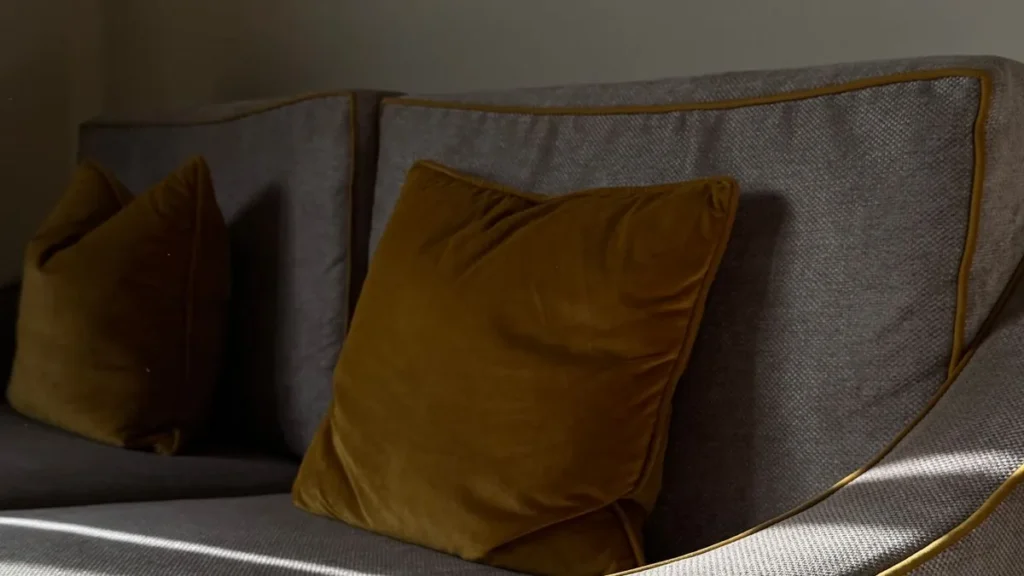
There is a particular kind of disappointment that comes with a new sofa. You spend weeks choosing it, it arrives, and within a month it looks like every other sofa: flat, grey, and slightly too sensible. The cheaper instinct, and in our view the better one, is a pair of velvet cushions.
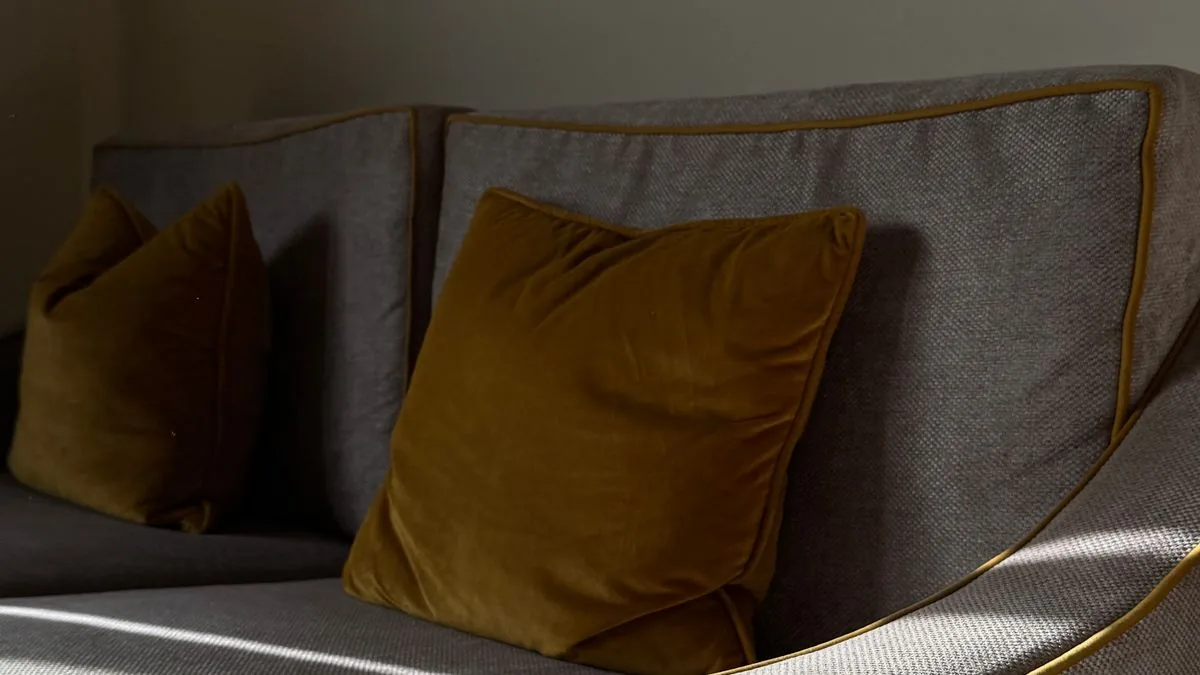
Velvet does something no other cushion fabric does. It catches light and holds shadow in the same square of fabric, so a cushion looks different from every angle and at every hour of the day. That single quality is why a velvet cushion on a plain sofa reads as expensive, while a cotton cushion in the same colour reads as merely new.
This is our take on the upgrade: why velvet works, which colours and sizes actually flatter a sofa, how to mix velvet with the cushions you already own, and the honest cases where velvet is the wrong choice. No new sofa required, and no pretending that a cushion can fix a sofa you genuinely dislike.
Key takeaways
- Velvet reads as luxury because its pile catches light and shadow at once, giving a plain sofa instant depth.
- Two or three velvet cushions in one strong colour beat a full set in many colours, which usually looks like a shop display.
- Size matters more than brand: a 50-centimetre square suits a three-seat sofa, and a smaller cushion looks lost on it.
- Mix velvet with one contrasting texture, such as linen or wool, so the sofa feels collected rather than matched.
- Velvet is not for every home: it marks easily, shows pet hair, and fades in strong sun, so check the caveats before buying.
Why a cushion beats a new sofa
A sofa is the most expensive single object in most living rooms, and it is also the one we look at the most. That combination makes it the worst place to chase a trend. The frame, the springs and the shape are probably fine. What has gone stale is the surface, and the surface is exactly what a cushion changes.
Velvet is the most efficient surface change available. A single deep-green or mustard cushion against a grey or cream sofa changes the whole colour story of the room, and it does so for the price of a dinner out rather than the price of a holiday. It also changes how the sofa feels to sit on. Velvet is warm to the touch in winter and soft against bare arms in summer, which is a small daily pleasure that a new sofa in the same plain fabric would not deliver.
There is also a practical argument. Cushions are reversible decisions. If the colour is wrong, you move them to a bedroom chair or give them away, and the sofa is unchanged. Starting with cushions lets you test a colour, a texture and a level of boldness before committing to anything bigger, and that is how most good rooms are built: one confident change at a time, not one expensive gamble.
Colour, texture and light: why velvet reads as luxury
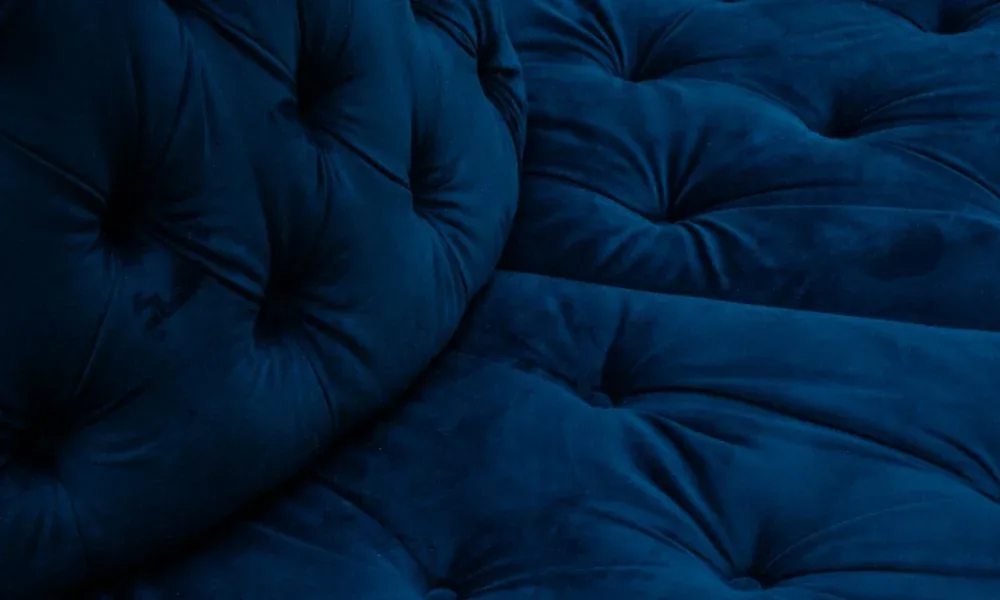
Velvet’s reputation is not an accident of fashion. The fabric is woven with a dense pile, and that pile bends light differently depending on which way it is brushed. Run your hand one way and the colour deepens; run it the other way and it brightens. No flat fabric does this.
Colour choice decides whether that quality flatters the room or overwhelms it. Deep, slightly muted tones are the safest route to luxury: forest green, ink blue, oxblood, mustard, and charcoal. These colours have enough depth for the pile to show its movement, and they sit comfortably against the neutral sofas most of us own. Very bright velvet, by contrast, can look theatrical, and pale velvet shows every mark within a week.
Light is the other half of the effect. Velvet looks its best in rooms with soft, indirect light, where the pile can shift between light and shade. In a very dark room it can disappear into the shadows, and in harsh direct sun it fades faster than most fabrics and shows every crease. The quiet-luxury look that dominates home decor right now depends on exactly this balance of texture and restraint, and our guide to what quiet luxury home decor means explains why a single rich texture often does more than a room full of expensive objects.
Scale, number and mixing: the rules that keep it elegant
The most common mistake with velvet cushions is buying too many, too small. A standard three-seat sofa needs cushions of about 50 centimetres square to look intentional; a 40-centimetre cushion on the same sofa looks like an afterthought. A cushion should be slightly larger than the space it fills, so it stands up properly instead of slumping.
Number is the second decision, and our view is that fewer is better. Two velvet cushions, one at each end of a three-seat sofa, create a frame. Three works if one of them is a lumbar cushion in the middle. Five or six velvet cushions in different colours is where the look tips into a showroom, and the sofa stops being somewhere you actually sit.
Mixing is what separates a good arrangement from a matching set. Velvet next to velvet in the same colour is flat; velvet next to a contrasting texture is interesting. A linen cushion beside a velvet one gives the eye somewhere to rest, and a wool or boucle cushion adds warmth without competing. The rule we follow is one velvet, one contrast, and nothing else fighting for attention. Colour can echo between the two, a mustard velvet with a cream linen, for example, but the textures should always differ. The same idea runs through our look at celebrity home decor, where one rich fabric does the work and everything else stays quiet.
The picks worth the money
Not every velvet cushion is worth buying, and price is a poor guide. The best test is the hand test: run your palm across the fabric in both directions. A good velvet changes shade as your hand moves and springs back without leaving a permanent mark. A cheap velvet feels stiff, looks shiny from across the room, and flattens into a permanent crease where it is sat on. If a cushion fails the hand test in the shop, it will not improve at home.
Look at the construction, too. A cushion with a hidden zip and a removable cover will outlast one that is sewn shut, because you can wash the cover or replace it when it fades. The insert matters as much as the cover: a feather insert gives the soft, slightly slumped look that reads as luxury, while a polyester insert holds a sharper shape but can look stiff.
For colour, we would start with one of three: deep green on a grey or cream sofa, mustard on a charcoal or navy sofa, or ink blue on a beige or tan sofa. These combinations work because the velvet provides the contrast the sofa lacks, and they are forgiving enough to live with for years. Buy the best quality you can afford in that one colour rather than three cheaper cushions in three colours.
When velvet fails: the honest caveats
Velvet is not the right fabric for every household, and pretending otherwise would be dishonest. It marks easily: a damp glass, a wet hand, or a spill leaves a visible ring until the pile dries and is brushed back. In a home with small children or a dog that sleeps on the sofa, velvet cushions will spend their life being cleaned. Pet hair clings to the pile and needs a lint roller rather than a shake.
Sun is the other enemy. Velvet fades unevenly in strong direct sunlight, so a cushion that lives against a south-facing window will lighten on one side within a season. Rotate the cushions every few weeks and keep them out of the strongest sun. None of this makes velvet a bad choice. It makes it a choice that suits a calm living room better than a busy family room, and knowing which room yours is matters more than any brand name.
| Factor | What velvet does well | What to watch for |
|---|---|---|
| Colour depth | Deep tones shift with the light and look expensive | Very bright velvet can look theatrical |
| Texture | Soft pile adds warmth and depth to plain upholstery | Cheap velvet feels stiff and looks shiny |
| Scale | 50 cm squares suit a three-seat sofa | Small cushions look lost on a large sofa |
| Mixing | Pairs beautifully with linen, wool or boucle | All-velvet sets look flat and showroom-like |
| Durability | Good cotton or silk velvet holds its pile for years | Polyester velvet flattens and marks easily |
| Care | Removable covers can be cleaned or replaced | Spills and pet hair show and need prompt attention |
| Sunlight | Looks best in soft, indirect light | Fades unevenly in strong direct sun |
| Cost | One excellent cushion beats three cheap ones | Feather inserts and quality covers cost more upfront |
Checklist: before you buy velvet cushions
- Measure your sofa and choose 50-centimetre squares for a three-seat, smaller for a loveseat.
- Run the hand test: a good velvet changes shade as your palm moves and springs back.
- Pick one deep, slightly muted colour first, and live with it before adding a second.
- Choose removable covers with a hidden zip, so you can clean or replace them.
- Pair velvet with one contrasting texture, such as linen or wool, not more velvet.
- Check where the sun falls on your sofa, and plan to rotate the cushions regularly.
Frequently asked questions
How many velvet cushions should I put on a sofa?
Two is the safest number for a three-seat sofa, one at each end. Three works if the middle one is a lumbar cushion.
What size velvet cushion suits a luxury sofa?
About 50 centimetres square for a standard three-seat sofa, and 45 centimetres for a smaller two-seat. The cushion should be slightly larger than the space it fills so it stands up rather than slumping.
Does velvet work on a leather sofa?
Yes, and it is one of the best pairings. Velvet softens leather’s hard, cool surface and adds the colour and texture that a plain leather sofa often lacks.
How do I clean a velvet cushion?
Brush the pile gently with a soft clothes brush to lift dust and restore the nap, and use a lint roller for pet hair. For spills, blot immediately with a dry cloth and let the area dry fully before brushing. Removable covers can usually be dry cleaned; check the care label before washing.
Is velvet a good choice if I have pets?
Honestly, it is a compromise. Velvet is comfortable and looks wonderful, but pet hair clings to the pile and claws can catch the weave. If your pet sleeps on the sofa, keep the velvet cushions for a chair the pet does not use.
Can velvet cushions work in a small living room?
Yes, and they can make a small room feel richer rather than smaller. One or two cushions in a deep colour give a small sofa presence without taking up space. Avoid piling on extra cushions, because in a small room every extra cushion is space you cannot sit on. The same less-is-more thinking applies elsewhere too, as our roundup of the best cashmere sweaters shows: one excellent piece, worn often, beats a wardrobe of average ones.
The bottom line
Velvet cushions are the easiest luxury upgrade for a sofa because they change the two things that make a room feel expensive, colour and texture, without changing anything structural. Two well-chosen cushions, in the right size and one deep colour, will do more for a plain sofa than a new throw, a new rug, or a new lamp.
Start with one pair and live with them for a month before buying more. If the colour still makes you smile every time you walk into the room, you have found your answer, and the sofa you were thinking of replacing suddenly looks like the sofa you chose on purpose.
Note: Check the care label on your own cushions before cleaning, and keep velvet out of strong direct sunlight to prevent uneven fading.