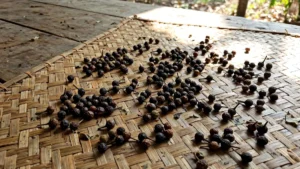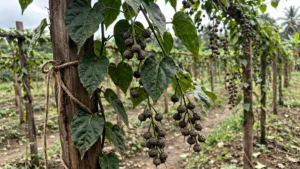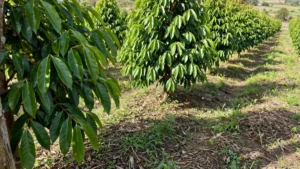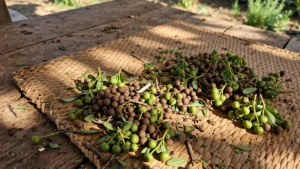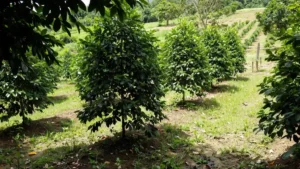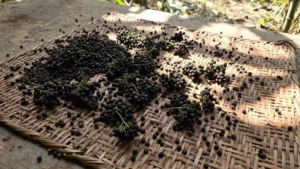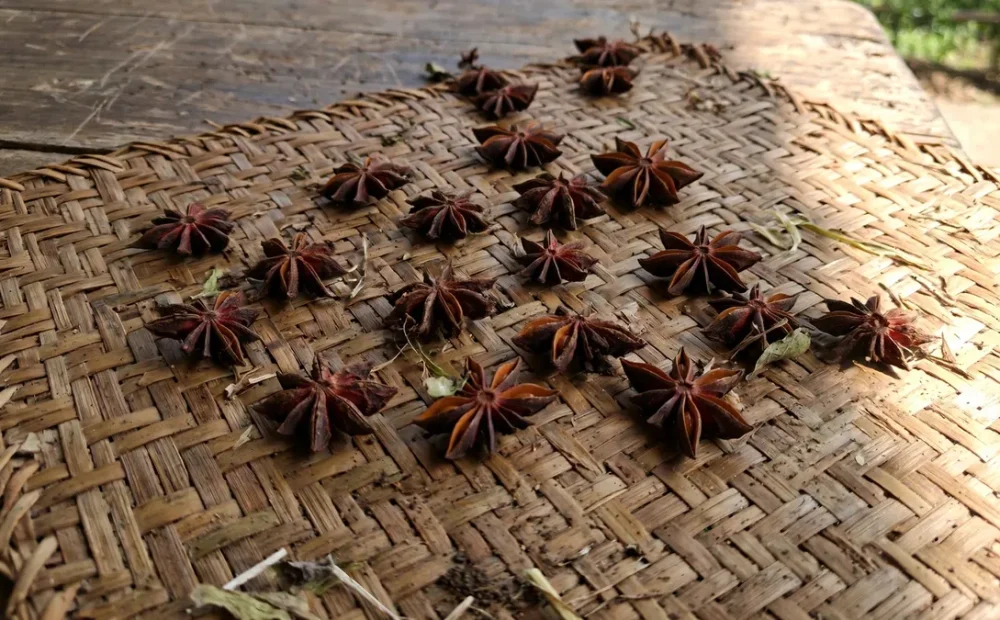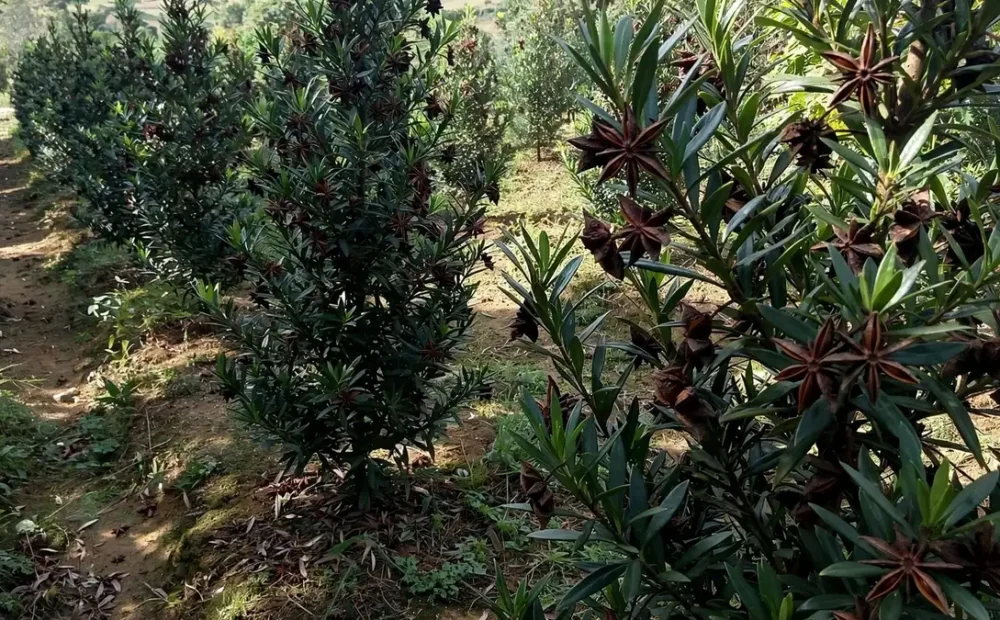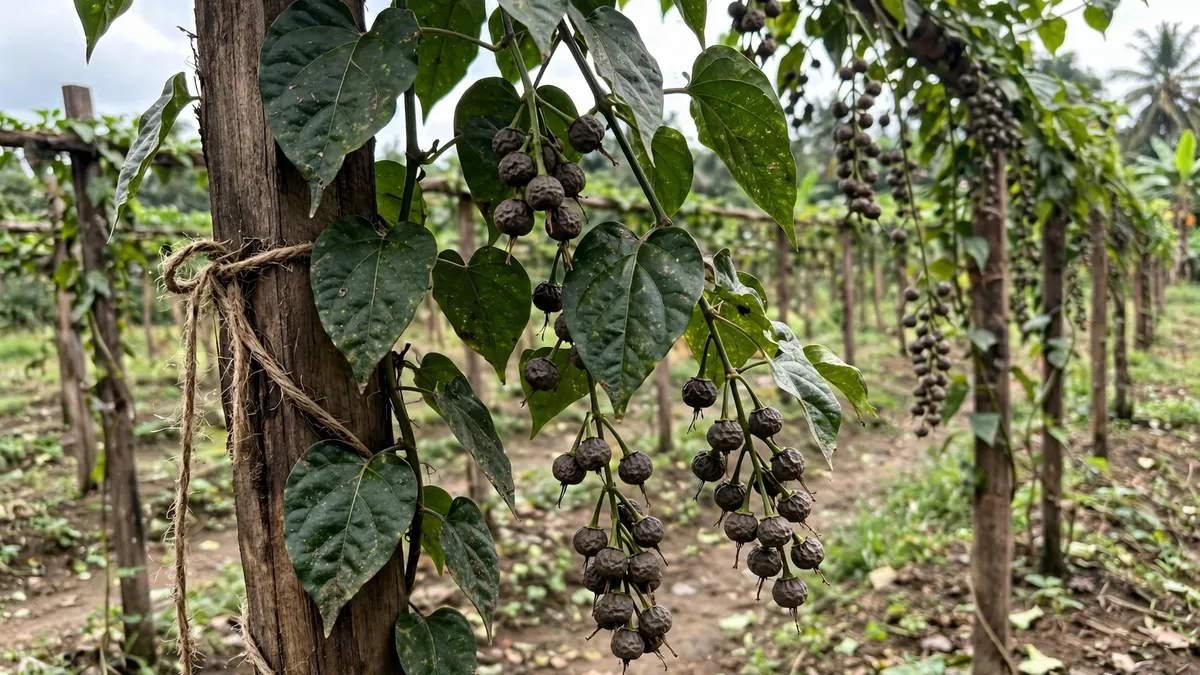
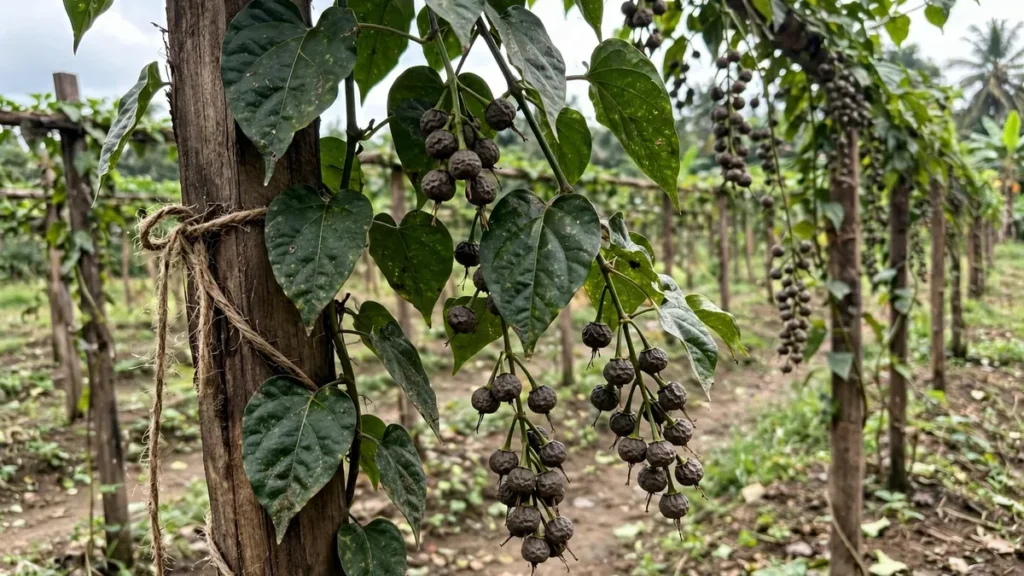
Cubeb pepper is the spice world’s quiet oddity, a berry with a tail. It grows on a climbing vine in the wet forests of Java, and each dried berry carries a short stem that looks like a little tail, which is why old spice traders called them tailed peppercorns. The flavour is nothing like ordinary pepper: cool camphor first, then warm allspice, with a bitter edge.
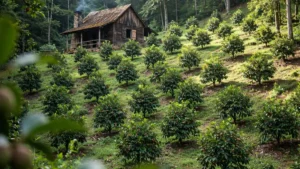
A cubeb pepper farm retreat is a few nights on a working cubeb farm in the picking and drying weeks, when the vines are heavy and the drying yards are full of dark grey-brown berries. You sleep in a farmhouse room, eat cubeb folded into stews, grills and spiced drinks, walk the vines while the berries are still green, and watch the harvest dried and sorted for the table.
Here are nine cubeb pepper farm retreats to weigh for 2027, from the cheapest West Java stay to the dearest Madagascar farm, so the decision turns on the way you travel rather than the place on the map.
Key takeaways
- Cubeb pepper is the dried berry of a climbing vine, and each berry carries a small tail, which is how you tell it from ordinary black pepper at a glance.
- The flavour runs cool camphor first, then warm allspice, with a bitter edge, so the kitchen uses it in small amounts and never as a straight swap for black pepper.
- Java is the classic home of cubeb, and farms there pick in rounds, so the farm names its picking week, not a month, and the week moves with the rain.
- Cubeb farms run small, with a handful of rooms and meals shared at one table, so expect plain comfort, early mornings and mud on your boots.
- Cubeb pepper carries no gluten, but the bread and pastry served beside it are usually wheat, so settle the kitchen and the calendar before you pay.
What a cubeb pepper farm retreat actually is
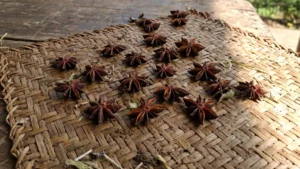
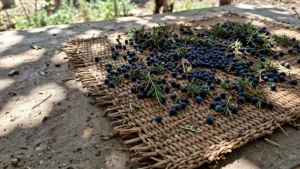
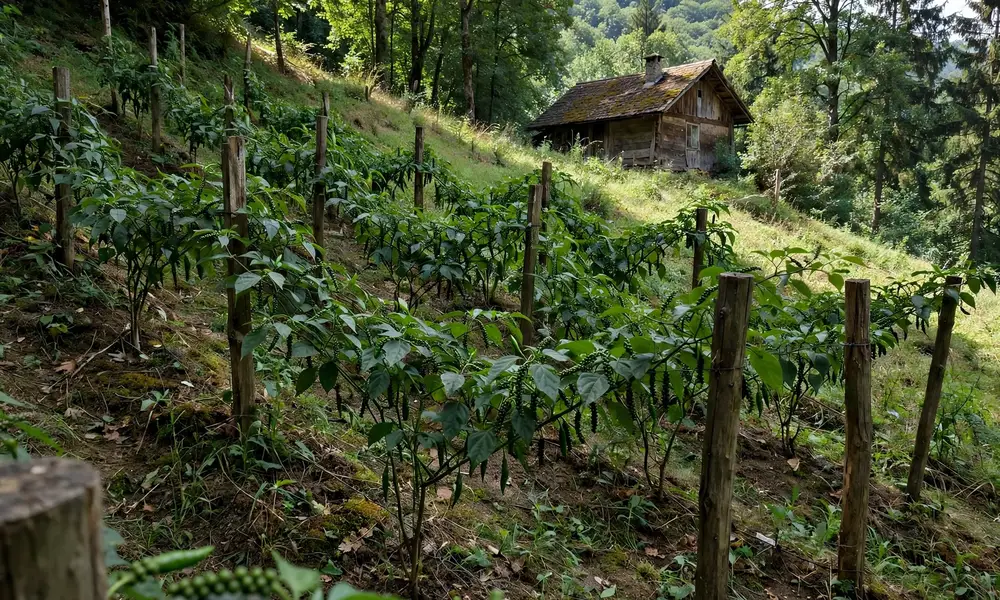
A cubeb pepper farm retreat means three to five nights on a working farm that grows cubeb, with the picking weeks as the reason for the trip. Guests sleep in a farmhouse room or a converted barn, eat what the farm kitchen cooks, and join the harvest, walking the vines to see berries cut down, tailed berries stripped by hand, and green berries spread on mats to dry in the sun until they turn dark grey-brown.
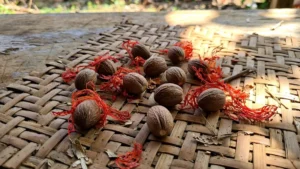
Cubeb has been traded for centuries, and its great regions took shape around the dishes they served. Java turned its cubeb into spiced stews and herbal drinks, Sumatra dried its berries for the spice trade, Borneo ground its cubeb for grills and curries, and the spice islands carried the vine west to Zanzibar and Madagascar. Cubeb wants heat, rain and a trunk to climb, so its farms sit in the humid tropics, where the ground stays rich. For a stay built around the pepper that shares cubeb’s vine and kitchen, our guide to the black pepper farm retreats covers climbing vines in the same wet tropics, with green spikes picked by hand and dried until they wrinkle and blacken.
Days on these farms run on the vine’s clock instead of a hotel’s, with dinner at a single shared table and real work on offer for guests who ask.
How we picked these stays, and what to ask first
We began with where cubeb truly grows, not where it sells best. A genuine cubeb farm offers vines to walk among, tailed berries at picking time, and a kitchen working with its own cubeb. A farm that buys its berries in is not a cubeb farm, whatever the website says.
A short guest list marks a serious farm: the harvest stays real work, not a show for visitors. They also spell out in the first email what the nightly rate covers, with dinner, the lift in from the nearest town and walks among the vines counted in the price instead of charged on arrival. Straight talk about vines, picking and drying is usually a sign the farm treats its guests well too.
The 9 best luxury cubeb pepper farm retreats of 2027
West Java, Indonesia — Tailed Berries on the Old Volcanic Slopes
What we like: Cubeb in West Java climbs the trees of the old volcanic slopes, and the farm folds it into stews, herbal drinks and spiced rice with lemongrass and galangal. The hills are green, tea grows beside the cubeb, and the kitchen serves cubeb stew with warm coconut rice.
What to consider: The mountain rain is heavy at picking time, and the farm sits far up the slopes, so the drive in is long and slow.
Style: Javanese mountain farm stay. Best for: Travellers who want cubeb where Java grows it best. Price range: $65–$95 per night. Standout feature: Tailed berries cut from the vines that morning.
Central Java, Indonesia — Cubeb Vines Below the Temple Hills
What we like: Cubeb in Central Java grows in the valleys below the temple hills, and the farm grinds it fresh for stews, drinks and morning porridge. The hills stand beyond the fields, the river runs nearby, and the kitchen serves cubeb beef stew with warm rice porridge.
What to consider: The valley mist hangs late at picking time, and the farm sits outside the town, so arrange the lift in advance.
Style: Javanese valley farm stay. Best for: Travellers who want cubeb with old temples close by. Price range: $100–$130 per night. Standout feature: Fresh-ground cubeb in the farm’s spiced drinks.
East Java, Indonesia — Cubeb in the Coffee Hills
What we like: Cubeb in East Java climbs the shade trees of the coffee hills, and the farm dries its berries in the sun for the spice trade. The hills are cool, coffee grows beside the cubeb, and the kitchen serves cubeb chicken with warm rice.
What to consider: Rain in the hills arrives without warning at picking time, and the farm is a long drive from the nearest city, so set off early in the day.
Style: Javanese coffee-hill farm stay. Best for: Travellers who want cubeb grown beside coffee. Price range: $135–$165 per night. Standout feature: Sun-dried tailed berries from the hill vines.
Bengkulu, Sumatra, Indonesia — Cubeb on the Wild West Coast
What we like: Cubeb in Bengkulu grows on the wild west coast of Sumatra, and the farm dries its berries in long yards for the spice trade. The coast is rugged, forest stands behind the vines, and the kitchen serves cubeb fish stew with warm rice.
What to consider: The coastal rain falls hard at picking time, and the farm sits far from the railway, so arrange the lift in advance.
Style: Sumatran coastal farm stay. Best for: Travellers who want cubeb from Sumatra’s old spice coast. Price range: $170–$200 per night. Standout feature: Dark grey-brown corns dried on the coastal yards.
Sarawak, Borneo, Malaysia — Cubeb Vines in the Rainforest Clearings
What we like: Cubeb in Sarawak grows in the rainforest clearings of Borneo, and the farm grinds its berries for grills and curries. The forest is close, the river runs nearby, and the kitchen serves cubeb pork with warm rice.
What to consider: The rainforest rain is heavy at picking time, and the farm is a drive from the river towns, so pack for wet weather.
Style: Bornean rainforest farm stay. Best for: Travellers who want cubeb from the deep rainforest. Price range: $205–$235 per night. Standout feature: Fresh-ground cubeb on the farm grill.
Sabah, Borneo, Malaysia — Cubeb on the Mountain Foothills
What we like: Cubeb in Sabah climbs the trees of the mountain foothills, and the farm folds it into curries, soups and pickles. The foothills are green, the sea breeze reaches the vines, and the kitchen serves cubeb fish curry with warm rice cakes.
What to consider: The foothill humidity is heavy at picking time, and the farm books its rooms early, so write well ahead.
Style: Bornean foothill farm stay. Best for: Travellers who want cubeb with mountains close by. Price range: $240–$270 per night. Standout feature: Cubeb ground fresh for the fish curry.
Chiang Mai, Thailand — Cubeb Where the Tea Grows
What we like: Cubeb in Chiang Mai grows in the northern hills of Thailand, and the farm grinds it for the estate kitchen. The hills are cool, tea blossom scents the air, and the kitchen serves cubeb pork curry with warm sticky rice.
What to consider: Mist hangs over the hills until late morning at picking time, and the farm perches high above the valley road, so the path down is steep.
Style: Thai hill farm stay. Best for: Travellers who want cubeb grown in the Thai north. Price range: $275–$305 per night. Standout feature: Cubeb from vines climbing the hill shade trees.
Zanzibar, Tanzania — Cubeb on the Swahili Coast
What we like: Cubeb on Zanzibar grows on the spice island of the Indian Ocean, and the farm grinds it for Swahili stews and grills. The ocean stands beyond the fields, cloves grow nearby, and the kitchen serves cubeb pilau with warm rice.
What to consider: Island weather changes fast at picking time, and this is the second-dearest stay here, so book a year ahead.
Style: Indian Ocean island farm stay. Best for: Travellers who want cubeb from a spice island. Price range: $310–$340 per night. Standout feature: Cubeb ground for pilau on the spice island.
Madagascar — Cubeb in the Eastern Rainforests
What we like: Cubeb in Madagascar grows in the eastern rainforests of the island, and the farm folds it into stews, grills and spiced rice. The forests are green, vanilla grows beside the cubeb, and the kitchen serves cubeb zebu stew with warm rice.
What to consider: This is the dearest stay on the list, and tropical rain is heaviest at picking time, so book a year ahead.
Style: Malagasy rainforest farm stay. Best for: Travellers who want cubeb from the far edge of its range. Price range: $345–$380 per night. Standout feature: Cubeb from vines climbing the rainforest trees.
Which cubeb pepper region fits your trip
If you want cubeb where the berry is treated as a feast, start with West Java or Central Java, where it is picked, dried and ground the same week it was cut. Either suits a newcomer, with gentle walks and slow dinners.
If you want scenery with your cubeb, Madagascar puts the vines in eastern rainforests, Zanzibar on a spice island, and Sarawak in rainforest clearings. The crop beside the cubeb shapes the plate: tea in West Java, coffee in East Java and vanilla in Madagascar. For a farm stay built around another spice altogether, our guide to the nutmeg farm retreats covers seeds dried in the sun for weeks on the Banda Islands and Grenada, with mace from the same fruit instead of tailed berries, and the cardamom farm retreats offer shade-grown pods in the hills, with cardamom tea and spiced rice instead of ground cubeb and grills.
If you want the crop that shares cubeb’s kitchen, the black pepper farms put you among vines in the same wet tropics, with green spikes and drying yards beside the cubeb vines.
The caveats that matter
Cubeb farming answers to the weather: farms give a best guess, never a promise, and a trip pinned to one picking day gambles on rain. The real warning is the vine itself, easy to miss when the stay is dressed up as gentle countryside.
| Detail | What is known |
|---|---|
| Best time to visit | In the picking weeks, when the berries are green and full, with the season shifting by region |
| What the work involves | Walking the vines, watching berries cut down and stripped by hand, and seeing them spread in the sun to dry and turn dark grey-brown |
| How long a stay runs | Three to five nights, set around the picking weeks |
| Who should take care | Guests with a strong sensitivity to pepper, and anyone unused to fierce sun, heavy rain or steep muddy paths |
| What the kitchen serves | Cubeb stews and grills, fish curries, spiced drinks and rice, with fresh bread and farm butter beside the plate |
| Gluten note | Cubeb pepper carries no gluten, but the bread and pastry served beside it are usually wheat, so ask the kitchen what it can safely serve |
| What to pack | Closed walking shoes, a broad sun hat, a rain layer for sudden showers, and clothes that wash easily by hand |
| What it does not do | No promised picking day, no fixed menu, and no hotel-style service on a working farm |
Anyone with a strict gluten-free diet should ring the farm before booking. A single question about the kitchen and the cubeb can save you a difficult stay, and a farm that answers honestly is usually worth the visit.
Checklist: booking a cubeb pepper farm stay honestly
Work through this list before you pay, and go over it again in the week before you travel.
- Get the picking window in writing, and ask what happens if the berries are still unripe when you arrive.
- Confirm the nightly rate covers dinner, the lift in from the nearest town and the walks among the vines.
- Ask whether the picking and drying happen on the farm, and whether the kitchen can serve a meal without cubeb.
- Before you pay, look at the room yourself: run the taps, sit on the bed and try the heater, since farm rooms are plain.
- Pack for rain and mud: sturdy shoes, a hat, a rain layer for sudden showers, and clothes you can wash in a basin.
- Keep one day free for the nearest town, so a shifted picking week still leaves a good trip.
Frequently asked questions
How is cubeb pepper different from black pepper?
Cubeb is the dried berry of a different vine, and each berry carries a small tail, which black pepper never has. The flavour is cool camphor first, then warm allspice, with a bitter edge, while black pepper is hot and sharp. The two are not a straight swap in the kitchen, and a farm that grows one rarely grows the other.
When do the farms pick their cubeb?
Cubeb is picked when the berries on a spike are full and green, with the precise week shifting with rain and warmth, so ask the farm for its picking window instead of a single date, and hold off booking flights until that window is fixed.
Is cubeb pepper grown on a tree or a vine?
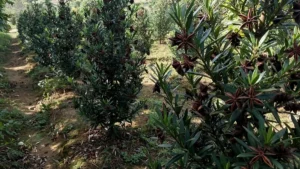
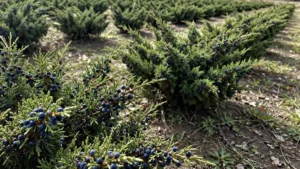
Cubeb pepper grows on a climbing vine, not a tree. The vine wraps itself around a living tree or a wooden pole and can climb several metres high, which is why picking is done by hand from a ladder, spike by spike, while berries on one spike ripen at different times.
Can guests join in the picking work?
Most farms let guests stroll the vines, join the picking and eat at the kitchen table, and some invite you to strip spikes and spread berries to dry. Picking is slow work, so ask the farm what guests may do before you book, and expect soil on your hands either way.
Which cubeb pepper farm region should a first-timer pick?
West Java is the easiest first trip: the cubeb vines are widest there, the farms are used to guests, and the cubeb stews show what the crop can do best. If you want the story as well as the plate, Central Java is the valley ground where cubeb has been grown for generations.
Can you eat well gluten-free on a cubeb pepper farm?
Mostly. The fields, the picking and the harvest are worth the trip alone, and cubeb pepper carries no gluten, but the bread and pastry served beside it are usually wheat. Ask the farm what it can cook without wheat for a gluten-free guest, and settle the picking week ahead of any week the kitchen bakes bread.
The bottom line
A cubeb pepper farm retreat suits travellers who prefer tailed berries, farm kitchens and cubeb ground the farm’s own way over a hotel. The green berries come fresh and bright, the dark corns grind into stews and grills, and the finest stays feed you from ground they worked themselves.
Fix the picking week first, then the travel dates, and keep a spare day at the end. When the cubeb picks on time you will eat berries dried that week, and when it does not, the hills, valleys and old towns will still carry the trip.