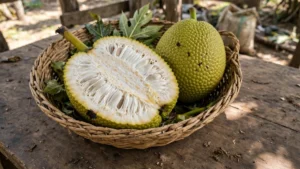
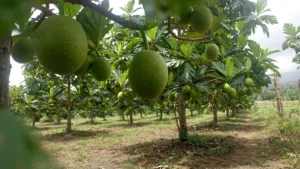
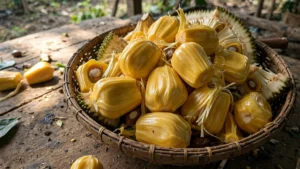
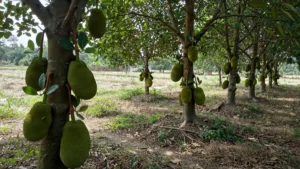
Breadfruit is the Pacific’s working fruit, and a farm escape is the way to meet it properly. The fruit is picked green and firm, roasted in an earth oven, fried in slices or baked in the coals, and it feeds a family for months from a single tree. A breadfruit farm escape means sleeping in a farmhouse at the orchard’s edge, joining the picking in the morning and the cooking in the evening, and learning a food that most visitors have never tasted. The Pacific Islands are its classic home, and the farms there still cook the old way.
Planning one is mostly about the calendar. The main Pacific harvest runs roughly November to May, Hawaii picks most of the year, and Jamaica’s heaviest crop comes from May to October — so the picking weeks decide the dates, not the flight board. The second thing to settle is the kitchen: breadfruit is naturally gluten-free, but farm kitchens use soy sauce and wheat breads, so a wheat allergy has to be in the first message, in writing. Get those two things right and the rest of the trip falls into place.
These nine steps take you from a first taste at home to flour in your bag on the flight back, with the season, the region and the packing sorted along the way. The whole trip works best at three to four nights, and the farms below all keep guest rooms on the farm itself.
Key takeaways
- Cook a breadfruit at home before you book — the fruit must be cooked, and a first taste tells you whether the trip is for you.
- The harvest weeks decide the dates: November to May across the Pacific, most of the year in Hawaii.
- Pick an island for its cooking, not its beaches — the earth oven is the point of the stay.
- Put any wheat allergy in your first message to the farm, in writing, before you pay.
- Latex and fig allergies matter here — breadfruit is a close cousin of jackfruit and fig, so ask the farm first.
What a breadfruit farm escape involves
A breadfruit farm escape is a working orchard stay, not a resort holiday. You sleep in a farmhouse or a bungalow inside the grove, wake to the picking, and spend the day with the fruit: learning the squeeze test on green fruit, cutting without the milky sap ruining a shirt, and cooking in the earth oven. The fruit is heavy — commonly one to four kilograms — so the picking uses poles and nets, and the farm provides gloves and oil for cleaning hands and blades.
The evenings are for cooking. A whole breadfruit goes into the oven wrapped in leaves and comes out soft enough to scoop; slices fry crisp in oil; ripe fruit goes into puddings and cakes. Many farms dry the flesh and grind it into flour, and the flour is the souvenir that actually travels. The stay is quiet by resort standards — early mornings, shared meals and a kitchen that closes early.
Planning it, and the questions to ask first
Start with the harvest, not the hotel. Ask each farm for its picking weeks in writing, and book flights that land a day before picking starts. Then ask three questions: can guests join the picking, can guests join the earth-oven cooking, and what will the kitchen cook for a gluten-free guest. A farm that answers all three in writing is a farm that runs its kitchen properly.

Book the room only after those answers arrive, and pay for the picking weeks, not the cheapest flight. The jackfruit farm escape guide follows the same order — harvest first, flights second, kitchen questions in writing — because the same calendar rules apply to every tropical fruit farm.
The 9 steps to plan a breadfruit farm escape
Taste it roasted at home, ahead of the trip
Before you book anything, cook a breadfruit. Buy a green, firm fruit from a grocer, roast it whole in the oven until the flesh turns soft and floury, then fry a few slices in oil. You will learn the fresh-bread-and-potato flavour of the green fruit and the softer, sweeter taste of a ripe one, and arrive knowing what the harvest is for. What to Do: Roast one whole and fry one sliced, and taste both. What to Avoid: Judging the fruit from a frozen pack, which hides how fresh it is. Best For: First-time visitors who have never eaten breadfruit. Time Needed: A week of evening cooking. Standout Tip: Roast one whole first, so you know what the farm oven is for.
Fly in for the harvest, not for the cheap seats
Cheap flights mean nothing if the fruit is still green. The harvest runs November to May across the Pacific, with Hawaii picking most of the year and Jamaica heaviest from May to October, and the exact weeks shift with the rains. Get each farm’s picking dates first, then book flights that land a day before picking starts. What to Do: Get the picking weeks in writing from two farms, then book your flights. What to Avoid: Do not book a flight you cannot refund before the farm confirms its picking dates. Best For: Travellers with a free week either side of the picking dates. Time Needed: Ten days of emails before you pay. Standout Tip: Aim for the middle of the picking window, when the fruit tastes best.
Cooking comes first; the scenery can wait
The oven is the point of the stay, so ask how each farm cooks before you ask about the beach. Samoa and Tonga light the umu most evenings, Fiji uses the lovo, and Jamaica’s lodges run a chef-led kitchen. A farm with a daily oven teaches you more in one evening than a resort with a fruit garnish teaches in a week. What to Do: Ask each farm how often the oven is lit and whether guests can join. What to Avoid: Picking an island for the resort and hoping the fruit shows up. Best For: Travellers who cook at home. Time Needed: An evening of reading farm pages. Standout Tip: Ask for a photo of the oven before you book.
Find out if picking is a guest job or a staff job
Not every farm lets guests pick. Some keep the harvest to staff during the busiest weeks, and some charge extra for the picking session. Ask in your first message whether guests can join, what the session costs, and whether gloves and poles are provided. A farm that welcomes guests into the rows is a farm that trusts its visitors. What to Do: Ask in your first message whether guests can join the picking. What to Avoid: Assuming every farm lets guests pick — ask first. Best For: Hands-on travellers. Time Needed: One note sent before you book. Standout Tip: Ask who provides the gloves and the oil for the sap.
One home roast tells you if the trip is yours
A ready breadfruit is dull green and gives slightly under the thumb; a glossy, rock-hard fruit is not yet ready. Practise at a grocer before you travel, so you can read the fruit on the farm instead of guessing. Smell the stem end too — a ripe fruit carries a faint sweet scent, while a green one smells of nothing. What to Do: Press the skin gently and smell the stem end at a market. What to Avoid: Picking a glossy, rock-hard fruit and expecting it to ripen fast. Best For: Anyone who will join the harvest. Time Needed: Half an hour at a market. Standout Tip: Smell the stem end first — it tells you more than the skin.
Mention wheat the moment you write to the farm
Breadfruit flesh is naturally gluten-free, but the kitchen is not. Farm kitchens use soy sauce, wheat breads and shared cooking surfaces, and a wheat allergy mentioned at the table is too late. Put the allergy in your first message, ask what the kitchen will cook for you, and get the answer in writing before you pay. What to Do: Put the allergy in the first message and ask for the gluten-free menu. What to Avoid: Waiting until you arrive to mention a wheat allergy. Best For: Gluten-free travellers. Time Needed: Five minutes with the booking form. Standout Tip: Ask for the gluten-free menu in writing, not by word of mouth.
Old clothes only — the sap does not wash out
The earth oven smokes, the rain falls most afternoons, and the sap sticks to everything it touches. Pack old clothes you can stain, closed shoes for the rows, and gloves for the cutting table. A hat and long sleeves help under the trees, and a rain jacket is worth its weight in the Pacific wet season. What to Do: Pack old clothes, closed shoes and gloves for the cutting table. What to Avoid: Wearing white near the oven or the sap. Best For: Anyone joining the cooking. Time Needed: An evening of packing. Standout Tip: Bring a shirt you can throw away at the end of the trip.
Get up for the market while the farm still sleeps
The best cooking lessons happen at the market, not in the kitchen. Go with the farm cook at first light, watch what she buys and why, and ask about the fruit you do not recognise. The market is also where the flour is sold — buy it there, not at the airport, where the price doubles. What to Do: Go with the cook at first light and ask about every unfamiliar fruit. What to Avoid: Sleeping through the market and buying souvenirs at the airport. Best For: Early risers. Time Needed: Two hours at dawn. Standout Tip: Buy the flour at the market, not the airport.
Buy the flour, leave the fruit on the tree
Fresh breadfruit bruises easily and ripens fast, so it is a poor souvenir. Flour and chips are the ones to carry home: dried and ground, the flour keeps for months, and the chips survive a flight in a sealed bag. Buy them at the farm shop, where the price is fair and the money stays with the farm. What to Do: Buy flour and chips at the farm shop before you leave. What to Avoid: Packing fresh fruit in your luggage — it will bruise and ripen. Best For: Travellers flying home. Time Needed: An hour at the farm shop before you leave. Standout Tip: Pack flour in your hand luggage, where it cannot be crushed.
Choosing the season and the region
The Pacific season runs roughly November to May, with the fruit at its best in the middle of that window. Samoa and Fiji are wettest in those months, so pack for rain; Hawaii picks most of the year and suits a trip outside the main window. Jamaica’s heaviest crop comes from May to October, which makes it the pick for a summer trip when the Pacific season is ending.
For a first trip, choose Samoa or Hawaii. Samoa cooks the old way with the umu lit every evening, and Hawaii is easy to reach with year-round picking. For a beach as well as a farm, Moorea and Rarotonga are the picks. For a remote farm, Espiritu Santo and Guadalcanal have old trees and unhurried picking. And for luxury, Jamaica’s stone lodge and tasting menu stand alone. The coconut plantation escape guide uses the same island logic, and several of these farms grow coconut beside their breadfruit.
If you travel in the shoulder months, ask the farm what is actually fruiting — a late rain can push the season by weeks, and a farm that answers honestly is worth more than one that promises everything. Tonga and the Cook Islands are small enough to cross in a day, so a stay there pairs well with a second island; Samoa and Fiji reward a longer stay, with more farms to visit and more ovens to learn from.
The caveats that matter
| Detail | What is known |
|---|---|
| Harvest window | The Pacific picks from November to May; Hawaii harvests nearly all year, while Jamaica peaks from May to October. |
| Ripe test | Look for a matte green skin that yields a little to the thumb; shiny, rock-hard fruit needs more time on the tree. |
| Never raw | Eat breadfruit only after cooking — the raw flesh is tough and will not digest. |
| Sap | A cut stem leaks milky sap that clings to skin and steel; the farm hands out gloves and oil. |
| Gluten | The fruit itself has no gluten, yet soy sauce and wheat breads appear in farm kitchens — put your allergy in writing. |
| Allergies | As a cousin of jackfruit and fig, breadfruit can trouble guests with latex or fig allergies — ask the farm first. |
| Weight | One fruit commonly weighs 1 to 4 kilograms, so picking uses poles, nets and a steady hand. |
| Flour | Dried and ground breadfruit keeps for months as flour; fresh fruit does not travel well. |
Checklist: before you book a breadfruit farm escape
- Get the picking weeks from the farm in writing before you pay.
- Put any wheat or gluten allergy in your first message, and ask what the kitchen will make for you.
- Check that the room rate includes meals and the picking sessions.
- Bring closed shoes, a hat and long sleeves for the rows, plus gloves for the cutting table.
- Bring cash along for the farm shop and the market in town.
- Reserve the earth-oven evening early — the best farms light the oven only a few nights a week.
Frequently asked questions
In which months does breadfruit ripen?
Across the Pacific the main season runs roughly November to May, with the fruit at its best in the middle of that window. Hawaii harvests nearly all year, while Jamaica’s heaviest crop comes from May to October. Get the farm’s picking weeks in writing before you pay.
Can visitors join the picking?
Guests are welcome at the picking on most of the farms here, usually in the morning, with poles and nets provided. The fruit is heavy and the sap clings, so the farm provides gloves and old clothes. Ask first — a few farms keep the picking to staff during the busiest weeks.
Can breadfruit farms feed gluten-free guests?
The fruit has no gluten in itself, but farm kitchens cook with soy sauce, wheat breads and shared surfaces. Tell the farm about any wheat allergy in your first message and ask what the kitchen will make for you, in writing.
How do I tell a ripe breadfruit from a green one?
A ready breadfruit is dull green and gives slightly under the thumb, and the stem end carries a faint sweet scent. A glossy, rock-hard fruit is not yet ready. Practise the squeeze test at a grocer before you travel, so you can read the fruit on the farm.
Which region suits a first breadfruit trip?
Samoa and Hawaii are the easiest first trips. Samoa cooks the old way with the umu lit every evening, and Hawaii picks most of the year with an easy airport transfer. Both are forgiving for a first-timer, and both teach the roasting before anything else. If you want a beach as well as a farm, Moorea and Rarotonga are the picks — the lagoon and the reef are part of the stay.
Which breadfruit souvenirs survive the flight home?
Flour and chips are the souvenirs that survive a flight — the flour, dried and ground, keeps for months. Fresh fruit bruises easily and ripens fast, so buy it only if you are flying home the same day. The pineapple plantation escape guide has the same rule: dried and preserved goods travel, fresh fruit does not.
The bottom line
A breadfruit farm escape works when the calendar comes first. Cook a fruit at home, get the picking weeks in writing, put any wheat allergy in the first message, and let the harvest decide the dates. The oven, the market and the flour are the trip — the beach is a bonus.
Three to four nights is enough to learn the picking, the roasting and the flour, and a week shows you the full cycle from tree to flour bag. Book the earth-oven evening early, pack clothes you can stain, and carry flour home instead of fresh fruit.