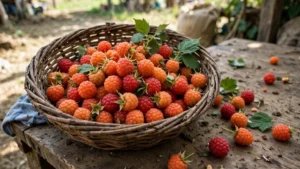
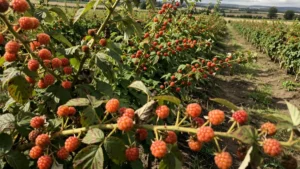
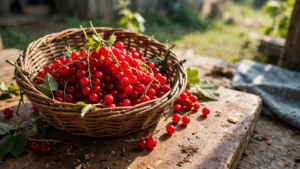
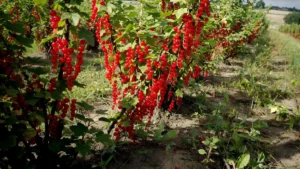
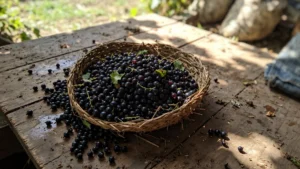
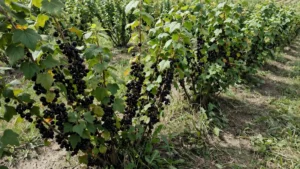
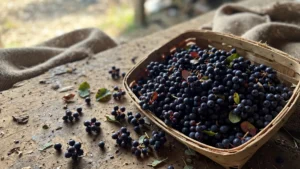
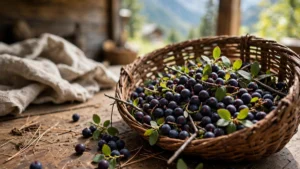
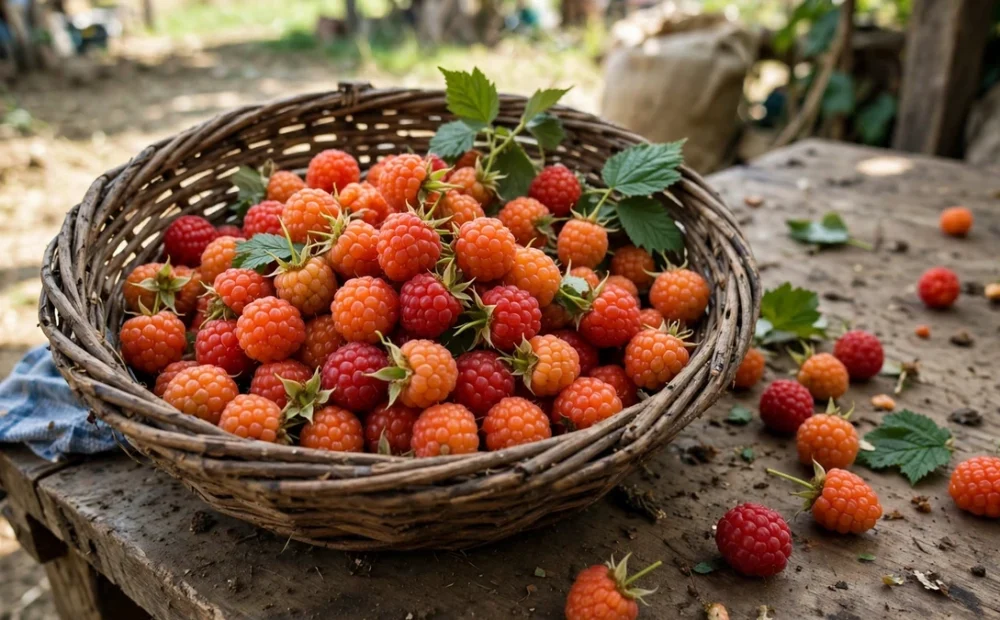
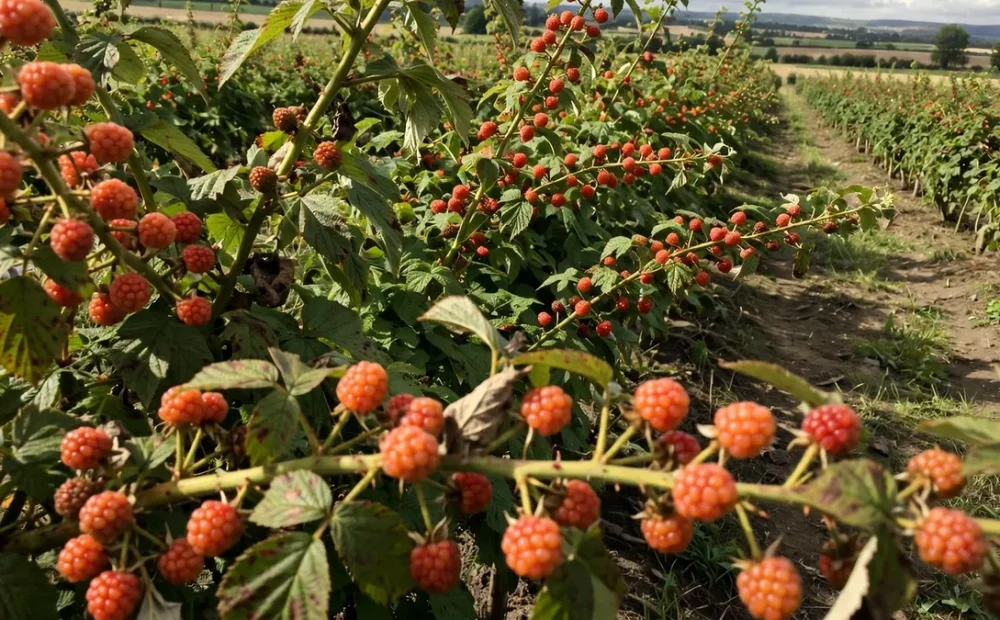
Blackcurrants keep a low profile. The bushes look plain, the berries hide in dark strigs beneath the leaves, and the first taste catches most people off guard: tart, deep, almost wine-like, a long way from the soft sweetness most fruit farms are built on. That sharp edge is the whole appeal. A blackcurrant farm retreat suits travellers who like their fruit with bite, and who are glad to swap a gentle summer berry for one that wants cooking, sugar, and a bit of patience.
Each berry is small and nearly black when ripe, and it dyes fingers and sleeves a deep purple. The bushes grow best in cool climates, and the harvest lasts only a few weeks in high summer, when the strigs turn from red to black and the fruit slips off soft. Farms that grow the crop properly cook with it all day: jam in the morning, cordial by the afternoon, a dark sauce for the evening meal.
The nine stays below run from a Kent smallholding under the hop poles to a cool valley in Otago where the season arrives late. Every entry looks at what the stay does well, where it falls short, and who will get the most from it.
Key takeaways
- Blackcurrants grow on bushes in cool climates, and the strongest stays are working farms where the berry is the main crop rather than a garnish.
- A ripe berry is black through and through, soft under the thumb, and slips off the strig with a gentle pull; red or firm berries are sour.
- Eaten raw, blackcurrants are sharply tart and best cooked, which makes the farm kitchen more important here than on a sweet-berry holiday.
- A farm walk and a tasting are usually part of the rate, while meals, lifts, and preserving sessions are often charged separately.
- Tell the farm about a wheat allergy before you book, because the kitchen bakes bread and cakes every morning and flour gets everywhere.
What a blackcurrant farm retreat actually is
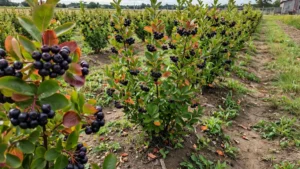
A blackcurrant farm retreat means sleeping on, or beside, a working blackcurrant farm. The bushes grow in long rows, waist-high and leafy, and the berries hang in strigs that ripen a few at a time, so the picking carries on for as long as the season lasts. The fruit is gathered by hand, bucket by bucket, and the farm cooks most of what it grows.
The single crop sets this kind of stay apart from an ordinary farm holiday. The berry drives the day, from the cordial at breakfast to the jam at lunch and the dark sauce over pudding after dinner. Bedrooms tend to be plain, the host works the rows, and the picking sets the timetable.
Knowing what the nightly rate covers is worth sorting out before you pay. A few of these stays are farms first and foremost, with simple rooms and a host out pruning each morning. Others are comfortable guesthouses inside a fruit farm, with more ease and less farm work on display. Both can be excellent, but they are different holidays, and the price usually gives away which one you are booking. The luxury blueberry farm retreats we covered earlier work the same way: get the inclusions in writing before the photographs decide for you.
How we picked these stays, and what to ask first
We chose stays where the blackcurrant bushes are genuine and central, not decoration. A strong blackcurrant retreat grows its own fruit, lets guests walk the rows or taste as part of the stay, and tells the truth about what happens once the fruiting season ends.
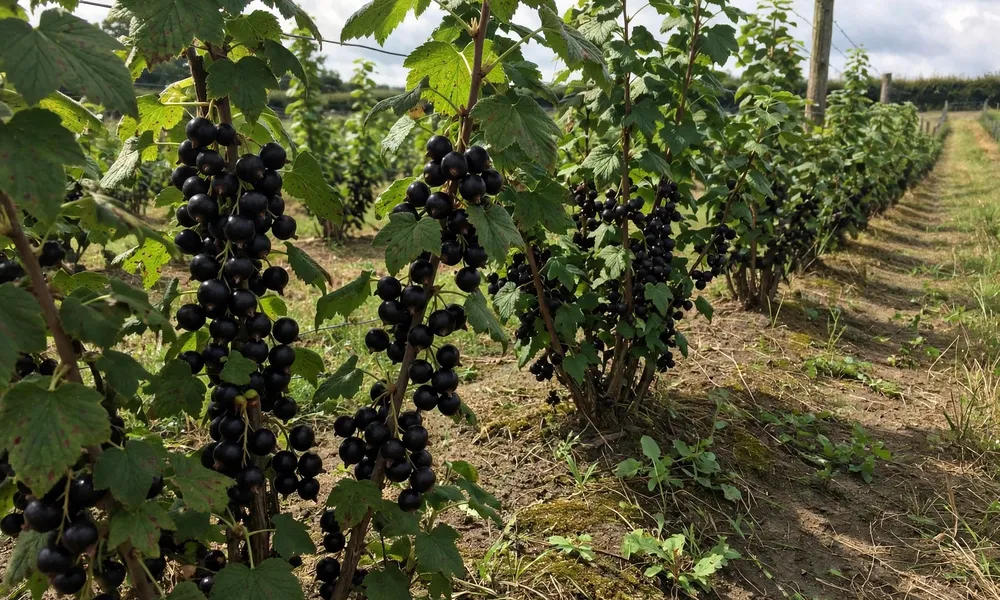
Season comes first. Blackcurrants fruit in a short burst through high summer, and the peak shifts by country. Kent and Herefordshire pick from July into August, with the earliest varieties leading the way. Scotland picks later still, and New Zealand picks while the northern farms rest.
Then ask what the price includes. A row walk, a tasting, and a preserving session are three different things, and some stays charge for each one separately. Find out whether breakfast is in the rate, whether the garden is shared, and whether the host speaks a language you can manage. A farm that lists every charge plainly before you book is usually run with care. The luxury cranberry farm retreats we covered earlier are built the same way: small stays where the booking details count for more than any star rating.
The 9 best luxury blackcurrant farm retreats of 2027
Kent, England — Blackcurrants under the Hop Poles
What we like: Kent is England’s blackcurrant heartland, and the berries here grow in long rows beneath the hop poles, small, dark, and sharply flavoured. The stay is a brick farmhouse at the field edge, and the host takes guests through the rows with a bucket before breakfast.
What to consider: The weather can turn fast, and a wet week may split the berries. The farm sits a drive from town, so arrange a lift in advance. Best for: Travellers who want blackcurrants grown where England grows them best. Style: Brick farmhouse at the field edge. Price range: From $65 per night, breakfast and a morning picking basket thrown in. Standout feature: Daily picking walks with the host.
Herefordshire, England — Blackcurrants in the Cider County
What we like: A riverside farm where blackcurrants grow in deep soil by the Wye, and the fruit comes in heavy and dark. The stay is a roomy farmhouse, the garden is broad, and the host runs picking mornings for guests who want to join in.
What to consider: Midday heat is strong and the farm lies a long drive from the nearest city. The river breeze helps, but the paths turn muddy after rain, so wear sturdy shoes. Best for: Fruit lovers after a large, generous harvest. Style: Roomy farmhouse near the river. Price range: From $95 per night, with a farm breakfast and a row walk included. Standout feature: Picking mornings guests can join.
Angus, Scotland — Blackcurrants on the Berry Coast
What we like: A coastal farm in eastern Scotland where blackcurrants grow in cool air above the sea, and the fruit ripens slowly with a deep flavour. The house is a stone cottage with a walled garden, and the host makes the berries into cordial for breakfast.
What to consider: The farm lies a long drive from the city and the summer wind can chill the evenings. Midges show up on still days, so bring repellent. Best for: Travellers who want fruit and a famous food region in a single trip. Style: Stone cottage with a walled garden. Price range: From $125 per night, dinner and breakfast both covered. Standout feature: Blackcurrant cordial poured fresh at breakfast.
Normandy, France — Blackcurrants among the Cider Apple Trees
What we like: A farm in the orchard country of Normandy where blackcurrants grow between the apple trees, and the fruit is dark, tart, and slow to ripen. The rooms face the orchards, the host runs a small kitchen, and the jam is made in a copper pot.
What to consider: The lane up is narrow and the farm fills through the fruiting months. Evenings stay cool enough for a layer, and the nearest town is half an hour away. Best for: Travellers who want cool orchard air alongside their berries. Style: Farmhouse with orchard views. Price range: From $160 per night, with dinner and a jam-making session included. Standout feature: Jam cooked down in a copper pot.
Burgundy, France — Blackcurrants where Cassis Is Made
What we like: A farm in Burgundy where blackcurrants grow beside the vineyards, and the kitchen turns the fruit into cassis every summer. The house is old and low, the air stays warm even in July, and the host knows every row.
What to consider: The valley lane is narrow and the farm keeps few rooms, so book early. The fruit runs sharp early in the season, and the sun is strong by afternoon. Best for: Travellers after a quiet, green corner of France. Style: Old farmhouse in the vineyard country. Price range: From $195 per night, all meals and the cassis tasting included. Standout feature: Cassis made on the farm each summer.
Pomerania, Poland — Blackcurrants on the Northern Plain
What we like: A farm on the northern plain of Poland where blackcurrants ripen in long rows under a wide sky, picked into buckets for the farm gate stall. The house stands among the rows, and the kitchen uses the fruit in compotes as well as jam.
What to consider: The heat arrives early and the farm sits an hour from the nearest city. The paths turn dusty after dry days, so wear sturdy shoes. Best for: Travellers who want fruit and wide northern skies in one trip. Style: Farmhouse among the rows. Price range: From $230 per night, breakfast, dinner, and a farm tour covered. Standout feature: Blackcurrant compotes from the farm kitchen.
Lublin, Poland — Blackcurrants on the Vistula Flats
What we like: A farm in the eastern fields of Poland where blackcurrants grow on open ground above the river, and the season runs while the western farms rest. The house is a timber cottage, and the host serves the fruit with cream from the dairy nearby.
What to consider: The wind blows hard off the plain and the farm lies a drive from the city. The season is brief, so the dates matter more than the price. Best for: Travellers who want blackcurrants away from the usual trail. Style: Timber cottage by the fields. Price range: From $265 per night, meals, tastings, and transfers included. Standout feature: Berries and cream from the dairy next door.
Canterbury, New Zealand — Blackcurrants beside the Braided Rivers
What we like: A farm on the Canterbury Plains where blackcurrants grow in cool, dry air, and the fruit is picked into buckets for the farm gate stall. The host is a second-generation grower, the season is generous, and the kitchen makes a blackcurrant sauce guests carry home in jars.
What to consider: The road runs long and straight, and the farm books out through the picking months. The wind rises often, so pick early and rest in the shade once the sun breaks through. Best for: Travellers after a long season and wide plains. Style: Plains farmhouse beside a farm gate stall. Price range: From $300 per night, full board and a preserving class included. Standout feature: Blackcurrant sauce made on the farm.
Otago, New Zealand — Blackcurrants on the Lake Country Farms
What we like: A small farm in the south of New Zealand where blackcurrants grow in neat rows behind an old shed, and the stay is a polished cottage with a lake view. The fruit is the tart kind, the farm runs a weekly tasting, and the kitchen folds the berries into morning crumbles.
What to consider: The price heads this list, and the farm sits a drive from the city. The season is brief, so confirm the dates first. Best for: Travellers who want blackcurrants within reach of the lakes. Style: Lakeside cottage with a mountain view. Price range: From $345 per night, everything included, from breakfast to the tasting. Standout feature: Weekly tastings with a lake view.
Which blackcurrant region fits your trip
For the most traditional fruit, head for Kent or Herefordshire, where the bushes are a working crop and the bucket reaches the table at every meal. For the most dramatic setting, choose Angus, above the sea in cool air. For the richest flavours, pick Burgundy, where the sun is strong and the harvest becomes cassis.
Kent makes the easiest first trip: the farm knows its guests, the season is generous, and the kitchen cooks with the fruit every day. The luxury raspberry farm retreats we covered earlier point the same way: choose the farm that cooks with its crop daily, and the trip mostly looks after itself.
The caveats that matter
Blackcurrant farm retreats are lovely, but they suit some travellers better than others. The fruit keeps to the seasons, the farms sit well away from town, and the honest stays say plainly what is ripening and what is not.
| Detail | What is known |
|---|---|
| When to go | High summer, while the bushes are bearing; the window shifts by country |
| Early and late kinds | Early varieties ripen first in July; late varieties follow into August and keep their flavour longer |
| Spotting ripe fruit | Black through and through, soft, and slipping off the strig easily, with no red left on the skin |
| Usually in the rate | Room and breakfast plus a row walk or tasting; preserving sessions and lifts often cost extra |
| Best suited to | Slow travellers, food lovers, and families with older children |
| Think twice if | You want nightlife, quick service, or a full daily programme |
| Getting there | Usually an hour or more from the closest airport; arrange the lift before you arrive |
| Never promised | Berries on your dates; the crop depends on weather, season, and the bush’s own rhythm |
Blackcurrants themselves contain no gluten, yet the farm kitchen bakes bread and cakes each morning, so ask how it keeps flour off your plate. The berries are tart and keep best cooked, so eat them on the day they are picked and take cordial home instead of fresh fruit. Before you pay, weigh the practical side if you have a health condition, are expecting, or travel with small children: the nearest clinic, the last spraying, and whether the paths suit little feet.
Checklist: booking a blackcurrant farm stay honestly
Go through these checks before you pay, then again in the week before you travel.
- Ask about fruiting: will the bushes be bearing on your dates, not just whether the farm is open?
- Ask about inclusions: row walk, tasting, meals, and lifts, and which ones cost extra.
- Ask about the journey: how long is the airport drive, and will the farm send a car?
- Ask about the bedroom: does the window face the rows or the garden, and is there shade, a fan, or air conditioning?
- Ask about the growing: how big is the field, is it organic, and when was it last sprayed?
- Ask about recent guests: find travellers who went in the same season as your planned trip.
Frequently asked questions
When do blackcurrants ripen?
It depends on the country. In Kent and Herefordshire, the bushes bear from July into August, early varieties before the late ones. In Scotland the window runs later, and in New Zealand the fruit comes while the northern farms rest.
How does a blackcurrant taste?
Tart and dark, with a flavour somewhere between blackberry and red wine. A ripe berry is deep black and fragrant; an unripe one is red, firm, and sour. The best are cooked into jam or cordial, on the day they were picked.
Can I pick my own blackcurrants at the farm?
Yes, at most farms, as long as a guide walks with you and you ask first. Some farms hand guests a bucket for a few strigs, while others leave the picking to the crew because the bushes bruise easily. Say so when you book, and wear long sleeves, because the branches scratch.
Who should be careful eating blackcurrants?
Most people can eat them freely, but the skins can trouble a sensitive stomach, and anyone with a berry allergy should tell the farm before booking. Wash the fruit before eating, and keep portions small when your stomach is delicate.
Which blackcurrant farm suits a first visit?
Kent, for the easiest journey and the longest season. The farm knows its guests, the fruit comes for much of the summer, and the kitchen serves it with every meal.
What do gluten-free guests need to ask?
Flag it when you book. The berries contain no gluten on their own, and the rice dishes are usually safe. The risk is the bread and cakes baked each morning, so ask the farm how it keeps flour off your plate.
The bottom line
A blackcurrant farm retreat suits travellers who like their food to come from the bush beside them, and who are glad to let the picking set the day. The fruit is tart, the season is brief, and the strongest stays are the ones that pick it, serve it fresh, and cook the rest into jam and cordial without any fuss.
Pick the region by what matters most: the hop country of Kent, the cassis farms of Burgundy, or the wide plains of Canterbury — and take the cordial home sealed, not the berries. A bottle on the shelf will outlast any photograph.