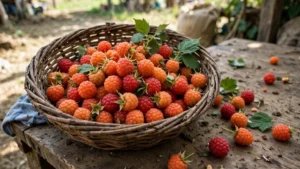
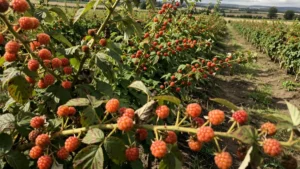
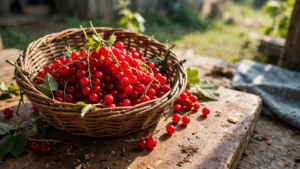
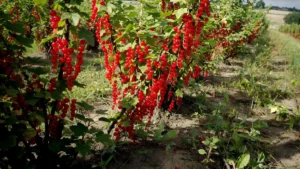
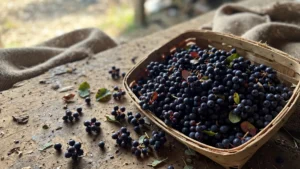
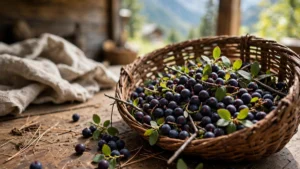
Chokeberry does not flatter the person who eats it. Bite one raw and the mouth dries out in seconds, the tongue puckers, and the flavour is all dark skin and tannin with almost no sweetness to rescue it. It is a berry that demands to be cooked, pressed, or sweetened — and that demand is what makes a chokeberry farm stay different from every other berry trip. You come to watch a harsh little fruit turn into juice, syrup, and jam in the farm kitchen.
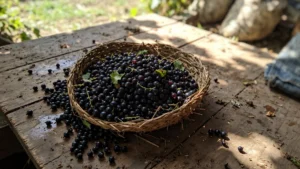
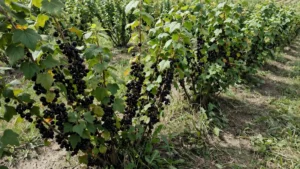
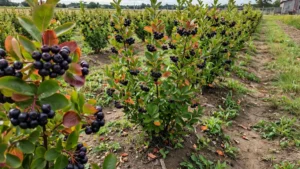
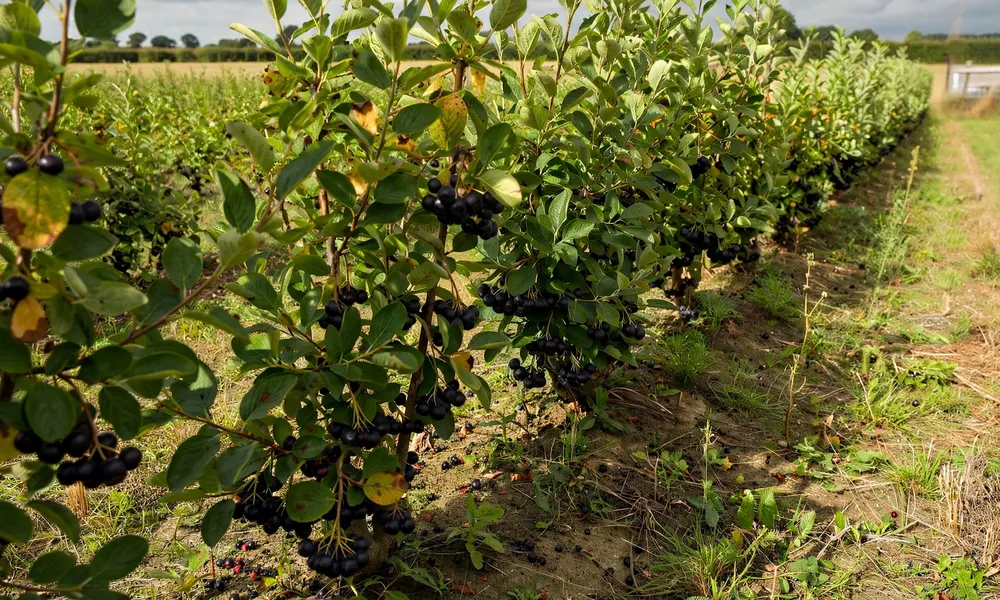
The berry is small, round, and so dark it looks black until the light catches it purple. It grows in clusters on a hardy shrub, Aronia melanocarpa, ripening late in the summer in heavy bunches that stain fingers and clothes a deep wine colour. Eastern Europe grows most of the world’s crop, and its farms treat the harvest as a pressing season.
Nine chokeberry farm stays are listed below, from a small Polish pressing farm at $65 a night to an Oregon estate at $345–$380, each earning its place on its pressing, its cooking, and the honesty of its rooms.
Key takeaways
- Chokeberries are picked when they are deep black, soft, and almost falling from the cluster — a red or firm berry is sour and mouth-drying.
- The fruit is far too astringent to eat raw in quantity; the farm’s juice, syrup, and jam are the point of the trip, not the picking alone.
- Poland, Lithuania, and Latvia grow most of the world’s chokeberries, and their farms press the harvest on site.
- The juice stains everything it touches, so dark clothes, gloves, and an apron are worth packing.
- Chokeberries carry no gluten themselves, but the kitchens bake bread and cakes each morning — write to the farm about wheat before you pay.
What a chokeberry farm retreat actually is
A chokeberry farm retreat is a stay on a working aronia farm during the late-summer harvest, usually from late August into September. Mornings are spent in the rows with a bucket, stripping whole clusters from the shrubs, and afternoons belong to the press, where the berries are crushed and the kitchen turns the dark juice into syrup, cordial, and jam.
What sets it apart from a soft-fruit stay is the transformation at its centre. A raspberry farm hands you a bowl and a spoon; a chokeberry farm hands you a press and a recipe, because the raw fruit is barely edible and the finished juice is the reason anyone grows it. The best stays are run by people who press every year and can explain, plainly, how much sugar a batch needs and why the juice is never drunk neat. The luxury elderberry farm retreats we covered earlier run on a similar idea — a dark berry that must be cooked before it can be enjoyed — but chokeberry pressing is louder, messier, and more hands-on.
Rooms on these farms are usually simple and clean, with a private bathroom and breakfast of bread, cheese, and the farm’s own jam. Groups stay small, because the pressing shed holds a dozen people at most.
How we picked these stays, and what to ask first
We looked for farms where chokeberry is the main crop rather than a hedge, where guests are allowed into the pressing shed, and where the kitchen cooks with the harvest daily. Farms that only sold juice at the gate, or kept guests out of the work, did not make the list.
Before you book, ask three things. First, when the pressing happens — a farm that presses daily during your dates is worth more than one that presses once a week. Second, what the rate covers: the pressing session, the jam class, and the jars you take home are often priced apart. Third, how the kitchen handles the astringency, because a farm that sweetens its juice well is the difference between a drink you enjoy and one you leave behind. The luxury sea buckthorn farm retreats we covered earlier ask the same question in a different key: tart fruit needs a kitchen that knows its own recipes.
The 9 best luxury chokeberry farm retreats of 2027
Lublin, Poland — Poland’s Aronia Heartland
What we like: A family farm on the flat eastern plain where aronia grows in long, straight rows and the pressing shed runs every afternoon of the harvest. The host presses the berries in a wooden screw press, sweetens the juice with the farm’s own honey, and serves it warm with breakfast. What to consider: The plain is windy and the farm is a long bus ride from Lublin, so arrange a lift in advance. Rooms are plain and the bathroom is shared on the ground floor. Best for: Travellers who want the pressing at the heart of the stay. Style: Plain farmhouse beside the rows. Price range: $65–$95 a night, breakfast and an afternoon pressing session included. Standout feature: Juice pressed in a wooden screw press and sweetened with the farm’s honey.
Aukštaitija, Lithuania — Aronia Bushes by the Lake Shore
What we like: A lakeside farm in the Lithuanian highlands where the shrubs grow in sandy soil and the berries come in dark and heavy. The host runs a morning picking walk and a syrup-making afternoon, and the farm’s smokehouse supplies the evening meal. What to consider: The lake wind is cold even in late summer, and the farm has only five rooms, which fill early. Mosquitoes appear on still evenings. Best for: Travellers who want berries, lake air, and a proper smokehouse supper. Style: Timber farmhouse with a lake view. Price range: $90–$120 a night, with breakfast and a syrup class included. Standout feature: Syrup made in the afternoon and poured over the farm’s smoked fish at dinner.
Vidzeme, Latvia — Chokeberry in the Northern Meadows
What we like: A meadow farm in northern Latvia where the aronia shrubs stand between hay fields and the host dries the berries for tea as well as pressing them for juice. The rooms are bright and simple, and the kitchen bakes the berries into a dark, dense cake. What to consider: The farm is a drive from Riga and the road is unpaved for the last stretch. Rain is common in September, so bring boots. Best for: Travellers who want the berry in every form — juice, tea, and cake. Style: Bright meadow farmhouse with an herb garden. Price range: $115–$145 nightly, breakfast and a drying-and-tea session covered. Standout feature: Dried chokeberry tea brewed from the farm’s own harvest.
Lviv, Ukraine — Aronia on the Western Hills
What we like: A hillside farm outside Lviv where the shrubs grow on terraced slopes and the berries are pressed in a small stone press house. The host’s mother runs the kitchen, the jam is made in copper pots, and the farm keeps bees and goats alongside the rows. What to consider: The hill road is steep and the farm has no card payment, so carry cash. The season is short, and the best weeks go first. Best for: Travellers who want a farm that grows everything it serves. Style: Stone press house on a terraced hill. Price range: $140–$170 a night, with all meals and a jam-making morning included. Standout feature: Jam cooked in copper pots in the stone press house.
Saxony, Germany — Chokeberry beside the Elbe Orchards
What we like: A tidy Saxon farm near the Elbe where aronia grows beside apple orchards, and the kitchen blends the two fruits into a juice the farm bottles and sells. The rooms are modern and quiet, and the tasting covers juice, wine, and liqueur made from the same harvest. What to consider: The farm is popular with German weekenders, so midweek dates are easier. The orchard paths are gravel, and the tasting is an extra charge. Best for: Travellers who want to taste the berry as juice, wine, and liqueur in one visit. Style: Modern farmhouse beside the orchards. Price range: $170–$200 nightly, breakfast and a guided tasting included. Standout feature: A tasting flight of chokeberry juice, wine, and liqueur.
Moravia, Czech Republic — Aronia between the Wine Valleys
What we like: A valley farm in Moravia where the shrubs grow between vineyard rows, and the host ferments the berries into a dark, dry wine served in the cellar. The house is old and cool, and the farm runs a harvest festival weekend in September. What to consider: The cellar stairs are steep and the farm books out for the festival weekend months ahead. English is limited, so learn a few Czech phrases. Best for: Travellers who want the berry fermented and the harvest celebrated. Style: Old valley farmhouse with a wine cellar. Price range: $200–$235 a night, full board and a cellar tasting covered. Standout feature: Chokeberry wine fermented on the farm and poured in the cellar.
Lake Balaton, Hungary — Chokeberry on the Sunny Shore
What we like: A sunny farm above Lake Balaton where the shrubs ripen early in the Hungarian heat and the berries are pressed into a syrup served over ice cream and pancakes. The rooms have a lake view, the host runs a morning market trip, and the farm’s restaurant is one of the region’s best. What to consider: August heat is strong and the farm is busy with lake visitors, so book the quieter September weeks. The market trip starts early. Best for: Travellers who want sun, a lake, and syrup on everything. Style: Lakeside farmhouse with a restaurant. Price range: $235–$270 nightly, with breakfast and a market-and-cooking day included. Standout feature: Chokeberry syrup over the farm’s pancakes and ice cream.
Iowa, USA — Aronia on the Prairie Rows
What we like: A prairie farm in Iowa, in the heart of America’s aronia country, where the shrubs grow in long straight rows under a wide sky and the harvest is pressed in a modern facility on site. The host is a third-generation grower, and the farm runs a harvest tour for guests. What to consider: The farm is an hour from Des Moines and the prairie wind is constant. The rooms are comfortable but plain, and the season is short. Best for: Travellers who want to see aronia grown at American scale. Style: Prairie farmhouse with a modern press house. Price range: $280–$320 a night, breakfast and a harvest tour included. Standout feature: The modern press house tour with the grower himself.
Willamette Valley, Oregon, USA — Chokeberry in the Wine Country
What we like: A polished estate in Oregon wine country where aronia grows beside pinot noir vines, and the kitchen folds the berries into sauces for the estate’s tasting menu. The rooms are suites with valley views, and the farm’s restaurant pairs chokeberry with local cheese and game. What to consider: The price tops this list and the estate takes few guests, so book months ahead. The tasting menu is an extra charge. Best for: Travellers who want the berry at its most polished, on a tasting menu. Style: Wine-country estate with suites and a restaurant. Price range: $345–$380 a night, breakfast and a tasting-menu dinner covered. Standout feature: Chokeberry sauces on the estate’s tasting menu.
Which chokeberry region fits your trip
For the most traditional pressing, go to Poland or Lithuania, where the farms press daily and sweeten with honey. For the widest range of products, choose Latvia or Saxony, where the berry becomes tea, wine, and liqueur as well as juice. For the most polished version, pick Oregon, where the berry lands on a tasting menu.
For a first trip, Lublin is the simplest choice: the farm welcomes guests, the pressing runs every afternoon, and the price leaves room for a longer stay. Our guide to the luxury goji berry farm retreats makes the same point in a different climate: pick the farm that presses and cooks with its crop daily.
The caveats that matter
Chokeberry farm retreats are rewarding, but not for everyone. The fruit is harsh raw, the farms sit far from town, and the pressing shed is a working place with hot pots and heavy equipment.
| Detail | What is known |
|---|---|
| Best time to visit | Late August into September, when the berries turn black and soften on the shrub |
| How ripe fruit looks | Deep black all over, soft to the touch, and almost falling from the cluster |
| Why it is not eaten raw | The berries are sharply astringent and drying on the tongue until cooked or sweetened |
| What is usually included | Room and breakfast plus a pressing session; jam classes and tastings often cost extra |
| Who should go | Slow travellers, food lovers, and anyone curious about juice and preserving |
| Who should think twice | Anyone after nightlife, quick service, or a trip built around eating fresh fruit |
| Transfers | Usually an hour or more from the closest airport; book the lift before you arrive |
| What is not guaranteed | Berries on your dates; the crop leans on weather, season, and the shrub’s own rhythm |
Chokeberries carry no gluten themselves, yet the farm kitchen bakes bread and cakes each morning, so ask how it keeps flour away from your plate. The juice stains skin, clothes, and cutting boards a deep wine colour, so wear dark clothes and gloves. Before you book, weigh the practical side if you have a health condition, are expecting, or travel with small children: where the nearest clinic sits, when the farm last sprayed, and whether the pressing shed suits little feet.
Checklist: booking a chokeberry farm stay honestly
Run through these checks before you pay, then once more in the week before you travel.
- Check the pressing: ask whether the press runs on your dates, not only whether the farm is open.
- Check the inclusions: pressing session, jam class, meals, and transfers, and which ones carry an extra charge.
- Check the distance: how long is the drive from the airport, and will the farm collect you?
- Check the bedroom: does the window look onto the rows or the garden, and is there shade or a fan for warm nights?
- Check the growing: ask how large the field is, whether it is grown organically, and when the shrubs were last sprayed.
- Check recent reviews: look for guests who visited in the same month you plan to travel.
Frequently asked questions
When is chokeberry season?
Late August into September in most of Europe, when the berries turn black and soften on the shrub. In the American Midwest the window is similar, and in Oregon it runs a little later, into early October.
What does a chokeberry taste like?
Dark, dry, and sharply astringent when raw, with a flavour somewhere between a blackberry skin and strong black tea. Cooked and sweetened, it turns rich and wine-like, which is why farms press it into juice and syrup rather than serving it fresh.
May guests pick chokeberries on the farm?
Yes, on most of the stays listed here, provided you walk with a guide and ask first. The berries come off in whole clusters rather than one by one, so wear gloves and dark clothes — the juice stains everything it touches.
Is it safe for everyone to eat chokeberries?
Mostly. The fruit suits most people once cooked, but raw berries can unsettle a delicate stomach, and anyone with a berry allergy should warn the farm when booking. Rinse the fruit before eating, and take small portions if your stomach is sensitive.
Where is the best place to start with chokeberry farms?
Lublin, for the easiest journey and the most honest pressing. The farm is used to guests, the press runs every afternoon, and the kitchen serves the juice with every meal.
What does a gluten-free traveller need to ask a chokeberry farm?
Yes, if you raise it when you book. The berries themselves have no gluten in them, and the plain rice dishes are generally fine. The risk is the bread and cakes baked every morning, so ask the farm how it keeps flour away from your food.
The bottom line
A chokeberry farm retreat suits travellers who like their food to come from the press beside them, and who are happy to let the harvest set the day. The fruit is harsh, the juice is dark, and the best stays are the ones that press it, sweeten it properly, and serve it without any fuss.
Choose the region by what you want most: the plain pressing farms of Poland, the lake air of Lithuania, or the tasting menu of Oregon — and bring the syrup home sealed, not the berries themselves. A sealed bottle keeps the trip on your shelf for months.