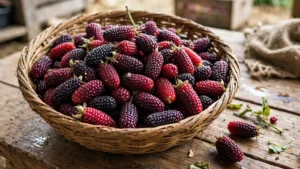
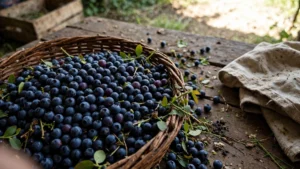
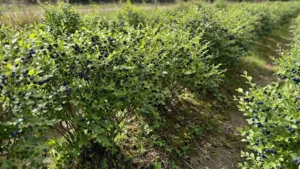
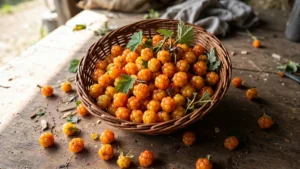
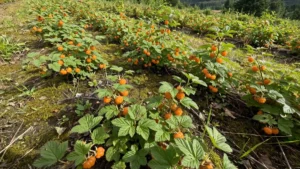
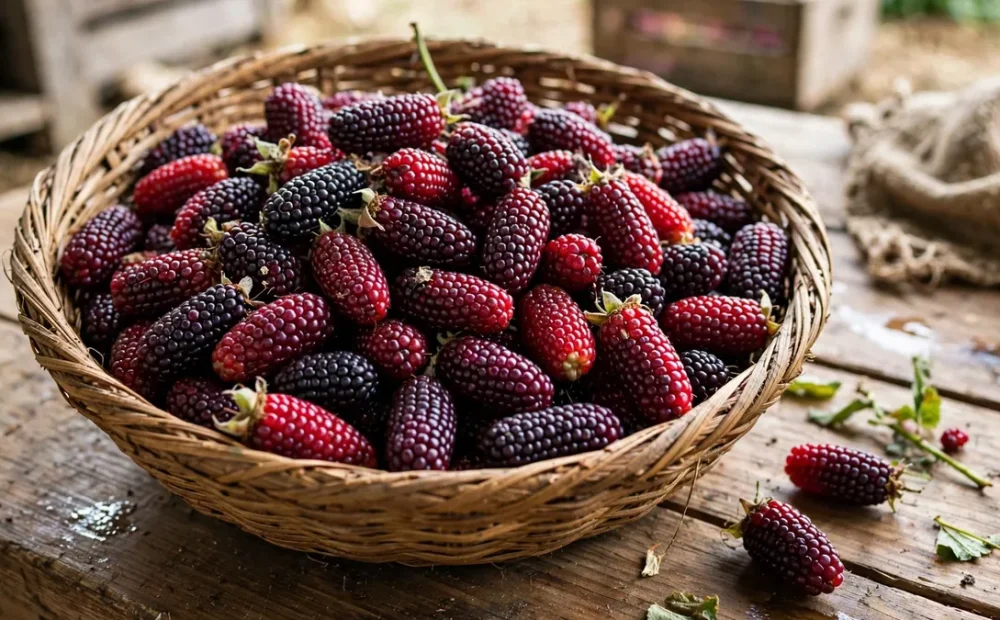
The tayberry began on the banks of the River Tay. In the late 1970s, at a research station near Dundee, the breeder Derek Jennings crossed a blackberry with a raspberry and produced a berry unlike either parent: a long, dark cone, deep red-purple when ripe, softer than a blackberry and sweeter than a raspberry. The fruit was named for the river, released in 1979, and it still ripens in a rush — a fortnight of prime picking on most farms, usually in July, and then it is gone.
A tayberry farm escape is a few days spent inside that fortnight. You stay on a working berry farm, pick in the mornings, cook in the afternoons, and eat what the rows produced at night. The best farms keep guest numbers small and the cooking tied to the harvest, so the jam on your breakfast table was picked by your own hands the day before.
Planning one takes nine steps, and none of them is hard: taste the berry, pin down the picking dates, pick a farm for its kitchen, check what guests are allowed to do, and settle allergies, clothes, and money before you pay. The steps below run in order, with the mistake to avoid at each one.
Key takeaways
- Fix your travel dates around the farm’s picking fortnight — the season lasts two to three weeks and follows the weather, not the flight timetable.
- Ask which jobs guests are allowed to join before you pay — picking, jam making, classes, and market trips are not the same on every farm.
- The canes are thorny and the juice stains, so bring long sleeves, gloves, closed shoes, and dark clothes you can spoil.
- Put allergies in your opening message and ask what the kitchen will cook for you.
- Tayberries carry no gluten themselves, but farm kitchens bake with wheat — write to the farm before paying, not after.
What a tayberry farm escape involves
Most tayberry escapes last three to five nights on a working berry farm in the middle of the harvest, in July and August across most regions. The day starts in the rows with a basket and gloves, moves to the kitchen for jam, pies, and sauces, and ends at a table eating what the day produced. Farms that do this well keep their groups small, usually under a dozen guests, so the host knows your name by the second morning.
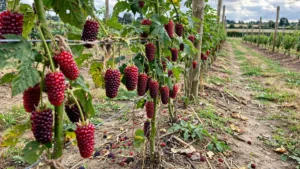
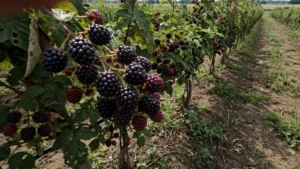
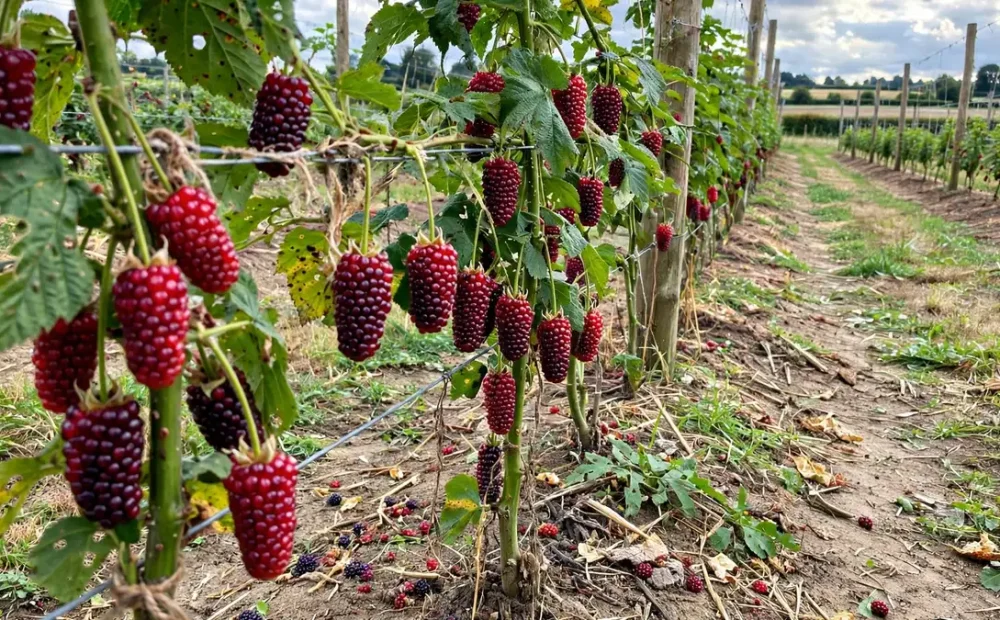
The berry itself shapes the trip. Tayberries grow on tall, thorny canes, and the fruit hangs in long cones that darken to a deep red-purple as they ripen. A ripe one comes away with a gentle pull and tastes sweet-tart, with a raspberry scent and a blackberry depth. Because the cones are large and soft, they bruise easily, so picking is slow, careful work — and because the season is short, the farm cooks with them every single day. For a berry trip with a similar unhurried shape, the blackberry farm escape guide we wrote earlier runs on the same pattern of small groups and a host who cooks the harvest.
Do not book one expecting a spa hotel with berries on the side. The rooms are comfortable and private and the food is excellent, but the harvest is the reason for the trip. If you want pampering, a country hotel will suit you better. If you want to come home with jam you made yourself, a tayberry farm is the right choice.
How to plan it, and what to ask first
Start with the picking dates, ahead of flights, rooms, or anything else. Write to two or three farms, ask for their picking window, and choose the one whose dates fit your diary — not the other way round. Then ask what the nightly rate covers: meals, picking sessions, cooking classes, and lifts from the nearest town all differ, and the cheapest rate is rarely the cheapest trip once the extras are counted.
Settle allergies and access before you pay anything. Tell the farm about wheat, gluten, stings, and any limits on walking in your first message, and ask what the kitchen will cook for you. Ask how far the rows lie from the rooms, whether the ground is level, and what happens if the season moves by a week. A farm that answers plainly is a farm you can trust; a farm that dodges the question is one to skip.
The 9 steps to plan a tayberry farm escape
Take the steps in order, and hold off on flights until the second one is settled. Each step carries a time, so you can see what the planning truly costs.
Start with a punnet from a farm shop, not a booking form
What to Do: Buy a punnet of ripe tayberries from a market stall or a farm shop, eat them fresh, and try a spoonful of tayberry jam. Learn the flavour — sweet-tart, dark, and soft — so you know what the journey is for.
What to Avoid: Reserving a farm stay for a fruit you have never tasted. If tayberries leave you cold, a week among the canes will feel endless.
Best For: Anyone tasting tayberries for the first time. Time Needed: An afternoon at a market stall. Standout Tip: Taste a pale berry as well, so you learn what under-ripe means.
Settle the picking dates first, then think about travel
What to Do: Get the picking dates in writing from two farms, then look at flights that land the day before picking starts. Ask each farm how solid its dates are, and whether it will move your booking if the season shifts.
What to Avoid: Buying a ticket you cannot change before the farm confirms its picking dates. A cheap fare you cannot move is the dearest mistake on this trip.
Best For: Travellers whose dates can flex by a week. Time Needed: Two emails and a day of patience. Standout Tip: Arrive a day early so you are rested for the first picking morning.
Judge the farms by what their kitchens serve
What to Do: Study each farm’s menu and cooking programme before you choose. Some farms cook savoury dishes with tayberries, some bake, some make jam and liqueur — choose the kitchen that excites you, not the prettiest photograph.
What to Avoid: Picking a farm for its scenery and discovering the kitchen only serves berries at breakfast. The cooking is half the trip.
Best For: Food lovers who like cooking as much as picking. Time Needed: An evening with the menus. Standout Tip: Ask to see the week’s menu before you commit.
Ask how much of the work guests get to do
What to Do: Ask whether guests may join the picking, the jam making, and the cooking classes, and whether there is a limit on what you can carry home. Some farms charge by the kilo for extra fruit, and it pays to know now.
What to Avoid: Assuming every activity is included in the rate. Picking usually comes free, but classes and extra fruit often cost more.
Best For: Hands-on travellers keen to join the work. Time Needed: One email before you commit. Standout Tip: Ask which jam recipe the farm uses, and whether you may take a copy home.
Find out if the canes bite
What to Do: Ask whether the farm grows thorny or thornless kinds, and whether it lends out gloves. Thornless rows suit beginners; thorny rows call for proper gloves and long sleeves.
What to Avoid: Packing light and meeting thorny canes. Bare arms and bare hands cut a picking morning short.
Best For: Beginners and guests whose skin is sensitive. Time Needed: One short message before you pack. Standout Tip: Bring your own gardening gloves even if the farm lends them out — your own pair fits better.
Open with your allergies, not with your dates
What to Do: Tell the farm about any wheat or gluten allergy in your opening email, and ask what the kitchen will make for you. Mention sting allergies, bee allergies, and any medicine that counts.
What to Avoid: Leaving allergies until you arrive. The kitchen orders its shopping days ahead, and a late warning means a plain plate.
Best For: Anyone with a food allergy or who reacts badly to stings. Time Needed: One short email before you commit. Standout Tip: Put the allergy in the subject line of your first email, so nobody misses it.
Put on clothes the berry juice can stain
What to Do: Pack long sleeves, gloves, closed shoes, and dark clothes you can spoil. Bring a hat for the sun and a light waterproof for rain, and keep a clean set of clothes for the drive home.
What to Avoid: Wearing white or pale clothes out in the rows. Tayberry juice marks everything it touches, and the marks do not wash out easily.
Best For: Every picker, on every farm. Time Needed: Half an hour of packing. Standout Tip: Pack a spare pair of shoes — the rows turn to mud after rain.
Spend an afternoon at the jam pot with the host
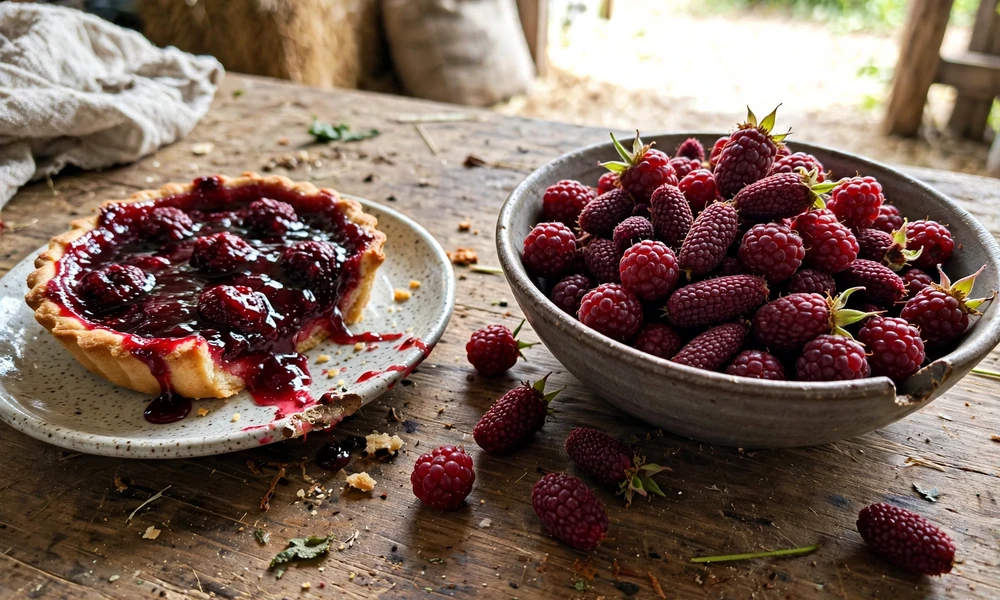
What to Do: Join the farm’s jam-making session if it offers one, and learn how the host judges the set, the sweetness, and the cooking time. The jam you make is the part of the trip that lasts longest.
What to Avoid: Treating the kitchen as a spectator sport. The best food on the trip is the food you helped make.
Best For: Cooks and anyone who likes taking skills home. Time Needed: A single afternoon with the jam pot. Standout Tip: Write the recipe down while the host is talking, not afterwards.
Buy jam and liqueur on your final morning
What to Do: Keep time on the last morning for the farm shop, buy jars of jam and bottles of liqueur, and pack them well for the journey home. Check the airline’s liquid rules before you pay.
What to Avoid: Leaving the shopping until the taxi is waiting. The shop may be small, the jars are heavy, and there is no time to pack them properly.
Best For: Travellers who like carrying a taste of the trip home. Time Needed: An hour on your last morning. Standout Tip: Buy one spare jar — it makes a better gift than anything at the airport.
Picking the right season and region
The whole trip hangs on the season. In most of Europe and North America, tayberries ripen in July and August, with the peak lasting two to three weeks. Scotland and southern England ripen first; France and Germany follow; the Niagara Peninsula runs later, and the Mornington Peninsula runs latest of all, into the southern summer. If your dates are fixed, choose the region whose season fits them, not the one you like the sound of. If you are weighing an earlier summer fruit trip instead, the raspberry farm escape guide we wrote earlier covers a season that starts just before the tayberry season.
July is the safest month for most regions: the berries are ripe, the weather is settled, and the farms are in their routine. August can be just as good as July up north, where the season starts later and runs cooler. June can be early and September can be late, so if your dates are fixed, ask the farm which week it would choose for you. A farm that names one particular week is a farm that knows its canes.
| Detail | What is known |
|---|---|
| Best season | July into August; Mornington Peninsula runs later, into the southern summer |
| Picking window | Two to three weeks per farm, moving with the weather |
| Trip length | Three to five nights works for most farms and most guests |
| Cheapest region | Tayside, Scotland, from $65 a night with breakfast and picking |
| Best for beginners | Tayside, Scotland, where the host teaches picking on the first morning |
| Best for cooks | Loire Valley, France, for savoury tayberry sauces and a teaching kitchen |
| Gluten | The berries carry no gluten, but kitchens bake with wheat — warn the farm in writing |
| What to pack | Long sleeves, gloves, closed shoes, dark clothes, and a hat |
The caveats that matter
First-timers usually trip over the same three things: thorns, stains, and wasps. The older canes are properly thorny, so sleeves and gloves are a must, not an option. The juice marks any fabric it touches, so choose dark clothes you can ruin. Wasps gather round ripe fruit, so pick slowly, watch your hands, and warn the host straight away about any sting allergy.
Not every berry on a cane is ready to pick or eat. Pale ones are sharp, firm ones are unripe, and fruit that resists a gentle pull should stay on the cane. Your host will show you the difference on the first morning — pay attention, because a basket of under-ripe berries makes thin jam and a poor pie. Wash every berry before eating, and skip canes beside busy roads or sprayed ground.
On food: the berries themselves hold no gluten, yet farm kitchens bake with wheat flour, serve bread at most meals, and sometimes use flour to thicken sauces. Raise any wheat or gluten allergy in your opening email, and ask what the kitchen can make for you. Other allergies count too — wasp stings, bee stings, and the farm’s dogs and cats are all worth flagging before you arrive, not after.
Checklist: before you book a tayberry farm escape
- Write to two farms for picking dates before you book any travel.
- Ask what the rate brings with it: meals, picking, classes, and rides from town.
- Pack long sleeves, gloves, sturdy shoes, and dark clothes for the rows.
- Flag allergies — gluten, wheat, and stings — in your opening email.
- Carry cash for the farm shop and the market stalls.
- Go over the cancellation terms in case the harvest moves by a week.
Frequently asked questions
When should I travel for the best tayberry picking?
July into August in most regions — usually mid-July to early August — and later on the Mornington Peninsula. Each farm’s window runs two to three weeks, and the exact dates move with the weather, so get the picking dates in writing before you book flights.
Is picking tayberries hard for a first-timer?
No. A ripe tayberry is deep red-purple, soft under the thumb, and slips off the stem with a gentle pull. The host shows you on the first morning, and most guests learn it in ten minutes. Gloves and long sleeves beat experience every time.
Can I bring tayberries home with me?
Yes, on most farms, within a limit. Ask about any kilo limit or charge for extra fruit, and check your airline’s rules for fresh fruit and liquids before you pack jam jars in hand luggage.
Can I eat tayberries right off the cane?
Yes, if they are ripe and washed. Avoid pale or firm berries, and fruit from canes beside busy roads or sprayed fields. Anyone with a berry allergy should tell the farm in advance.
What should I wear for a morning among the canes?
Long sleeves, gloves, closed shoes, and dark clothes you can ruin. Bring a hat for the sun and a light waterproof for rain, and keep a clean set of clothes for the drive home.
Can I enjoy a tayberry farm escape on a gluten-free diet?
Yes, if you tell the farm in advance. The berries themselves are gluten-free, and most farm kitchens will gladly cook gluten-free meals and bake with other flours if you ask. The loganberry farm escape guide we wrote earlier follows the same rule: write to the farm first, and ask what the kitchen will cook for you.
The bottom line
A tayberry escape is a brief, honest holiday built around a harvest that refuses to wait. Plan around the picking dates, dress for thorns and stains, and warn the farm about allergies before you hand over money. Do those three things, and the rest of the trip — the jam, the pie, the market mornings — looks after itself.
Tayside or Devon make the gentlest first escapes, and the Mornington Peninsula is the one to save for when you want the most polished version of the idea. Either way, come home with jam you made yourself, and the trip will outlast the flight.