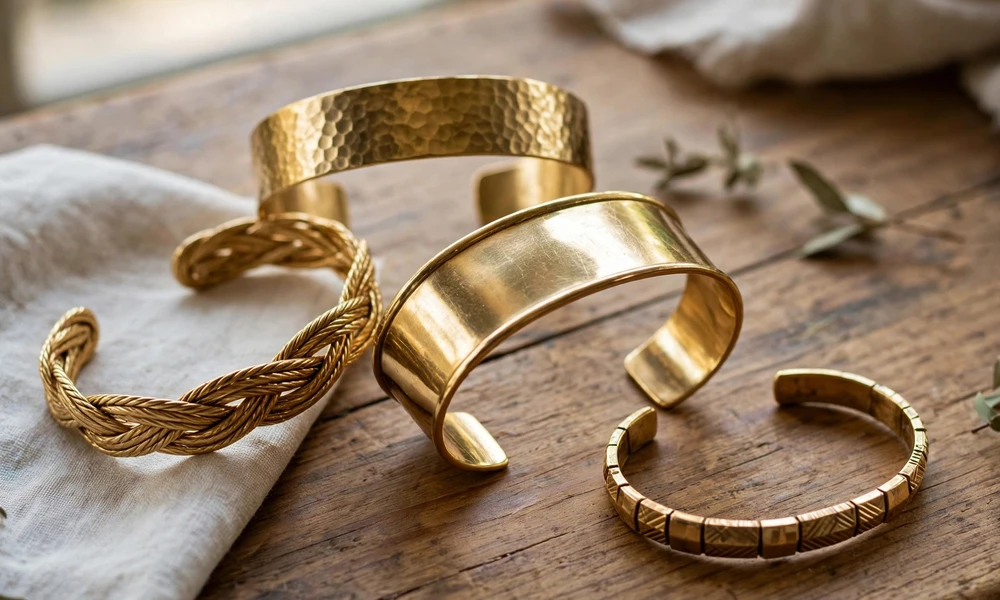
A cuff bracelet is worn against the skin every day, which means it collects everything your skin does: sweat, sunscreen, moisturiser, perfume, and the fine dust of a normal day. The problem is not that cuff bracelets are hard to clean. It is that the wrong cleaning method can do more damage than the dirt, stripping a gold layer, scratching a polished surface, or soaking a pearl until it loosens.
That is why this guide is organised by material first, not by method. A stainless steel cuff can be scrubbed with a soft brush and soapy water. A gold vermeil cuff cannot. A pearl-detail cuff should never be soaked at all. Knowing what your cuff is made of, and cleaning it the way that material needs, is the difference between a cuff that looks good for years and one that is ruined in an afternoon.
Below are nine steps that cover the whole job, from inspecting the cuff before you start to storing it properly when you finish. Each step is described by what to do, what to avoid, who it suits best, how long it takes, and the one tip that matters most, so you can clean your cuff with confidence instead of guessing.
Key takeaways
- Always identify the material before cleaning, because gold vermeil, pearls and leather need gentler treatment than solid gold or stainless steel.
- Warm water and a drop of mild soap clean most cuff bracelets safely, and a soft cloth does most of the work.
- Never soak a cuff with pearls, leather, enamel or glued stones, and never use toothpaste, baking soda paste, or an abrasive cloth.
- Dry the cuff fully before storing it, because trapped moisture is the fastest cause of tarnish.
- No cleaning method restores a worn-through gold layer or a chipped enamel surface, and a cuff that is damaged should go to a jeweller.
What cuff bracelets are made of
Most cuff bracelets are made from one of five materials, and each one cleans differently. Solid gold is the most forgiving. It does not tarnish, and it can be washed in warm soapy water and polished with a soft cloth. Sterling silver tarnishes in damp air and needs a silver cloth or a gentle wash, but it is otherwise hardy. Gold vermeil is sterling silver with a thick layer of gold, and the gold layer is the weak point: harsh chemicals, abrasive cloths and ultrasonic cleaners can wear it away. Our guide to how to clean gold jewellery covers the gold family in detail, including the difference between solid gold, gold-filled and gold vermeil.
Brass and stainless steel sit at opposite ends of the care scale. Brass is warm and affordable, but it darkens quickly and can mark the skin. Stainless steel is the easiest material of all. It does not tarnish, it does not react with skin, and it can be washed, brushed and dried without worry, which is why it is the best choice for anyone who wants a cuff that needs almost no care.
Then there are the mixed-material cuffs: leather and metal, enamel over brass, and cuffs with a pearl or a stone set into the band. These are the ones that cause the most cleaning mistakes, because the metal part and the decorative part need different treatment. A leather cuff should never be soaked. An enamel cuff should never be scrubbed with anything abrasive. A pearl should never be immersed in water or sprayed with cleaner. When a cuff mixes materials, clean it the way its most delicate part needs, not the way its toughest part allows.
How to clean a cuff bracelet safely
Start with the simplest method and stop there if it works. For most cuffs, a soft, lint-free cloth, slightly dampened with warm water, removes daily build-up in under a minute. Wipe the inside of the cuff as carefully as the outside, because the inside is where sweat and lotion collect. If the cuff still looks dull, move to warm water with a drop of mild soap, soak it briefly, and wipe it again. That two-step approach cleans almost every cuff safely, and it avoids the damage that comes from reaching for a strong cleaner first.
What you should never use is just as important. Toothpaste, baking soda paste, vinegar, and abrasive polishing cloths all scratch or strip the surface of a cuff, and the damage is usually permanent. Ultrasonic cleaners are fine for solid gold and stainless steel, but they can loosen glued stones, crack enamel, and wear through gold vermeil. Steam cleaners are worse. If you are unsure whether a method is safe for your cuff, test it on the inside of the band first, where a mark will not show, and wait a day before cleaning the whole piece.
Finally, think about frequency. A cuff worn every day benefits from a quick wipe once a week and a proper wash once a month. A cuff worn occasionally needs a wipe before it goes back into storage, because a dirty cuff tarnishes faster in a drawer than a clean one does.
The 9 steps to clean a cuff bracelet
Take the cuff off and inspect it first
What to do: Look at the cuff in daylight, inside and out, and check for loose stones, cracked enamel, worn plating, and any bend or crack in the metal.
What to avoid: Cleaning a cuff that is already damaged, because water and handling can make a loose stone or a crack worse. Best for: Every cuff, every time. Time needed: 2 minutes. Standout tip: Hold the cuff up to the light and turn it slowly, damage is easiest to see at an angle.
Identify the material before you touch water
What to do: Check the hallmark or the seller’s description, and work out whether the cuff is solid gold, sterling silver, gold vermeil, brass, stainless steel, leather, enamel, or a mix.
What to avoid: Guessing, because a gold vermeil cuff cleaned like stainless steel will lose its gold layer. Best for: Every cuff, especially gifts and second-hand pieces. Time needed: 2 minutes. Standout tip: If there is no hallmark and no description, treat the cuff as gold vermeil and clean it gently.
Mix warm water with a drop of mild soap
What to do: Fill a small bowl with lukewarm water, add one drop of mild, fragrance-free dish soap or hand soap, and stir until it is just cloudy.
What to avoid: Hot water, which can loosen glue and stress enamel, and strong detergents, which strip finishes. Best for: Solid gold, sterling silver, stainless steel and brass cuffs. Time needed: 1 minute. Standout tip: Lukewarm means comfortable on the inside of your wrist, if it feels hot, let it cool.
Soak plain metal cuffs briefly
What to do: Lower a plain metal cuff into the soapy water and leave it for three to five minutes, so the soap can loosen the build-up.
What to avoid: Soaking a cuff with pearls, leather, enamel, glued stones, or a fabric element, and soaking any cuff for longer than ten minutes. Best for: Solid gold, sterling silver, stainless steel and unlacquered brass. Time needed: 5 minutes. Standout tip: If the cuff has any decoration you are unsure about, skip the soak and wipe it instead.
Clean gently with a soft brush or cloth
What to do: Lift the cuff out of the water and wipe it with a soft, lint-free cloth, or brush it lightly with a soft-bristled toothbrush reserved for jewellery.
What to avoid: Hard brushes, scouring pads, paper towels, and any cloth with a rough texture, all of which scratch. Best for: Every cuff that has been soaked. Time needed: 3 minutes. Standout tip: Work in small circles on the outside, and in straight lines on the inside, where the skin contact is.
Rinse under clean lukewarm water
What to do: Hold the cuff under a gentle stream of lukewarm water and turn it slowly, so every part is rinsed, then shake off the excess water.
What to avoid: Rinsing over an open drain without a plug or a sieve, and using hot water. Best for: Every cuff that has been washed. Time needed: 1 minute. Standout tip: Put the plug in the sink first, or rinse over a bowl, so a dropped cuff cannot disappear down the drain.
Dry fully with a soft lint-free cloth
What to do: Pat the cuff dry with a soft, lint-free cloth, then leave it on a clean towel in the open air for ten minutes before storing it.
What to avoid: Leaving the cuff damp, drying it with a hairdryer, or putting it away while it is still wet. Best for: Every cuff, without exception. Time needed: 2 minutes, plus 10 minutes of air drying. Standout tip: Dry the inside of the band carefully, because that is where moisture hides and tarnish starts.
Polish lightly and check the settings again
What to do: Give the cuff a final polish with a clean, dry cloth, or a silver polishing cloth for sterling silver, and check the stones, the pearl, and the shape one more time.
What to avoid: Polishing a gold vermeil cuff with a silver cloth, which is too abrasive for the gold layer, and polishing enamel at all. Best for: Solid gold, sterling silver, brass and stainless steel cuffs. Time needed: 2 minutes. Standout tip: A polishing cloth is for shine, not for cleaning, so only use it on a cuff that is already clean and dry.
Store the cuff properly straight away
What to do: Put the clean, dry cuff in its own pouch or slot, away from other jewellery, in a cool, dry place, and close the box.
What to avoid: Tossing a clean cuff into a drawer with other jewellery, where it will scratch and tarnish again within days. Best for: Every cuff. Time needed: 1 minute. Standout tip: A cuff stored clean stays clean, so this step is part of the cleaning, not an afterthought.
Which cuffs need extra care
Gold vermeil cuffs need the gentlest treatment in this guide. The gold layer is thick compared to ordinary plating, but it is still a layer, and it wears through with friction, chemicals and time. Clean a vermeil cuff with a soft, damp cloth and a drop of mild soap, rinse quickly, dry immediately, and never use a silver polishing cloth, an ultrasonic cleaner, or a jewellery dip.
Pearl-detail cuffs and enamel cuffs are the next most delicate. A pearl is organic and porous, so it absorbs water, perfume and chemicals, and it can loosen from its setting if it is soaked. Wipe a pearl with a soft, dry cloth only, and keep it away from water entirely. Enamel is glass, so it chips if it is knocked and cracks if it is heated suddenly. Wipe an enamel cuff with a soft, damp cloth and dry it straight away, and never scrub it. A cuff with glued stones should be treated the same way, because water and heat weaken glue, and a stone that falls out is a stone that is hard to replace.
Leather cuffs are the simplest to care for and the easiest to ruin. Leather should never be soaked, because water stains it and stiffens it as it dries. Wipe a leather cuff with a slightly damp cloth, let it air dry away from heat, and condition it occasionally with a leather conditioner if the maker recommends it. The best cuff bracelets roundup notes which styles in this guide are leather, so you can check your own cuff against it before you start.
The caveats that matter
Cleaning cannot fix wear. It can remove dirt, restore shine, and slow down tarnish, but it cannot replace a gold layer that has worn through, repair a chipped enamel surface, or tighten a loose stone. If your cuff has lost its finish, shows the metal underneath, or has a stone that moves, cleaning it will not help, and scrubbing it will make it worse.
| Detail | What is known |
|---|---|
| Safest method for most cuffs | Warm water, one drop of mild soap, a soft cloth, and full drying |
| Never soak | Pearls, leather, enamel, glued stones, and any cuff with a fabric element |
| Never use | Toothpaste, baking soda paste, vinegar, abrasive cloths, and harsh chemical dips |
| Best for gold vermeil | A soft, damp cloth only, no silver cloth, no ultrasonic cleaner, no jewellery dip |
| Best for sterling silver | Warm soapy water, then a silver polishing cloth once the cuff is clean and dry |
| Best for stainless steel | Warm soapy water and a soft brush, it is the most forgiving material |
| Drying | Pat dry with a soft cloth, then air dry for ten minutes before storing |
| What cleaning does not fix | Worn-through plating, chipped enamel, loose stones, and metal fatigue |
If you have a skin condition, a metal allergy, or a cuff that has caused irritation, check the metal before you clean it, and stop wearing it if the irritation returns after cleaning. A reaction that persists after a thorough clean is usually a reaction to the metal itself, not to dirt, and no amount of washing will fix it.
Checklist: cleaning a cuff bracelet honestly
Use these checks before you start, and again after you finish. See our guide to how to store bracelets for what to do once the cuff is clean.
- Check the material: know what the cuff is made of before you touch water.
- Check for damage: loose stones, cracked enamel, worn plating, or a bent band mean jeweller first, cleaning second.
- Check your tools: a soft, lint-free cloth, a soft brush, mild soap, and lukewarm water are all you need.
- Check the soak: only plain metal cuffs go in the water, and only for three to five minutes.
- Check the drying: the cuff must be fully dry, inside and out, before it goes back into storage.
- Check the storage: a clean cuff in its own pouch, away from other jewellery, stays clean longer.
Frequently asked questions
How often should I clean a cuff bracelet?
A cuff worn every day benefits from a quick wipe once a week and a proper wash once a month. A cuff worn occasionally needs a wipe before it goes back into storage. More often than that is unnecessary, and over-cleaning can wear a finish faster.
Can I clean a gold vermeil cuff in soapy water?
Yes, briefly, with lukewarm water and one drop of mild soap, then rinse quickly and dry immediately. Do not soak it, do not scrub it, and never use a silver polishing cloth or an ultrasonic cleaner on it.
Can I use toothpaste to clean a cuff bracelet?
No. Toothpaste is abrasive and will scratch the surface of a cuff, especially gold vermeil, enamel and polished silver. Use warm soapy water and a soft cloth instead, which cleans just as well without the damage.
Why does my sterling silver cuff keep tarnishing?
Sterling silver tarnishes when it meets air and moisture, and a cuff worn daily meets both. Wiping it weekly and storing it dry, in a closed pouch or box, slows tarnish down. A silver polishing cloth removes the tarnish that does form.
Can I put a cuff bracelet in an ultrasonic cleaner?
Only if it is solid gold or stainless steel with no stones, pearls, enamel or glued parts. Ultrasonic cleaners can loosen stones, crack enamel and wear through gold vermeil, so check the material first and skip it if you are unsure.
How do I clean a cuff bracelet with a pearl on it?
Wipe the metal with a soft, damp cloth, and wipe the pearl with a soft, dry cloth. Never soak the cuff, never spray cleaner on it, and never use a brush on the pearl. If the pearl is loose, take the cuff to a jeweller.
The bottom line
Cleaning a cuff bracelet in 2027 is a simple job, and that is the point. Warm water, a drop of mild soap, a soft cloth, and full drying will keep almost every cuff looking good for years. The mistakes are the ones that feel like shortcuts: toothpaste, baking soda, strong cleaners, long soaks, and ultrasonic machines used on the wrong material.
Know your cuff’s material, clean it the way that material needs, dry it properly, and store it on its own. That is the honest way to keep a cuff bracelet you wear every day looking like a piece you are proud of, instead of one you have to hide.