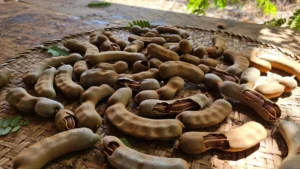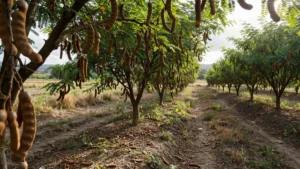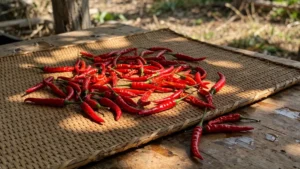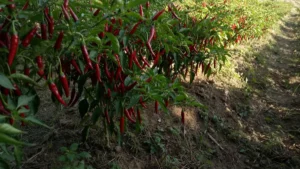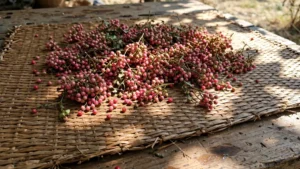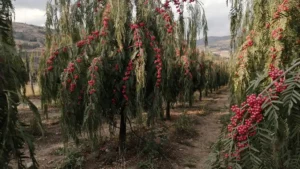

An annatto farm escape is a short stay on a working farm in the pod weeks, when the achiote trees are hung with drying pods and the kitchen cooks with its own seed. You sleep in a farmhouse room, walk the rows each morning, and eat rice stained orange by oil pressed that day. The work is light, the colour is everywhere, and the days run on farm time, which means early starts, long slow afternoons, and dinners that arrive when the work is done rather than when the clock says so.
Planning one is simple if you start with the farm, not the flight. The pods split when they are ready, not when your holiday starts, so the farm’s dates come first and everything else follows. The nine steps below walk you through the booking, the packing and the days themselves, from choosing a region to carrying seed home, and they flag the small mistakes that catch first-time farm travellers out.
This guide covers the Yucatán to Kerala, the pod calendar, the kitchen questions that matter, and the small mistakes that turn a good trip into a frustrating one, so you arrive ready and leave with seed worth cooking. It also covers what to do when the pods run early or late, how to judge a farm from its answers, and how to pack for heat, mud and steep paths without overloading a small farmhouse room.
Key takeaways
- Book around the farm’s pod dates, not the flight board, because the pods split when they dry, not when your holiday starts.
- A real annatto farm grows its own trees and presses its own oil, so ask where the seed comes from before you pay.
- The work is light: picking dry pods, cracking them open and shaking the seeds free, with the sun doing the drying.
- Pack for heat, mud and steep paths, and bring clothes you do not mind staining orange.
- Pure annatto seed is naturally gluten-free, but some bought pastes and powders are cut with wheat flour, so check every label and every kitchen.
What an annatto farm escape involves
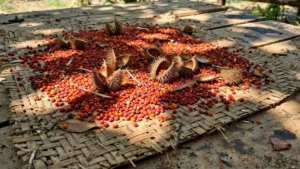
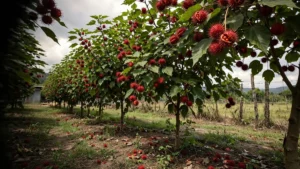
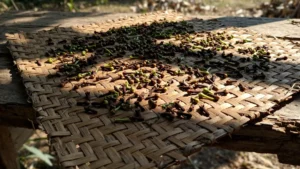
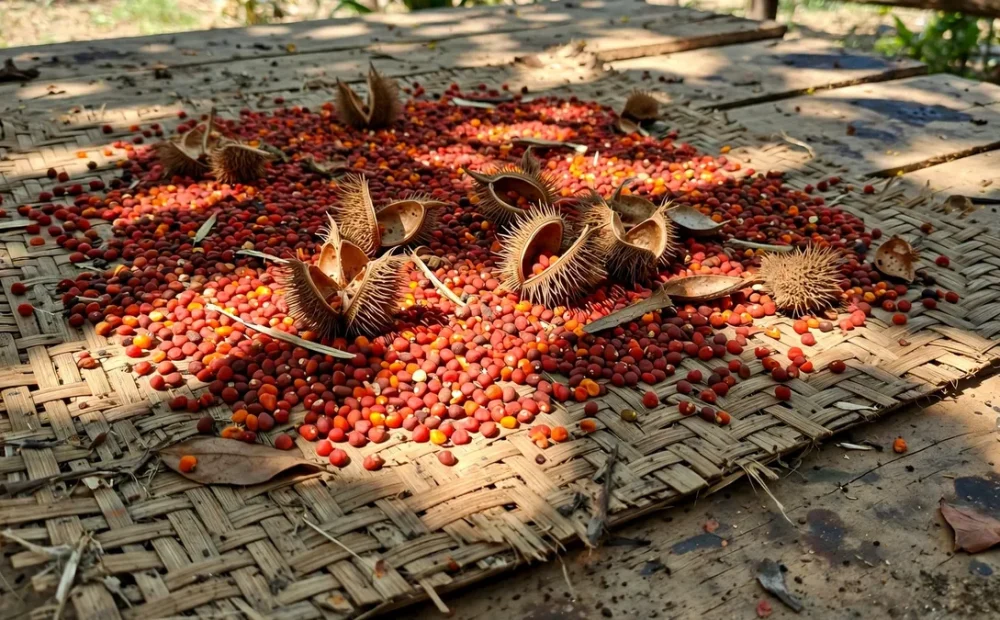
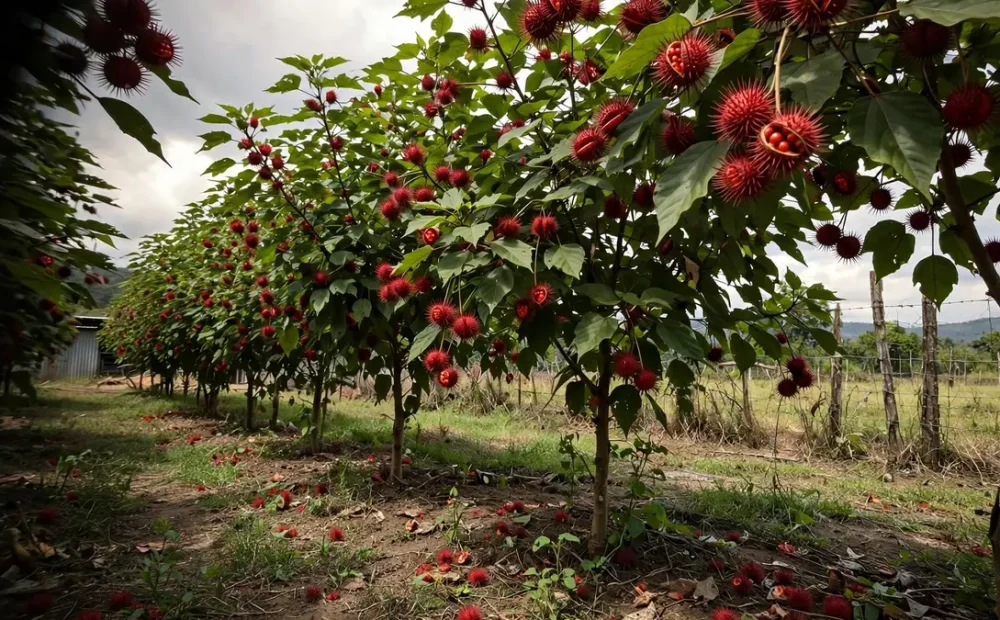
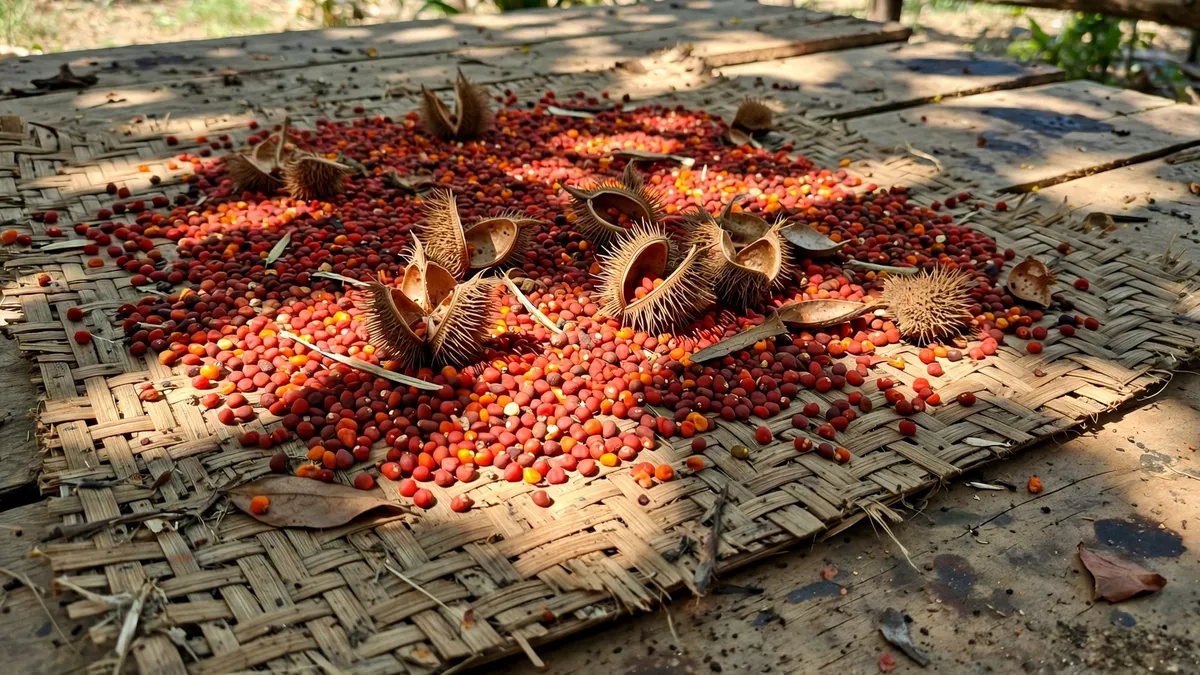
An annatto farm escape means three to five nights in a farmhouse room beside rows of achiote trees, with meals cooked from the farm’s own seed and work in the grove each morning. The trees stand three to five metres tall, the pods hang in clusters, and the drying yard holds seeds spread on mats in the sun. The days start early, slow down at midday, and end with a red meal at a long table, where the cook will usually sit down with you and explain what went into the pot.
The escape is not a hotel with a garden. The rooms are plain, the water can run cold, and the farm keeps farm hours, so breakfast is early and dinner is when the work is done. In return you get the whole crop in front of you: the pod on the tree, the seed in the basket, the oil in the pan, and the colour on the plate, all from the same trees. The farmhouse itself is usually simple, a few rooms around a yard, with a shared veranda where guests gather in the evening and compare stained fingers.
Most farms welcome guests who want to work, and most will hand you a basket on your first morning. The picking is simple, the cracking is satisfying, and the kitchen will show you how a spoonful of oil turns a pot of rice orange. Come ready to use your hands and to eat what the farm grows. The same hands-on pattern runs through our turmeric farm escape guide, where the harvest is a rhizome instead of a seed.
How to plan it, and what to ask first
Start with the seed, not the scenery. A farm that grows its own achiote trees and presses its own oil is a real annatto farm, and a farm that buys powder in is not, whatever the photos show. Ask whether the trees are the farm’s own, whether the oil is pressed on site, and whether the kitchen cooks with farm seed.
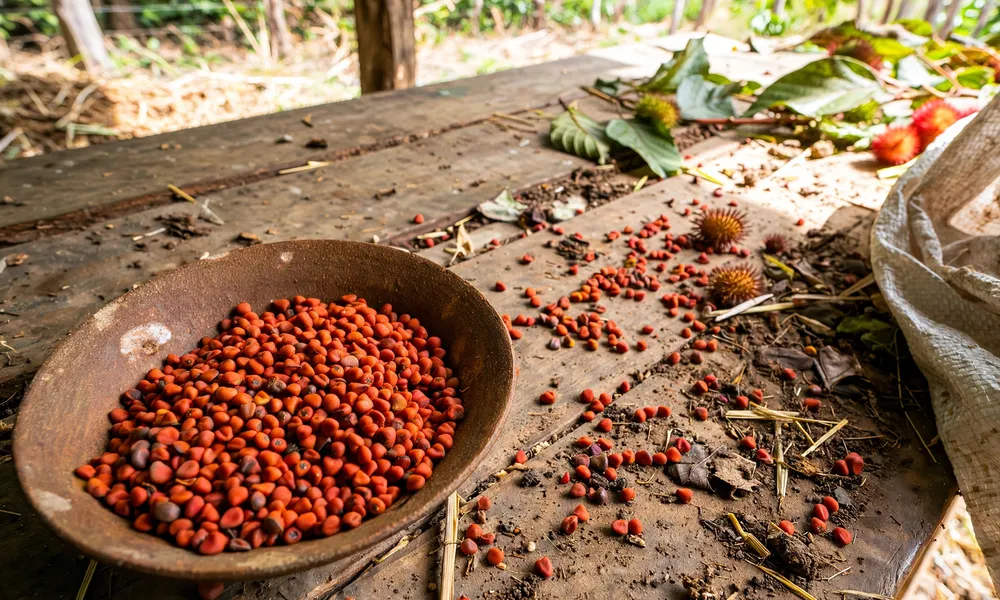
Ask for the pod dates before you book anything else. The pods split in the dry weeks after the rains, and the season shifts by region, so a general calendar will mislead you. Ask the farm to name its week, then book flights around it, and ask what happens if the pods run early or late. A good farm will tell you honestly when the season is uncertain, and a farm that promises exact dates months ahead is guessing.
Ask about the rooms, the kitchen and the road in the same message. A farm with two rooms and a shared bathroom is a different trip from a farm with ten rooms and hot water, and a farm at the end of a dirt road is a different journey from one beside a town. The answers tell you what to pack and how much time to allow. Ask, too, whether meals are included in the room price, whether the farm charges for the picking work, and whether the farm shop sells seed by the kilo or by the bag.
The 9 steps to plan an annatto farm escape
Learn how the seed colours a dish before you book
What to do: Read up on the achiote tree, the spiny pods and the brick-red seed, so you know what a real grove looks like and what the kitchen should be serving. Learn that the colour comes from the pulp on the seed, and that the flavour is mild and peppery.
What to avoid: Do not book a farm that cannot tell you when its pods split or how its oil is pressed, since that farm is probably buying its seed in.
Best for: First-time farm travellers. Time needed: An evening of reading. Standout tip: A farm that talks about its trees first is a farm worth booking.
Let the farm’s week decide when you travel
What to do: Ask the farm to name its pod week, then book flights around those dates, leaving a day either side in case the pods run early or late.
What to avoid: Do not book cheap flights first and hope the pods fit, since the trees will not wait for your ticket.
Best for: Travellers whose holiday dates are already fixed. Time needed: A week of messages. Standout tip: The farm’s dates are the only dates that matter.
Pick the region by how you like to travel
What to do: Choose the Yucatán for an easy first trip, Peru or Brazil for forest and river, Jamaica for a short island stay, or Kerala for the spice hills, and match the region to how much heat, hill and boat you enjoy.
What to avoid: Do not pick the dearest farm and assume it is the best, since the cheapest Yucatán stay grows the same seed.
Best for: Travellers choosing between regions. Time needed: An evening of comparing. Standout tip: The seed is the same everywhere, so pick the landscape you want.
Flag any wheat worry with the cook on arrival
What to do: Tell the farm about any gluten worry before you arrive, and ask it to cook with its own seed and to check every paste, powder and sauce.
What to avoid: Do not assume a farm kitchen is gluten-free, since bought pastes and powders are sometimes cut with wheat flour.
Best for: Gluten-free travellers. Time needed: One message before booking. Standout tip: Pure seed is safe, but bought paste needs checking.
Rise early and meet the pickers in the rows
What to do: Join the pickers at first light, when the air is cool and the pods are dry, and learn to spot a pod that is ready to split.
What to avoid: Do not walk the rows at midday, since the heat is fierce and the pickers will already be done.
Best for: Early risers. Time needed: Two hours each morning. Standout tip: The best picking happens before breakfast.
Join the pod-cracking in the yard after picking
What to do: Sit in the yard with the pickers, crack the dry pods open and shake the seeds free, and watch the red pulp rub off on your hands.
What to avoid: Do not rush the cracking, since a hard squeeze stains your clothes and a gentle one saves the seed.
Best for: Hands-on travellers. Time needed: An hour after the morning walk. Standout tip: Wear clothes you do not mind turning orange.
Watch a basket of seed become cooking oil
What to do: Ask the farm to show you the pressing, and watch the seeds give up their colour into warm oil, which the kitchen uses the same day.
What to avoid: Do not buy oil from a farm that cannot show you the press, since that oil was probably bought in.
Best for: Curious cooks. Time needed: Half an hour in the yard. Standout tip: Oil pressed today colours rice tonight.
Taste the red dishes at every dinner
What to do: Eat what the kitchen serves, from red rice and achiote paste to grilled fish and beans, and ask the cook how much seed went into each dish.
What to avoid: Do not ask for plain food and skip the red dishes, since the cooking is the point of the trip.
Best for: Hungry travellers. Time needed: Every dinner. Standout tip: The kitchen is the best classroom on the farm.
Pack a pouch of farm-dried seed for home
What to do: Buy dried seed from the farm shop, sealed and dry, and ask the farm how to store it and how much to use in a pot of rice.
What to avoid: Do not buy oil for the journey home unless the farm seals it well, since it leaks, stains and turns quickly.
Best for: Home cooks. Time needed: Thirty minutes on your final day. Standout tip: A small bag of farm seed beats a bottle of shop oil.
Picking the right season and region
The pod weeks fall in the dry season after the rains, and the exact month shifts by region, so the Yucatán, Peru, Brazil, Jamaica and Kerala all run on different calendars. Ask each farm for its own dates, and do not trust a single guidebook month for the whole crop. A farm that names its week is a farm that knows its trees. The Yucatán usually splits first in the year, the Amazon farms follow the river’s fall, and Kerala’s pods come with the dry months after the monsoon, so the same crop can give you three different trips depending on when you travel.
For a first trip, the Yucatán is the easiest, with short flights, plain rooms and famous food. For forest and river, pick Madre de Dios or Ucayali in Peru, or Pará in Brazil, and allow extra days for boats and muddy roads. For hills and sea air, pick Bahia or Westmoreland, and for the spice hills, pick Kerala, where the monsoon keeps everything green and the paths slick. Flower crops run on a tighter calendar, and our saffron farm escape guide shows how a short harvest window changes the planning. Whichever region you choose, leave a spare day at each end, since farm roads are slow and pod weeks shift with the rain.
The caveats that matter
| Detail | What is known |
|---|---|
| Best time to go | The pod weeks in the dry season after the rains, when the pods split and the seeds turn brick-red |
| How long to stay | Three to five nights, set around the pod week the farm names |
| What the work is | Picking dry pods, cracking them open, shaking the seeds free and drying them in the sun |
| What to pack | Light clothes you can stain, strong shoes, a rain layer, sun cream and insect repellent |
| What the kitchen serves | Red rice, achiote paste, grilled fish or pork, beans and plantain, cooked with farm oil |
| Gluten note | Pure seed is naturally gluten-free, but bought pastes and powders may be cut with wheat flour |
| What to ask first | Whether the trees are the farm’s own, whether the oil is pressed on site, and what the pod dates are |
| What to carry home | Dried seed from the farm shop, sealed and dry, with the farm’s storage advice |
Checklist: before you book an annatto farm escape
- Ask the farm to name its pod week before you book flights.
- Confirm the farm grows its own trees and presses its own oil.
- Tell the kitchen about any gluten worry in advance.
- Pack clothes you can stain, strong shoes and a rain layer.
- Carry cash for the farm shop and the road.
- Leave a spare day at each end for slow roads and late pods.
Frequently asked questions
Is an annatto farm stay workable for a gluten-free traveller?
Yes, if the kitchen is told in advance. The farm’s own seed carries no gluten, but bought pastes and powders sometimes hide wheat flour, so ask the cook to use farm seed and to check every sauce. Tell the farm when you book, repeat it when you arrive, and ask the cook to show you the paste and powder before it goes into the pot.
When should you book an annatto farm stay?
As soon as the farm names its pod week, which is usually a few months ahead. The farms are small, the rooms are few, and the pod weeks fill fast once the dates are out. If the farm cannot name a week yet, ask it to message you when the pods start to dry, and book your flights only after that message arrives.
What should go in the bag for annatto country?
Light clothes you can stain orange, strong shoes for the rows, a rain layer, sun cream and insect repellent, and a small bag for carrying seed home. Add a hat for the midday sun, a torch for the early mornings, and a spare shirt, since the first one will be orange by the second day.
Do annatto farms welcome children?
Most do, and the picking suits children who like using their hands. Check with the farm first, since the rows are hot, the paths are rough, and the work starts early. Younger children will tire by midday, so plan for a quiet afternoon while the adults finish the cracking in the yard.
What is worth carrying home from an annatto farm?
Dried seed from the farm shop, sealed and dry. A small bag will colour rice for months, and the farm can tell you how much to use and how to store it. Keep it in a sealed jar away from damp, and use a spoonful of oil rather than the dry seed when you want the colour to spread evenly through a pot.
What does a week on an annatto farm cost?
Rooms run from $65 to $380 a night across the nine farms in this series, so a three-night stay costs roughly $200 to $1,140 before flights. Food and farm work are usually included in the room price, and the farm shop seed costs little on top of that. The dearest cost is usually the journey, since the farms sit at the end of dirt roads and river crossings, so budget for the transfer as well as the room.
The bottom line
An annatto farm escape is a short, simple trip: a few nights beside rows of achiote trees, mornings in the grove, and evenings at a table where the rice is orange because the seed in the field gave it colour that day. The work is light, the food is red, and the farm does most of the planning for you. You will leave with stained fingers, a bag of seed, and a much clearer idea of where colour in food actually comes from.
Start with the seed, fix the pod dates, and book the farm before the flights. Pack clothes you can stain and shoes you can muddy, tell the kitchen about any gluten worry, and carry home a bag of farm seed. The trees will do the rest. If you want another root-crop escape to compare, our ginger farm escape guide plans a similar trip around a very different harvest.