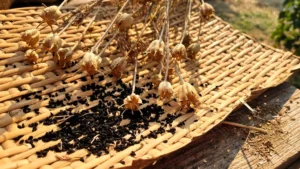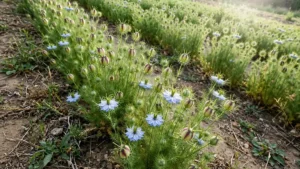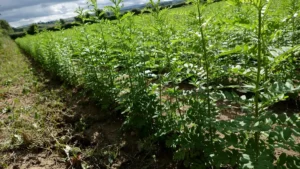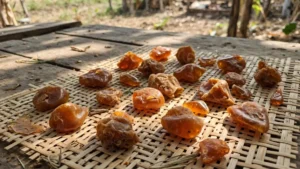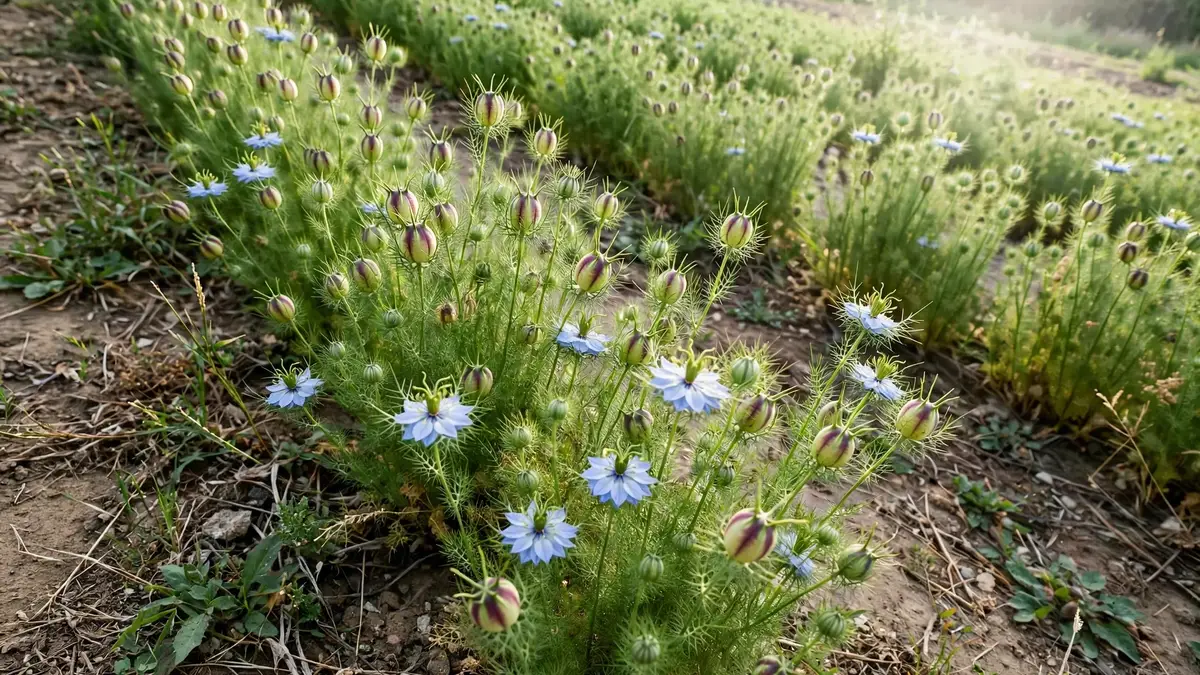

Nigella is the black seed scattered over flatbread, the tiny teardrop that gives naan its peppery bite, yet almost nobody who eats it has seen where it grows. The plant is a low annual with fine, feathery leaves and pale blue flowers, and it lives fast: sown in the cool season and cut whole once the pods swell and the seeds inside turn black.
On the farm the seed is a different thing from the jar on the shelf. Fresh nigella smells faintly of onion and pepper, and a dry pod rattles when you shake it, which is how the farmer knows the seed is ready. The farms that welcome guests are small places, and the best of them grow nigella as a real crop, for the bakers and spice merchants, rather than as a strip beside the door for show.
Below are nine nigella farm stays worth considering in 2027, from the green oasis of Fayoum to the dry foothills of the Atlas. Each stay is described with what it does well, what to watch for, and the traveller it suits best.
Key takeaways
- Nigella is an annual: sown in the cool season and cut a few months later, so the farm names the cutting week only weeks ahead.
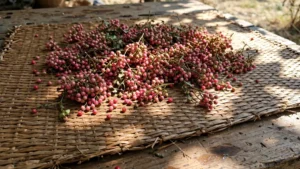
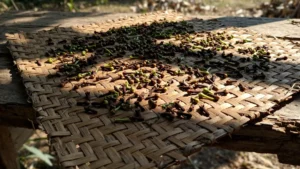
- The pods are cut whole when they swell and the seed inside turns black, then dried in the sun until the seeds rattle.
- Nigella, cumin and onion seed are three different seeds, and a good farm will show you all three in the field.
- Choose a stay by whether you want the cutting, the drying, or the threshing, since the three fall on different days.
- Nigella itself is naturally gluten-free, but farm kitchens bake flatbread every morning, so check how the kitchen handles flour before you book.
What a nigella farm retreat actually is
A nigella farm retreat is a stay on a working seed farm during the harvest, usually three to five nights, with a room on the farm and meals from the farm kitchen. The days follow the pods: out in the rows in the early morning to see the plants cut, back to the yard to watch the pods dry in the sun, and an evening meal where the seed appears in the bread, the lentils, and the pickles. The visit follows the harvest, not a timetable made for visitors. The farm grows nigella for the bakers and the spice trade, and you are there while the work happens.
Rooms are on the farm, and supper comes to the family’s long table, where nigella turns up in the bread, the soup, and the pickles. Groups stay small, often no more than ten guests, because a threshing crew cannot work around a crowd, and the farmer sets the pace of every day.
How we picked these stays, and what to ask first
We started with farms that grow nigella as a real crop, sold to bakers and spice buyers, rather than a strip beside the door for show. Each stay on the list cuts its own plants, dries its own pods, and bakes with the harvest. We then looked for stays that take guests through the cutting season, keep the rooms on the farm, and feed a table of strangers well. A farm that fell short on any of those three stayed off the list, however fine its fields look in a photograph.
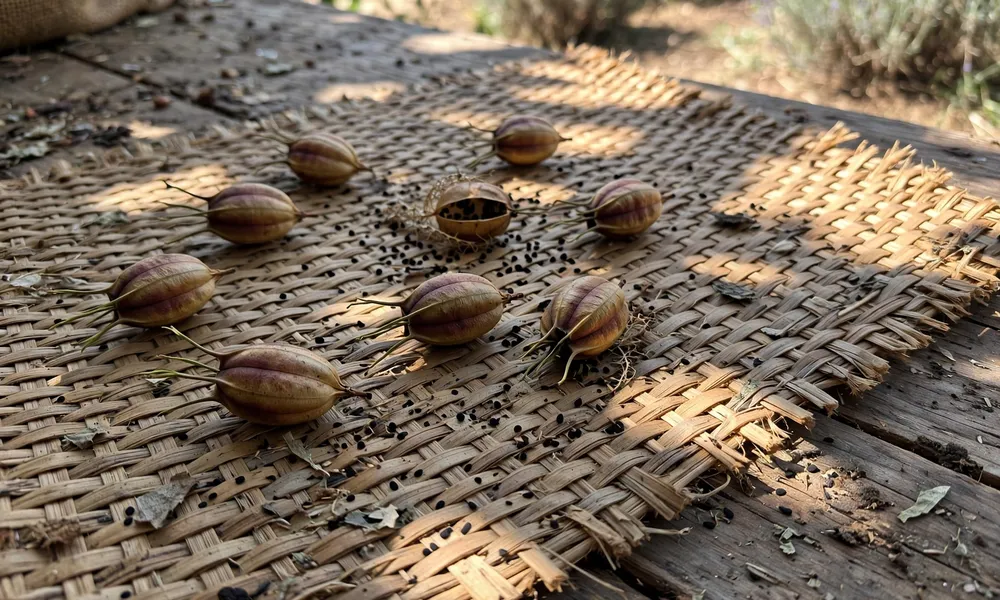
Before you book, ask three questions. First, which week the farm cuts the plants, because a nigella field is ready all at once and the work lasts days, not weeks. Second, whether the kitchen bakes its own bread with the farm’s seed, or buys bread in, because a farm that bakes with its own nigella will show you more. Third, how the farm handles flour and bread for gluten-free guests, since a kitchen that bakes flatbread every morning needs a clear answer. We used the same three tests for the cumin farm retreats, and they hold up just as well there.
The 9 best luxury nigella farm retreats of 2027
Fayoum Oasis, Egypt — Nigella beside the Old Waterwheels
What we like: Nigella in Fayoum grows on the green edge of the oasis, where the fields are watered by old wooden waterwheels and the farm sells its seed to the bakers of Cairo. The kitchen serves ful medames, lentil soup, and flatbread scattered with the farm’s own nigella.
What to consider: The oasis heat is strong at harvest time, and the farm is a long drive from Cairo, so plan the journey for the early morning.
Style: Egyptian oasis farm stay. Best for: Travellers who want nigella where it has grown for centuries. Price range: $65–$95 per night. Standout feature: Seed threshed on the oasis edge for the Cairo bakers.
Nile Delta, Egypt — Nigella between the Canals
What we like: Nigella in the delta grows between the canals north of Cairo, where the fields stay green late into the season and the farm dries its pods on the flat rooftops of the old brick houses. The kitchen serves koshari, ta’ameya, and flatbread topped with the farm’s seed.
What to consider: The delta is humid at harvest time, and the farm books out early, so settle the week as soon as the farm names it.
Style: Egyptian delta farm stay. Best for: Travellers who want nigella among the canals. Price range: $100–$130 per night. Standout feature: Pods drying on the rooftops above the canals.
Anatolian Plateau, Turkey — Nigella on the High Steppe
What we like: Nigella on the plateau grows on the high steppe near Konya, where the fields are wide and the farm sells its seed to the pide bakers of the city. The kitchen serves pide, lentil soup, and çörek scattered with the farm’s nigella.
What to consider: The plateau wind is strong at cutting time, and the farm’s English is limited, so learn a few Turkish words first.
Style: Turkish high-steppe farm stay. Best for: Travellers who want nigella on the open steppe. Price range: $135–$165 per night. Standout feature: Seed grown on the steppe for the pide ovens of Konya.
Aleppo Plains, Syria — Nigella among the Old Olive Groves
What we like: Nigella around Aleppo grows on the plains between the old olive groves, where the farm dries its pods on the flat rooftops and sells its seed to the spice sellers of the old city. The kitchen serves muhammara, za’atar flatbread, and bread topped with the farm’s seed.
What to consider: The farm is small and fills fast, so confirm the dates early and check the current travel guidance before you book.
Style: Northern Syrian plains farm stay. Best for: Travellers who want nigella among old olive trees. Price range: $170–$200 per night. Standout feature: Seed sold to the spice sellers of the old city.
Punjab, India — Nigella for the Naan Ovens
What we like: Nigella in Punjab grows as kalonji on the flat green fields of the north, where the farm sells its seed to the naan bakers of Amritsar. The kitchen serves dal makhani, naan scattered with kalonji, and pickles made with the farm’s seed.
What to consider: The heat is fierce at midday, and the farm sits far from the railway, so arrange the lift in advance.
Style: Punjabi plains farm stay. Best for: Travellers who want nigella as kalonji, straight from the naan belt. Price range: $205–$235 per night. Standout feature: Kalonji grown for the naan ovens of Amritsar.
Khorasan, Iran — Nigella on the Eastern Frontier
What we like: Nigella in Khorasan grows on the dry frontier land of the east, where the fields are watered by old qanats and the farm sells its seed to the barbari bakers of Mashhad. The kitchen serves barbari bread, ash-e reshteh, and flatbread scattered with the farm’s seed.
What to consider: The farm sits far from the main roads, so arrange the lift in advance and bring cash, as card payment is rare out here.
Style: Eastern Iranian frontier farm stay. Best for: Travellers who want nigella from the old spice roads. Price range: $240–$270 per night. Standout feature: Seed watered by old qanats for the bakers of Mashhad.
Hyderabad, Pakistan — Nigella on the Lower Indus
What we like: Nigella around Hyderabad grows on the flat plains of the lower Indus, where the soil is rich and the farm cuts its seed for the spice merchants of Karachi. The kitchen serves biryani, dal, and roti topped with the farm’s nigella.
What to consider: The valley heat is strong at harvest time, and the season is short, so book the cutting week as soon as the farm names it.
Style: Pakistani Indus valley farm stay. Best for: Travellers who want nigella from the river plains. Price range: $275–$305 per night. Standout feature: Seed cut in the valley for the Karachi spice trade.
Amman Hills, Jordan — Nigella above the Old City
What we like: Nigella in the Amman hills grows on terraced slopes above the old city, where the farm sells its seed to the ka’ak bakers of the downtown markets. The kitchen serves mansaf, ka’ak scattered with nigella, and lentil soup with the farm’s own olive oil.
What to consider: The hills are steep and the sun is strong, so bring a hat and sturdy shoes for the walk to the fields.
Style: Jordanian hillside farm stay. Best for: Travellers who want nigella with a view over the old city. Price range: $310–$340 per night. Standout feature: Seed grown on the terraces for the ka’ak bakers below.
Atlas Foothills, Morocco — Nigella at the Mountain Edge
What we like: Nigella at the foot of the Atlas grows on dry red soil, where the farm’s fields sit below the snow line and the seed comes in small and sharp. The kitchen serves tagine, khobz scattered with nigella, and harira with the farm’s own herbs.
What to consider: The mountain sun is strong and the nights are cold, so pack a warm layer as well as a hat.
Style: Moroccan mountain-edge farm stay. Best for: Travellers who want nigella at the edge of the mountains. Price range: $345–$380 per night. Standout feature: Small, sharp seed grown on red soil below the Atlas.
Which nigella region fits your trip
If you want the seed at its most traditional, go to Fayoum or the Nile Delta, where nigella goes straight to the bakers of Cairo. If you want the wildest setting, choose the Atlas foothills, where the seed grows on red soil below the mountains. If you want the biggest flavours, Punjab is the farm to pick, where kalonji ends up on the naan of Amritsar.
For a first trip, Fayoum is the simplest choice: the farm is used to guests, the cutting week is generous, and the kitchen bakes with nigella at every meal, so you taste the seed from morning to night. The fenugreek farm retreats work the same way for first-timers: small farms, short seasons, and bread at every meal.
The caveats that matter
Nigella is a weather-led crop, because the plants ripen together and the pods must dry under the sun. A wet spell in the cutting week can spoil the pods where they lie, and a hot wind can scatter the seed before it is gathered. A single storm can wipe out the cutting week, while a cold spring can hold the season back by a fortnight. The best farms telephone guests the moment the dates shift, so book a stay that lets you move the week without losing your deposit, and take the farmer’s reading of the sky over the national forecast.
| Detail | What is known |
|---|---|
| Nigella seed | The small black teardrop seed from the annual pods, peppery with a faint onion note |
| The annual cycle | Sown when the weather cools, in flower within weeks, cut a few months on |
| Best harvest time | Late spring to early summer, when the pods swell and the seed inside turns black |
| Nigella vs cumin | Different plants and different seeds; nigella is peppery and dark, cumin is warm and pale |
| Nigella vs onion seed | Not the same seed at all; onion seed is paler and milder, nigella is black and peppery |
| Who should check first | Anyone with a seed allergy, and anyone who eats gluten-free |
| What to avoid | Arriving after the cutting week, once the fields stand bare |
| How it travels | Whole dried seed in paper packets; ground seed loses its scent within days |
Shoppers often confuse nigella with its neighbours in the spice trade. Cumin is straight and pale with a warm, earthy smell, onion seed is rounder and milder with almost no bite, and nigella is small, black and teardrop-shaped with a peppery kick. In a jar the three look much the same, but they cook in very different ways, and a farmer standing in the field will point out the difference in a minute. The coriander farm retreats carry the same warning about lookalike crops: trust the grower’s eye over any photograph.
Checklist: booking a nigella farm stay honestly
Run through these checks before you pay, and once more in the week before you travel.
- Check the week: ask the farm which week it cuts the plants, and which week it threshes.
- Check the drying: ask whether the pods dry in the sun on the farm, or go straight to a shed.
- Check the bread: ask whether the kitchen bakes with the farm’s own nigella, or buys bread in.
- Check the flour: ask how the kitchen keeps its flatbread apart from your plate, if you eat gluten-free.
- Check the bed: make sure your room is on the farm, not in a town an hour’s drive away.
- Check the move: make sure the farm will shift your week free of charge if the season runs late.
Frequently asked questions
Why is nigella cut all at once?
Nigella is an annual, and the whole plant ripens together. Once the pods swell and the seed inside turns black, the farm cuts the plants in a few days, before the seed shatters and falls, which leaves only a short window for the harvest.
When do the farms cut their nigella?
Most farms cut the plants in late spring or early summer, once the pods swell and the seed inside turns black. Wet or hot weather can shift the dates either way. Threshing follows after the pods dry in the sun, usually a few days later.
Is nigella the same seed as onion seed?
No. The two seeds share a dark colour in a jar, but they come from different plants. Nigella seed is small, black and teardrop-shaped, with a peppery bite, while onion seed is rounder and milder, and the two cook very differently.
May guests cut plants in the rows with the crew?
Most of these farms say yes, provided you ask the day before. The work is simple: cut the plants by hand and lay them in bundles, while the crew sets the pace and guests follow it. Gloves help if your skin reacts easily, and cut only the rows the farmer shows you.
Where is the simplest nigella farm for a first trip?
Fayoum Oasis, for the easiest journey and the most generous cutting week. The farm bakes with nigella every day, and the kitchen is used to guests.
Can a gluten-free eater enjoy a nigella farm?
Yes, provided you tell the farm when you book. Nigella itself is naturally gluten-free, and the rice and lentil dishes are usually safe. The risk is the flatbread the kitchen bakes each morning, so ask how the farm keeps it away from your plate.
The bottom line
A nigella farm retreat suits travellers who want their food to come from the field they are standing in, and who will happily let the farm set the day. The seed is small, the season is brief, and the best stays cut it, dry it, and bake with it without any fuss.
Choose the region by whether you want the old spice roads, the river plains, or the mountain edge, and bring the whole seed home rather than the ground spice. A packet of seed from the farm will keep the trip alive longer than any photograph.