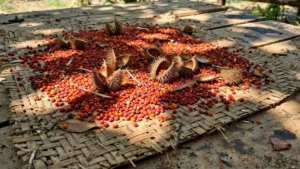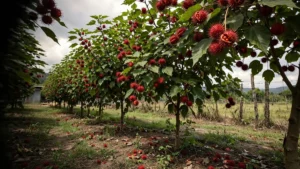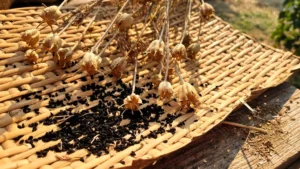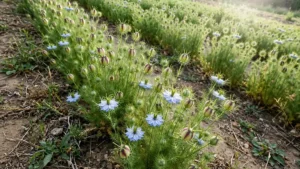

A nigella farm escape is a short stay on a working seed farm in the dry season, timed to the few days when the whole crop is cut, dried, and threshed. The plant is an annual, so the farm sows in the cool months and harvests a few months later, and the work happens fast: the pods swell and darken, the crew cuts the plants by hand, and the seed is spread in the sun before it can shatter. Arrive a week early and the pods are still green; arrive a week late and the plants are already cut.
That narrow window is what makes the trip worth planning around. This is not a show farm with a gift shop at the gate. You are standing in the rows while a crop that flavours breads and pickles across the Middle East and South Asia is gathered, and you are eating it in the farm kitchen the same evening, in the bread, the lentils, and the soup. The farms that do this well are small, dry-country places that take only a handful of guests at a time.
The nine steps below take you from choosing a region to carrying the seed home in your bag. Each one covers what to do, what to avoid, and how long it takes, so the harvest sets your plans rather than the other way round.
Key takeaways
- Nigella is an annual with a short harvest, so the whole trip hangs on the cutting week the farm names a few weeks ahead.
- Book nothing until the farm fixes its dates, because a nigella field is ready all at once and the work lasts days.
- Learn nigella from cumin and onion seed by sight before you travel, and the farm will show you the difference in the field.
- Sleep on the farm, eat from the farm kitchen, and bring the whole dried seed home instead of the ground spice.
- Nigella itself is naturally gluten-free, but farm kitchens bake flatbread every morning, so tell the farm when you book.
What a nigella farm escape involves
A nigella farm escape is a stay of three to five nights on a working seed farm during the harvest, with a room on the farm and meals from the farm kitchen. The days follow the pods: out in the rows in the early morning to cut the plants, back to the yard to spread them in the sun, and an evening meal where the seed appears in almost everything on the table. The work is plain and physical, and guests may join in when they wish, following the crew’s lead.
There is no hotel here. The rooms are farmhouse bedrooms or converted storehouses, supper is served at the family’s long table, and the farm’s own nigella is in the bread, the lentils, and the pickles. The best escapes are the ones where the farm treats you as a guest of the harvest, not as a customer of a tour, and where the farmer is glad to explain the crop as the work goes on. Ask plain questions and you will get plain answers.
How to plan it, and what to ask first
Begin with the harvest, not the map. Nigella is sown in the cool season and cut a few months later, and the exact week depends on the spring weather, so no farm can promise a date months ahead. Pick two or three regions from our list, write to the farms, and ask when they expect to cut. The farm that answers with a week and a backup week is the one to book.
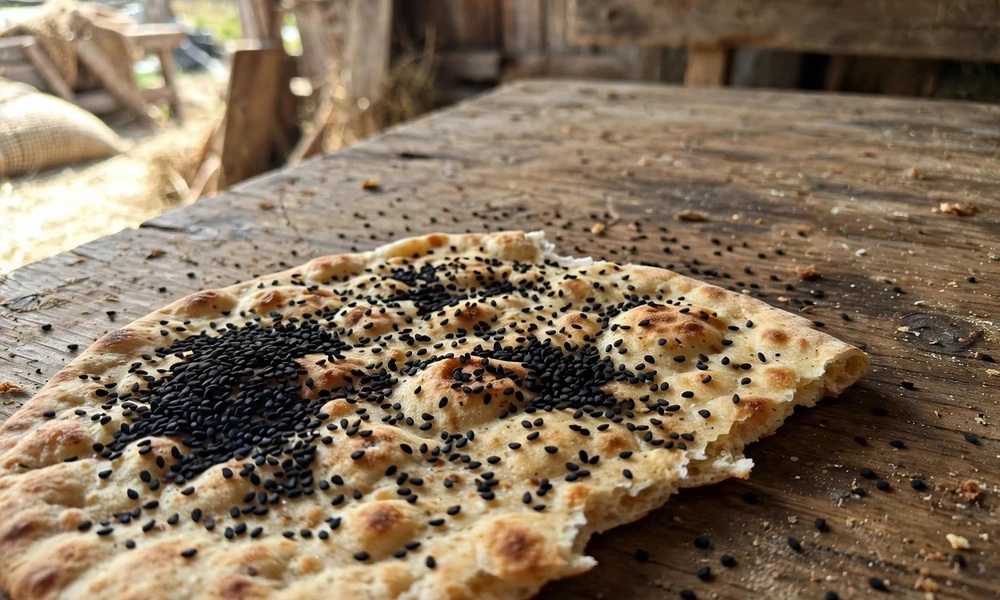
Ask three questions before you book. First, which week the farm cuts the plants, and whether the dates can move if the weather turns, because a nigella field is ready all at once. Second, whether the kitchen bakes bread with the farm’s own seed or buys bread in, since a farm that bakes with its harvest will show you more. Third, how the farm manages flour and bread for gluten-free guests, since a kitchen that bakes flatbread every morning needs a clear answer. The cumin farm escape guide asks the same three questions, and they serve just as well there.
The 9 steps to plan a nigella farm escape
Pick a farm that grows nigella for bakers, not for show
What to do: Choose the region whose cooking matches your own kitchen, whether that is the flatbreads of Fayoum or the naan of Punjab, because the farm’s food is the trip. What to avoid: Choosing a region for its photographs and eating food you dislike for five days. Best for: Travellers who cook with nigella at home and want to see where it comes from. Time needed: One evening comparing the farm’s menus with your own spice shelf. Standout tip: The farm whose bread you already love is the farm whose harvest you will enjoy most.
Drying days first, booking second
What to do: Write to the farm, ask when it expects to cut, and wait for a firm week before you book anything else. What to avoid: Grabbing a cheap flight first, then learning the farm cuts a fortnight later. Best for: Travellers who would sooner move a flight than miss the harvest. Time needed: A few weeks of patience while the farm watches the pods. Standout tip: The farm’s own date is the only date that matters; the flight can wait.
Dry pods rattle — that sound is the harvest signal
What to do: Pick a swollen pod, hold it to your ear, and shake it gently. A dry rattle means the seed is ready; silence means the pod needs more sun. What to avoid: Judging the crop by the colour of the pods alone, because green pods can hide black seed and dark pods can still be damp inside. Best for: Travellers who like to learn a crop by touch rather than by reading. Time needed: Ten minutes in the rows with the farmer. Standout tip: The rattle is the farmer’s test, and it works on every nigella farm.
Cut early, while dew still weighs the pods down
What to do: Rise with the crew and cut while the air is cool, because the pods are less likely to shatter when they are damp with dew. What to avoid: Starting at midday, when the heat dries the pods and the seed falls before it is gathered. Best for: Early risers who do not mind a long morning in the field. Time needed: Three or four hours in the rows before the sun climbs. Standout tip: The cool hours are the working hours on a seed farm.
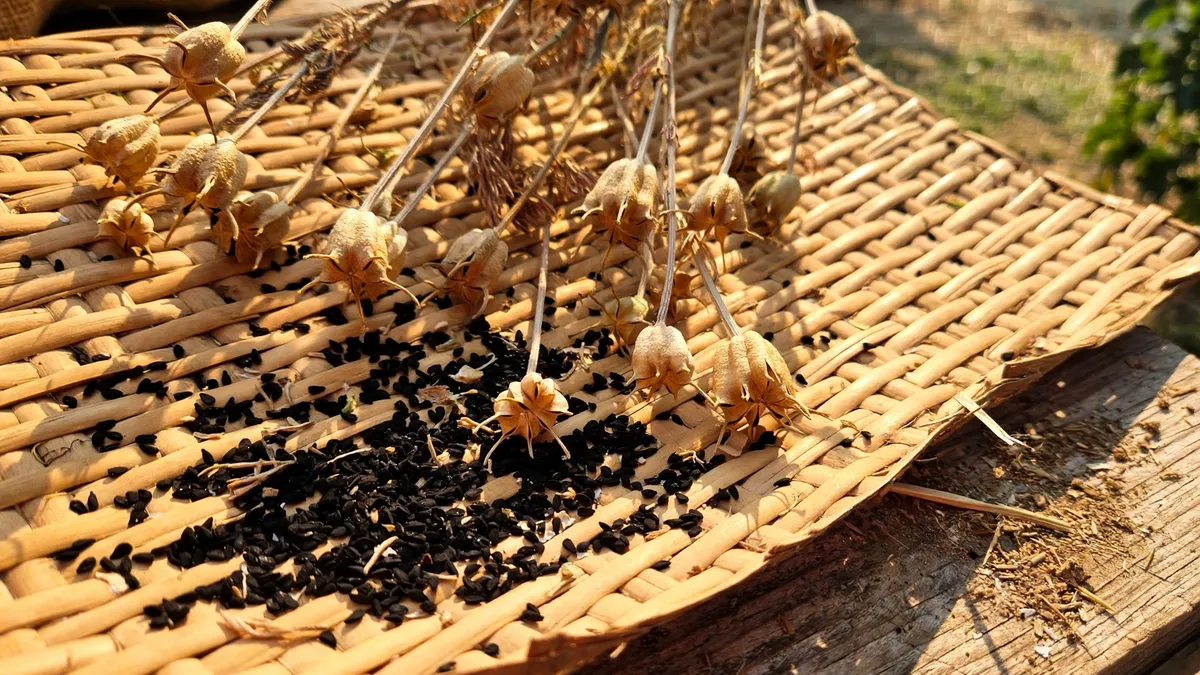
Lay the cut plants in thin rows on the drying yard
What to do: Spread the cut plants in thin, even rows on the drying yard, so the sun reaches every pod and the air moves between them. What to avoid: Piling the plants in heaps, where the pods in the middle stay damp and rot. Best for: Travellers who like methodical work with a visible result. Time needed: An hour of spreading after the morning cut. Standout tip: Thin rows dry in days; heaps take a week and lose seed.
Leave the pods in the sun for seven days, then crack them
What to do: Leave the pods in the sun for the best part of a week, then crack a few open to check the seed is dry and black all the way through. What to avoid: Threshing while the pods are still soft, because damp seed goes musty in the packet within days. Best for: Patient travellers who would rather wait than waste a harvest. Time needed: Five to seven days of sun, checked daily. Standout tip: A pod that cracks cleanly in the hand is ready; one that bends is not.
Supper is where the seed shows what it can do
What to do: Sit down to the evening meal and taste the seed in the bread, the soup, and the pickles, so you learn how little nigella a dish needs. What to avoid: Eating the seed by the spoonful from the packet, which tastes bitter and tells you nothing about the cooking. Best for: Travellers who learn a spice through the kitchen rather than the field. Time needed: One unhurried supper at the farm table. Standout tip: A pinch in the dough is enough; nigella is a seasoning, not a main ingredient.
Set the three seeds side by side and study the differences
What to do: Ask the farmer to lay nigella, cumin and onion seed side by side on the table, and study the shape, colour and smell of each. What to avoid: Buying seed from a market stall on shape alone, because the three are easy to confuse in a jar. Best for: Travellers who want to shop with confidence after the trip. Time needed: Half an hour at the farmhouse table. Standout tip: Shape tells you more than colour: nigella is teardrop-shaped, cumin is straight, onion seed is round.
Whole seed travels best in a paper packet
What to do: Buy the whole dried seed from the farm, pack it in paper, and keep it in a cool cupboard at home. What to avoid: Buying ground nigella, which loses its scent within days, or packing the seed in plastic while it is still warm from the sun. Best for: Cooks who want the farm’s flavour in their own kitchen. Time needed: A morning at the farm shop before you leave. Standout tip: Whole seed keeps for a year in a cool cupboard; ground seed is spent in a month.
Picking the right season and region
Nigella is a cool-season crop, so the season runs from the spring sowing to the early summer cutting, and the exact week moves with the weather. In Egypt the cutting comes earliest, often in late spring, while the high steppe of Anatolia and the foothills of the Atlas cut later, into early summer. A wet spring pushes everything back, and a hot one brings the cutting forward, so the farm’s own reading of its fields is worth more than any calendar.
For a first escape, Fayoum is the simplest choice: the farm is used to guests, the cutting week is generous, and the kitchen bakes with nigella at every meal. If you want the seed at its most traditional, the Nile Delta and the Aleppo plains put you among the old bakers’ routes, while Punjab is the farm to pick if you want kalonji for the naan ovens. The fenugreek farm escape runs on the same seasonal rhythm, and pairs well with a nigella trip in the same year.
The caveats that matter
Nigella is a weather-led crop, and the cutting week can move by a fortnight with one cold spring or one hot wind. Rain on the drying pods can spoil a whole day’s cutting, and a farm that threshes damp seed will send you home with packets that go musty within days. Book a stay that lets you move the week without losing your deposit, and check that the farm dries its pods in the sun rather than in a shed, because sun-dried seed keeps its scent far longer.
| Detail | What is known |
|---|---|
| The trip window | Three to five nights, timed to the cutting week the farm names a few weeks ahead |
| When to book | Write to the farm first, then book flights only once the week is fixed |
| What the farm provides | A room on the farm, meals from the kitchen, and a place in the cutting crew |
| What to pack | Gloves, a hat, sturdy shoes, and paper packets for the seed you carry home |
| Nigella vs cumin | Different plants and different seeds; nigella is peppery and dark, cumin is warm and pale |
| Nigella vs onion seed | Not the same seed at all; onion seed is paler and milder, nigella is black and peppery |
| Gluten-free eating | The seed is safe, but the kitchen bakes flatbread daily, so warn the farm at booking |
| Bringing seed home | Whole dried seed in paper packets; ground seed loses its scent within days |
Seed allergies are rare but real, and nigella is a seed, so anyone with a seed allergy should ask the farm before booking. The greater risk on most trips is simpler: the sun. Cutting runs through the heat of the day, and the drying yard offers no shade, so carry water, wear a hat, and rest when the crew rests. Our guide to the coriander farm escape makes the same point about dry-country farms: the sun is the crop’s friend and the traveller’s test.
Checklist: before you book a nigella farm escape
Run through these checks before you pay, and once more in the week before you travel.
- Check the dates: ask the farm which week it cuts, and whether a backup week exists if the weather turns.
- Check the drying: ask whether the pods dry in the farm’s sun, or go straight to a shed.
- Check the bread: ask whether the kitchen bakes with the farm’s own seed, or buys bread in.
- Check the flour: ask how the kitchen keeps flatbread away from your plate, if you eat gluten-free.
- Check the room: make sure your room is on the farm, not in a town an hour’s drive away.
- Check the seed: make sure you can buy whole dried seed from the farm before you leave.
Frequently asked questions
How early should I write to a nigella farm?
Write to the farm two or three months ahead, but book nothing until the farm names its cutting week, which it can only do a few weeks before the harvest. Flights and rooms booked early can usually be moved, so keep them flexible until the farm fixes its dates.
What should I pack for nigella country?
Gloves for the cutting, a hat and sun cream for the drying yard, sturdy shoes for the field paths, and paper packets for the seed you bring home. A light jacket helps too, because the mornings are cool even when the afternoons are hot.
Can children join in on a nigella farm?
Yes, on most of these farms, as long as they stay with an adult and the farmer agrees. The cutting is simple work, and children enjoy shaking the pods to hear the seeds rattle, but the threshing yard is busy, so keep small children clear of the crew.
What should you carry home from a nigella farm?
Whole dried seed in paper packets, bought from the farm itself. A small jar of the farm’s pickles travels well too, if the farm sells them. Leave the ground spice on the shelf: it loses its scent within days, while whole seed keeps for a year.
Can you eat gluten-free and still enjoy a nigella farm?
Yes, as long as the farm knows before you arrive. The seed itself is naturally gluten-free, and the rice and lentil dishes are usually safe. The flatbread is the risk, since the kitchen bakes it every morning, so ask how the farm keeps it away from your plate.
What does a week on a nigella farm cost?
Most of these stays run from $65 to $380 a night, depending on the region and the room, with meals included. Flights and the drive to the farm are extra, and the seed you buy at the farm shop costs very little.
The bottom line
A nigella farm escape suits travellers who like to learn a spice by cutting it, drying it, and eating it in the same week. The work is plain, the season is brief, and the best escapes are the ones where the farm lets you join the crew and then feeds you from its own kitchen.
Plan around the farm’s dates, not the flight board, and bring the whole seed home in paper, not plastic. A packet of nigella from the farm will flavour your bread for a year, and the trip will stay with you longer than that.