
A leather scarf and a suede scarf look like close cousins on a shop rail, but they behave very differently once you wear them. Leather is smooth, structured and quietly tough, while suede is soft, matte and warm to the touch. Both are made from animal hide, both sit outside the usual wool and cashmere conversation, and both are bought as much for how they look as for how warm they keep you.
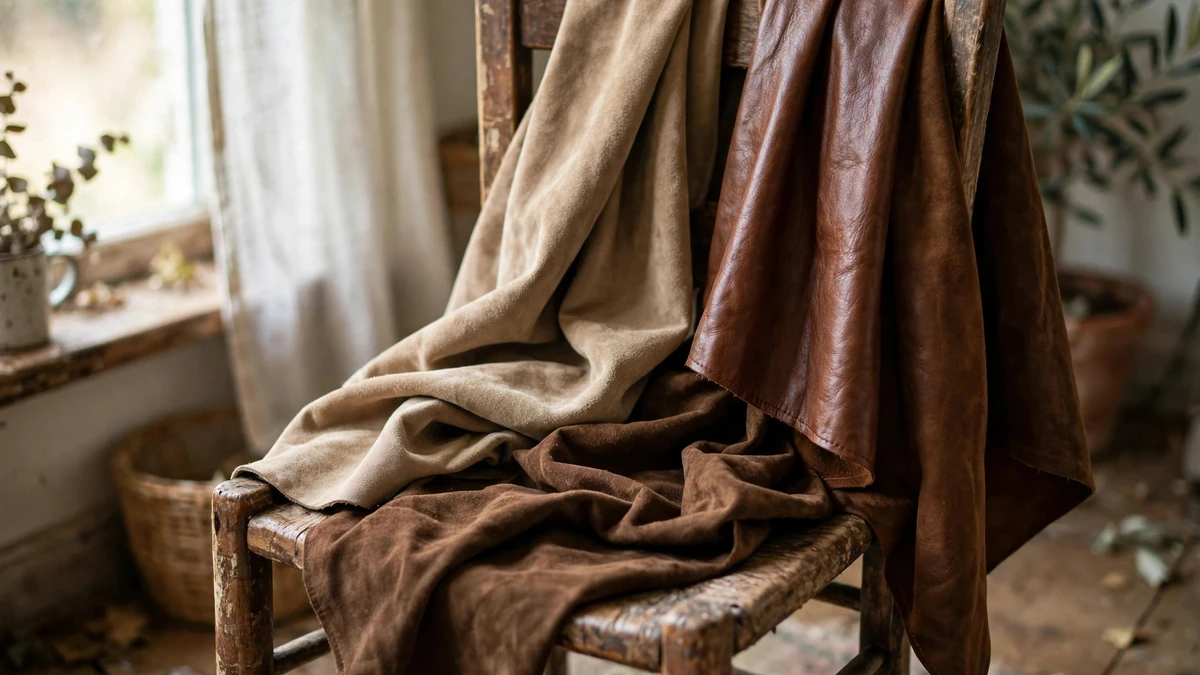
The confusion comes from the names. Suede is not a separate material from leather. It is leather made from the underside of the hide, brushed into a soft nap, while the smooth leather used for scarves is usually the finished top grain.
Below are nine comparisons that settle the choice in 2027, from feel and warmth to price and everyday practicality. Each one is described honestly, with what each material does well and where it falls short, so you can choose the scarf that fits your wardrobe and your willingness to look after it.
Key takeaways
- Leather scarves are smooth, structured and weather-resistant, while suede scarves are softer, warmer and more casual in feel.
- Suede insulates better than smooth leather because its brushed nap traps air, but it stains and marks far more easily.
- Leather is the tougher of the two and ages with a patina, while suede shows wear sooner and needs regular brushing.
- Neither is a financial investment, and neither replaces a wool or cashmere scarf for everyday cold-weather warmth.
- Both need specialist care, and a scarf that is stiff, poorly lined or badly cut is poor value at any price.
What leather and suede scarves actually are
A leather scarf is a narrow strip of finished leather, usually lambskin or calfskin, cut thin enough to drape around the neck. Good ones are soft and supple, with a smooth surface and a light lining on the underside so the leather does not catch on knitwear. Cheap ones can feel stiff and papery, which is the fastest way to tell the difference in a shop. Leather scarves are usually worn as a style piece, looped once or draped flat under a coat, rather than wrapped tightly for warmth.
A suede scarf is made from the same hides, but the surface is the brushed underside, which gives it a soft, velvety nap and a matte finish. Suede scarves are usually cut from lambskin or goatskin, and they feel warmer the moment you put one on, because the nap holds a thin layer of air against the skin. They drape more easily than smooth leather and look softer with tailored coats, knitwear and denim alike.
The key point is that neither material is a traditional scarf fibre. Wool and cashmere are knitted or woven, which makes them flexible and breathable in a way a hide never quite is, so leather and suede scarves are best understood as accessories that add texture and shape, with a modest amount of warmth as a bonus.
How we chose these comparisons and what to look for
We compared the two materials on the things that actually decide whether a scarf gets worn: feel against the skin, warmth, durability, care, weather handling, drape, colour, price and who each one suits. A scarf that looks beautiful on a rail but feels stiff, stains at the first drop of rain, or needs constant fussing will spend most of its life in a drawer.

Look first at the hide. Lambskin is the softest and most supple choice for both leather and suede scarves, and it drapes best around the neck. Calfskin is slightly firmer and tougher, which suits a structured leather scarf but can feel stiff in suede. Goatskin suede is durable and has a slightly coarser nap, which some people prefer for everyday wear. If the label does not name the hide, that is usually a sign to look elsewhere.
Look next at the finish and the lining. A good leather scarf has a smooth, even surface with no dry patches or cracks, and a soft lining, often silk or a fine cotton, on the underside. A good suede scarf has a nap that is even in every direction, with no shiny, flattened patches where it has been handled too much. Our guide to wool vs cashmere scarves is a useful companion here, because it shows how much of a scarf’s value comes from the fibre itself, and the same logic applies to hide: the material is the decision.
The 9 comparisons that matter in 2027
Feel and softness
What we like: Suede wins on first touch. Its brushed nap feels warm and velvety against the neck, with no cold, slick sensation when you first put it on. Smooth leather feels cooler and firmer at first, but a good lambskin softens with wear and develops a comfortable, lived-in feel within a few weeks.
What to consider: Suede can feel slightly scratchy if the nap is coarse or the hide is thick, and it can catch on rough knitwear. Best for: Suede for comfort, leather for a clean, structured look. Fabric: Lambskin suede or lambskin leather. Price range: £40 to £220. Standout feature: Suede’s instant warmth against the skin.
Warmth and insulation
What we like: Suede is the warmer of the two. The nap traps air, which is what insulation really is, and a suede scarf feels noticeably warmer on a cold morning than a smooth leather one of the same thickness. Leather blocks wind well, which helps in a different way, by stopping cold air from reaching your neck at all.
What to consider: Neither comes close to wool or cashmere for warmth. Best for: Suede for cool autumn days, leather for windy days. Fabric: Brushed lambskin suede or smooth lambskin leather. Price range: £40 to £220. Standout feature: Suede’s trapped-air warmth.
Durability and lifespan
What we like: Leather is the tougher material by a clear margin. A well-made leather scarf resists scuffs, keeps its shape for years, and can be wiped clean. It is the scarf you can wear hard, fold into a bag, and still find looking respectable the next day.
What to consider: Suede shows wear much sooner. The nap flattens where it rubs against a coat collar, and it picks up marks that are hard to remove. Best for: Leather for daily wear, suede for occasional wear. Fabric: Full-grain leather or lambskin suede. Price range: £50 to £250. Standout feature: Leather’s resistance to scuffs and creasing.
Care and cleaning
What we like: Leather is easier to live with. A quick wipe with a damp cloth removes most marks, and an occasional leather conditioner keeps it supple. Suede has a simple routine too, a soft brush after wearing, but it is less forgiving when you skip it.
What to consider: Neither can be washed at home. Both need a specialist leather cleaner for anything beyond a surface mark, and suede needs a protector spray before first wear, reapplied through the season. Best for: Leather for low-maintenance owners, suede for people happy to brush and protect. Fabric: Smooth leather or brushed suede. Price range: £40 to £200, plus care products. Standout feature: Leather’s wipe-clean surface.
Water and weather resistance
What we like: Leather handles weather far better. Rain beads on a smooth leather surface and wipes off, and a leather scarf will survive a shower without damage. Suede, by contrast, absorbs water into its nap, which can leave watermarks and stiffen the surface as it dries.
What to consider: Neither is waterproof, and a soaked leather scarf still needs to dry slowly, away from direct heat, or it can stiffen and crack. Best for: Leather for changeable weather, suede for dry days only. Fabric: Finished leather or protected suede. Price range: £40 to £220. Standout feature: Leather’s natural water resistance.
Drape and styling
What we like: Suede drapes more naturally. It falls in soft folds, knots easily, and looks relaxed with knitwear, denim jackets and tailored coats. Leather holds a shape, which suits a single loop or a flat drape under an open coat, and gives a sharper, more deliberate silhouette.
What to consider: Leather can look stiff if it is thick or poorly cut, and it resists a neat knot. Best for: Suede for relaxed outfits, leather for sharp, structured looks. Fabric: Thin lambskin in either finish. Price range: £40 to £220. Standout feature: Suede’s soft, easy drape.
Colour and ageing
What we like: Leather ages beautifully. It develops a patina, a soft sheen and darkening at the edges that most owners come to like, and a dark brown or black leather scarf often looks better in its second year than its first. Suede holds its colour evenly when new, with a rich, matte depth that photographs well.
What to consider: Suede fades and marks unevenly, so an old suede scarf can look tired in a way an old leather scarf rarely does. Best for: Leather for long-term character, suede for rich colour now. Fabric: Vegetable-tanned leather or dyed lambskin suede. Price range: £50 to £250. Standout feature: Leather’s patina over time.
Price and value
What we like: Both are affordable compared with a good cashmere scarf. A decent leather or suede scarf starts around £40, and the best lambskin versions sit between £120 and £220. Leather usually gives better value over time, because it lasts longer and needs less care, so the cost per wear is lower.
What to consider: Very cheap versions of either material are a false economy. Thin, bonded or heavily corrected leather cracks, and cheap suede sheds nap and stains quickly. Best for: Leather for cost per wear, suede for affordable softness. Fabric: Lambskin in either finish. Price range: £40 to £250. Standout feature: Leather’s lower cost per wear.
Who each one suits best
What we like: Suede suits people who want softness and warmth and are willing to care for it, and it works beautifully with casual and smart-casual outfits. Leather suits people who want a sharp, low-maintenance statement piece, and it pairs well with structured coats, biker jackets and tailored tailoring.
What to consider: If you want a scarf you can throw in a bag and forget, buy leather. If you want the softest feel and accept the upkeep, buy suede. Best for: Suede for comfort-first wearers, leather for low-maintenance wearers. Fabric: Lambskin suede or lambskin leather. Price range: £40 to £250. Standout feature: Each material’s distinct personality.
Which scarf is right for you
Start with how you actually live. If you walk to work in changeable weather, travel often, and want a scarf that survives a bag, a coat hook and a sudden shower, leather is the honest answer. It is tougher, easier to clean, and it looks better the longer you own it. If you mostly wear a scarf indoors, in dry weather, and you care most about how soft it feels against your neck, suede is the better choice.
Think about your wardrobe too. Leather reads sharper and more deliberate, so it suits structured coats, leather jackets and tailored outfits. Suede reads softer and more relaxed, so it works with knitwear, denim and unstructured coats. If you already own several wool scarves, either material adds a useful contrast in texture, but if this is your only scarf, a wool or cashmere one will serve you better day to day. Our roundup of the best winter scarves for women is a useful reality check before spending on a statement piece.
Finally, be honest about care. Suede needs a brush after wearing, a protector spray before the season, and a dry day to wear it on. Leather needs a wipe and an occasional condition. If you know you will not do the suede routine, buy leather, and you will wear it far more often.
The caveats that matter
Both materials have limits that are easy to overlook in a shop. Neither is warm enough to be your only winter scarf, neither should be washed at home, and neither holds up well to constant friction against a rough coat collar. Suede in particular is a fair-weather material, and wearing it in rain is the fastest way to ruin it. Buy from a seller who names the hide and the lining, and be wary of very cheap versions, which are often bonded leather or thin splits that will not last a season.
| Detail | What is known |
|---|---|
| Warmest | Suede, because its brushed nap traps air against the skin |
| Toughest | Smooth leather, which resists scuffs and keeps its shape |
| Best in rain | Leather, which sheds water; suede absorbs it and can mark |
| Easiest to care for | Leather, wiped clean and conditioned occasionally |
| Best drape | Suede, which falls in soft folds and knots easily |
| Best ageing | Leather, which develops a patina; suede fades and flattens |
| Best value over time | Leather, because it lasts longer and needs less care |
| What neither does | Neither replaces wool or cashmere for everyday winter warmth |
If you have a leather allergy or a sensitivity to animal hides, neither material is suitable, and a plant-based or wool alternative is the safer choice. If you are buying a gift, leather is the safer bet, because it is easier to care for and harder to damage by accident.
Checklist: choosing a leather or suede scarf honestly
Use these checks before you buy, and again after a month of wear.
- Check the hide: lambskin is softest, calfskin is firmer, and the label should name it.
- Check the lining: a soft silk or fine cotton lining stops the leather catching on knitwear.
- Check the nap on suede: it should be even in every direction, with no shiny flattened patches.
- Check the weather: suede is for dry days only, leather handles a shower but is not waterproof.
- Check the care routine: suede needs brushing and protector spray, leather needs a wipe and occasional conditioner.
- Check the price honestly: under £40 usually means bonded or corrected leather that will not last.
Frequently asked questions
Is suede real leather?
Yes. Suede is leather made from the underside of the hide, brushed into a soft nap, while smooth leather is the finished top grain. They are the same material with a different surface, which is why they behave so differently.
Which is warmer, leather or suede?
Suede is warmer, because its nap traps air. Leather blocks wind better, which helps in a different way. Neither is as warm as wool or cashmere, so both are best as mild-weather or style pieces.
Can I wear a suede scarf in the rain?
No, not if you can avoid it. Suede absorbs water, which can leave watermarks and stiffen the nap as it dries. A protector spray helps, but it does not make suede waterproof. Leather is the safer choice in wet weather.
How do I clean a leather or suede scarf?
Wipe leather with a damp cloth and condition it occasionally. Brush suede with a soft suede brush after wearing, and use a protector spray before the season. For anything beyond a surface mark, use a specialist leather cleaner. Our guide on how to wear a scarf with a coat covers keeping a scarf looking its best.
Does leather last longer than suede?
Yes, usually by a clear margin. Leather resists scuffs, keeps its shape, and develops a patina, while suede shows wear sooner, with flattened nap and marks that are hard to remove.
Are leather and suede scarves worth the money?
As style pieces, yes, if you buy good lambskin and care for it. As warmth, no, a wool or cashmere scarf gives far more warmth for the same money. Neither is a financial investment, so buy for how it looks and feels, not for resale value.
The bottom line
Leather and suede scarves are a choice between toughness and softness. Leather is smoother, sharper, easier to care for and better in bad weather, and it ages with a character that suede cannot match. Suede is warmer, softer and more relaxed, but it needs dry days, regular brushing and a protector spray to stay looking good.
Choose leather if you want a low-maintenance statement piece that survives real life, and choose suede if you want the softest feel and are happy to look after it. Either way, buy good lambskin, check the lining, and be honest about the weather you will wear it in, because that is what decides which one you will actually reach for.