

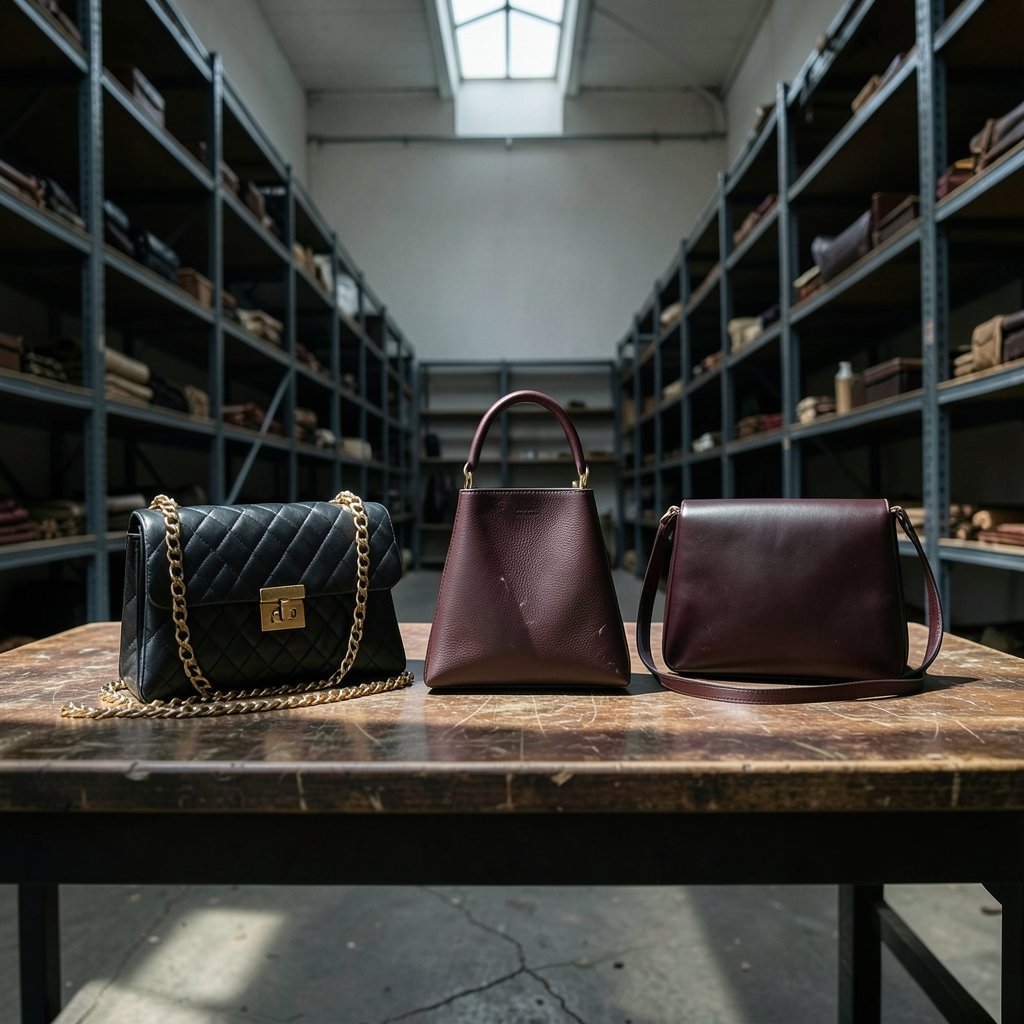
What if the most powerful statement a woman ever made wasn’t spoken, but carried? That’s the strange truth about handbags. A rectangle of leather with a strap can rewrite the rules of who gets to move freely, who gets to be seen, and who gets to decide what “luxury” even means. Over the last century, a handful of designs did exactly that. Here are ten bags that didn’t just sell well. They changed how people think, walk, work, and shop.
Why Bags Became More Than Accessories
For most of history, a bag was a practical object, not a personality. But as women entered workplaces, traveled internationally, and gained financial independence, the bag became a tool of self-definition. Each era’s defining bag reflects its moment. The 1930s rise of travel shaped the Louis Vuitton Speedy. Post-war femininity shaped the structured silhouettes of the 1950s, much like the 1950s womens fashion silhouette that changed everything. And the shift toward hands-free living shaped the shoulder bag.
That’s the through-line: form follows freedom. When women’s lives changed, their bags changed with them.
The 10 Designs That Changed Fashion History

1. Chanel 2.55: The Bag That Freed Both Hands
In February 1955, Coco Chanel released the 2.55, named for its launch date. Its revolution was almost absurdly simple: a long chain strap so the bag could hang from the shoulder, leaving the wearer’s hands free. Before this, handbags were carried by a short top handle or tucked into the crook of the arm. The 2.55 turned the bag into a declaration of independence.
The details mattered too. The quilted “matelassé” stitching, the clean flap silhouette, and the practical strap created a formula that has been copied for seven decades. Chanel’s own philosophy sums it up: fashion fades, but style remains.
2. Hermès Kelly: A Royal Photograph Did the Marketing
The Kelly began life in the 1930s as a structured, trapezoidal bag with a distinctive turn-lock clasp and meticulous hand craftsmanship. It was rebranded in 1956 after Grace Kelly was photographed using one to shield her pregnancy from paparazzi. That single image, royal narrative plus artisanal skill, turned a well-made bag into a myth.
The lesson for anyone studying fashion history: a bag’s story can be worth more than its leather.
3. Hermès Birkin: Born From an Airplane Complaint
In the 1980s, on a flight from Paris to London, Jane Birkin sat beside Jean-Louis Dumas, the head of Hermès. She complained that she could never find the perfect weekend bag. Without realizing who he was, she described her dream design. Soon after, she received a custom bag with a personal message, and the Birkin became the most recognized luxury handbag in the world.
It’s a useful reminder that the most iconic designs often start as practical complaints, not marketing plans.
4. Louis Vuitton Speedy: Travel Shrinks to City Size
Introduced in the 1930s, the Speedy answered a new hunger for international travel. It was designed as a smaller, more practical version of the brand’s larger travel bags. It reached true icon status in the 1960s when Audrey Hepburn carried a smaller iteration, and demand followed the celebrity.
The Speedy shows how a bag can migrate from the luggage rack to the daily commute without losing its identity. For a parallel story of a look that traveled from function to legend, the 1920s fashion women flapper look changed everything in much the same way.
5. Gucci Jackie: The Hobo Goes High Society
The slim, curved hobo shape now known as the Jackie was famously carried by Jackie Kennedy, and the association stuck. Its soft, rounded silhouette broke with the stiff, boxy bags of the previous era and helped make relaxed, under-arm carry a status symbol. When a bag is renamed after its most famous wearer, you know the culture has decided it matters.
6. Fendi Baguette: The First Real “It Bag”
The Baguette, a small rectangular bag meant to be tucked under the arm like a loaf of bread, helped invent the modern It Bag economy. It arrived in the late 1990s, when logomania and celebrity culture collided, and it turned handbag collecting into a mainstream obsession. Fendi later found a groove with this bag shape, and the style has been revived repeatedly, which tells you how deeply it lodged in the public imagination.
7. Fendi Spy: Mystery as a Design Feature
The Spy Bag followed in the early 2000s, with a hidden compartment and a soft, slouchy body. It captured a moment when bags became playful, secretive, and slightly theatrical. Its success proved that a bag could sell on intrigue rather than a logo alone.
8. Balenciaga City (the Motorcycle Bag): Luxury Learns to Slouch
The grunge era got its luxury hero in the early 2000s. The City, with its distressed leather, studs, and relaxed shape, made “worn-in” a desirable quality. It marked a shift from polished perfection toward a bag that looked like it had a life. That attitude echoes the way punk fashion safety pins ripped shirts changed style forever by making imperfection a statement.
9. Louis Vuitton Multicolore Speedy: The Artist Collaboration Era
In 2002, a collaboration between Marc Jacobs and artist Takashi Murakami turned the classic monogram into an explosion of color. The Multicolore Speedy transformed a heritage pattern into pop art. It was quickly adopted by celebrities and influencers and remains one of the biggest successes in artist-and-luxury-house partnerships. The bag proved that collaboration could reset a brand’s age.
10. The Everyday Logo Tote: Democratizing the Status Bag
The final entry isn’t a single model but a category: the accessible logo tote that brought status-symbol design to high streets everywhere. It made the visual language of luxury available far beyond luxury budgets, and it changed how the industry thought about pricing, licensing, and mass aspiration. Some purists hate it. Its cultural impact is undeniable.
What These Ten Bags Have in Common
| Design move | Bag that pioneered it | Why it mattered |
|---|---|---|
| Shoulder strap | Chanel 2.55 | Freed the hands; signaled independence |
| Celebrity association | Hermès Kelly | Turned craftsmanship into myth |
| Customer-driven origin | Hermès Birkin | Proved real needs beat focus groups |
| Travel-to-city scale | Louis Vuitton Speedy | Made luggage part of daily life |
| Under-arm hobo | Gucci Jackie | Made relaxed carry aspirational |
| Small format obsession | Fendi Baguette | Created the It Bag economy |
| Hidden detail | Fendi Spy | Sold intrigue over logos |
| Distressed finish | Balenciaga City | Made imperfection luxurious |
| Artist collaboration | LV Multicolore Speedy | Reset a heritage brand |
| Accessible status | Logo tote | Spread luxury’s visual language |
If you look at the table, a pattern emerges. None of these bags won on materials alone. Each one solved a problem, told a story, or broke a rule at exactly the right moment.
Practical Lessons for Bag Buyers and Collectors
Fashion history is fun, but it’s also useful. Here’s what actually works when you’re choosing or collecting a bag, based on how these ten designs earned their staying power.
Judge the strap before the logo. The 2.55 changed everything because of a strap, not a monogram. Try the bag on. If the strap digs, twists, or forces a hand into service, the design will annoy you daily.
Look for a story beyond the price tag. The Kelly and Birkin last partly because people remember where they came from. Bags built from real design decisions tend to hold up better than trend-led pieces.
Buy the size you’ll actually carry. The Speedy’s success came from scaling down a travel bag. Many buyers make the mistake of choosing the largest size for “value,” then leave it in the closet because it’s too heavy for daily use.
Treat wear as character, not damage. The Balenciaga City legitimized distressed leather. If you’re buying pre-owned, a little patina is often a feature, not a flaw. But check the handles and corners first, because those wear fastest.
Don’t chase an It Bag at peak hype. The Baguette’s history shows how quickly a must-have becomes a maybe-have. If you love a shape, buy it for the shape. If you’re buying it for status, wait a season.
Verify construction over branding. Stitching density, hardware weight, and lining quality tell you more about longevity than a label does. This is the same logic that makes the 1950s fashion real story behind silhouette so instructive: the structure is the point.
How Bags Mirror the Decades
The handbag timeline doubles as a social timeline. The 1930s brought travel and practicality. The 1950s brought structure and femininity. The 1990s brought logomania and celebrity. The 2000s brought collaboration and playful experimentation. The 2010s and beyond brought resale, revival, and a new interest in craftsmanship over noise.
That pattern mirrors clothing history almost exactly. The Regency era fashion empire waist that changed women dressed loosened the body, and the 1700s fashion panniers powdered wigs cotton changed dress widened it. Bags follow the same rhythm of constraint and release.
Even the beauty industry shows the pattern. When a product serves people who were previously ignored, it changes the market permanently, the way the fashion fair black cosmetics brand that changed industry did. Bags that serve real lives do the same.
Conclusion
Ten designs, one shared trait: each one gave people something they didn’t know they needed. A free hand. A story to tell. A smaller bag for a faster life. A slouchy shape that felt like a rebellion. The bags of fashion history aren’t important because they were expensive. They’re important because they changed behavior, and behavior is what fashion actually sells.
So the next time you reach for a strap, remember you’re holding a piece of a much longer argument about freedom, status, and practicality. And if you want to see how deeply these objects shape daily habits, look at how players optimize the ffxiv fashion report hit 80 every week without wasting gil. People take their bags seriously, in every world.
FAQ
What was the first handbag to have a shoulder strap?
The Chanel 2.55, released in February 1955, is widely credited with popularizing the long chain shoulder strap. Before it, handbags were typically carried by a short top handle or in the crook of the arm. The strap allowed hands-free carrying, which was a significant change for women’s daily mobility.
Why is the Hermès Kelly named after Grace Kelly?
The bag began in the 1930s with a structured, trapezoidal shape and a turn-lock clasp. It was rebranded in 1956 after Grace Kelly was photographed using one to cover her pregnancy from paparazzi. The royal association turned a well-crafted bag into a cultural icon.
How did the Hermès Birkin get its name?
In the 1980s, actor Jane Birkin sat next to Jean-Louis Dumas of Hermès on a flight from Paris to London. She described the weekend bag she couldn’t find. Soon after, she received a custom version with a personal message, and the design took her name.
What makes a bag an “It Bag”?
An It Bag is a design that becomes a mass cultural obsession rather than just a popular product. The Fendi Baguette is often cited as an early example, arriving in the late 1990s when celebrity culture and logomania collided. It Bag status usually combines a recognizable shape, heavy celebrity visibility, and intense short-term demand.
Are vintage designer bags worth buying?
Often yes, but condition matters more than the label. Check handles, corners, and hardware first, since those wear fastest. Bags with genuine design history, like the styles above, tend to hold interest longer than trend-driven pieces. Distressed finishes can be a feature rather than a flaw on models designed that way.
Which bag changed fashion the most?
The Chanel 2.55 is the strongest candidate. Its shoulder strap changed how people carried bags, and its quilted flap silhouette has been imitated for decades. The Hermès Birkin and Kelly changed the luxury market’s psychology, but the 2.55 changed daily behavior.











